Department of Psychiatry, McLean Hospital, Harvard Medical School, Belmont, MA 02478, USA; Molecular Neurobiology Laboratory, McLean Hospital, Harvard Medical School, Belmont, MA 02478, USA; Department of Neurosurgery, Huashan Hospital, Institute for Translational Brain Research, State Key Laboratory of Medical Neurobiology, MOE Frontiers Center for Brain Science, Fudan University, Shanghai 200032, China.
Department of Neurosurgery, Massachusetts General Hospital, Harvard Medical School, Boston, MA 02114, USA.
Neurobiol Dis. 2022 Aug;170:105777. doi: 10.1016/j.nbd.2022.105777. Epub 2022 May 27.
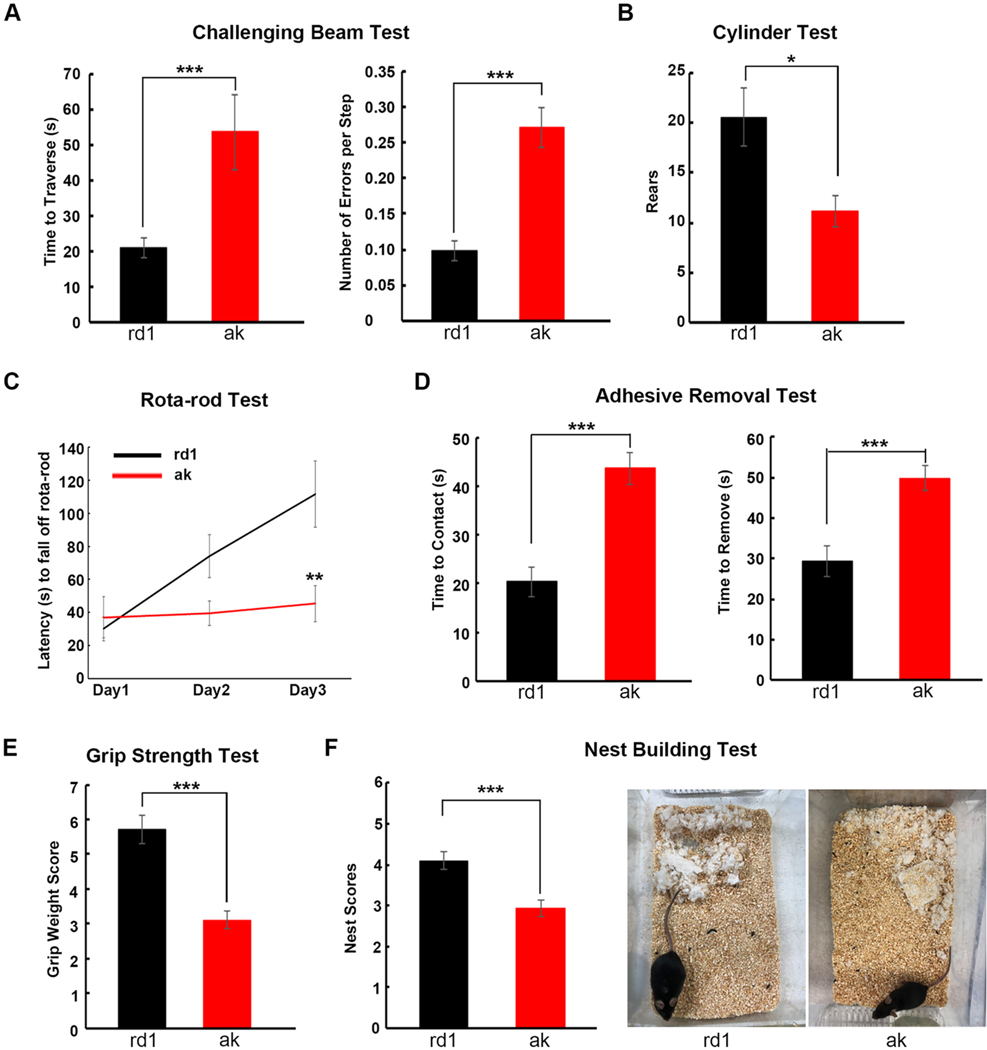
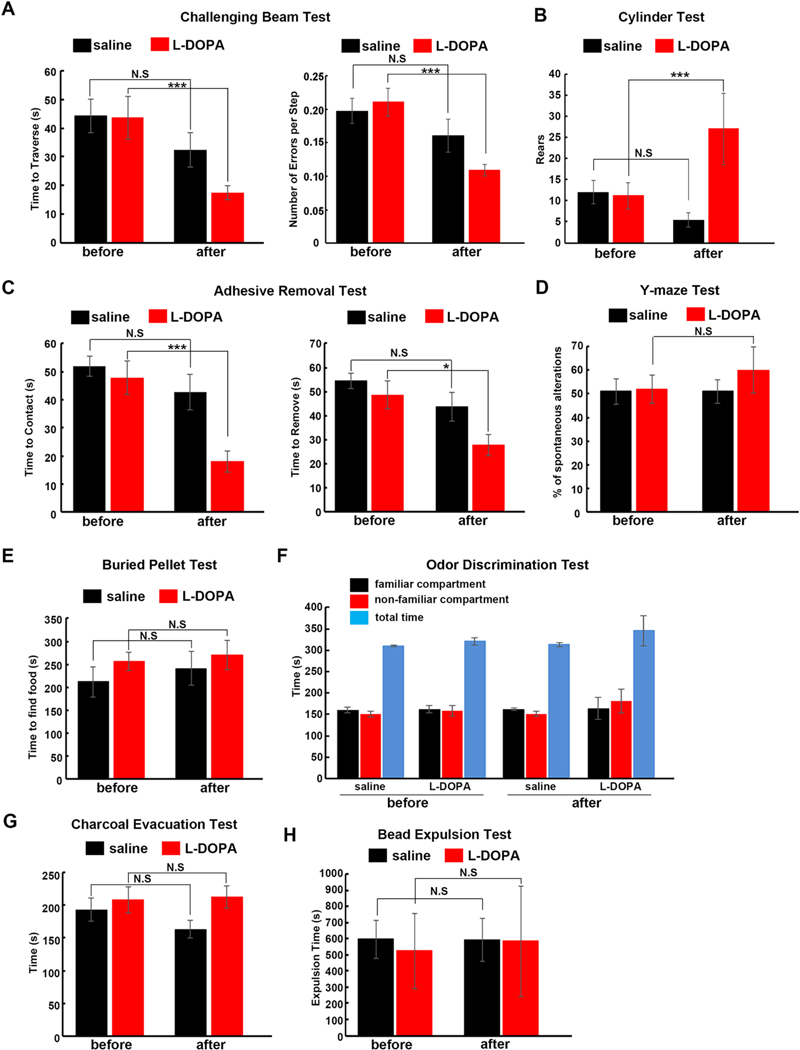
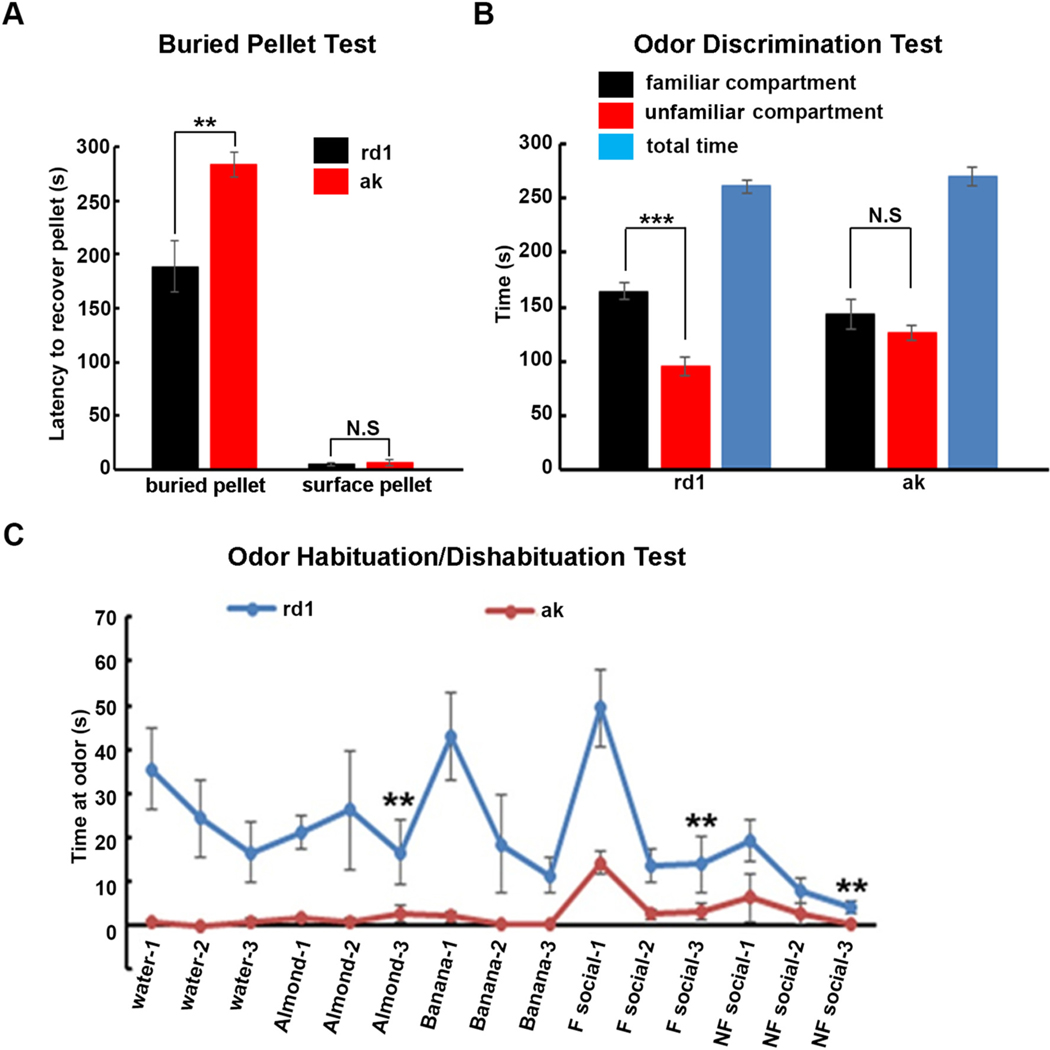
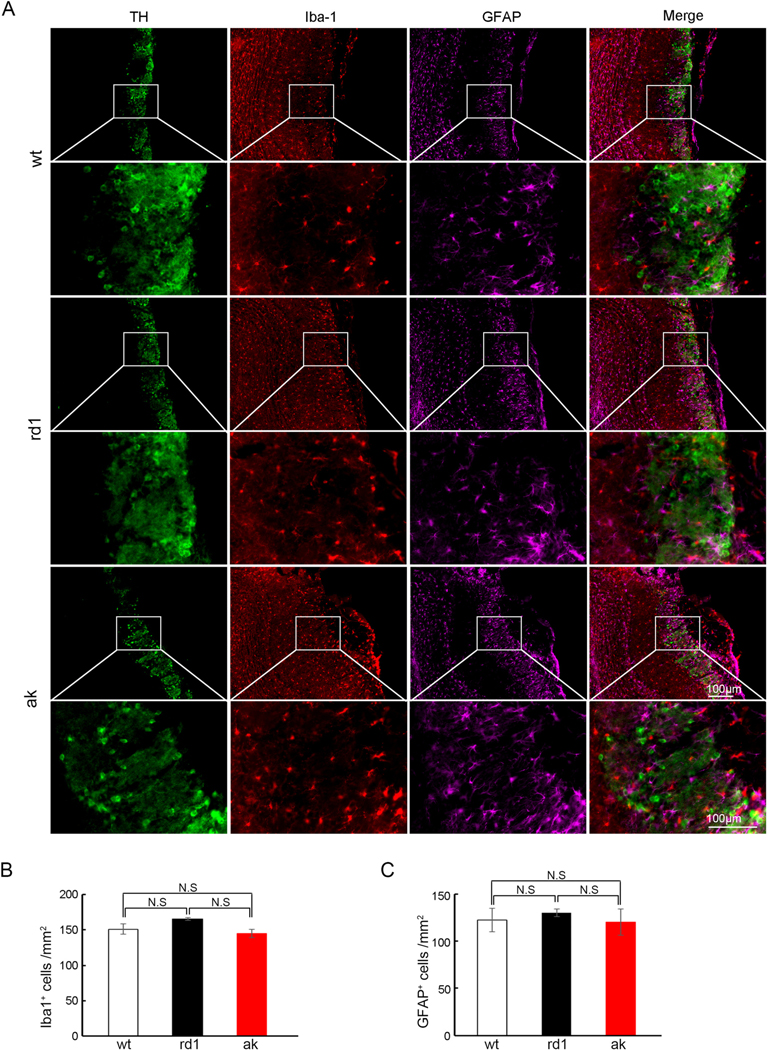
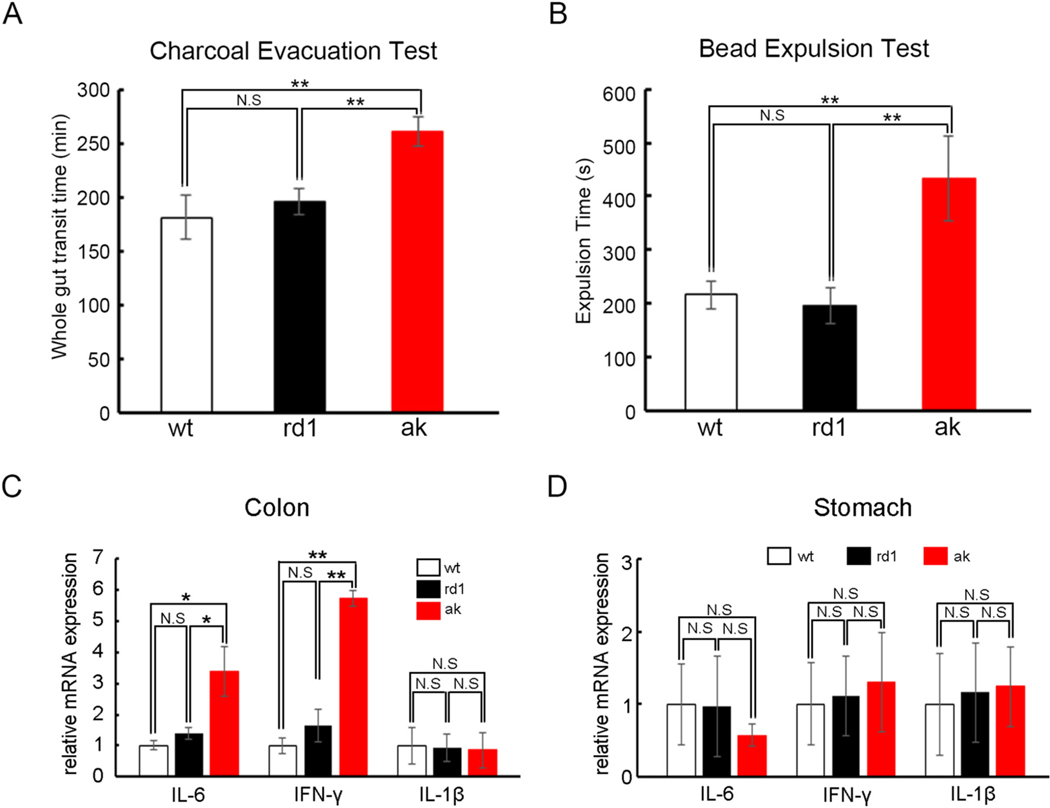
Parkinson's disease (PD) is characterized by the selective death of substantia nigra pars compacta (SNpc) dopaminergic neurons and includes both motor and non-motor symptoms. While numerous models exist for the study of typical PD motor deficits, fewer exist for non-motor symptoms. Previous studies have shown that a Pitx3 mouse model (aphakia or ak mouse) has specific developmental failure of the dopaminergic neuron population in the SNpc and that it can be used for the study of PD-related gross motor dysfunction as well as cognitive functional deficits. It remains unclear whether the aphakia mouse, both male and female, might also be used to model fine motor deficits and for additional studies of non-motor deficits associated with PD. Here, using an extensive battery of behavioral tests, we demonstrate that the aphakia mouse shows both gross and fine motor functional deficits compared with control mice. Furthermore, aphakia mice show deficits of olfactory function in buried pellet, odor discrimination and odor habituation/dishabituation tests. We also found that aphakia mice suffer from gastrointestinal dysfunction (e.g., longer whole gut transit time and colon motility deficits), suggesting that the mutation also affects function of the gut-brain axis in this animal model. Moreover, our data demonstrate that in the aphakia mouse, L-DOPA, the gold standard PD medication, can rescue both gross and fine motor function deficits but neither olfactory nor gastrointestinal symptoms, a pattern much like that seen in PD patients. Altogether, this suggests that the aphakia mouse is a suitable model for fine motor, olfactory and gastrointestinal behavioral studies of PD as well as for the development of novel disease-modifying therapeutics. SIGNIFICANCE STATEMENT: While several animal models are available to study the major motor symptoms of PD, there are fewer that replicate non-motor symptoms, which constitute a major source of morbidity for patients. Moreover, available models often require manipulations resulting in sudden massive cell loss and inflammation, both of which may interfere with understanding of the direct effects of dopaminergic neuronal loss in the SNpc. We describe a model of congenital SNpc cell deficiency in a Pitx3 mouse and characterize it with a battery of behavioral tests suggesting that it closely mimics non-motor as well as motor symptoms of PD, providing a useful insight into the effects of the nigrostriatal dopamine deficit. Taken together, these data suggest that the ak mouse represents a useful model to study dopaminergic system function for both motor and non-motor symptoms of PD.
帕金森病(PD)的特征是黑质致密部(SNpc)多巴胺能神经元的选择性死亡,包括运动和非运动症状。虽然存在许多用于研究典型 PD 运动缺陷的模型,但用于非运动症状的模型较少。先前的研究表明,Pitx3 小鼠模型(无晶状体或 ak 小鼠)具有 SNpc 中多巴胺能神经元群体的特定发育失败,并且可用于研究与 PD 相关的粗大运动功能障碍以及认知功能缺陷。目前尚不清楚无晶状体小鼠(雄性和雌性)是否也可用于模拟精细运动缺陷,并进一步研究与 PD 相关的非运动缺陷。在这里,我们使用广泛的行为测试套件,证明与对照小鼠相比,无晶状体小鼠表现出粗大运动和精细运动功能缺陷。此外,无晶状体小鼠在埋藏颗粒、气味辨别和气味习惯化/去习惯化测试中表现出嗅觉功能缺陷。我们还发现无晶状体小鼠患有胃肠道功能障碍(例如,整个肠道转运时间更长和结肠运动功能障碍),这表明该突变也影响了该动物模型中肠道-大脑轴的功能。此外,我们的数据表明,在无晶状体小鼠中,L-DOPA,即治疗 PD 的金标准药物,可以挽救粗大运动和精细运动功能缺陷,但不能挽救嗅觉或胃肠道症状,这与 PD 患者的模式非常相似。总而言之,这表明无晶状体小鼠是研究 PD 的精细运动、嗅觉和胃肠道行为的合适模型,也是开发新型疾病修饰治疗方法的合适模型。 意义声明:虽然有几种动物模型可用于研究 PD 的主要运动症状,但用于复制非运动症状的模型较少,这些症状是非运动症状患者的主要发病源。此外,现有的模型通常需要进行操作,从而导致大量细胞突然丢失和炎症,这两者都可能干扰对 SNpc 中多巴胺能神经元丢失的直接影响的理解。我们描述了一种在 Pitx3 小鼠中 SNpc 细胞先天性缺乏的模型,并通过一系列行为测试对其进行了表征,表明它非常类似于 PD 的非运动和运动症状,为了解黑质纹状体多巴胺缺乏的影响提供了有用的见解。总之,这些数据表明,ak 小鼠代表了研究 PD 的运动和非运动症状的多巴胺系统功能的有用模型。