Department of Pathology, Union Hospital, Tongji Medical College, Huazhong University of Science and Technology, Wuhan 430022, China.
Department of Respiration Medicine, Shanghai Tenth People's Hospital, School of Medicine, Tongji University, Shanghai 200072, China.
Cancer Biol Med. 2022 Jun 1;19(8):1235-48. doi: 10.20892/j.issn.2095-3941.2021.0585.
Lynch syndrome (LS) pre-screening methods remain under-investigated in colorectal cancers (CRCs) in Asia. Here, we aimed to systematically investigate LS pre-screening and comprehensively characterize LS CRCs.
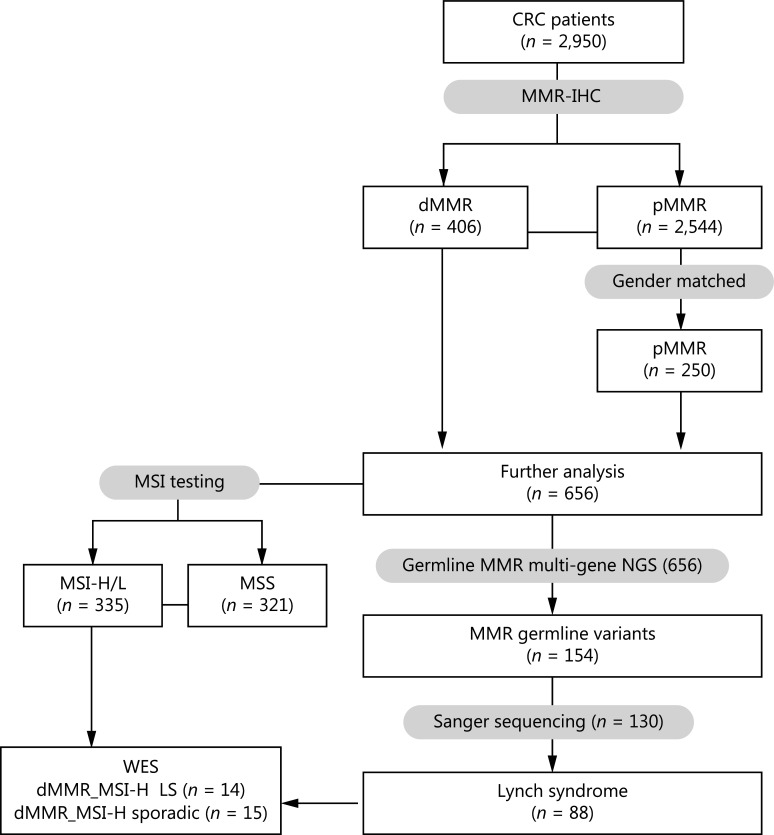
Microsatellite instability (MSI) and germline variants of DNA mismatch repair (MMR) genes were examined in 406 deficient MMR (dMMR) and 250 proficient MMR CRCs. The genetic differences between LS and sporadic CRCs were studied with whole exome sequencing analysis.
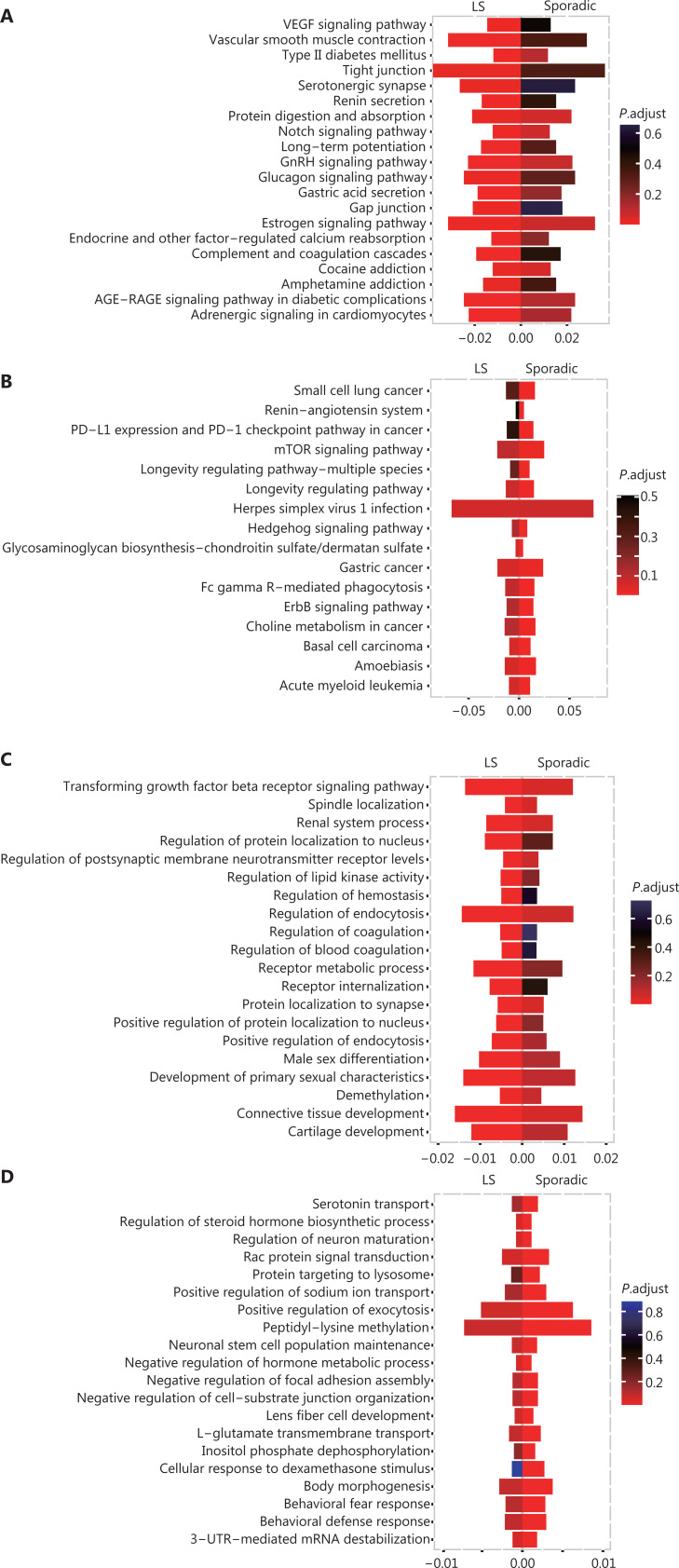
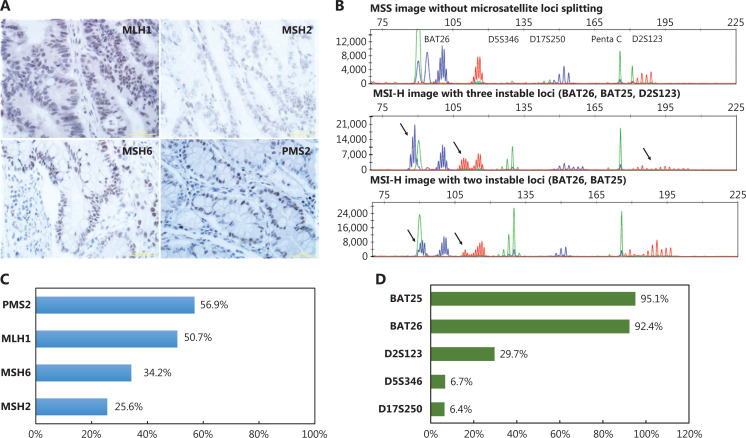
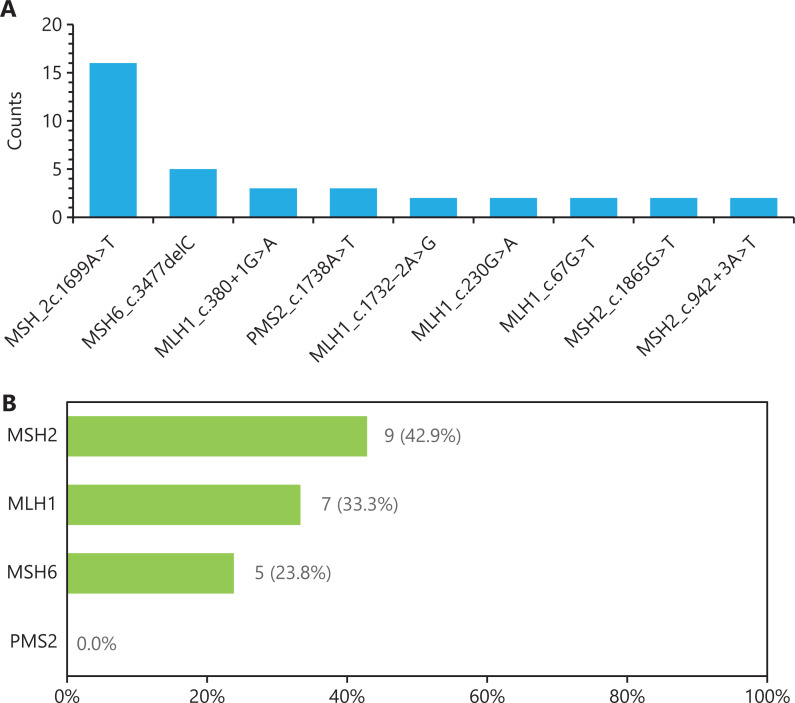
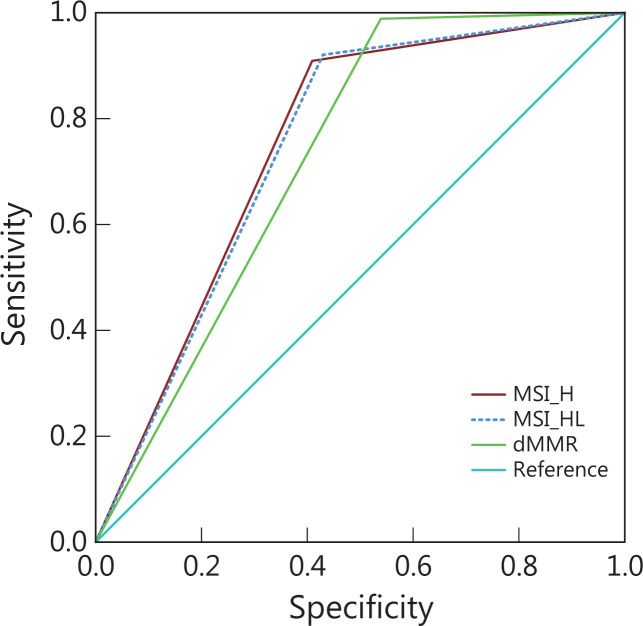
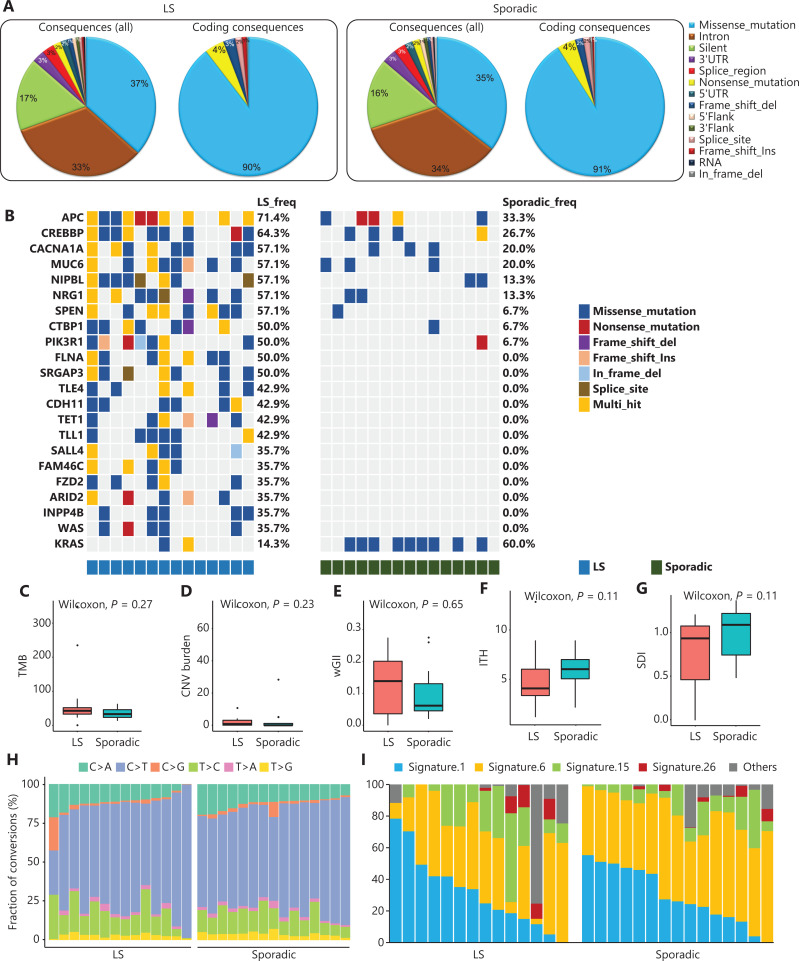
The incidence of dMMR in Chinese patients with CRCs was 13.8%. Consistency analysis between MMR immunohistochemistry (IHC) and MSI testing showed the kappa value was 0.758. With next-generation sequencing (NGS), germline variants were detected in 154 CRCs. Finally, 88 patients with CRC were identified as having LS by Sanger sequencing. Among them, we discovered 21 previously unreported pathogenic germline variants of MMR genes. Chinese patients with LS, compared with sporadic CRCs, tended to be early-onset, right-sided, early-stage and mucinous. Overall, the performance of MMR IHC and MSI testing for LS pre-screening was comparable: the area under the ROC curve for dMMR, MSI-H, and MSI-H/L was 0.725, 0.750, and 0.745, respectively. dMMR_MSI-H LS and sporadic CRCs showed substantial differences in somatic genetic characteristics, including different variant frequencies of , , and , as well as different enriched pathways of VEGF, Notch, TGFβR, mTOR, ErbB, and Rac protein signal transduction.
MMR IHC and MSI testing were effective methods for LS pre-screening. The revealed clinical and somatic genetic characteristics in LS CRCs may have the potential to improve the performance of LS pre-screening in combination with dMMR/MSI.
林奇综合征(LS)的筛查方法在亚洲结直肠癌(CRC)中研究较少。本研究旨在系统地调查 LS 的筛查方法,并全面描述 LS CRC 的特征。
对 406 例错配修复缺陷(dMMR)和 250 例错配修复完整(pMMR)CRC 患者进行微卫星不稳定性(MSI)和 DNA 错配修复(MMR)基因种系变异的检测。通过全外显子组测序分析研究 LS 和散发性 CRC 之间的遗传差异。
中国 CRC 患者中 dMMR 的发生率为 13.8%。MMR 免疫组化(IHC)和 MSI 检测的一致性分析显示,kappa 值为 0.758。通过下一代测序(NGS),在 154 例 CRC 中检测到种系变异。最后,通过 Sanger 测序确定 88 例 CRC 患者为 LS。其中,我们发现了 21 种以前未报道的 MMR 基因致病性种系变异。与散发性 CRC 相比,中国 LS 患者发病年龄更早,肿瘤位置更偏右侧,分期更早,且肿瘤多为黏液腺癌。总体而言,MMR IHC 和 MSI 检测用于 LS 筛查的性能相当:dMMR、MSI-H 和 MSI-H/L 的 ROC 曲线下面积分别为 0.725、0.750 和 0.745。dMMR_MSI-H LS 和散发性 CRC 在体细胞遗传特征方面存在显著差异,包括不同的变异频率和富集通路,如、、、VEGF、Notch、TGFβR、mTOR、ErbB 和 Rac 蛋白信号转导。
MMR IHC 和 MSI 检测是 LS 筛查的有效方法。LS CRC 中揭示的临床和体细胞遗传特征可能有潜力与 dMMR/MSI 联合提高 LS 筛查的性能。