Department of Plant Nutrition, Institute of Crop Science and Resource Conservation, Rheinische Friedrich-Wilhelms-Universität Bonn, 53115 Bonn, Germany.
Department of Chemistry and Pharmacy and CIBSS-Centre for Integrative Biological Signalling Studies, Albert-Ludwigs University Freiburg, 79104 Freiburg, Germany.
Biochemistry. 2022 Jun 21;61(12):1213-1227. doi: 10.1021/acs.biochem.2c00145. Epub 2022 May 31.
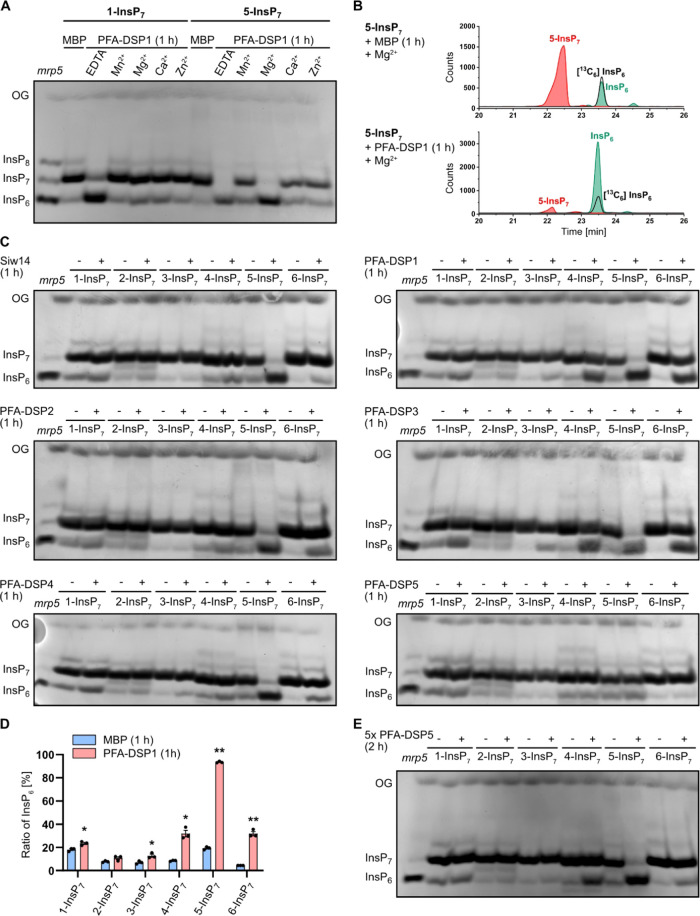
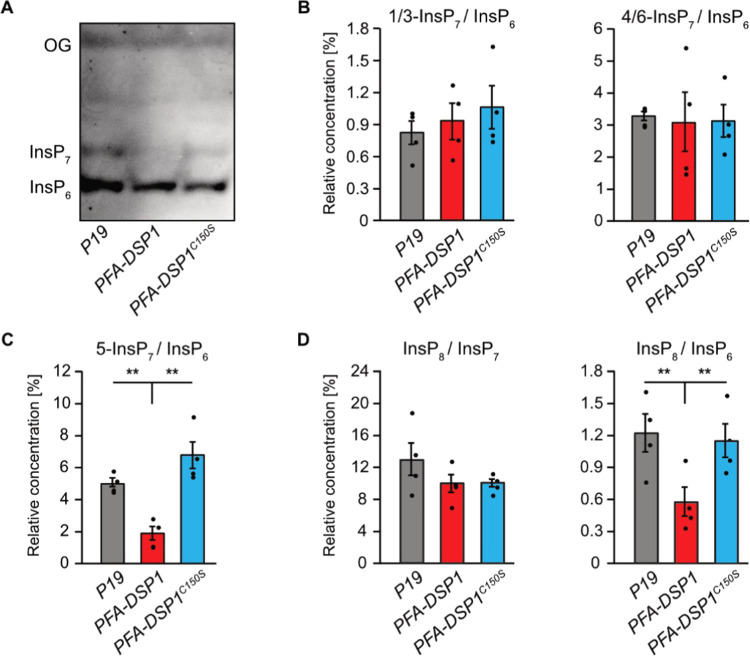
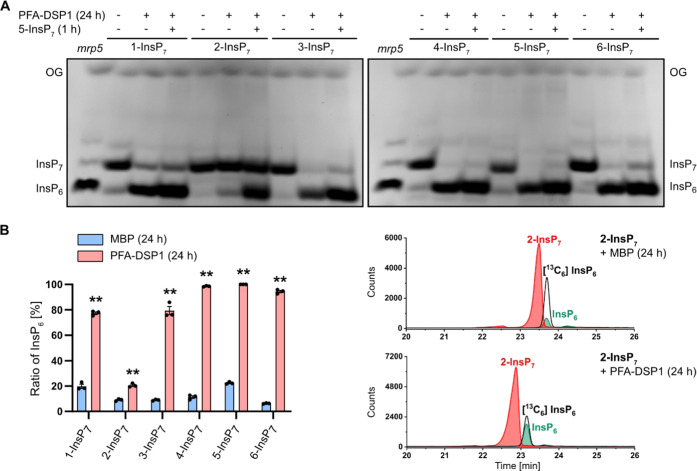
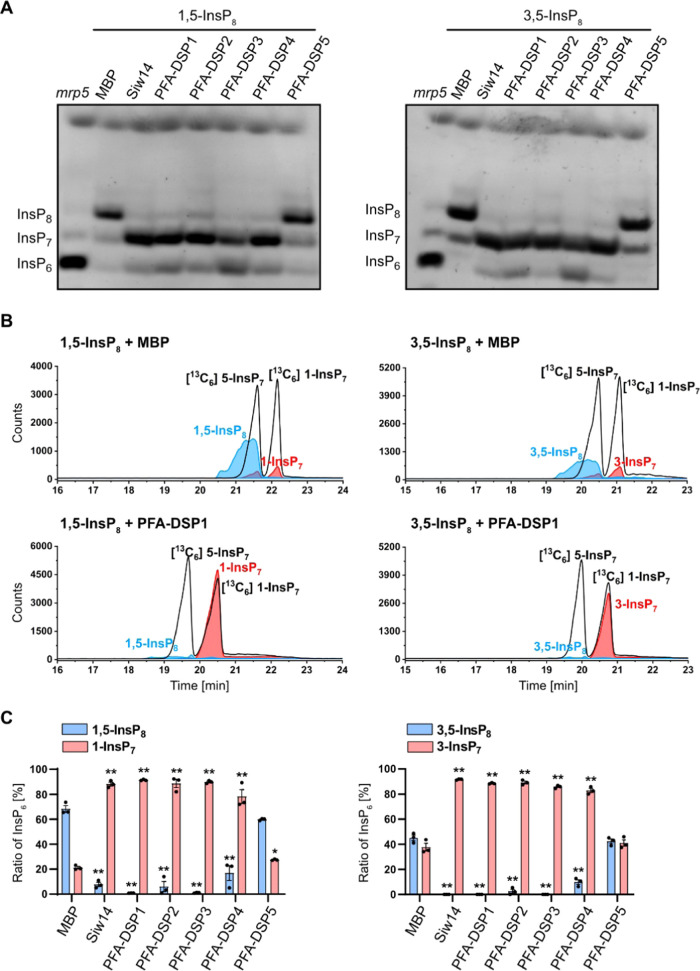
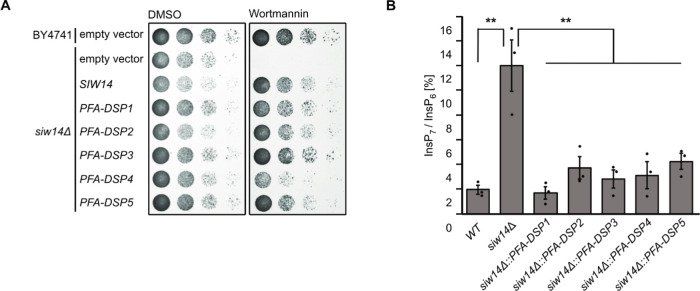
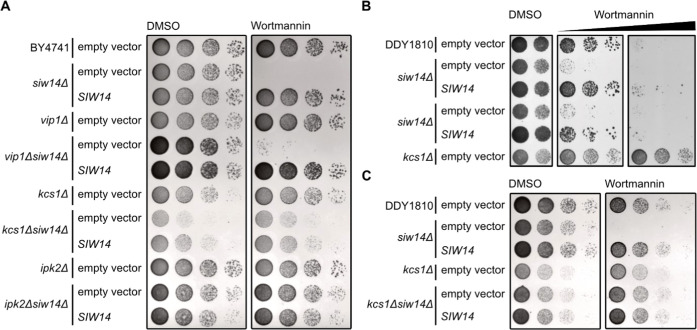
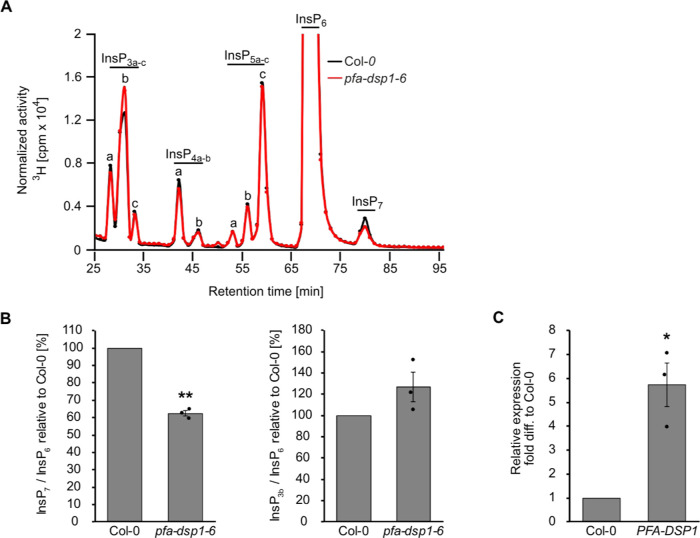
Inositol pyrophosphates are signaling molecules containing at least one phosphoanhydride bond that regulate a wide range of cellular processes in eukaryotes. With a cyclic array of phosphate esters and diphosphate groups around -inositol, these molecular messengers possess the highest charge density found in nature. Recent work deciphering inositol pyrophosphate biosynthesis in revealed important functions of these messengers in nutrient sensing, hormone signaling, and plant immunity. However, despite the rapid hydrolysis of these molecules in plant extracts, very little is known about the molecular identity of the phosphohydrolases that convert these messengers back to their inositol polyphosphate precursors. Here, we investigate whether Plant and Fungi Atypical Dual Specificity Phosphatases (PFA-DSP1-5) catalyze inositol pyrophosphate phosphohydrolase activity. We find that recombinant proteins of all five PFA-DSP homologues display phosphohydrolase activity with a high specificity for the 5-β-phosphate of inositol pyrophosphates and only minor activity against the β-phosphates of 4-InsP and 6-InsP. We further show that heterologous expression of PFA-DSP1-5 rescues wortmannin sensitivity and deranged inositol pyrophosphate homeostasis caused by the deficiency of the PFA-DSP-type inositol pyrophosphate phosphohydrolase Siw14 in yeast. Heterologous expression in leaves provided evidence that PFA-DSP1 also displays 5-β-phosphate-specific inositol pyrophosphate phosphohydrolase activity . Our findings lay the biochemical basis and provide the genetic tools to uncover the roles of inositol pyrophosphates in plant physiology and plant development.
肌醇六磷酸是一类含有至少一个磷酸酐键的信号分子,能够调节真核生物中的多种细胞过程。这些分子信使在肌醇周围形成环状的磷酸酯和二磷酸基团,具有自然界中发现的最高电荷密度。最近在揭示肌醇六磷酸生物合成的工作中,发现了这些信使在营养感应、激素信号和植物免疫中的重要功能。然而,尽管这些分子在植物提取物中迅速水解,但对于将这些信使转化回其肌醇多磷酸前体的磷酸水解酶的分子身份知之甚少。在这里,我们研究了植物和真菌非典型双特异性磷酸酶(PFA-DSP1-5)是否催化肌醇六磷酸磷酸水解酶活性。我们发现,所有五个 PFA-DSP 同源物的重组蛋白都表现出对肌醇六磷酸 5-β-磷酸的高特异性磷酸水解酶活性,而对 4-InsP 和 6-InsP 的β-磷酸的活性较小。我们进一步表明,PFA-DSP1-5 的异源表达挽救了wortmannin 敏感性和由酵母中 PFA-DSP 型肌醇六磷酸磷酸水解酶 Siw14 缺乏引起的肌醇六磷酸稳态失调。在拟南芥叶片中的异源表达提供了证据,表明 PFA-DSP1 还显示出 5-β-磷酸特异性肌醇六磷酸磷酸水解酶活性。我们的发现为揭示肌醇六磷酸在植物生理学和植物发育中的作用奠定了生化基础,并提供了遗传工具。