Department of Biomedical Sciences for Health, Università degli Studi di Milano, Via Luigi Mangiagalli 31, 20133, Milano, Italy.
Unit of Radiology, IRCCS Policlinico San Donato, Via Rodolfo Morandi 30, 20097, San Donato Milanese, Italy.
Eur Radiol. 2022 Nov;32(11):7388-7399. doi: 10.1007/s00330-022-08868-3. Epub 2022 Jun 1.
To evaluate the potential of contrast-enhanced mammography (CEM) for reducing the biopsy rate of screening recalls.
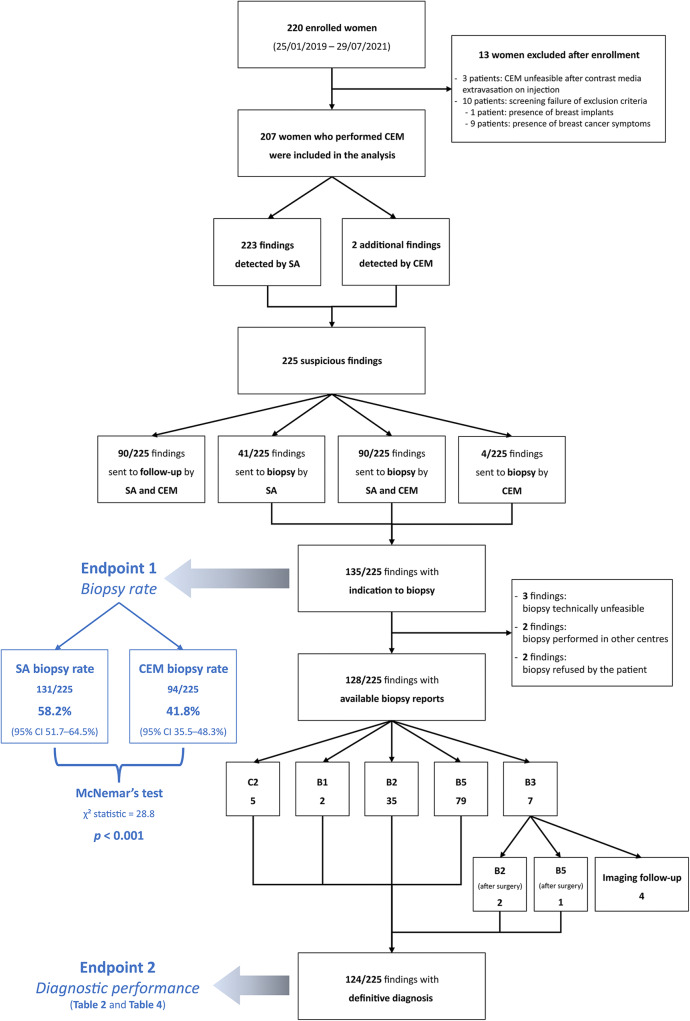
Recalled women were prospectively enrolled to undergo CEM alongside standard assessment (SA) through additional views, tomosynthesis, and/or ultrasound. Exclusion criteria were symptoms, implants, allergy to contrast agents, renal failure, and pregnancy. SA and CEM were independently evaluated by one of six radiologists, who recommended biopsy or 2-year follow-up. Biopsy rates according to SA or recombined CEM (rCEM) were compared with the McNemar's test. Diagnostic performance was calculated considering lesions with available final histopathology.
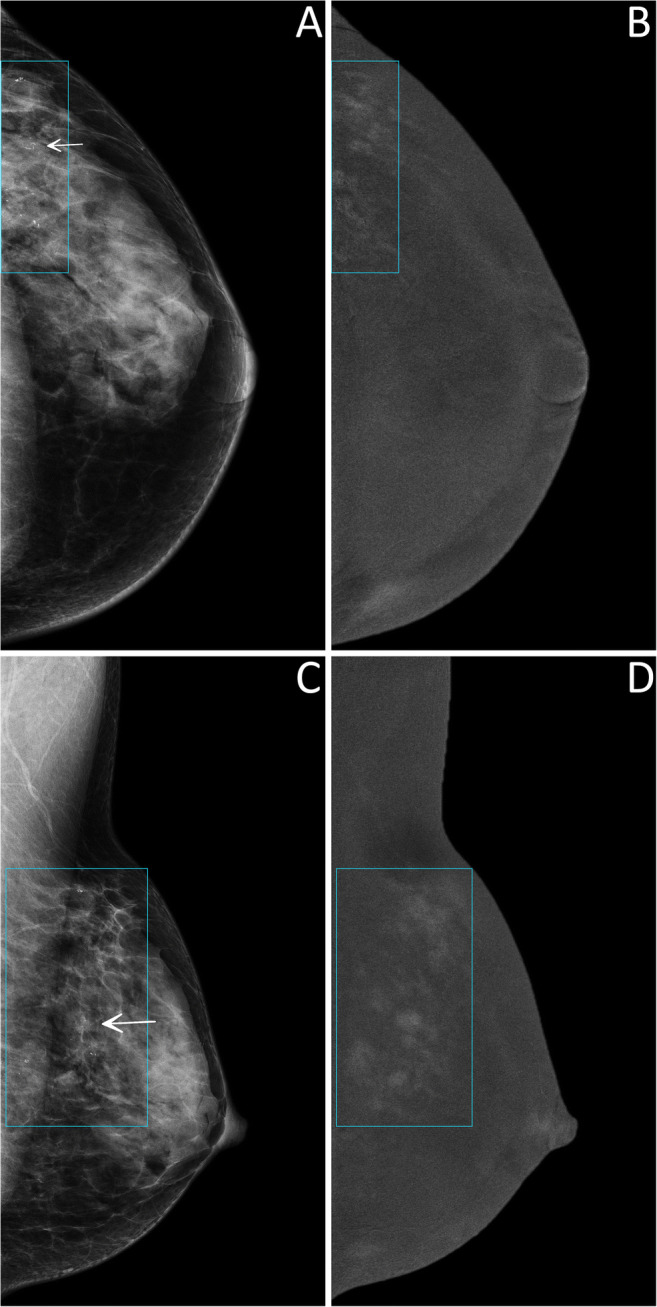
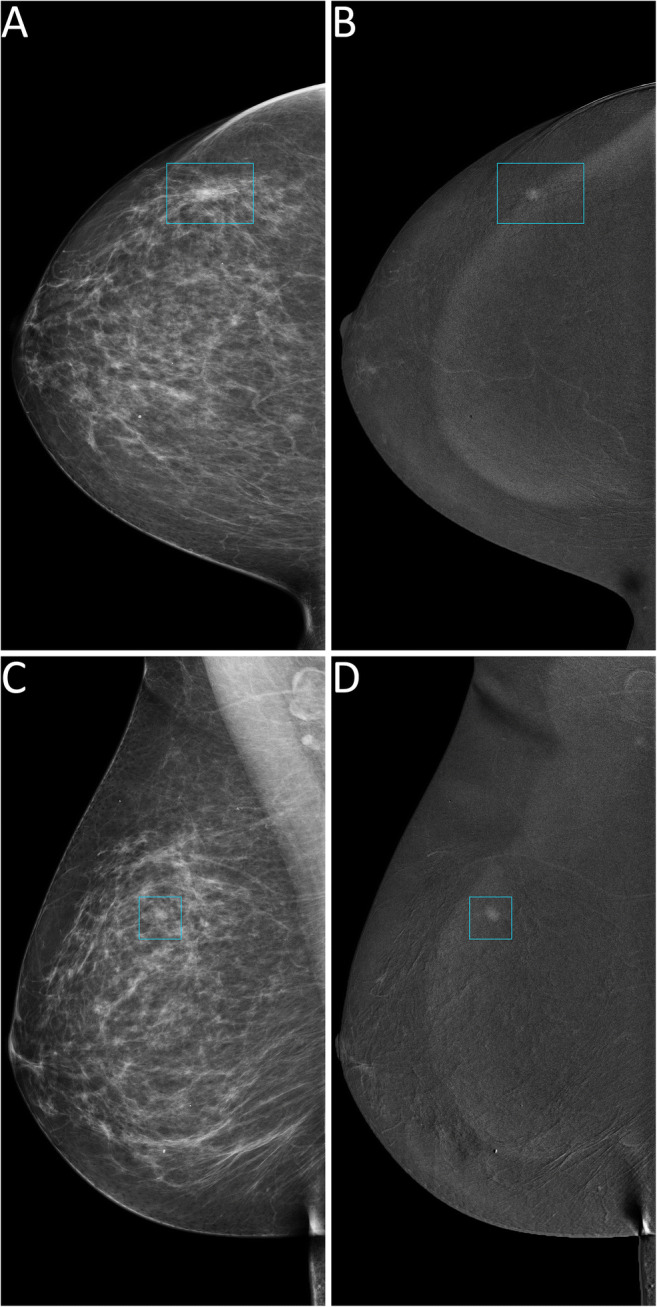
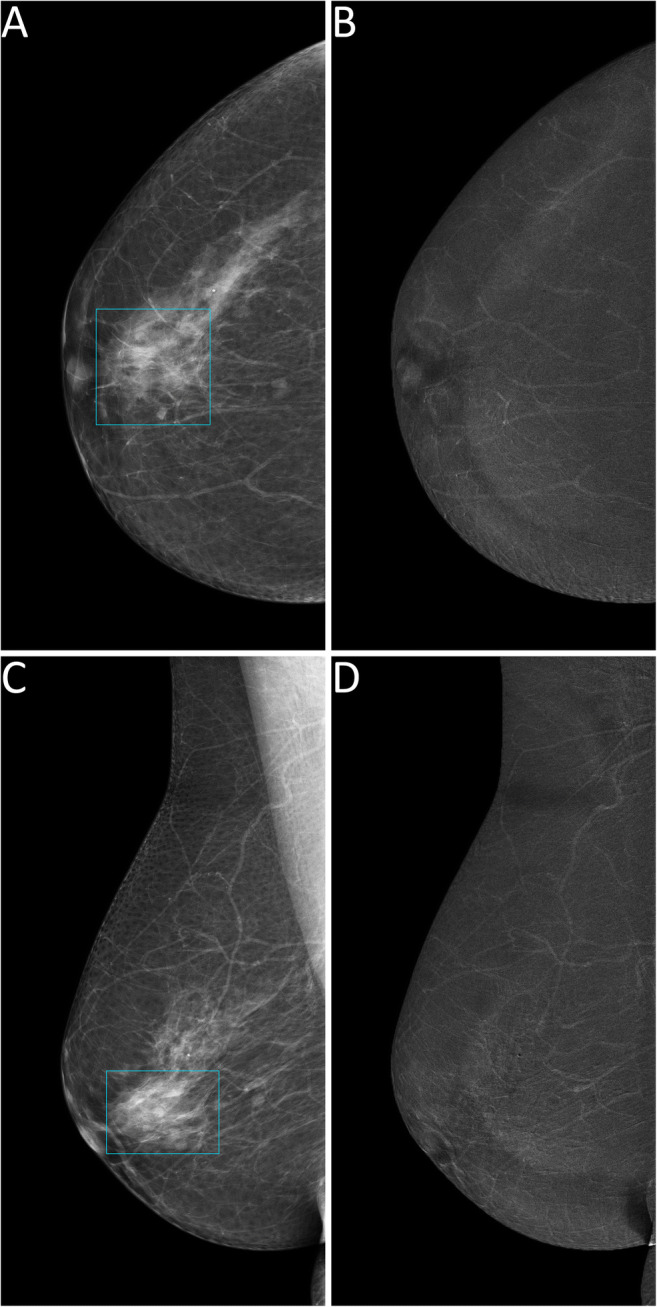
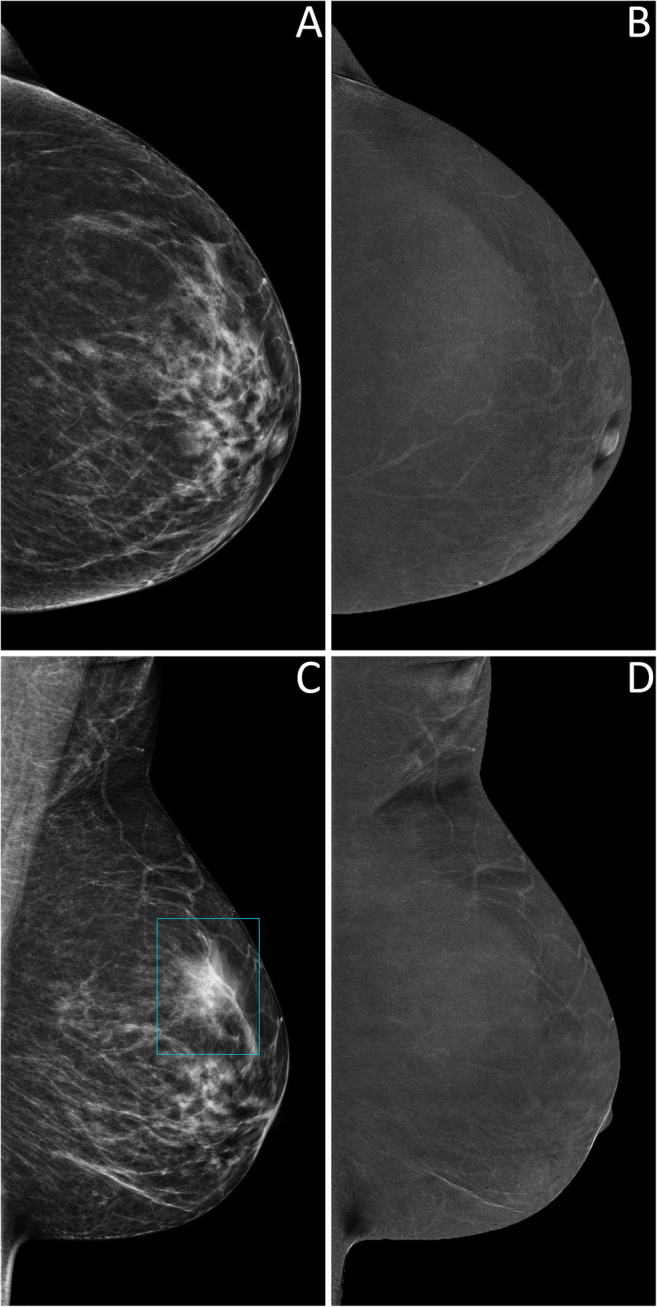
Between January 2019 and July 2021, 220 women were enrolled, 207 of them (median age 56.6 years) with 225 suspicious findings analysed. Three of 207 patients (1.4%) developed mild self-limiting adverse reactions to iodinated contrast agent. Overall, 135/225 findings were referred for biopsy, 90/225 by both SA and rCEM, 41/225 by SA alone and 4/225 by rCEM alone (2/4 being one DCIS and one invasive carcinoma). The rCEM biopsy rate (94/225, 41.8%, 95% CI 35.5-48.3%) was 16.4% lower (p < 0.001) than the SA biopsy rate (131/225, 58.2%, 95% CI 51.7-64.5%). Considering the 124/135 biopsies with final histopathology (44 benign, 80 malignant), rCEM showed a 93.8% sensitivity (95% CI 86.2-97.3%) and a 65.9% specificity (95% CI 51.1-78.1%), all 5 false negatives being ductal carcinoma in situ detectable as suspicious calcifications on low-energy images.
Compared to SA, the rCEM-based work-up would have avoided biopsy for 37/225 (16.4%) suspicious findings. Including low-energy images in interpretation provided optimal overall CEM sensitivity.
• The work-up of suspicious findings detected at mammographic breast cancer screening still leads to a high rate of unnecessary biopsies, involving between 2 and 6% of screened women. • In 207 recalled women with 225 suspicious findings, recombined images of contrast-enhanced mammography (CEM) showed a 93.8% sensitivity and a 65.9% specificity, all 5 false negatives being ductal carcinoma in situ detectable on low-energy images as suspicious calcifications. • CEM could represent an easily available one-stop shop option for the morphofunctional assessment of screening recalls, potentially reducing the biopsy rate by 16.4%.
评估对比增强乳腺摄影(CEM)在降低筛查召回活检率方面的潜力。
前瞻性纳入召回的女性,同时进行 CEM 检查和标准评估(SA),包括额外视图、断层合成和/或超声检查。排除标准为症状、植入物、造影剂过敏、肾衰竭和怀孕。由六名放射科医生中的一名独立评估 SA 和 CEM,并推荐活检或 2 年随访。比较 SA 或组合 CEM(rCEM)的活检率,并采用 McNemar 检验。考虑到具有可用最终组织病理学的病变,计算诊断性能。
2019 年 1 月至 2021 年 7 月,共纳入 220 名女性,225 例可疑病变中 207 例(中位年龄 56.6 岁)进行了分析。207 名患者中有 3 名(1.4%)出现轻微的自限性碘造影剂不良反应。总体而言,225 例可疑病变中有 135 例被推荐活检,90 例同时通过 SA 和 rCEM 推荐,41 例仅通过 SA 推荐,4 例仅通过 rCEM 推荐(4 例中 2 例为 DCIS 和 1 例浸润性癌)。rCEM 活检率(94/225,41.8%,95%CI 35.5-48.3%)比 SA 活检率(131/225,58.2%,95%CI 51.7-64.5%)低 16.4%(p<0.001)。考虑到 124 例具有最终组织病理学的活检(44 例良性,80 例恶性),rCEM 显示出 93.8%的敏感性(95%CI 86.2-97.3%)和 65.9%的特异性(95%CI 51.1-78.1%),所有 5 例假阴性均为导管原位癌,在低能图像上可表现为可疑钙化。
与 SA 相比,基于 rCEM 的检查可避免对 225 例可疑病变中的 37 例进行活检。在解释中纳入低能图像可提供最佳的整体 CEM 敏感性。
在乳腺 X 线筛查的可疑病变检查中,仍有很高比例的不必要活检,涉及 2%至 6%的筛查女性。
在 207 名有 225 例可疑病变的召回女性中,组合的 CEM 图像显示出 93.8%的敏感性和 65.9%的特异性,所有 5 例假阴性均为导管原位癌,在低能图像上可表现为可疑钙化。
CEM 可以作为筛查召回的形态功能评估的一种便捷的一站式选择,有可能将活检率降低 16.4%。