Cicco Sebastiano, Desantis Vanessa, Vacca Antonio, Cazzato Gerardo, Solimando Antonio G, Cirulli Anna, Noviello Silvia, Susca Cecilia, Prete Marcella, Brosolo Gabriele, Catena Cristiana, Lamanuzzi Aurelia, Saltarella Ilaria, Frassanito Maria Antonia, Cimmino Antonella, Ingravallo Giuseppe, Resta Leonardo, Ria Roberto, Montagnani Monica
Department of Biomedical Sciences and Human Oncology (DIMO), Unit of Internal Medicine and Clinical Oncology, University of Bari Aldo Moro Medical School, Bari, Italy.
Department of Biomedical Sciences and Human Oncology, Pharmacology Section, University of Bari Aldo Moro Medical School, Bari, Italy.
Front Med (Lausanne). 2022 May 16;9:863150. doi: 10.3389/fmed.2022.863150. eCollection 2022.
Takayasu Arteritis (TAK) increases vascular stiffness and arterial resistance. Atherosclerosis leads to similar changes. We investigated possible differences in cardiovascular remodeling between these diseases and whether the differences are correlated with immune cell expression.
Patients with active TAK arteritis were compared with age- and sex-matched atherosclerotic patients (Controls). In a subpopulation of TAK patients, Treg/Th17 cells were measured before (T0) and after 18 months (T18) of infliximab treatment. Echocardiogram, supraaortic Doppler ultrasound, and lymphocytogram were performed in all patients. Histological and immunohistochemical changes of the vessel wall were evaluated as well.
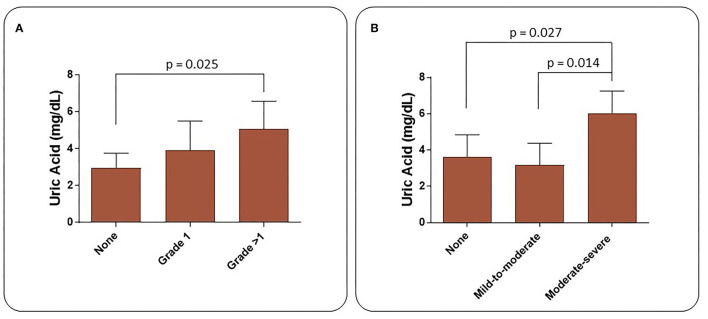
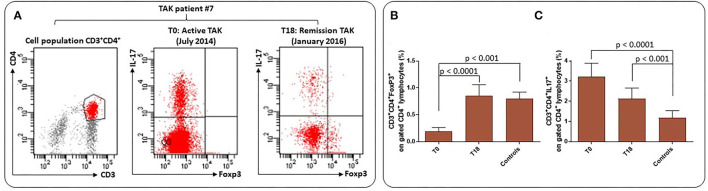
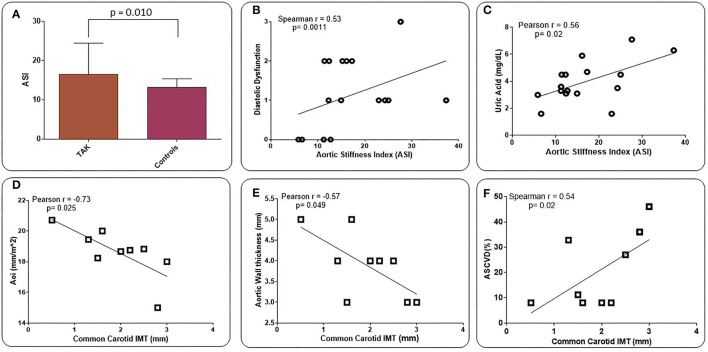
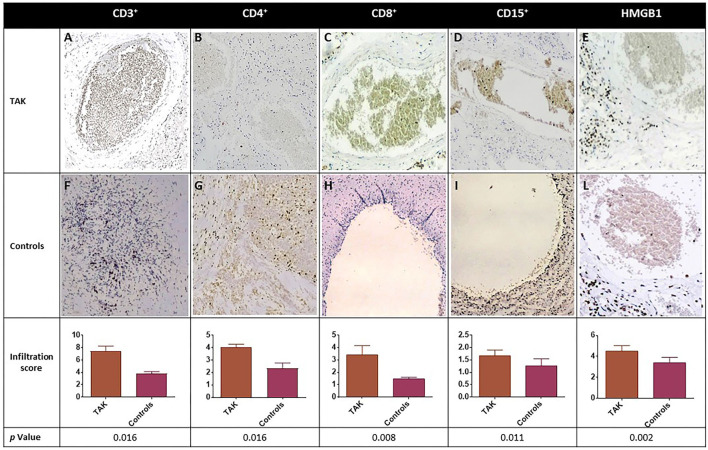
TAK patients have increased aortic valve dysfunction and diastolic dysfunction. The degree of dysfunction appears associated with uric acid levels. A significant increase in aortic stiffness was also observed and associated with levels of peripheral T lymphocytes. CD3 CD4 cell infiltrates were detected in the vessel wall samples of TAK patients, whose mean percentage of Tregs was lower than Controls at T0, but increased significantly at T18. Opposite behavior was observed for Th17 cells. Finally, TAK patients were found to have an increased risk of atherosclerotic cardiovascular disease (ASCVD).
Our data suggest that different pathogenic mechanisms underlie vessel damage, including atherosclerosis, in TAK patients compared with Controls. The increased risk of ASCVD in TAK patients correlates directly with the degree of inflammatory cell infiltration in the vessel wall. Infliximab restores the normal frequency of Tregs/Th17 in TAK patients and allows a possible reduction of steroids and immunosuppressants.
大动脉炎(TAK)会增加血管僵硬度和动脉阻力。动脉粥样硬化也会导致类似变化。我们研究了这些疾病在心血管重塑方面可能存在的差异,以及这些差异是否与免疫细胞表达相关。
将活动性大动脉炎患者与年龄和性别匹配的动脉粥样硬化患者(对照组)进行比较。在大动脉炎患者的一个亚组中,在英夫利昔单抗治疗前(T0)和治疗18个月后(T18)测量调节性T细胞/辅助性T细胞17(Treg/Th17)。对所有患者进行超声心动图、主动脉弓上多普勒超声和淋巴细胞计数检查。还评估了血管壁的组织学和免疫组化变化。
大动脉炎患者主动脉瓣功能障碍和舒张功能障碍增加。功能障碍程度似乎与尿酸水平相关。还观察到主动脉僵硬度显著增加,并与外周T淋巴细胞水平相关。在大动脉炎患者的血管壁样本中检测到CD3 CD4细胞浸润,其Tregs的平均百分比在T0时低于对照组,但在T18时显著增加。Th17细胞则表现出相反的变化。最后,发现大动脉炎患者发生动脉粥样硬化性心血管疾病(ASCVD)的风险增加。
我们的数据表明,与对照组相比,大动脉炎患者血管损伤(包括动脉粥样硬化)的潜在致病机制不同。大动脉炎患者ASCVD风险增加与血管壁炎症细胞浸润程度直接相关。英夫利昔单抗可恢复大动脉炎患者Tregs/Th17的正常比例,并可能减少类固醇和免疫抑制剂的使用。