Department of Genomic Medicine.
Department of Cancer Biology, and.
JCI Insight. 2022 Jun 22;7(12):e148990. doi: 10.1172/jci.insight.148990.
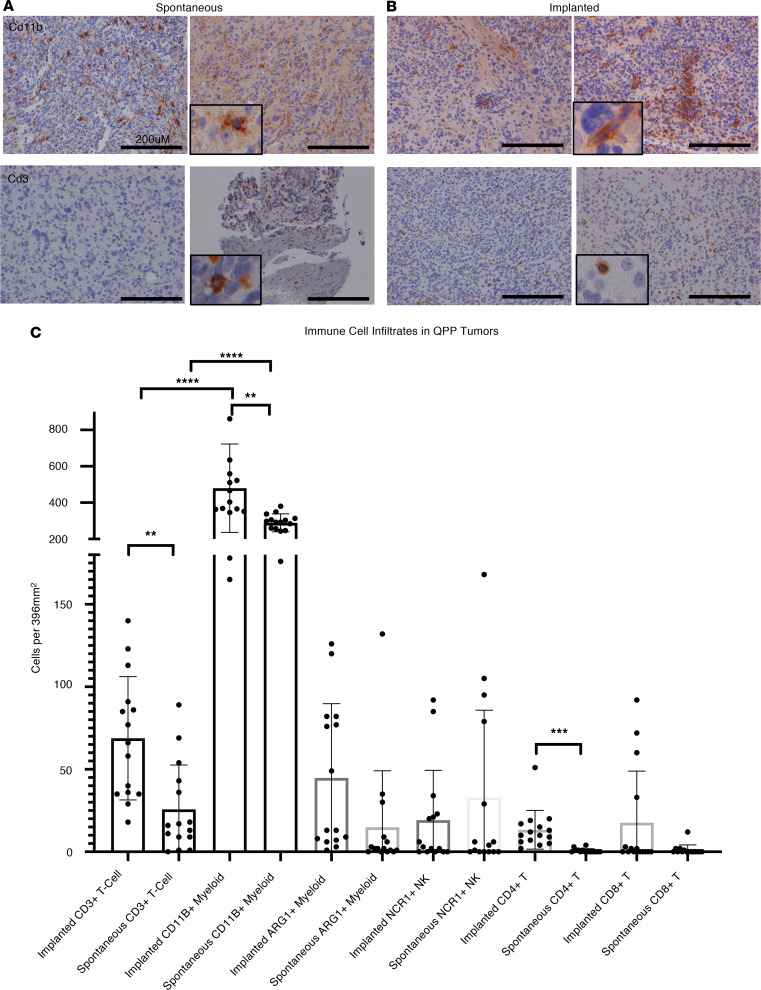
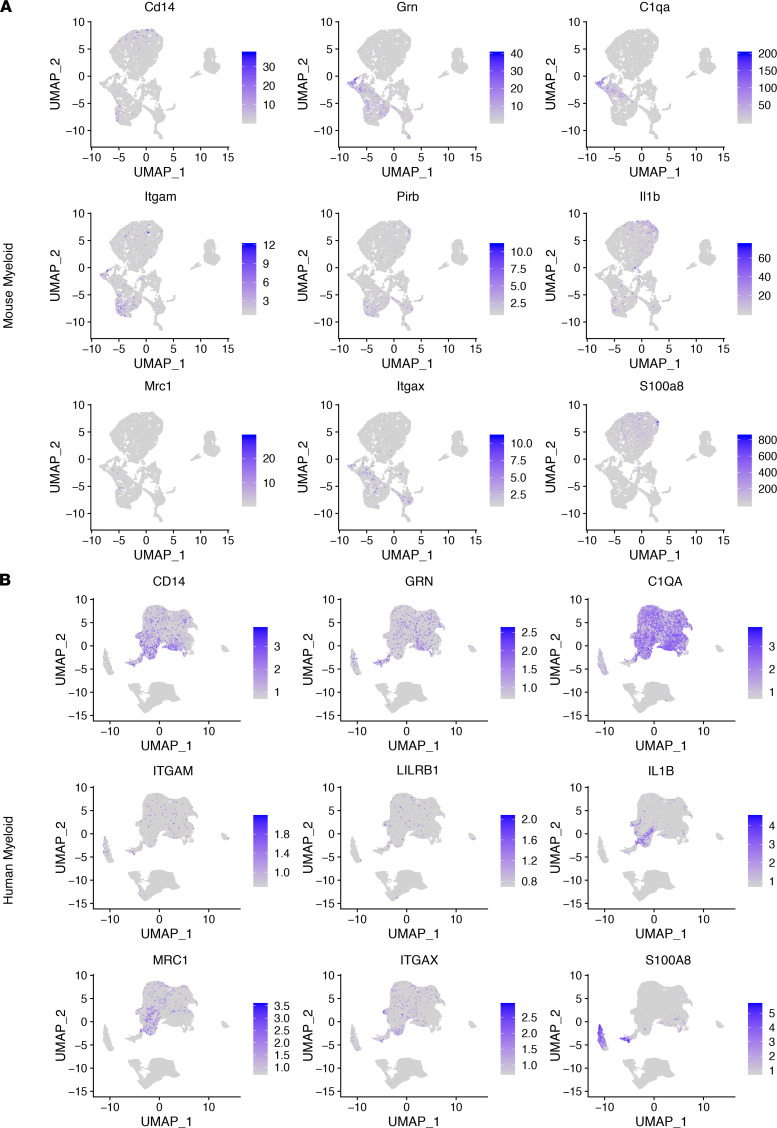
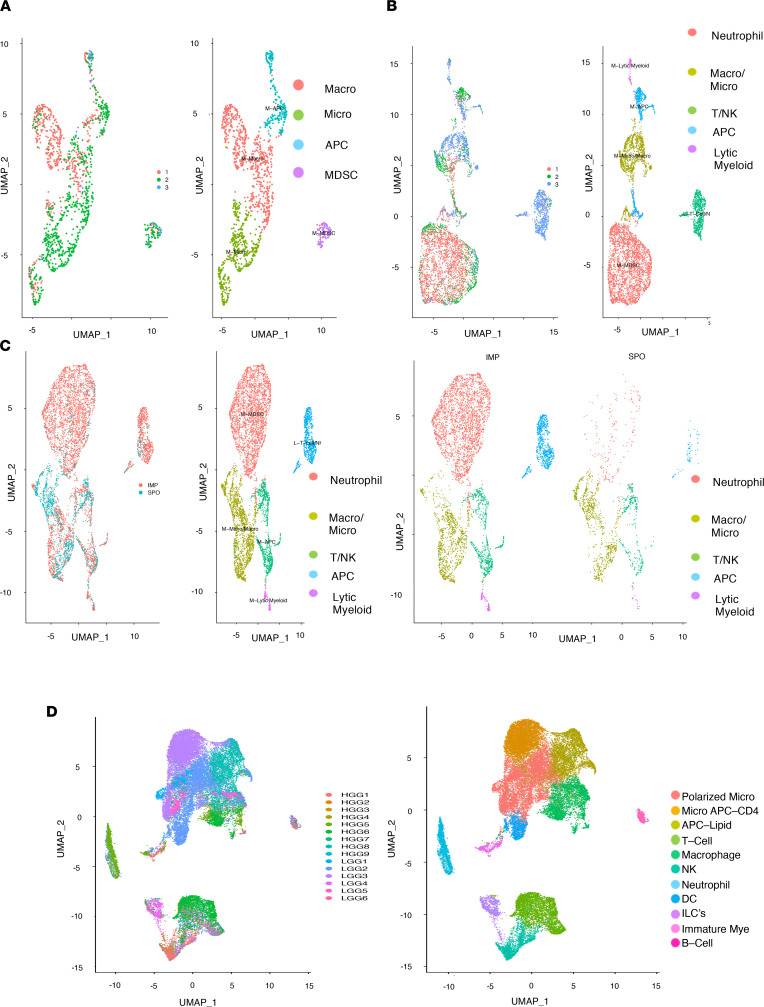
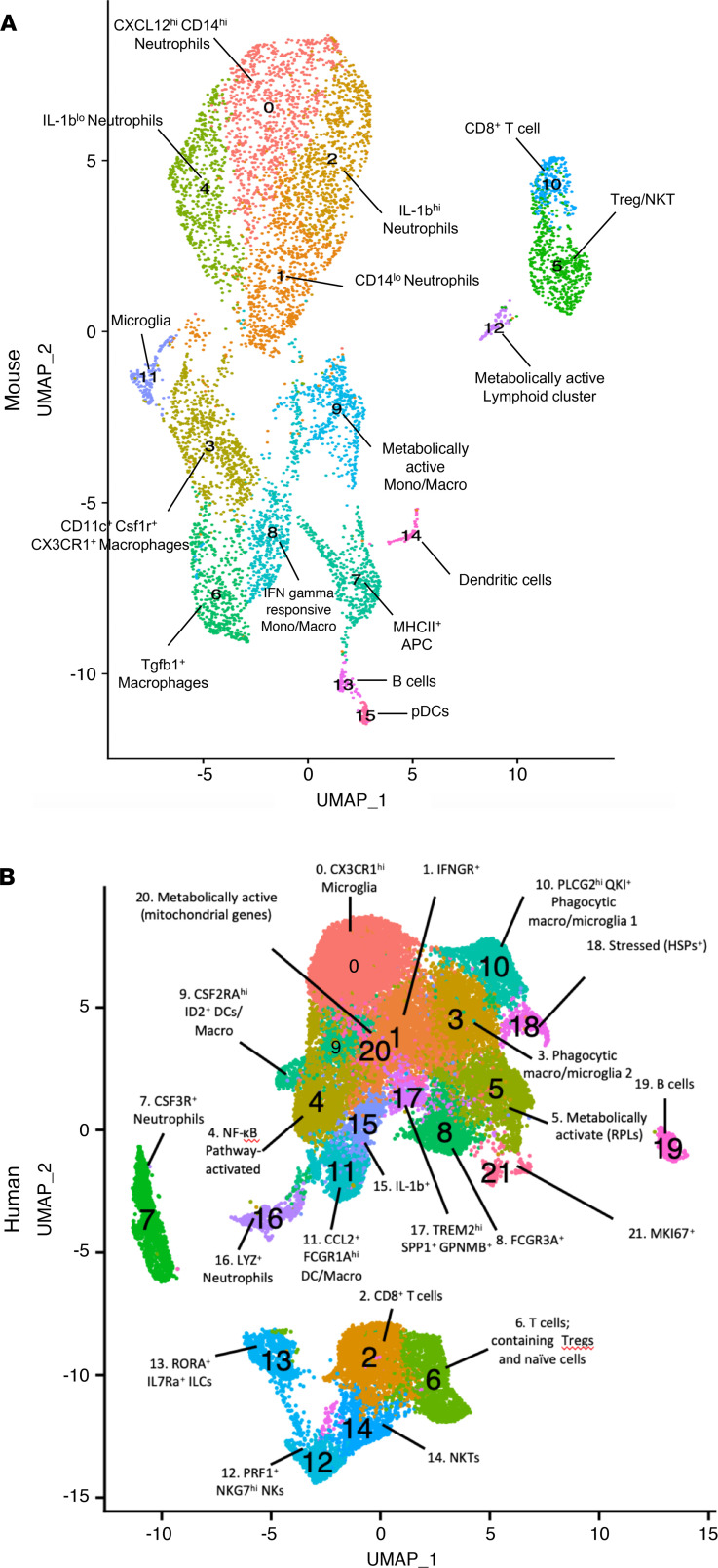
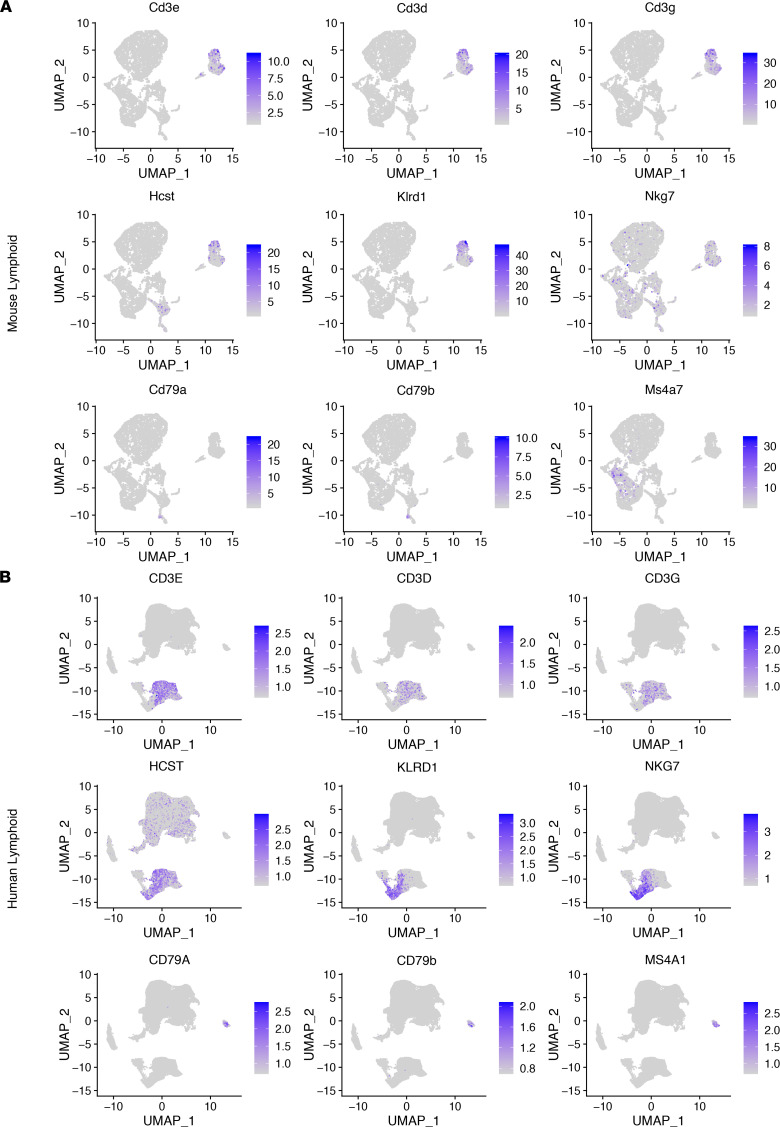
Novel therapeutic strategies targeting glioblastoma (GBM) often fail in the clinic, partly because preclinical models in which hypotheses are being tested do not recapitulate human disease. To address this challenge, we took advantage of our previously developed spontaneous Qk/Trp53/Pten (QPP) triple-knockout model of human GBM, comparing the immune microenvironment of QPP mice with that of patient-derived tumors to determine whether this model provides opportunity for gaining insights into tumor physiopathology and preclinical evaluation of therapeutic agents. Immune profiling analyses and single-cell sequencing of implanted and spontaneous tumors from QPP mice and from patients with glioma revealed intratumoral immune components that were predominantly myeloid cells (e.g., monocytes, macrophages, and microglia), with minor populations of T, B, and NK cells. When comparing spontaneous and implanted mouse samples, we found more neutrophils and T and NK cells in the implanted model. Neutrophils and T and NK cells were increased in abundance in samples derived from human high-grade glioma compared with those derived from low-grade glioma. Overall, our data demonstrate that our implanted and spontaneous QPP models recapitulate the immunosuppressive myeloid-dominant nature of the tumor microenvironment of human gliomas. Our model provides a suitable tool for investigating the complex immune compartment of gliomas.
针对胶质母细胞瘤(GBM)的新型治疗策略在临床上往往失败,部分原因是正在测试假设的临床前模型不能再现人类疾病。为了应对这一挑战,我们利用先前开发的自发性 Qk/Trp53/Pten(QPP)三重敲除人类 GBM 模型,将 QPP 小鼠的免疫微环境与患者来源的肿瘤进行比较,以确定该模型是否为深入了解肿瘤病理生理学和治疗药物的临床前评估提供了机会。对 QPP 小鼠和脑胶质瘤患者的植入和自发肿瘤进行免疫分析和单细胞测序,揭示了肿瘤内免疫成分主要是髓样细胞(例如单核细胞、巨噬细胞和小胶质细胞),T、B 和 NK 细胞较少。当比较自发和植入的小鼠样本时,我们发现植入模型中的中性粒细胞和 T 和 NK 细胞更多。与低级别胶质瘤相比,源自人类高级别胶质瘤的样本中中性粒细胞和 T 和 NK 细胞的丰度增加。总体而言,我们的数据表明,我们的植入和自发性 QPP 模型再现了人类胶质母细胞瘤肿瘤微环境中免疫抑制的髓样细胞主导性质。我们的模型为研究胶质瘤复杂的免疫区室提供了一个合适的工具。