Meshaal Safa, Ei Hawary Rabab, Eldash Alia, Erfan Aya, Abd Elaziz Dalia, Alkady Radwa, Lotfy Sohilla, Galal Nermeen, Boutros Jeannette, Elmarsafy Aisha
Clinical and Chemical Pathology Department, Faculty of Medicine, Cairo University, Cairo, 11562, Egypt.
Pediatric Department, Faculty of Medicine, Cairo University, Cairo, Egypt.
Allergy Asthma Clin Immunol. 2022 Jun 2;18(1):45. doi: 10.1186/s13223-022-00688-w.
Human inborn errors of immunity (IEI) are a group of inherited genetic disorders of the immune system. IEI Patients suffer from severe repeated infections, autoimmunity, lymphadenopathy and/or increased susceptibility to malignancies. IEI are due to absence, disproportion, or loss of function of immune cells; mostly inherited in autosomal recessive manner, hence are more common in countries with high rate of consanguinity. Definite diagnosis of IEI is achieved by genetic analysis, however it is not always available.
to report on different IEI categories and impact of expanding the use of flow cytometry (FCM) in diagnosis, categorization and follow up of IEI patients in a highly consanguineous population.
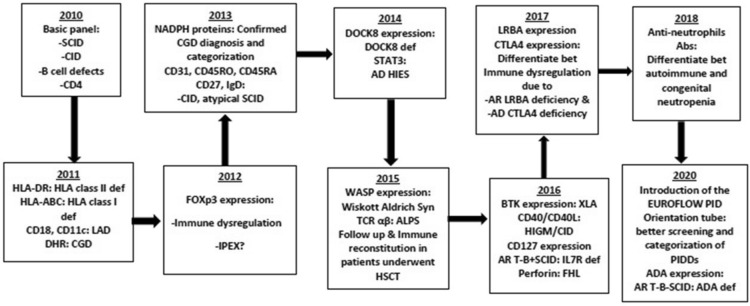
Retrospective chart review on different IEI categories diagnosed at the primary immunodeficiency center in Cairo University Specialized Pediatric hospital from 2011 to 2021 based on expanding the use of FCM.
1510 IEI patients were diagnosed; 480 were diagnosed genetically with FMF, 11 with cystic fibrosis and 1019 patients were diagnosed with other IEI disorders. Phagocytic defects were the commonest (30%) followed by severe combined immunodeficiency (22%) and combined immunodeficiency (18.3%). FCM testing properly diagnosed and categorized 73% of the cases.
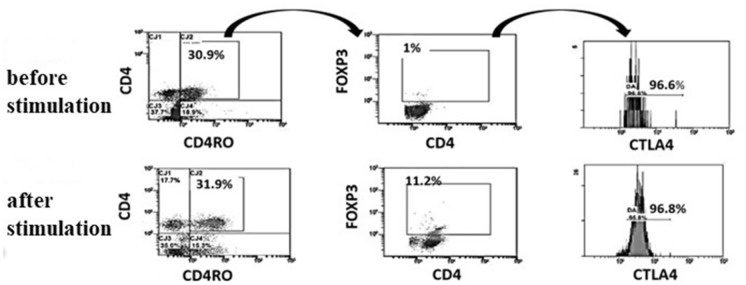
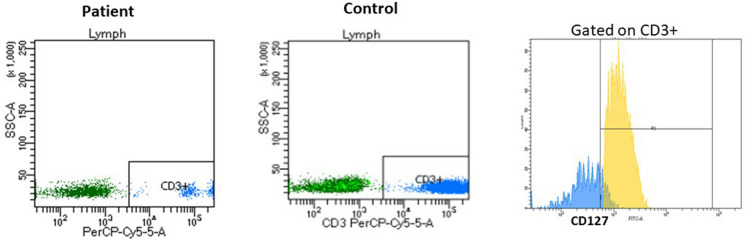
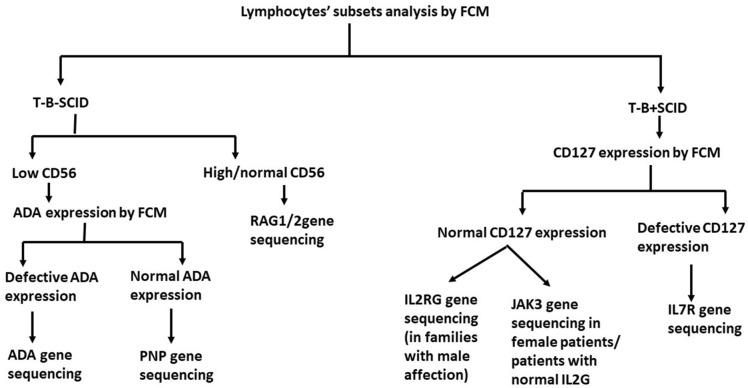
Using multi-color FCM to evaluate immune cells populations, subpopulations, functions, and intracellular proteins expression is proved a useful cost-effective method for screening, categorization and follow up of IEI patients. FCM can improve the diagnosis of IEI significantly when tests are properly targeted and well designed. This study presents a 10-year experience in diagnosis of IEI using FCM at a tertiary referral center in a setting of limited resources and yet high prevalence of IEI.
人类遗传性免疫缺陷病(IEI)是一组免疫系统的遗传性基因疾病。IEI患者遭受严重的反复感染、自身免疫、淋巴结病和/或对恶性肿瘤易感性增加。IEI是由于免疫细胞缺失、比例失调或功能丧失所致;大多以常染色体隐性方式遗传,因此在近亲结婚率高的国家更为常见。IEI的明确诊断通过基因分析实现,但并非总能进行。
报告不同类型的IEI以及在一个近亲结婚率高的人群中扩大使用流式细胞术(FCM)对IEI患者诊断、分类和随访的影响。
对2011年至2021年在开罗大学专科医院儿科初级免疫缺陷中心诊断的不同类型IEI进行回顾性病历审查,审查基于扩大FCM的使用。
共诊断出1510例IEI患者;480例通过基因诊断为家族性地中海热(FMF),11例为囊性纤维化,1019例诊断为其他IEI疾病。吞噬缺陷最为常见(30%),其次是严重联合免疫缺陷(22%)和联合免疫缺陷(18.3%)。FCM检测正确诊断并分类了73%的病例。
使用多色FCM评估免疫细胞群体、亚群、功能和细胞内蛋白质表达,被证明是一种用于IEI患者筛查、分类和随访的有用且具有成本效益的方法。当检测目标明确且设计良好时,FCM可显著改善IEI的诊断。本研究展示了在资源有限但IEI患病率高的环境下,一家三级转诊中心使用FCM诊断IEI的10年经验。