Institute of Legal Medicine, Medical University of Innsbruck, Müllerstraße 44, 6020, Innsbruck, Austria.
Forensic Physics and Ballistics, Institute of Forensic Medicine, University of Bern, Bern, Switzerland.
Int J Legal Med. 2023 Mar;137(2):587-593. doi: 10.1007/s00414-022-02842-w. Epub 2022 Jun 3.
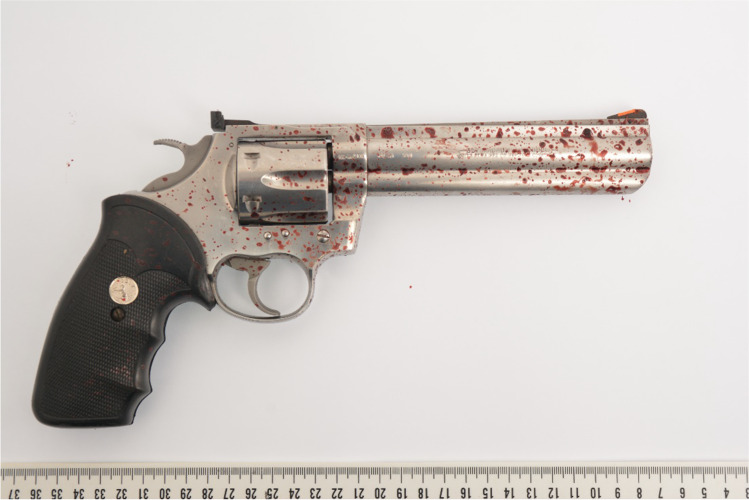
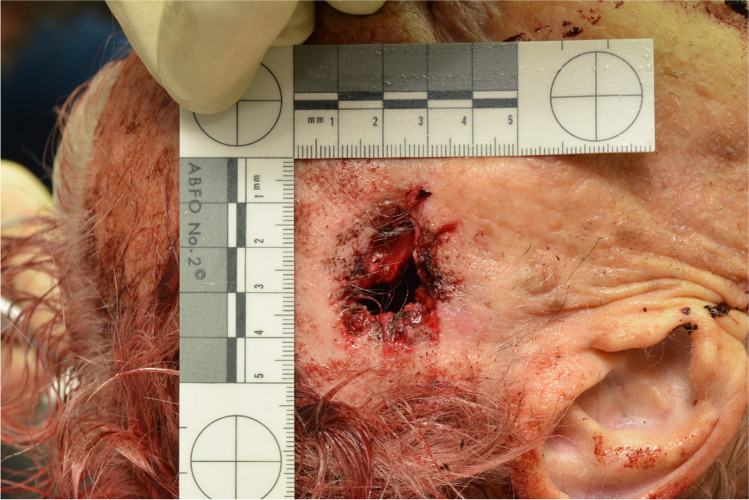
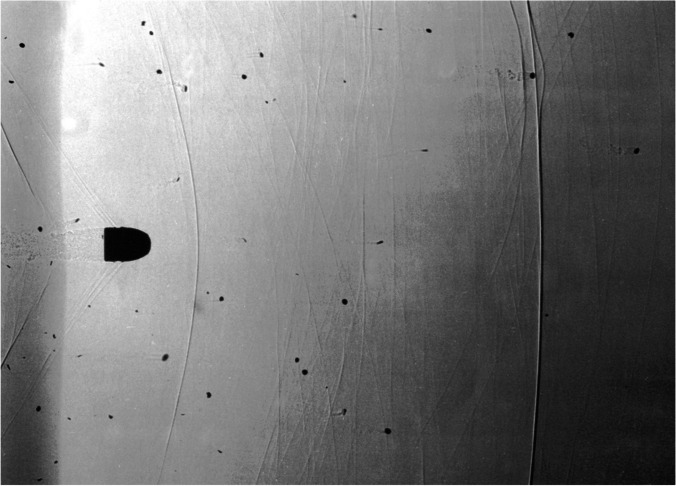
Gunshot residues (GSRs) play an important role in forensic investigations of gun-related violence. The presence of GSRs has been described to help to identify the bullet entry area, as it was supposed not to be found at exit wounds. This report details the suicidal headshot of an 84-year-old male where unburned tube-like, cuboid and flake-formed powder particles have been found not only at the inside of the muzzle but also circular around the exit wound. With very short-barrelled weapons, it must be expected that part of the propellant charge leaves the barrel unburned behind the bullet. In contrast to that, the barrel length of the used weapon should lead to a complete burn-up of powder particles. The surprisingly large number of unburned powder particles present at the exit wound of the injury gave reason for further investigation to understand the underlying ballistic aspects and outlines the importance of having a close look at incidence scene photos during an investigation.
射击残留物(GSR)在与枪支暴力有关的法医调查中起着重要作用。据描述,GSR 的存在有助于确定子弹进入区域,因为据说在出口伤口处不应发现 GSR。本报告详细介绍了一起 84 岁男性的自杀性头部枪击案,在枪口内部以及圆形出口伤口周围不仅发现了未燃烧的管状、立方体形和片状粉末颗粒,而且还发现了未燃烧的管状、立方体形和片状粉末颗粒。对于短枪管武器,必须预期部分推进剂装药会在子弹后面未燃烧地离开枪管。相比之下,所使用武器的枪管长度应该会导致粉末颗粒完全燃烧。令人惊讶的是,在伤口的出口处发现了大量未燃烧的粉末颗粒,这促使进一步调查以了解潜在的弹道方面,并强调了在调查过程中仔细查看现场照片的重要性。