Mallinckrodt Institute of Radiology, Washington University School of Medicine, 510 S Kingshighway Blvd, St. Louis, USA.
Department of Cancer Imaging, Peter MacCallum Cancer Centre, 305 Grattan Street, Melbourne, Australia.
Cancer Imaging. 2022 Jun 3;22(1):25. doi: 10.1186/s40644-022-00465-3.
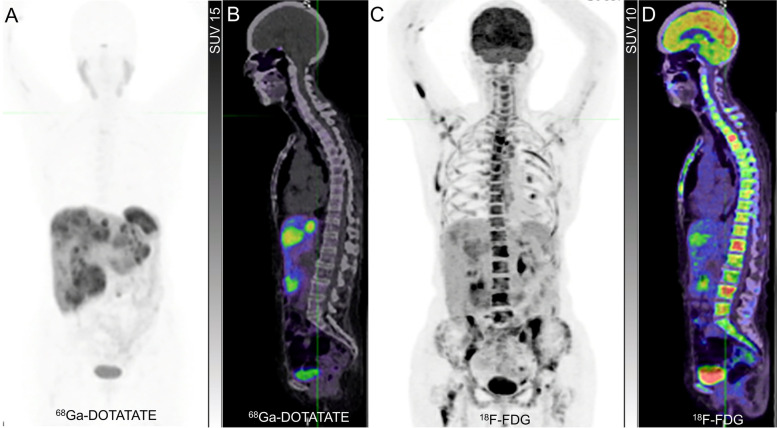
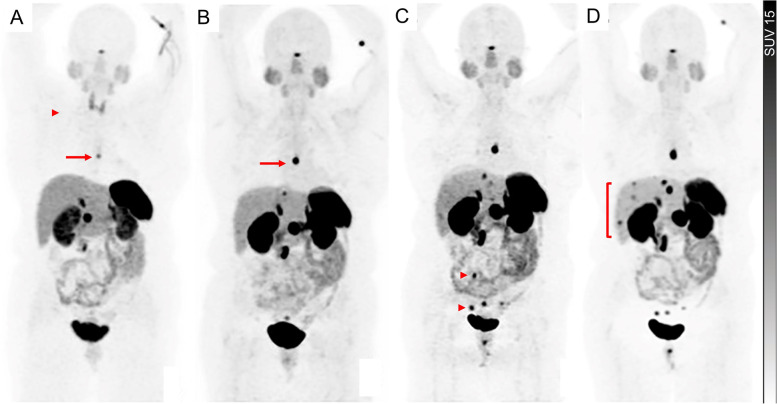
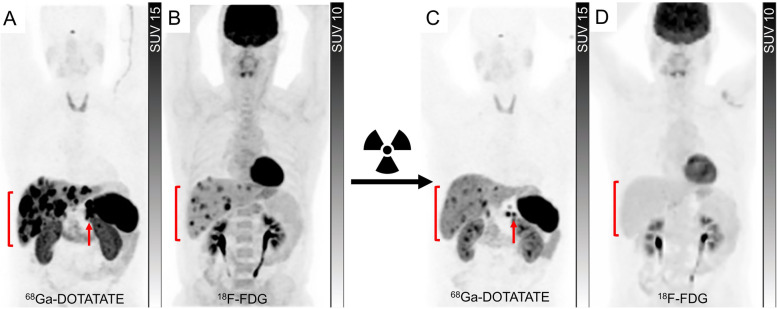
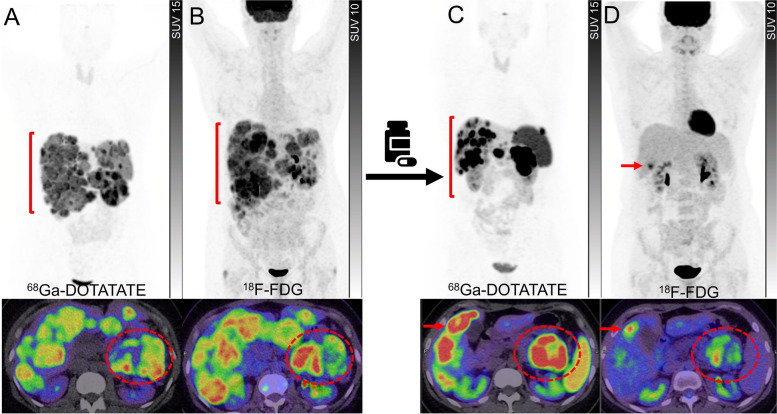
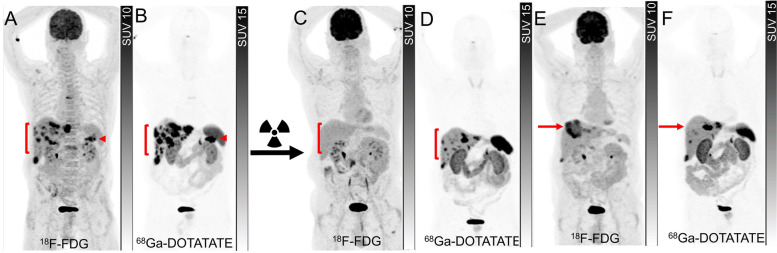
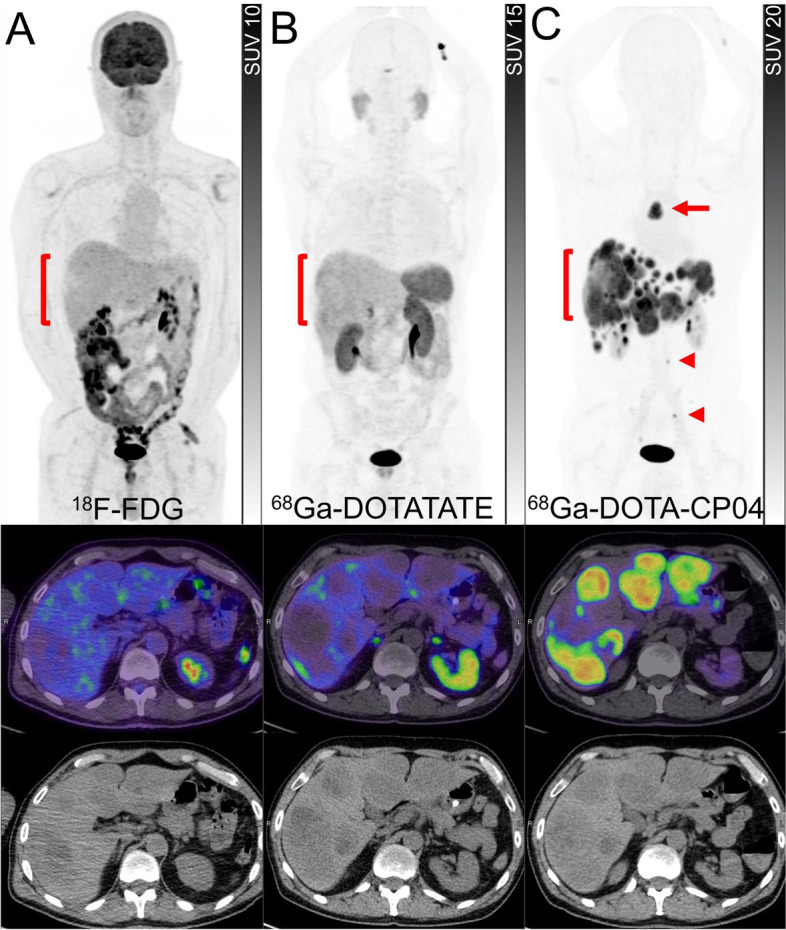
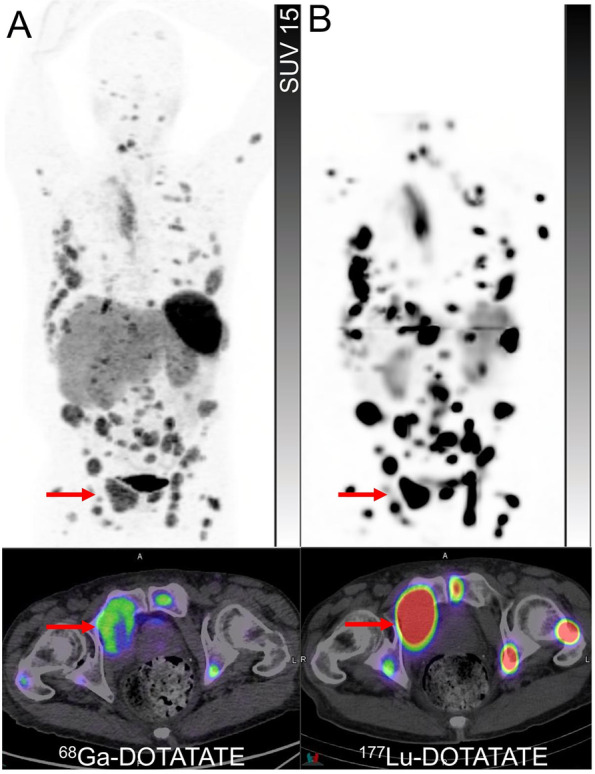
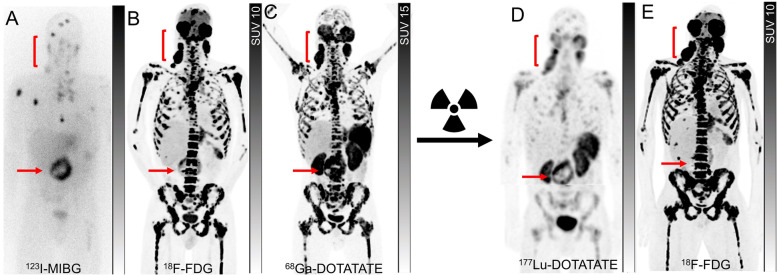
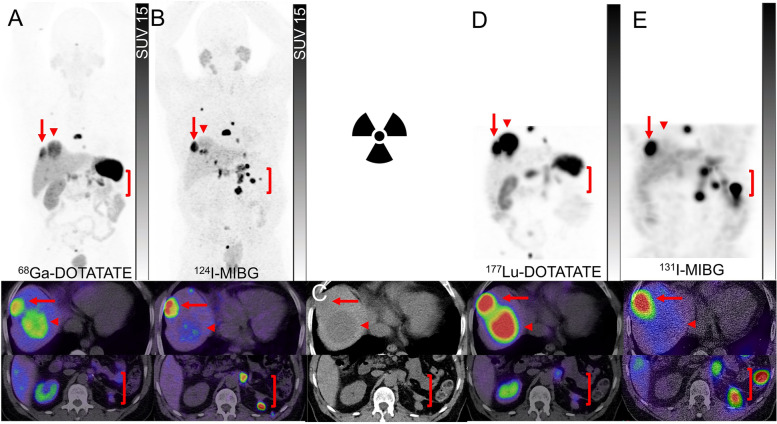
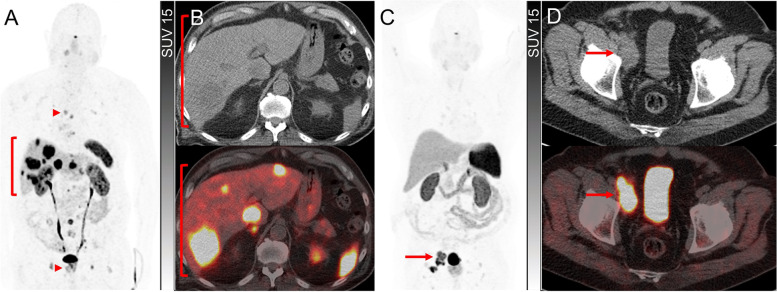
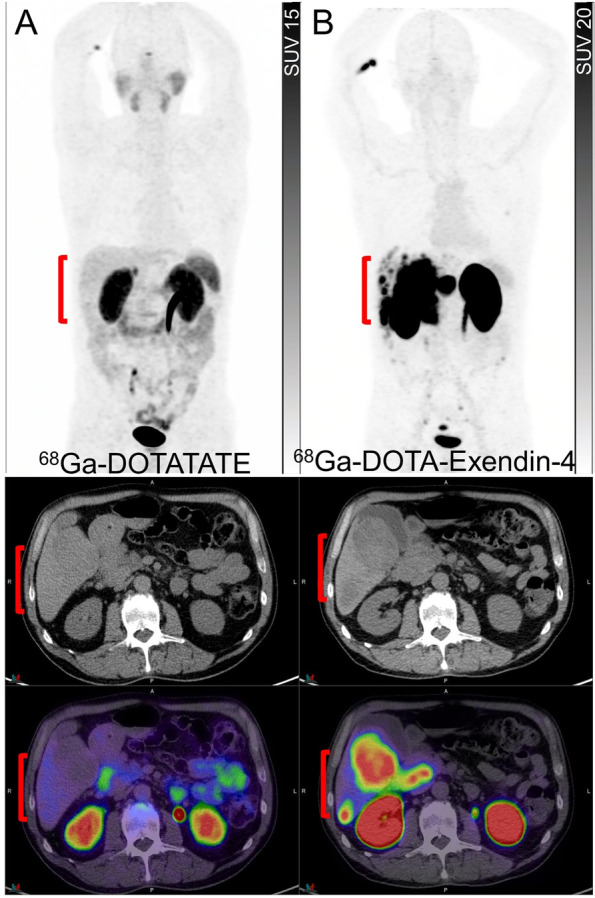
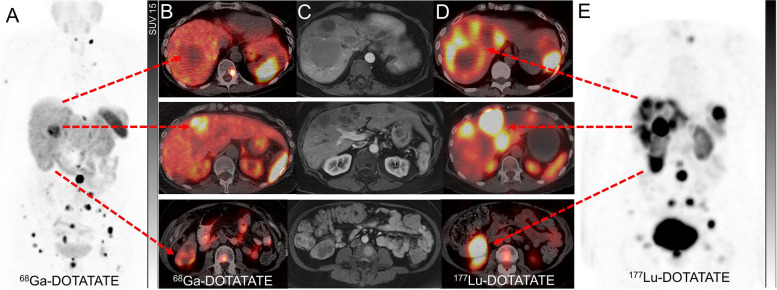
Neuroendocrine neoplasia (NEN) is an umbrella term that includes a widely heterogeneous disease group including well-differentiated neuroendocrine tumours (NETs), and aggressive neuroendocrine carcinomas (NECs). The site of origin of the NENs is linked to the intrinsic tumour biology and is predictive of the disease course. It is understood that NENs demonstrate significant biologic heterogeneity which ultimately translates to widely varying clinical presentations, disease course and prognosis. Thus, significant emphasis is laid on the pre-therapy evaluation of markers that can help predict tumour behavior and dynamically monitors the response during and after treatment. Most well-differentiated NENs express somatostatin receptors (SSTRs) which make them appropriate for peptide receptor radionuclide therapy (PRRT). However, the treatment outcomes of PRRT depend heavily on the adequacy of patient selection by molecular imaging phenotyping not only utilizing pre-treatment SSTR PET but F-Fluorodeoxyglucose (F-FDG) PET to provide insights into the intra- or inter-tumoural heterogeneity of the metastatic disease. Molecular imaging phenotyping may go beyond patient selection and provide useful information during and post-treatment for monitoring of temporal heterogeneity of the disease and dynamically risk-stratify patients. In addition, advances in the understanding of genomic-phenotypic classifications of pheochromocytomas and paragangliomas led to an archetypical example in precision medicine by utilizing molecular imaging phenotyping to guide radioligand therapy. Novel non-SSTR based peptide receptors have also been explored diagnostically and therapeutically to overcome the tumour heterogeneity. In this paper, we review the current molecular imaging modalities that are being utilized for the characterization of the NENs with special emphasis on their role in patient selection for radioligand therapy.
神经内分泌肿瘤(NEN)是一个涵盖广泛异质性疾病组的术语,包括分化良好的神经内分泌肿瘤(NET)和侵袭性神经内分泌癌(NEC)。NEN 的起源部位与内在肿瘤生物学有关,并可预测疾病进程。据了解,NEN 表现出显著的生物学异质性,最终导致临床表现、疾病过程和预后差异很大。因此,非常重视治疗前评估能够帮助预测肿瘤行为的标志物,并在治疗期间和治疗后动态监测反应。大多数分化良好的 NEN 表达生长抑素受体(SSTRs),这使它们适合肽受体放射性核素治疗(PRRT)。然而,PRRT 的治疗效果在很大程度上取决于通过分子成像表型进行患者选择的充分性,不仅利用治疗前 SSTR PET,还利用 F-氟脱氧葡萄糖(F-FDG)PET 提供对转移性疾病的肿瘤内或肿瘤间异质性的深入了解。分子成像表型可能不仅限于患者选择,还可以在治疗期间和治疗后提供有用的信息,以监测疾病的时间异质性并动态风险分层患者。此外,对嗜铬细胞瘤和副神经节瘤的基因组-表型分类的理解的进展通过利用分子成像表型来指导放射性配体治疗,为精准医学提供了一个典范。新型非 SSTR 肽受体也已被探索用于诊断和治疗,以克服肿瘤异质性。本文综述了目前用于 NEN 特征描述的分子成像方式,特别强调它们在放射性配体治疗患者选择中的作用。