Rovira Eric, Moreno Beatriz, Razquin Nerea, Hjerpe Roland, Gonzalez-Lopez Monika, Barrio Rosa, Ruiz de Los Mozos Igor, Ule Jernej, Pastor Fernando, Blazquez Lorea, Fortes Puri
Department of Gene Therapy and Regulation of Gene Expression, Center for Applied Medical Research (CIMA), University of Navarra (UNAV), 31008 Pamplona, Spain.
Department of Molecular Therapy, Aptamer Unit, Center for Applied Medical Research (CIMA), University of Navarra (UNAV), 31008 Pamplona, Spain.
Mol Ther Nucleic Acids. 2022 May 10;28:831-846. doi: 10.1016/j.omtn.2022.05.023. eCollection 2022 Jun 14.
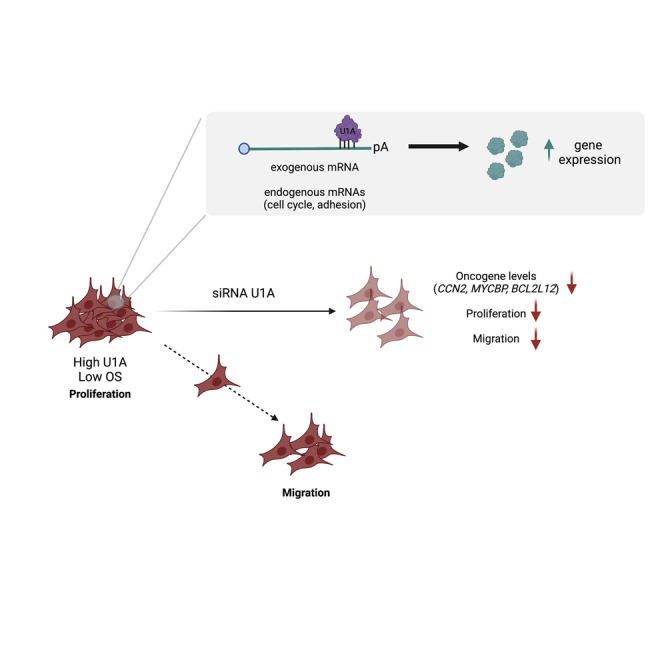
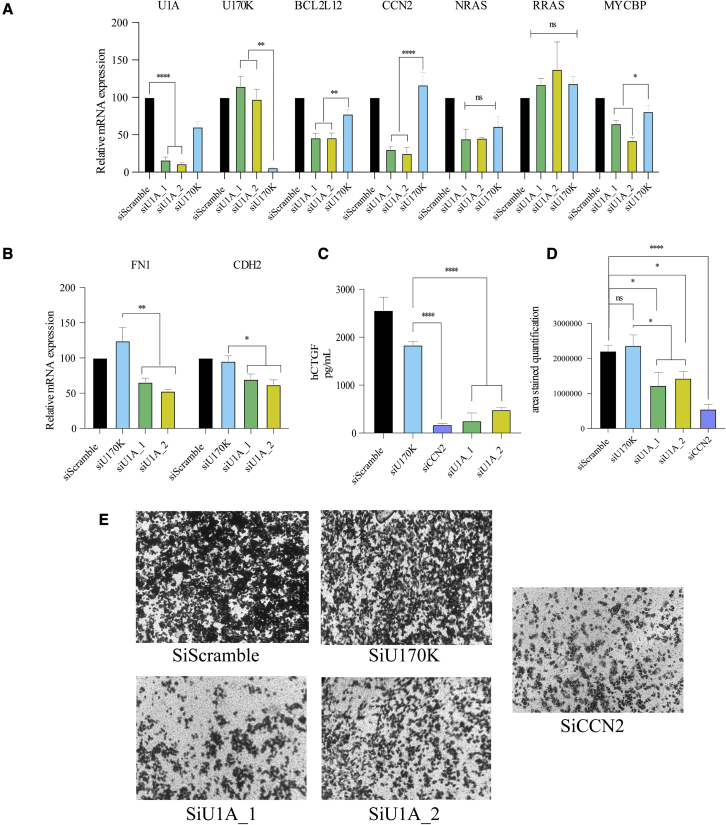
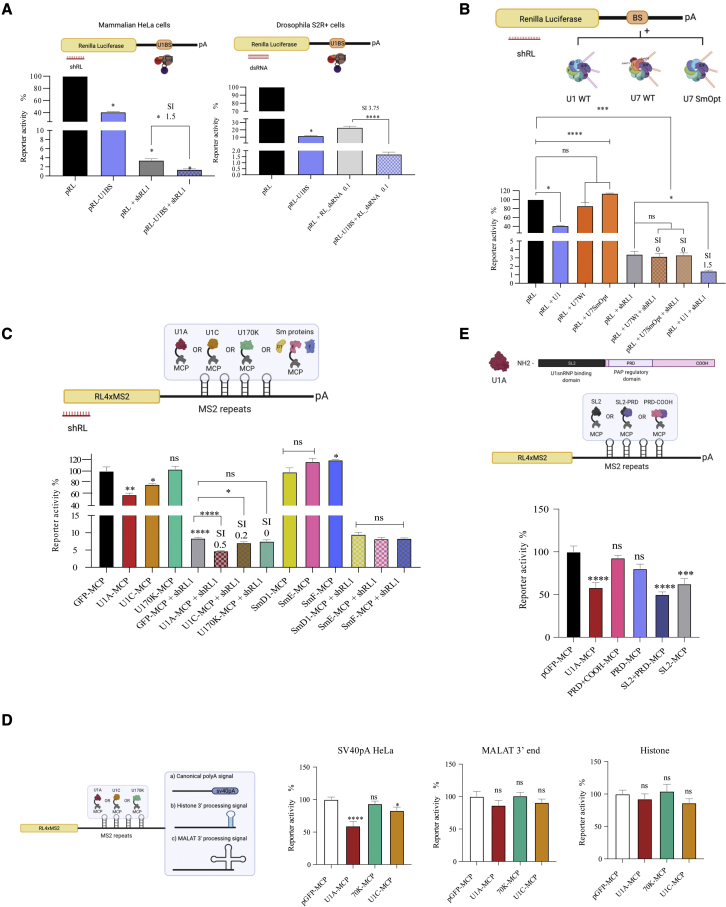
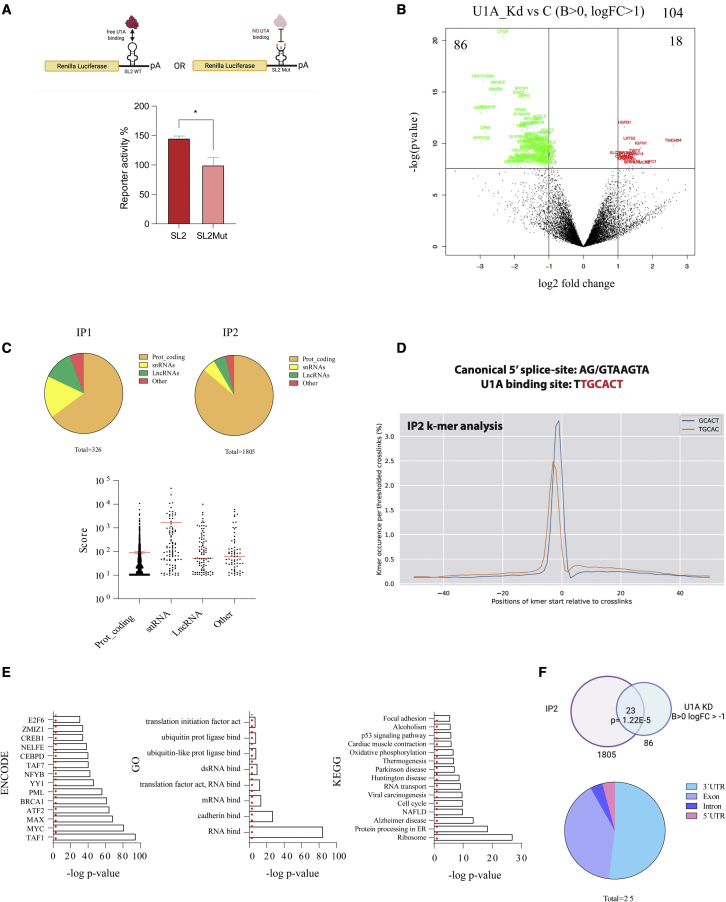
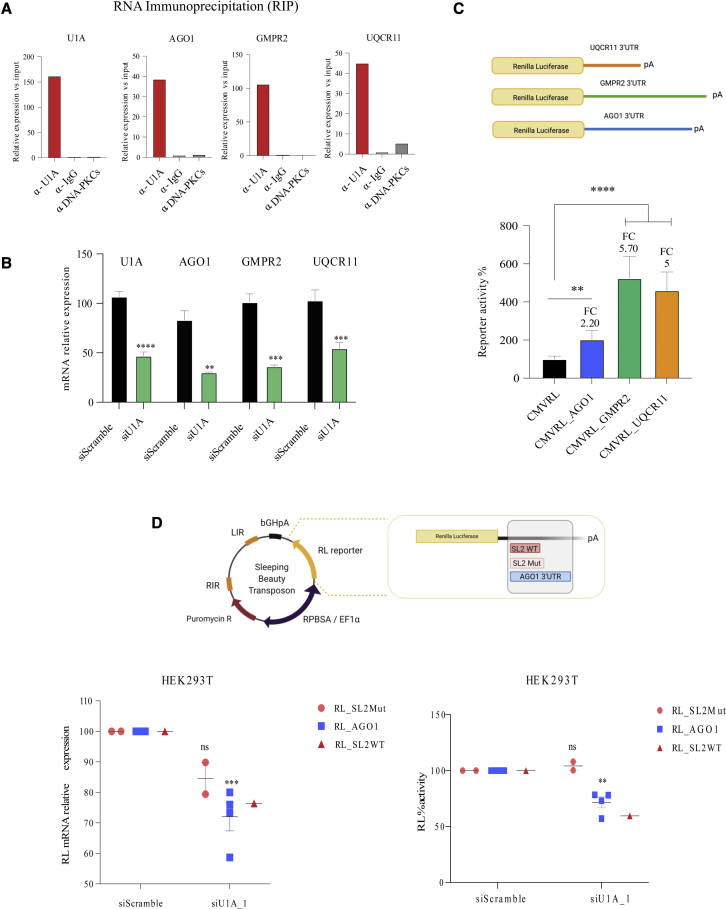
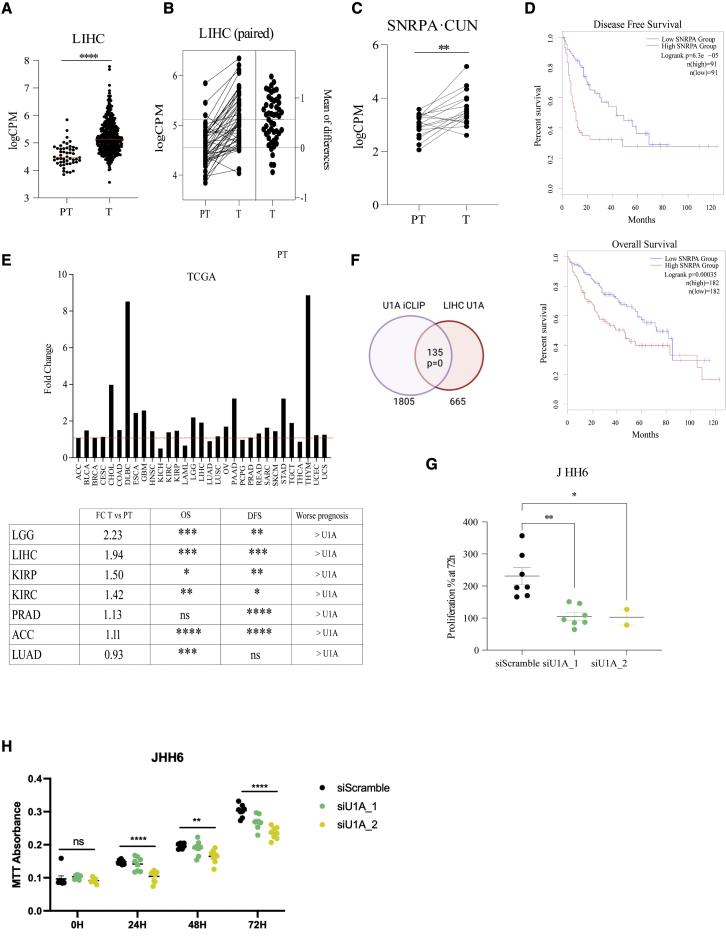
Here, we show that direct recruitment of U1A to target transcripts can increase gene expression. This is a new regulatory role, in addition to previous knowledge showing that U1A decreases the levels of U1A mRNA and other specific targets. In fact, genome-wide, U1A more often increases rather than represses gene expression and many U1A-upregulated transcripts are directly bound by U1A according to individual nucleotide resolution crosslinking and immunoprecipitation (iCLIP) studies. Interestingly, U1A-mediated positive regulation can be transferred to a heterologous system for biotechnological purposes. Finally, U1A-bound genes are enriched for those involved in cell cycle and adhesion. In agreement with this, higher U1A mRNA expression associates with lower disease-free survival and overall survival in many cancer types, and U1A mRNA levels positively correlate with those of some oncogenes involved in cell proliferation. Accordingly, U1A depletion leads to decreased expression of these genes and the migration-related gene /CTGF, which shows the strongest regulation by U1A. A decrease in U1A causes a strong drop in expression and CTGF secretion and defects in the expression of CTGF EMT targets, cell migration, and proliferation. These results support U1A as a putative therapeutic target for cancer treatment. In addition, U1A-binding sequences should be considered in biotechnological applications.
在此,我们表明将U1A直接募集到靶转录本上可增加基因表达。这是一种新的调控作用,除此之外,先前的研究表明U1A可降低U1A mRNA和其他特定靶标的水平。事实上,在全基因组范围内,根据单核苷酸分辨率交联和免疫沉淀(iCLIP)研究,U1A更多时候是增加而非抑制基因表达,并且许多U1A上调的转录本都直接与U1A结合。有趣的是,U1A介导的正向调控可转移至异源系统用于生物技术目的。最后,与U1A结合的基因在参与细胞周期和黏附的基因中富集。与此一致的是,在许多癌症类型中,较高的U1A mRNA表达与较低的无病生存期和总生存期相关,并且U1A mRNA水平与一些参与细胞增殖的癌基因水平呈正相关。因此,U1A的缺失导致这些基因以及迁移相关基因/结缔组织生长因子(CTGF)的表达降低,CTGF受U1A的调控作用最强。U1A的减少导致CTGF表达和分泌大幅下降以及CTGF上皮-间质转化(EMT)靶标、细胞迁移和增殖方面的表达缺陷。这些结果支持将U1A作为癌症治疗的一个潜在治疗靶点。此外,在生物技术应用中应考虑U1A结合序列。