
基于向量量化的微阵列图像压缩技术的鳐鱼觅食优化。
Manta Ray Foraging Optimization with Vector Quantization Based Microarray Image Compression Technique.
机构信息
Department of Computer Science, College of Computer Sciences and Information Technology, King Faisal University, Al Ahsa 31982, Saudi Arabia.
Department of Computer Science, College of Computer Science and Information Systems, Najran University, Najran 61441, Saudi Arabia.
出版信息
Comput Intell Neurosci. 2022 May 25;2022:7140552. doi: 10.1155/2022/7140552. eCollection 2022.
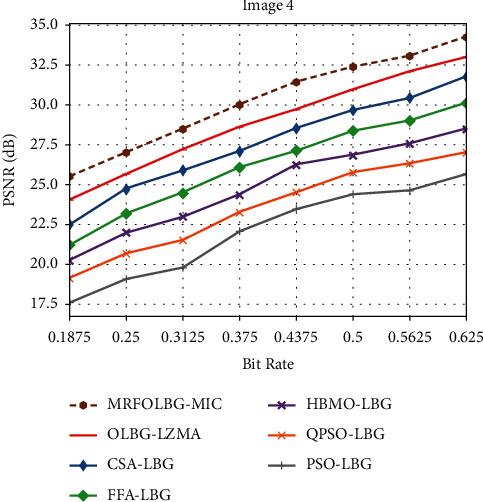
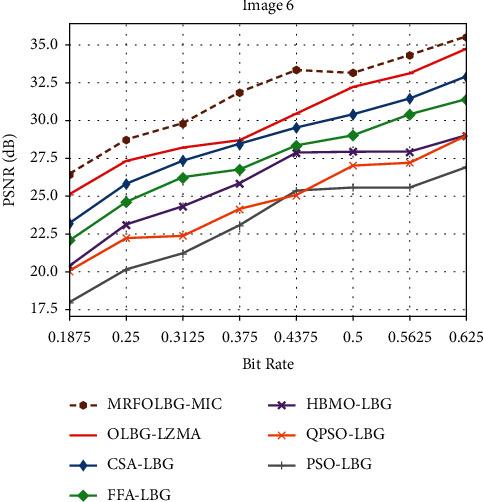
DNA microarray technologies enable the analysis of the expression of numerous genes in an individual experiment and become an important approach in the field of medicine and biology for investing genetic function, regulation, and interaction. Microarray images can be investigated well for obtaining the contained genetic data. But is it undesirable to retain the genetic data and avoid the microarray images? Due to considerable attention to DNA microarray and several experiments being performed under distinct conditions, a massive quantity of data gets produced over the globe. In order to store and share the microarray images, effective storage and communication models are needed in a natural way. Vector quantization (VQ) is a commonly utilized tool for compressing images, which mainly aims to produce effective codebooks comprising a collection of codewords. Therefore, this paper presents a manta ray foraging optimization (MRFO) with Linde-Buzo-Gray (LBG) based microarray image compression (MRFOLBG-MIC) technique. The LBG model is commonly utilized to design local optimal codebooks to compress images. The construction of codebooks can be defined as a nondeterministic polynomial time (NP) hard problem and can be resolved by the MRFO algorithm. The codebooks produced from LBG-VQ are optimized using the MRFO algorithm to attain optimum optimal codebooks. When the codebooks are produced by the MRFOLBG-MIC algorithm, Deflate model can be applied to compress the index tables. The design of the MRFO algorithm with LBG and Deflate based index table compression demonstrate the novelty of the work. For demonstrating the enhanced compression efficacy of the MRFOLBG-MIC model, a wide-ranging experimental validation process is performed using a benchmark dataset. The experimental outcomes inferred that the MRFOLBG-MIC model accomplished superior outcomes over the other existing models.
DNA 微阵列技术使在单个实验中分析大量基因的表达成为可能,并成为医学和生物学领域研究遗传功能、调控和相互作用的重要方法。微阵列图像可以进行很好的研究,以获取包含的遗传数据。但是,保留遗传数据并避免微阵列图像是否不可取?由于对 DNA 微阵列的大量关注以及在不同条件下进行的多个实验,全球产生了大量的数据。为了存储和共享微阵列图像,需要自然地采用有效的存储和通信模型。矢量量化 (VQ) 是一种常用的图像压缩工具,主要目的是生成包含一系列码字的有效码本。因此,本文提出了一种基于曼塔射线觅食优化 (MRFO) 和 Linde-Buzo-Gray (LBG) 的微阵列图像压缩 (MRFOLBG-MIC) 技术。LBG 模型常用于设计局部最优码本来压缩图像。码本的构建可以定义为非确定性多项式时间 (NP) 难题,并可以通过 MRFO 算法来解决。使用 MRFO 算法对 LBG-VQ 生成的码本进行优化,以获得最优的最优码本。当使用 MRFOLBG-MIC 算法生成码本时,可以应用 Deflate 模型来压缩索引表。基于 LBG 和 Deflate 的索引表压缩的 MRFO 算法设计展示了工作的新颖性。为了证明 MRFOLBG-MIC 模型增强的压缩效果,使用基准数据集进行了广泛的实验验证过程。实验结果表明,MRFOLBG-MIC 模型优于其他现有模型。





 Zotero 插件