Tugaut Béatrice, Shah Selam, Dolgin Kevin, Rebibo Seror Hanna, Arnould Benoit, Laporte Marie-Eve, Lee Aaron, Nabec Lydiane, Kayyali Reem, Wells Joshua, Piette John D, Hubert Guillaume
Patient Centered Outcomes, ICON plc, 27 rue de la Villette, 69003, Lyon, France.
Patient Centered Outcomes, ICON plc, Boston, MA, USA.
J Patient Rep Outcomes. 2022 Jun 6;6(1):61. doi: 10.1186/s41687-022-00470-x.
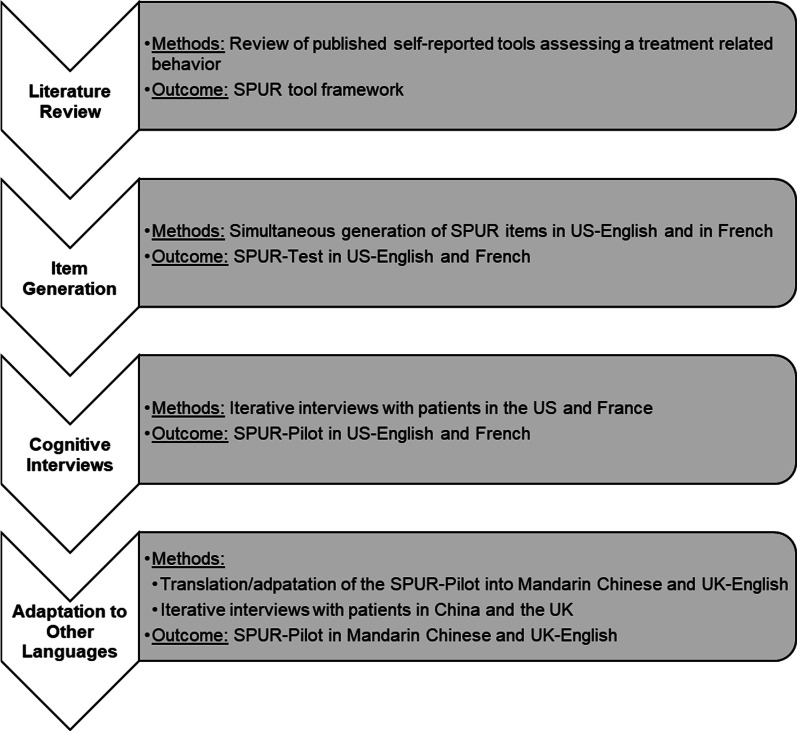
Long-term treatment adherence is a worldwide concern, with nonadherence resulting from a complex interplay of behaviors and health beliefs. Determining an individual's risk of nonadherence and identifying the drivers of that risk are crucial for the development of successful interventions for improving adherence. Here, we describe the development of a new tool assessing a comprehensive set of characteristics predictive of patients' treatment adherence based on the Social, Psychological, Usage and Rational (SPUR) adherence framework. Concepts from existing self-reporting tools of adherence-related behaviors were identified following a targeted MEDLINE literature review and a subset of these concepts were then selected for inclusion in the new tool. SPUR tool items, simultaneously generated in US English and in French, were tested iteratively through two rounds of cognitive interviews with US and French patients taking long-term treatments for chronic diseases. The pilot SPUR tool, resulting from the qualitative analysis of patients' responses, was then adapted to other cultural settings (China and the UK) and subjected to further rounds of cognitive testing.
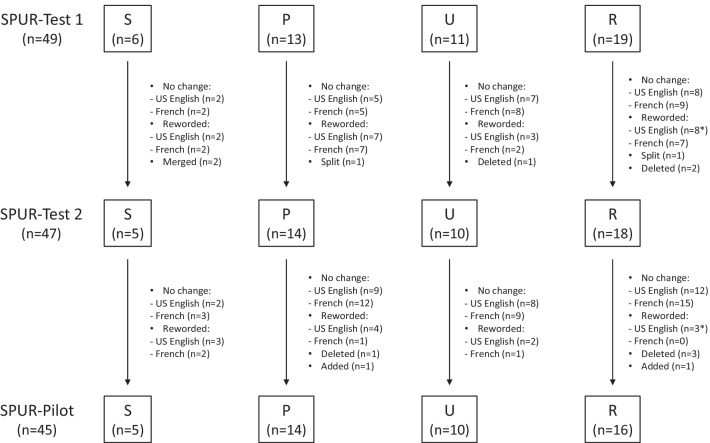
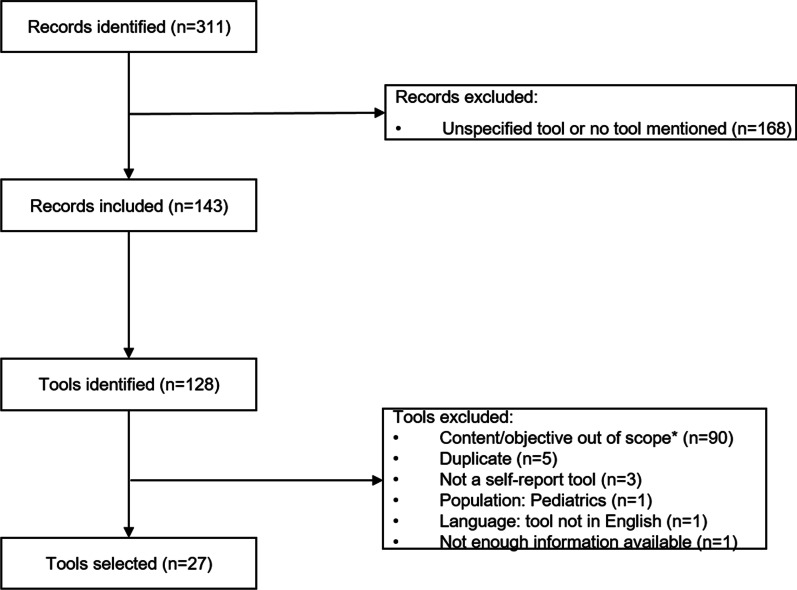
The literature review identified 27 relevant instruments, from which 49 concepts were included in the SPUR tool (Social: 6, Psychological: 13, Usage: 11, Rational: 19). Feedback from US and French patients suffering from diabetes, multiple sclerosis, or breast cancer (n = 14 for the first round; n = 16 for the second round) indicated that the SPUR tool was well accepted and consistently understood. Minor modifications were implemented, resulting in the retention of 45 items (Social: 5, Psychological: 14, Usage: 10, Rational: 16). Results from the cognitive interviews conducted in China (15 patients per round suffering from diabetes, breast cancer or chronic obstructive pulmonary disease) and the UK (15 patients suffering from diabetes) confirmed the validity of the tool content, with no notable differences being identified across countries or chronic conditions.
Our qualitative analyses indicated that the pilot SPUR tool is a promising model that may help clinicians and health systems to predict patient treatment behavior. Further steps using quantitative methods are needed to confirm its predictive validity and other psychometric properties.
长期治疗依从性是一个全球性问题,不依从是行为和健康观念复杂相互作用的结果。确定个体不依从的风险并识别该风险的驱动因素对于开发提高依从性的成功干预措施至关重要。在此,我们描述了一种新工具的开发,该工具基于社会、心理、使用和理性(SPUR)依从性框架评估一系列预测患者治疗依从性的综合特征。在对MEDLINE文献进行有针对性的综述后,确定了现有依从性相关行为自我报告工具中的概念,然后选择其中一部分概念纳入新工具。SPUR工具项目同时以美国英语和法语生成,通过对接受慢性病长期治疗的美国和法国患者进行两轮认知访谈进行迭代测试。根据对患者回答的定性分析得出的试点SPUR工具随后被应用于其他文化背景(中国和英国),并进行了进一步的认知测试。
文献综述确定了27种相关工具,其中49个概念被纳入SPUR工具(社会:6个,心理:13个,使用:11个,理性:19个)。患有糖尿病、多发性硬化症或乳腺癌的美国和法国患者的反馈(第一轮n = 14;第二轮n = 16)表明,SPUR工具被广泛接受且理解一致。进行了一些小的修改,最终保留了45个项目(社会:5个,心理:14个,使用:10个,理性:16个)。在中国(每轮15名患有糖尿病、乳腺癌或慢性阻塞性肺疾病的患者)和英国(15名患有糖尿病的患者)进行的认知访谈结果证实了工具内容的有效性,不同国家或慢性病之间未发现明显差异。
我们的定性分析表明,试点SPUR工具是一个有前景的模型,可能有助于临床医生和卫生系统预测患者的治疗行为。需要进一步采用定量方法来确认其预测有效性和其他心理测量特性。