Oxford Autoimmune Neurology Group, Nuffield Department of Clinical Neurosciences, University of Oxford, Oxford OX3 9DU, United Kingdom.
Department of Neurology, John Radcliffe Hospital, Oxford University Hospitals, Oxford OX3 9DU, United Kingdom.
Proc Natl Acad Sci U S A. 2022 Jun 14;119(24):e2121804119. doi: 10.1073/pnas.2121804119. Epub 2022 Jun 6.
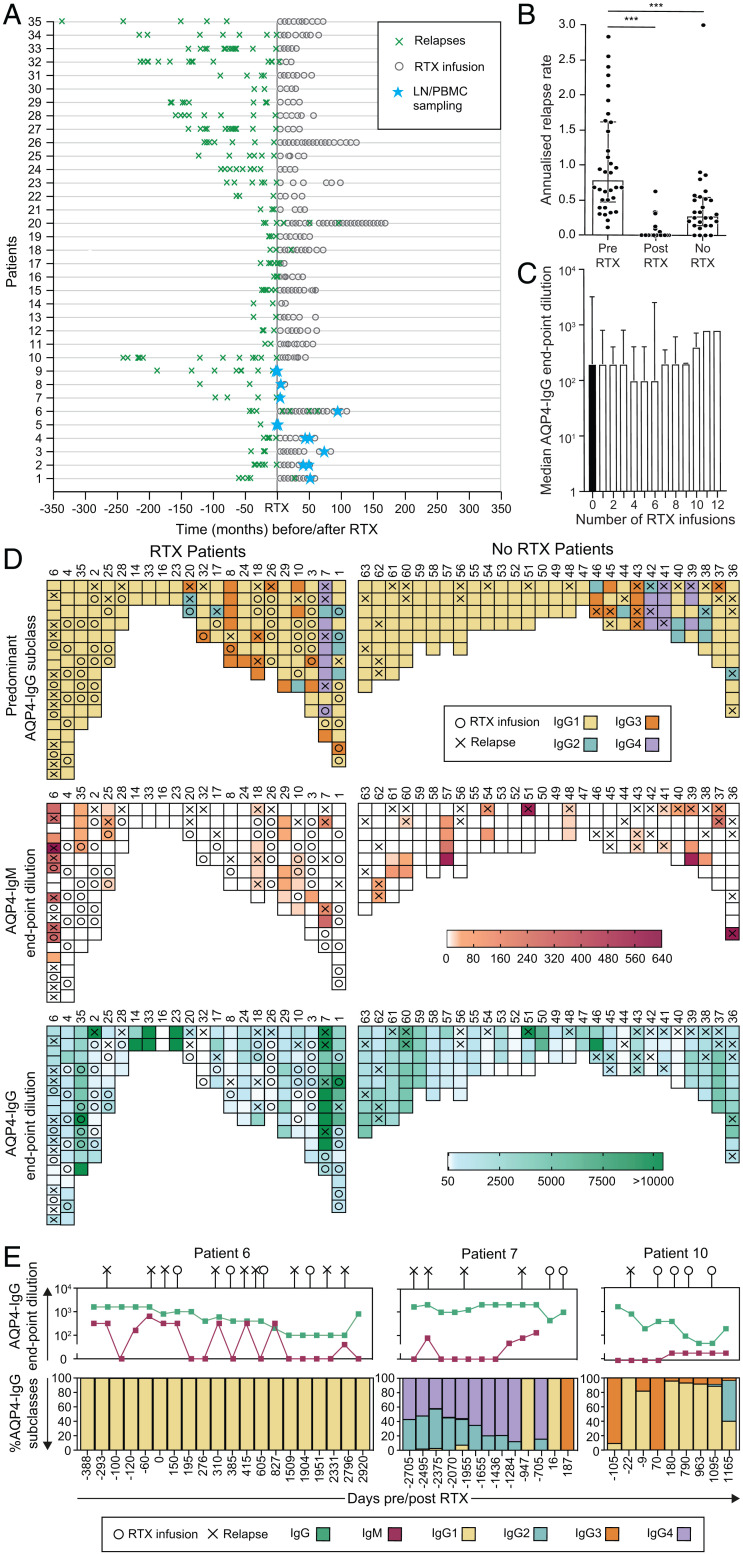
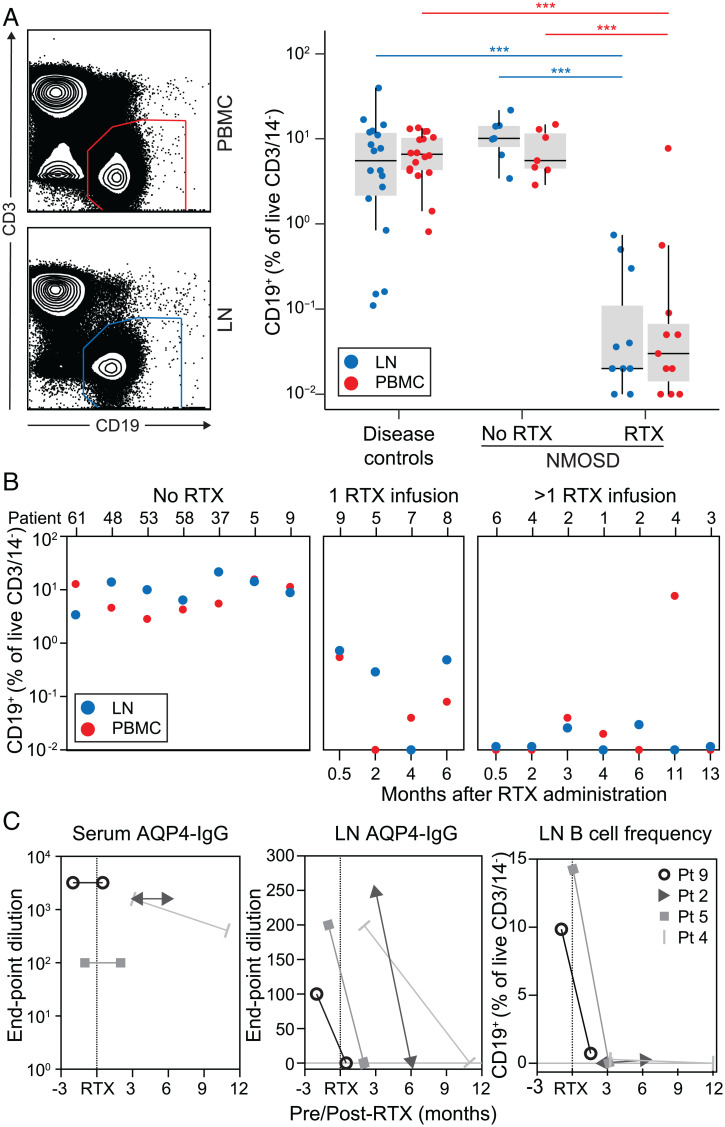
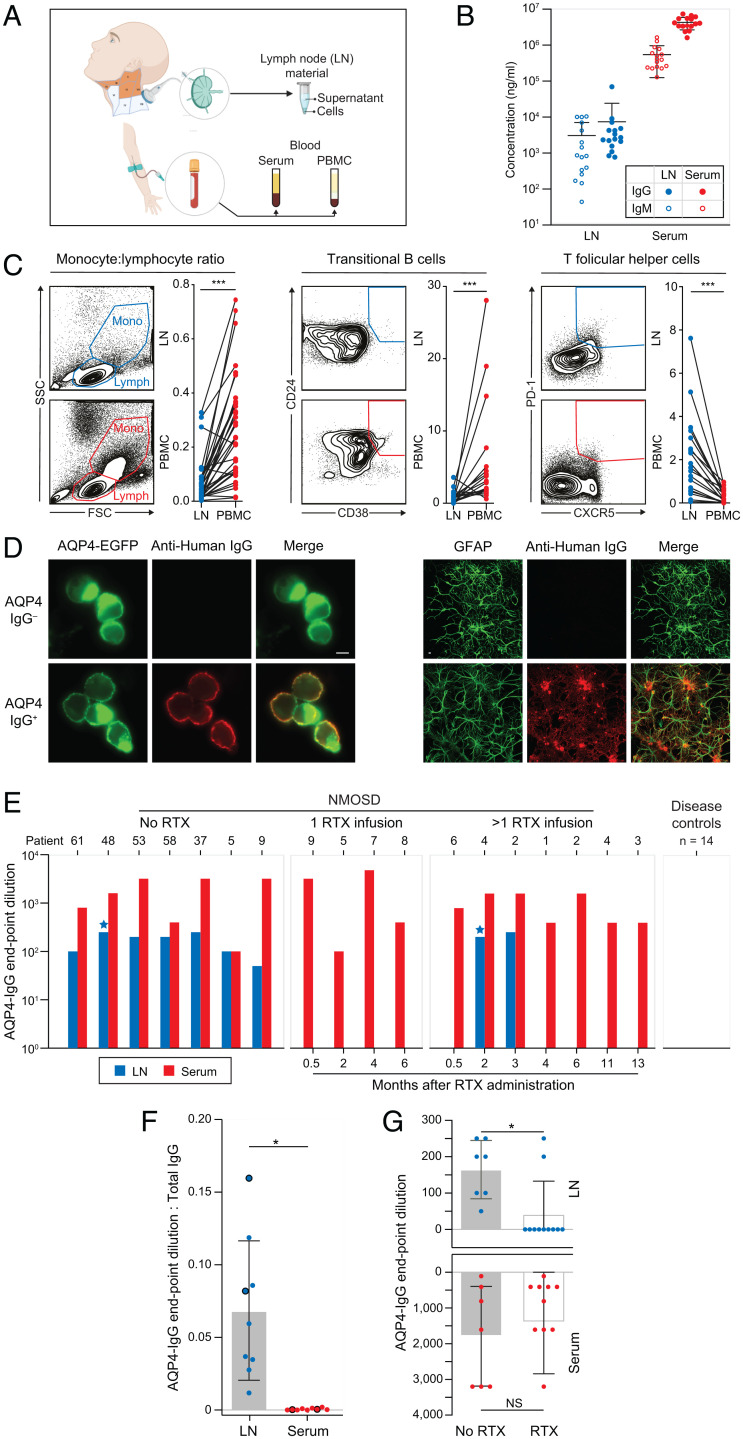
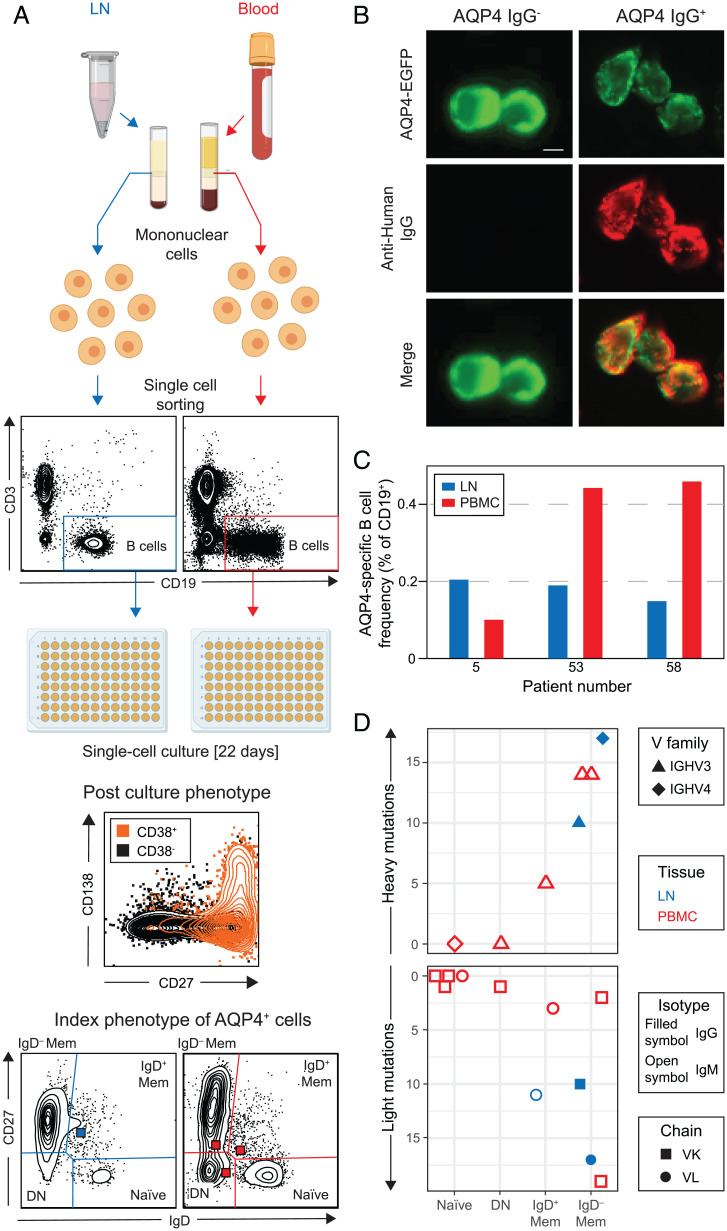
Neuromyelitis optica spectrum disorders (NMOSDs) are caused by immunoglobulin G (IgG) autoantibodies directed against the water channel aquaporin-4 (AQP4). In NMOSDs, discrete clinical relapses lead to disability and are robustly prevented by the anti-CD20 therapeutic rituximab; however, its mechanism of action in autoantibody-mediated disorders remains poorly understood. We hypothesized that AQP4-IgG production in germinal centers (GCs) was a core feature of NMOSDs and could be terminated by rituximab. To investigate this directly, deep cervical lymph node (dCLN) aspirates (n = 36) and blood (n = 406) were studied in a total of 63 NMOSD patients. Clinical relapses were associated with AQP4-IgM generation or shifts in AQP4-IgG subclasses (odds ratio = 6.0; range of 3.3 to 10.8; P < 0.0001), features consistent with GC activity. From seven dCLN aspirates of patients not administered rituximab, AQP4-IgGs were detected alongside specific intranodal synthesis of AQP4-IgG. AQP4-reactive B cells were isolated from unmutated naive and mutated memory populations in both blood and dCLNs. After rituximab administration, fewer clinical relapses (annual relapse rate of 0.79 to 0; P < 0.001) were accompanied by marked reductions in both AQP4-IgG (fourfold; P = 0.004) and intranodal B cells (430-fold; P < 0.0001) from 11 dCLNs. Our findings implicate ongoing GC activity as a rituximab-sensitive driver of AQP4 antibody production. They may explain rituximab’s clinical efficacy in several autoantibody-mediated diseases and highlight the potential value of direct GC measurements across autoimmune conditions.
视神经脊髓炎谱系疾病(NMOSD)是由免疫球蛋白 G(IgG)自身抗体引起的,这些自身抗体针对水通道蛋白-4(AQP4)。在 NMOSD 中,离散的临床复发导致残疾,并被抗 CD20 治疗药物利妥昔单抗有效地预防;然而,其在自身抗体介导的疾病中的作用机制仍知之甚少。我们假设生发中心(GC)中的 AQP4-IgG 产生是 NMOSD 的核心特征,并且可以被利妥昔单抗终止。为了直接研究这一点,我们对 63 名 NMOSD 患者的深部颈淋巴结(dCLN)抽吸物(n=36)和血液(n=406)进行了研究。临床复发与 AQP4-IgM 产生或 AQP4-IgG 亚类的变化相关(优势比=6.0;范围 3.3 至 10.8;P<0.0001),这些特征与 GC 活性一致。从未接受利妥昔单抗治疗的 7 名患者的 dCLN 抽吸物中,检测到 AQP4-IgG 以及特异性的 AQP4-IgG 淋巴结内合成。AQP4 反应性 B 细胞从血液和 dCLN 中的未突变幼稚和突变记忆群体中分离出来。利妥昔单抗给药后,临床复发次数减少(年复发率从 0.79 降至 0;P<0.001),同时从 11 个 dCLN 中也观察到 AQP4-IgG(四倍;P=0.004)和淋巴结内 B 细胞(430 倍;P<0.0001)的显著减少。我们的研究结果表明,持续的 GC 活性是 AQP4 抗体产生的利妥昔单抗敏感驱动因素。它们可能解释了利妥昔单抗在几种自身抗体介导的疾病中的临床疗效,并强调了在自身免疫性疾病中直接测量 GC 的潜在价值。