• 文献检索
  • 文档翻译
  • 深度研究
  • 学术资讯
  • Suppr Zotero 插件Zotero 插件
  • 邀请有礼
  • 套餐&价格
  • 历史记录
应用&插件
Suppr Zotero 插件Zotero 插件浏览器插件Mac 客户端Windows 客户端微信小程序
定价
高级版会员购买积分包购买API积分包
服务
文献检索文档翻译深度研究API 文档MCP 服务
关于我们
关于 Suppr公司介绍联系我们用户协议隐私条款
关注我们

Suppr 超能文献

核心技术专利:CN118964589B侵权必究
粤ICP备2023148730 号-1Suppr @ 2026

文献检索

告别复杂PubMed语法,用中文像聊天一样搜索,搜遍4000万医学文献。AI智能推荐,让科研检索更轻松。

立即免费搜索

文件翻译

保留排版,准确专业,支持PDF/Word/PPT等文件格式,支持 12+语言互译。

免费翻译文档

深度研究

AI帮你快速写综述,25分钟生成高质量综述,智能提取关键信息,辅助科研写作。

立即免费体验

A Novel Index to Predict the Failure of High-Flow Nasal Cannula in Patients with Acute Hypoxemic Respiratory Failure: A Pilot Study.

作者信息

Chen Dongyu, Heunks Leo, Pan Chun, Xie Jianfeng, Qiu Haibo, Yang Yi, Liu Ling

机构信息

Zhongda Hospital, School of Medicine Southeast University Nanjing, China.

The First people's Hospital of Yancheng Yancheng, Jiangsu, China.

出版信息

Am J Respir Crit Care Med. 2022 Oct 1;206(7):910-913. doi: 10.1164/rccm.202203-0561LE.
DOI:10.1164/rccm.202203-0561LE
PMID:35671485
原文链接:https://pmc.ncbi.nlm.nih.gov/articles/PMC9799263/
Abstract
摘要
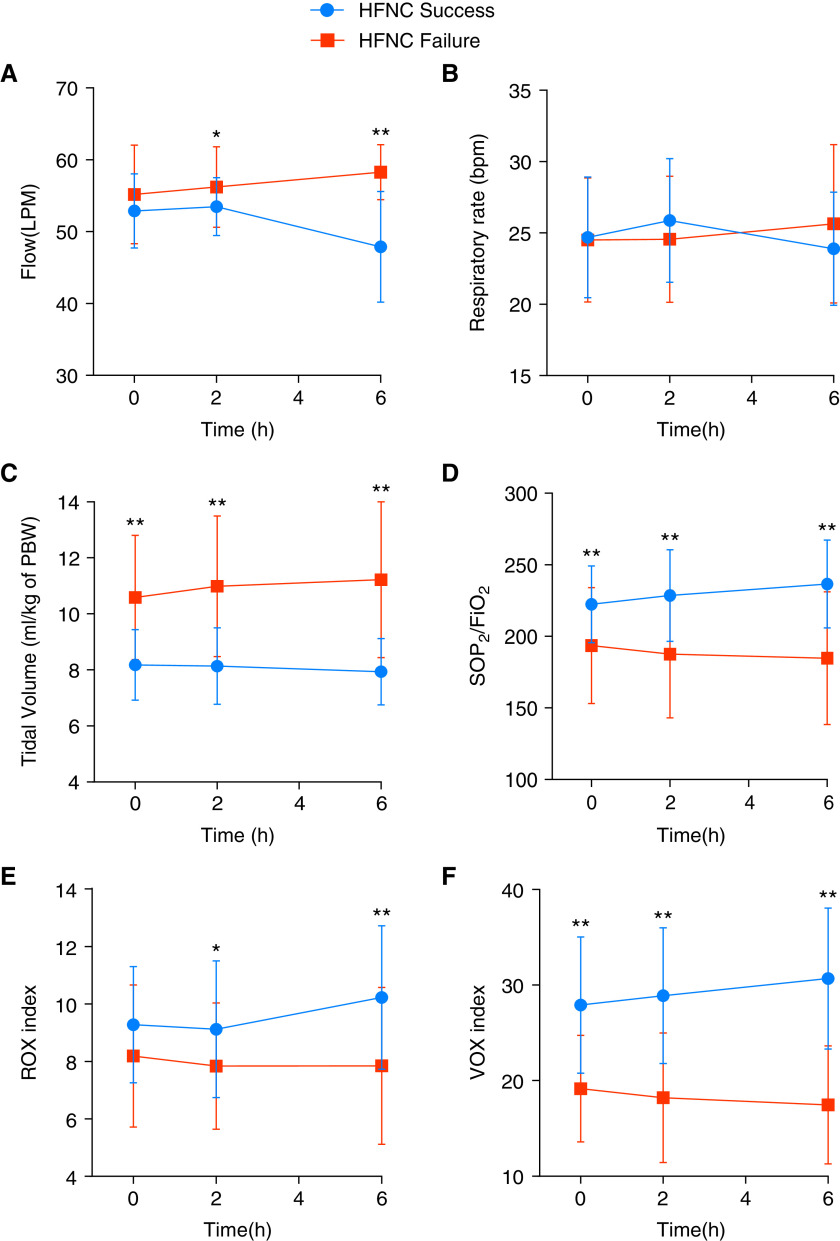
https://cdn.ncbi.nlm.nih.gov/pmc/blobs/ed65/9799263/0caea6faeabf/rccm.202203-0561LEf1.jpg

相似文献

1
A Novel Index to Predict the Failure of High-Flow Nasal Cannula in Patients with Acute Hypoxemic Respiratory Failure: A Pilot Study.一种预测急性低氧性呼吸衰竭患者高流量鼻导管吸氧失败的新型指标:一项初步研究。
Am J Respir Crit Care Med. 2022 Oct 1;206(7):910-913. doi: 10.1164/rccm.202203-0561LE.
2
High-Flow Nasal Cannula Oxygenation in Immunocompromised Patients With Acute Hypoxemic Respiratory Failure: A Groupe de Recherche Respiratoire en Réanimation Onco-Hématologique Study.免疫功能低下的急性低氧性呼吸衰竭患者的高流量鼻导管给氧:一项肿瘤血液学重症监护呼吸研究小组的研究。
Crit Care Med. 2017 Mar;45(3):e274-e280. doi: 10.1097/CCM.0000000000002085.
3
Accuracy of Nasal Pressure Swing to Predict Failure of High-Flow Nasal Oxygen in Patients with Acute Hypoxemic Respiratory Failure.鼻压摆动预测急性低氧性呼吸衰竭患者高流量鼻导管给氧失败的准确性
Am J Respir Crit Care Med. 2023 Mar 15;207(6):787-789. doi: 10.1164/rccm.202210-1848LE.
4
Sequential application of oxygen therapy via high-flow nasal cannula and noninvasive ventilation in acute respiratory failure: an observational pilot study.高流量鼻导管给氧与无创通气序贯应用于急性呼吸衰竭的观察性初步研究。
Respir Care. 2015 Feb;60(2):170-8. doi: 10.4187/respcare.03075. Epub 2014 Oct 7.
5
Predictors of Intubation in Patients With Acute Hypoxemic Respiratory Failure Treated With a Noninvasive Oxygenation Strategy.预测急性低氧性呼吸衰竭患者经无创氧合策略治疗后需要插管的因素。
Crit Care Med. 2018 Feb;46(2):208-215. doi: 10.1097/CCM.0000000000002818.
6
Noninvasive Respiratory Support at the End of Life.生命终末期的无创呼吸支持。
Respir Care. 2019 Jun;64(6):701-711. doi: 10.4187/respcare.06618.
7
Reply to: 'Is continuous positive airway pressure truly superior to high-flow nasal cannula in managing acute hypoxemic respiratory failure?'.回复:“在治疗急性低氧性呼吸衰竭方面,持续气道正压通气真的优于高流量鼻导管吸氧吗?”
Respirology. 2024 May;29(5):435-436. doi: 10.1111/resp.14711. Epub 2024 Mar 25.
8
Is continuous positive airway pressure truly superior to high-flow nasal cannula in managing acute hypoxemic respiratory failure?在治疗急性低氧性呼吸衰竭方面,持续气道正压通气真的优于高流量鼻导管吸氧吗?
Respirology. 2024 May;29(5):434. doi: 10.1111/resp.14712. Epub 2024 Mar 25.
9
Effect of non-invasive oxygenation strategies in immunocompromised patients with severe acute respiratory failure: a post-hoc analysis of a randomised trial.免疫功能低下的严重急性呼吸衰竭患者的无创性氧合策略的效果:一项随机试验的事后分析。
Lancet Respir Med. 2016 Aug;4(8):646-652. doi: 10.1016/S2213-2600(16)30093-5. Epub 2016 May 27.
10
Effect of high-flow nasal cannula oxygen therapy in adults with acute hypoxemic respiratory failure: a meta-analysis of randomized controlled trials.高流量鼻导管给氧疗法对成人急性低氧血症性呼吸衰竭的影响:一项随机对照试验的荟萃分析
CMAJ. 2017 Feb 21;189(7):E260-E267. doi: 10.1503/cmaj.160570.

引用本文的文献

1
Gas composition and pressure in the hypopharynx during high-flow oxygen therapy through a nasal cannula in healthy volunteers with different breathing patterns.不同呼吸模式的健康志愿者通过鼻导管进行高流量氧疗时下咽的气体成分和压力
BMC Anesthesiol. 2025 Aug 23;25(1):416. doi: 10.1186/s12871-025-03267-9.
2
Real-time prediction of HFNC treatment failure in acute hypoxemic respiratory failure using machine learning.使用机器学习对急性低氧性呼吸衰竭患者高流量鼻导管治疗失败进行实时预测
Sci Rep. 2025 Aug 18;15(1):30245. doi: 10.1038/s41598-025-16061-x.
3
A Multicenter Retrospective Study Predicting Early Noninvasive Ventilation Failure in Patients With Acute Hypoxic Respiratory Failure.

本文引用的文献

1
Early Inspiratory Effort Assessment by Esophageal Manometry Predicts Noninvasive Ventilation Outcome in Respiratory Failure. A Pilot Study.食管测压法早期吸气努力评估预测呼吸衰竭患者无创通气结局:一项初步研究。
Am J Respir Crit Care Med. 2020 Aug 15;202(4):558-567. doi: 10.1164/rccm.201912-2512OC.
2
Respiratory drive in the acute respiratory distress syndrome: pathophysiology, monitoring, and therapeutic interventions.急性呼吸窘迫综合征的呼吸驱动:病理生理学、监测和治疗干预。
Intensive Care Med. 2020 Apr;46(4):606-618. doi: 10.1007/s00134-020-05942-6. Epub 2020 Feb 3.
3
Respiratory Drive in Critically Ill Patients. Pathophysiology and Clinical Implications.
一项预测急性低氧性呼吸衰竭患者早期无创通气失败的多中心回顾性研究。
Clin Respir J. 2025 Jul;19(7):e70098. doi: 10.1111/crj.70098.
4
Can we predict the future of respiratory failure prediction?我们能否预测呼吸衰竭预测的未来?
Crit Care. 2025 Jun 19;29(1):253. doi: 10.1186/s13054-025-05484-7.
5
Exploring the Economic Burden of Pulmonary Arterial Hypertension and Its Relation to Disease Severity and Treatment Escalation: A Systematic Literature Review.探索肺动脉高压的经济负担及其与疾病严重程度和治疗升级的关系:一项系统文献综述
Pharmacoeconomics. 2025 Apr 17. doi: 10.1007/s40273-025-01492-1.
6
Monitoring patients with acute respiratory failure during non-invasive respiratory support to minimize harm and identify treatment failure.在无创呼吸支持期间监测急性呼吸衰竭患者,以尽量减少伤害并识别治疗失败情况。
Crit Care. 2025 Apr 9;29(1):147. doi: 10.1186/s13054-025-05369-9.
7
Machine learning models compared with current clinical indices to predict the outcome of high flow nasal cannula therapy in acute hypoxemic respiratory failure.将机器学习模型与当前临床指标进行比较,以预测急性低氧性呼吸衰竭患者高流量鼻导管治疗的结果。
Crit Care. 2025 Mar 7;29(1):101. doi: 10.1186/s13054-025-05336-4.
8
Diaphragm excursions as proxy for tidal volume during spontaneous breathing in invasively ventilated ICU patients.在接受有创通气的重症监护病房患者自主呼吸期间,膈肌移动作为潮气量的替代指标。
Intensive Care Med Exp. 2023 Oct 27;11(1):73. doi: 10.1186/s40635-023-00553-z.
9
Reply to Li .回复李。
Am J Respir Crit Care Med. 2023 Feb 15;207(4):491-492. doi: 10.1164/rccm.202209-1830LE.
10
Volume-OXygenation Index to Predict High-flow Nasal Cannula Failure: How to Capture the Tidal Volume Matters.预测高流量鼻导管失败的容量-氧合指数:如何准确测量潮气量很重要。
Am J Respir Crit Care Med. 2023 Feb 15;207(4):490-491. doi: 10.1164/rccm.202209-1659LE.
危重症患者的呼吸驱动。病理生理学和临床意义。
Am J Respir Crit Care Med. 2020 Jan 1;201(1):20-32. doi: 10.1164/rccm.201903-0596SO.
4
Patient self-inflicted lung injury: implications for acute hypoxemic respiratory failure and ARDS patients on non-invasive support.患者自行性肺损伤:对接受无创支持的急性低氧性呼吸衰竭和 ARDS 患者的影响。
Minerva Anestesiol. 2019 Sep;85(9):1014-1023. doi: 10.23736/S0375-9393.19.13418-9. Epub 2019 Mar 12.
5
An Index Combining Respiratory Rate and Oxygenation to Predict Outcome of Nasal High-Flow Therapy.呼吸频率与氧合指数联合预测经鼻高流量治疗结局。
Am J Respir Crit Care Med. 2019 Jun 1;199(11):1368-1376. doi: 10.1164/rccm.201803-0589OC.
6
Predicting success of high-flow nasal cannula in pneumonia patients with hypoxemic respiratory failure: The utility of the ROX index.预测高流量鼻导管吸氧对低氧性呼吸衰竭肺炎患者的疗效:ROX指数的应用价值。
J Crit Care. 2016 Oct;35:200-5. doi: 10.1016/j.jcrc.2016.05.022. Epub 2016 May 31.
7
Effect of Postextubation High-Flow Nasal Cannula vs Conventional Oxygen Therapy on Reintubation in Low-Risk Patients: A Randomized Clinical Trial.低危患者拔管后使用高流量鼻导管与常规氧疗对再插管的影响:一项随机临床试验。
JAMA. 2016 Apr 5;315(13):1354-61. doi: 10.1001/jama.2016.2711.
8
Failure of Noninvasive Ventilation for De Novo Acute Hypoxemic Respiratory Failure: Role of Tidal Volume.新发低氧性呼吸衰竭行无创通气失败:潮气量的作用。
Crit Care Med. 2016 Feb;44(2):282-90. doi: 10.1097/CCM.0000000000001379.
9
High-flow oxygen through nasal cannula in acute hypoxemic respiratory failure.经鼻高流量氧疗在急性低氧性呼吸衰竭中的应用。
N Engl J Med. 2015 Jun 4;372(23):2185-96. doi: 10.1056/NEJMoa1503326. Epub 2015 May 17.
10
Failure of high-flow nasal cannula therapy may delay intubation and increase mortality.高流量鼻导管治疗失败可能会延迟插管并增加死亡率。
Intensive Care Med. 2015 Apr;41(4):623-32. doi: 10.1007/s00134-015-3693-5. Epub 2015 Feb 18.