Department of Neurology (W.v.d.S., N.A.M.v.d.E., V.C., D.W.J.D., B.R.), Erasmus MC University Medical Center, Rotterdam, the Netherlands.
Department of Radiology and Nuclear Medicine (W.v.d.S., N.A.M.v.d.E., V.C., P.J.v.D., A.v.d.L., B.R.), Erasmus MC University Medical Center, Rotterdam, the Netherlands.
Stroke. 2022 Sep;53(9):2818-2827. doi: 10.1161/STROKEAHA.121.036195. Epub 2022 Jun 8.
Symptomatic intracranial hemorrhage (sICH) is a serious complication after endovascular treatment for ischemic stroke. We aimed to identify determinants of its occurrence and location.
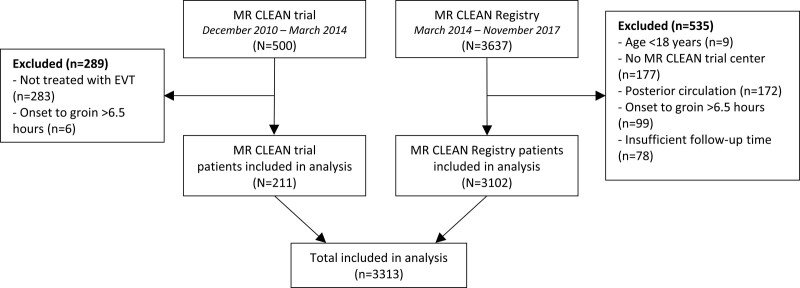
We retrospectively analyzed data from the Dutch MR CLEAN trial (Multicenter Randomized Clinical Trial of Endovascular Treatment for Acute Ischemic Stroke in the Netherlands) and MR CLEAN registry. We included adult patients with a large vessel occlusion in the anterior circulation who underwent endovascular treatment within 6.5 hours of stroke onset. We used univariable and multivariable logistic regression analyses to identify determinants of overall sICH occurrence, sICH within infarcted brain tissue, and sICH outside infarcted brain tissue.
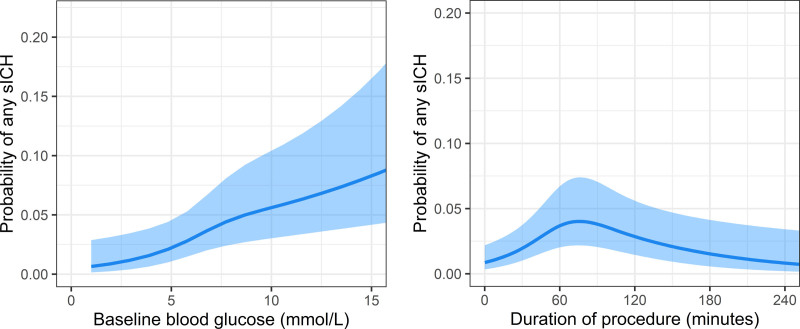
SICH occurred in 203 (6%) of 3313 included patients and was located within infarcted brain tissue in 50 (25%), outside infarcted brain tissue in 23 (11%), and both within and outside infarcted brain tissue in 116 (57%) patients. In 14 patients (7%), data on location were missing. Prior antiplatelet use, baseline systolic blood pressure, baseline plasma glucose levels, post-endovascular treatment modified treatment in cerebral ischemia score, and duration of procedure were associated with all outcome parameters. In addition, determinants of sICH within infarcted brain tissue included history of myocardial infarction (adjusted odds ratio, 1.65 [95% CI, 1.06-2.56]) and poor collateral score (adjusted odds ratio, 1.42 [95% CI, 1.02-1.95]), whereas determinants of sICH outside infarcted brain tissue included level of occlusion on computed tomography angiography (internal carotid artery or internal carotid artery terminus compared with M1: adjusted odds ratio, 1.79 [95% CI, 1.16-2.78]).
Several factors, some potentially modifiable, are associated with sICH occurrence. Further studies should investigate whether modification of baseline systolic blood pressure or plasma glucose level could reduce the risk of sICH. In addition, determinants differ per location of sICH, supporting the hypothesis of varying underlying mechanisms.
URL: https://www.isrctn.com/; Unique identifier: ISRCTN10888758.
症状性颅内出血(sICH)是血管内治疗缺血性卒中后的严重并发症。我们旨在确定其发生和位置的决定因素。
我们回顾性分析了荷兰 MR CLEAN 试验(荷兰多中心急性缺血性卒中血管内治疗随机临床试验)和 MR CLEAN 登记处的数据。我们纳入了发病 6.5 小时内接受血管内治疗的前循环大血管闭塞的成年患者。我们使用单变量和多变量逻辑回归分析来确定总体 sICH 发生、梗死脑组织内 sICH 和梗死脑组织外 sICH 的决定因素。
3313 例纳入患者中 sICH 发生 203 例(6%),其中 50 例(25%)位于梗死脑组织内,23 例(11%)位于梗死脑组织外,116 例(57%)位于梗死脑组织内外。在 14 例患者(7%)中,位置数据缺失。既往抗血小板治疗、基线收缩压、基线血糖水平、血管内治疗后改良脑缺血治疗评分以及操作持续时间与所有结局参数相关。此外,梗死脑组织内 sICH 的决定因素包括心肌梗死史(调整比值比,1.65 [95%可信区间,1.06-2.56])和较差的侧支评分(调整比值比,1.42 [95%可信区间,1.02-1.95]),而梗死脑组织外 sICH 的决定因素包括 CT 血管造影上的闭塞程度(颈内动脉或颈内动脉终末段与 M1 相比:调整比值比,1.79 [95%可信区间,1.16-2.78])。
一些潜在可改变的因素与 sICH 的发生相关。进一步的研究应探讨是否可以通过调整基线收缩压或血糖水平来降低 sICH 的风险。此外,sICH 发生的位置不同,决定因素也不同,这支持了不同潜在机制的假说。