Department of Clinical Laboratory Medicine, Kanazawa University Graduate School of Medical Science, Kanazawa, Japan.
Lineberger Comprehensive Cancer Center, The University of North Carolina at Chapel Hill, Chapel Hill, NC, USA.
Nat Commun. 2022 Jun 8;13(1):3176. doi: 10.1038/s41467-022-30879-3.
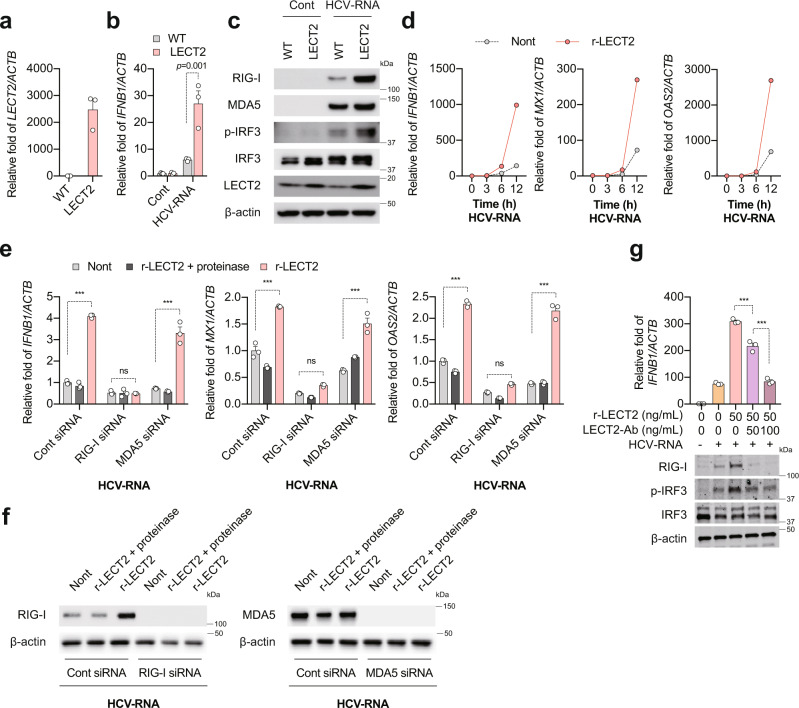
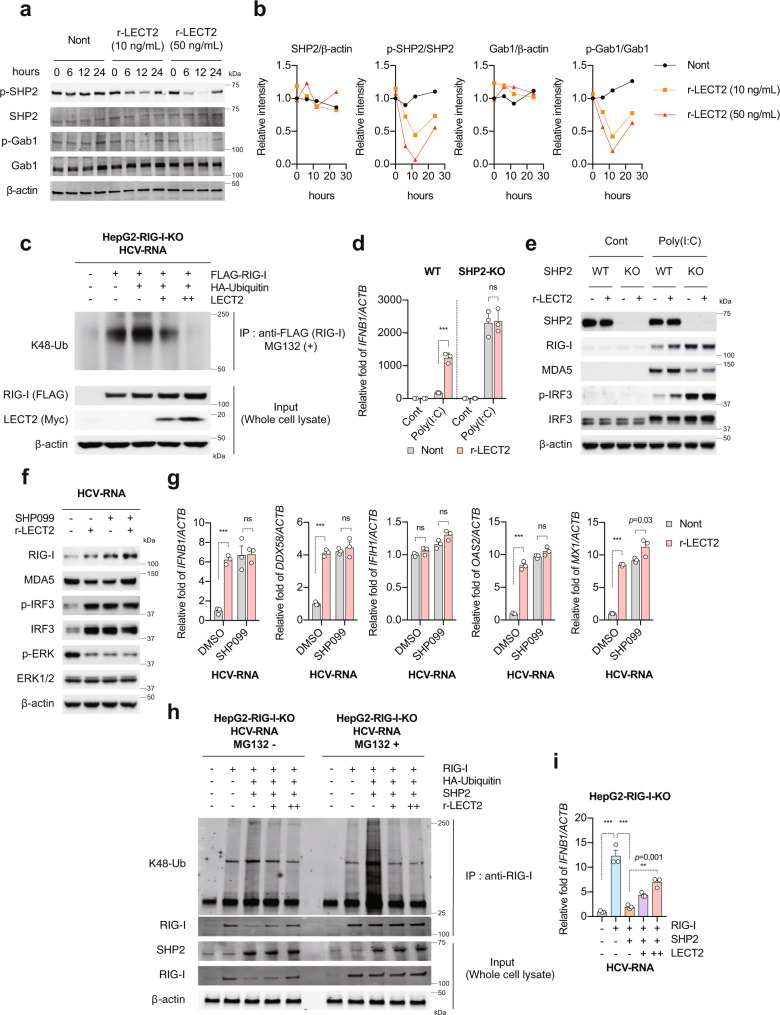
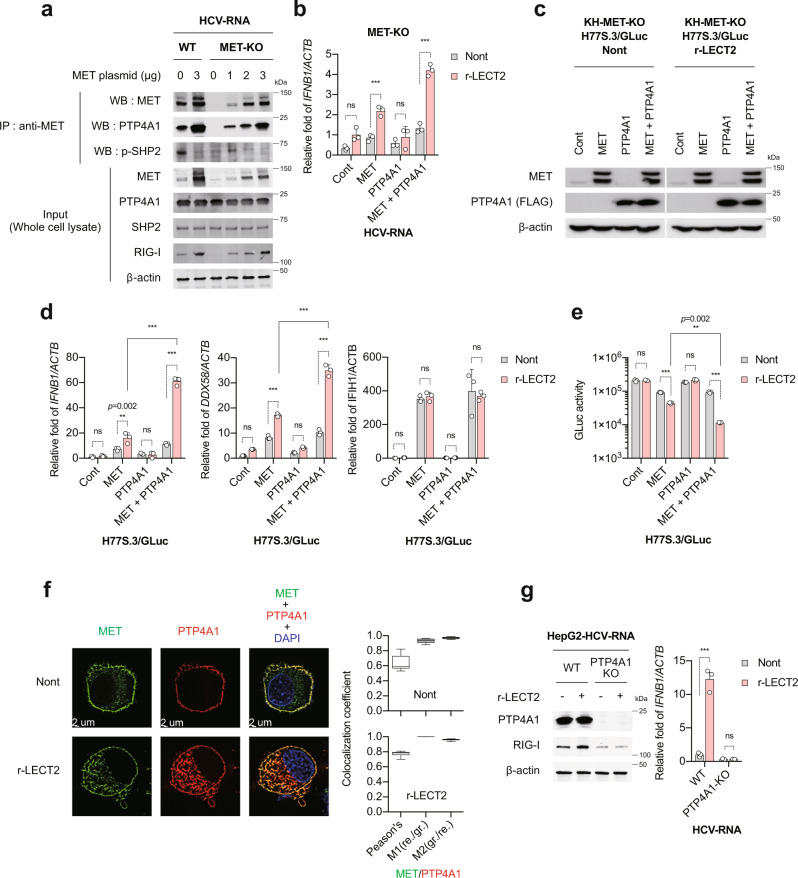
Retinoic acid-inducible gene (RIG)-I is an essential innate immune sensor that recognises pathogen RNAs and induces interferon (IFN) production. However, little is known about how host proteins regulate RIG-I activation. Here, we show that leukocyte cell-derived chemotaxin 2 (LECT2), a hepatokine and ligand of the MET receptor tyrosine kinase is an antiviral regulator that promotes the RIG-I-mediated innate immune response. Upon binding to MET, LECT2 induces the recruitment of the phosphatase PTP4A1 to MET and facilitates the dissociation and dephosphorylation of phosphorylated SHP2 from MET, thereby protecting RIG-I from SHP2/c-Cbl-mediated degradation. In vivo, LECT2 overexpression enhances RIG-I-dependent IFN production and inhibits lymphocytic choriomeningitis virus (LCMV) replication in the liver, whereas these changes are reversed in LECT2 knockout mice. Forced suppression of MET abolishes IFN production and antiviral activity in vitro and in vivo. Interestingly, hepatocyte growth factor (HGF), an original MET ligand, inhibits LECT2-mediated anti-viral signalling; conversely, LECT2-MET signalling competes with HGF-MET signalling. Our findings reveal previously unrecognized crosstalk between MET-mediated proliferation and innate immunity and suggest that targeting LECT2 may have therapeutic value in infectious diseases and cancer.
维甲酸诱导基因(RIG)-I 是一种重要的先天免疫传感器,可识别病原体 RNA 并诱导干扰素(IFN)的产生。然而,宿主蛋白如何调节 RIG-I 的激活仍知之甚少。在这里,我们发现白细胞衍生趋化因子 2(LECT2)是一种抗病毒调节剂,它是一种肝源细胞因子和 MET 受体酪氨酸激酶的配体,可促进 RIG-I 介导的先天免疫反应。与 MET 结合后,LECT2 诱导磷酸酶 PTP4A1 向 MET 的募集,并促进 SHP2 从 MET 上的解离和去磷酸化,从而保护 RIG-I 免受 SHP2/c-Cbl 介导的降解。在体内,LECT2 的过表达增强了 RIG-I 依赖性 IFN 的产生,并抑制了淋巴细胞性脉络丛脑膜炎病毒(LCMV)在肝脏中的复制,而在 LECT2 敲除小鼠中则出现相反的变化。体外和体内强制抑制 MET 会消除 IFN 的产生和抗病毒活性。有趣的是,MET 的原始配体肝细胞生长因子(HGF)抑制了 LECT2 介导的抗病毒信号;相反,LECT2-MET 信号与 HGF-MET 信号竞争。我们的研究结果揭示了 MET 介导的增殖和先天免疫之间以前未被认识到的相互作用,并表明靶向 LECT2 在传染病和癌症中可能具有治疗价值。