Micron School for Materials Science and Engineering, Boise State University, Boise, Idaho 83725, United States.
Department of Electrical & Computer Engineering, Boise State University, Boise, Idaho 83725, United States.
J Phys Chem Lett. 2022 Jun 23;13(24):5413-5423. doi: 10.1021/acs.jpclett.1c04162. Epub 2022 Jun 9.
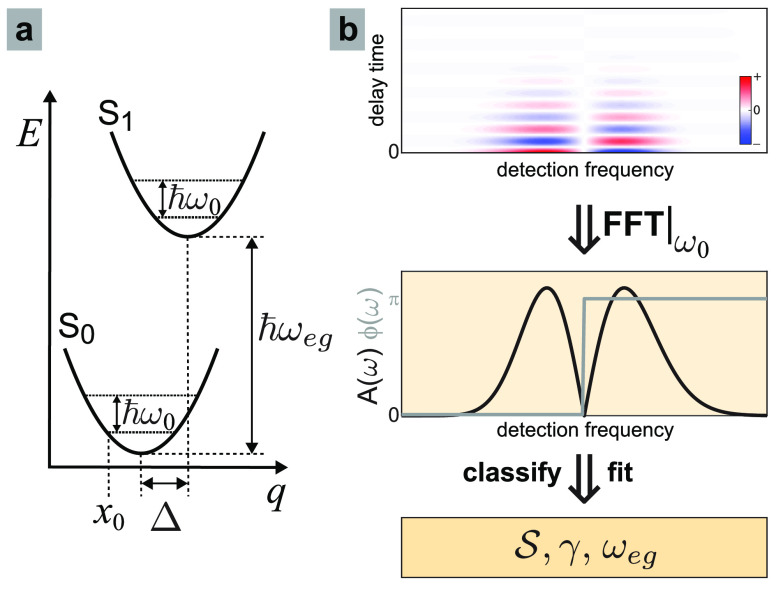
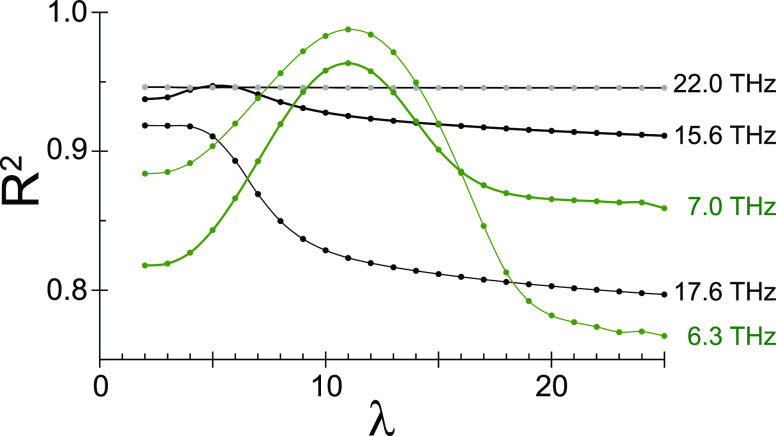
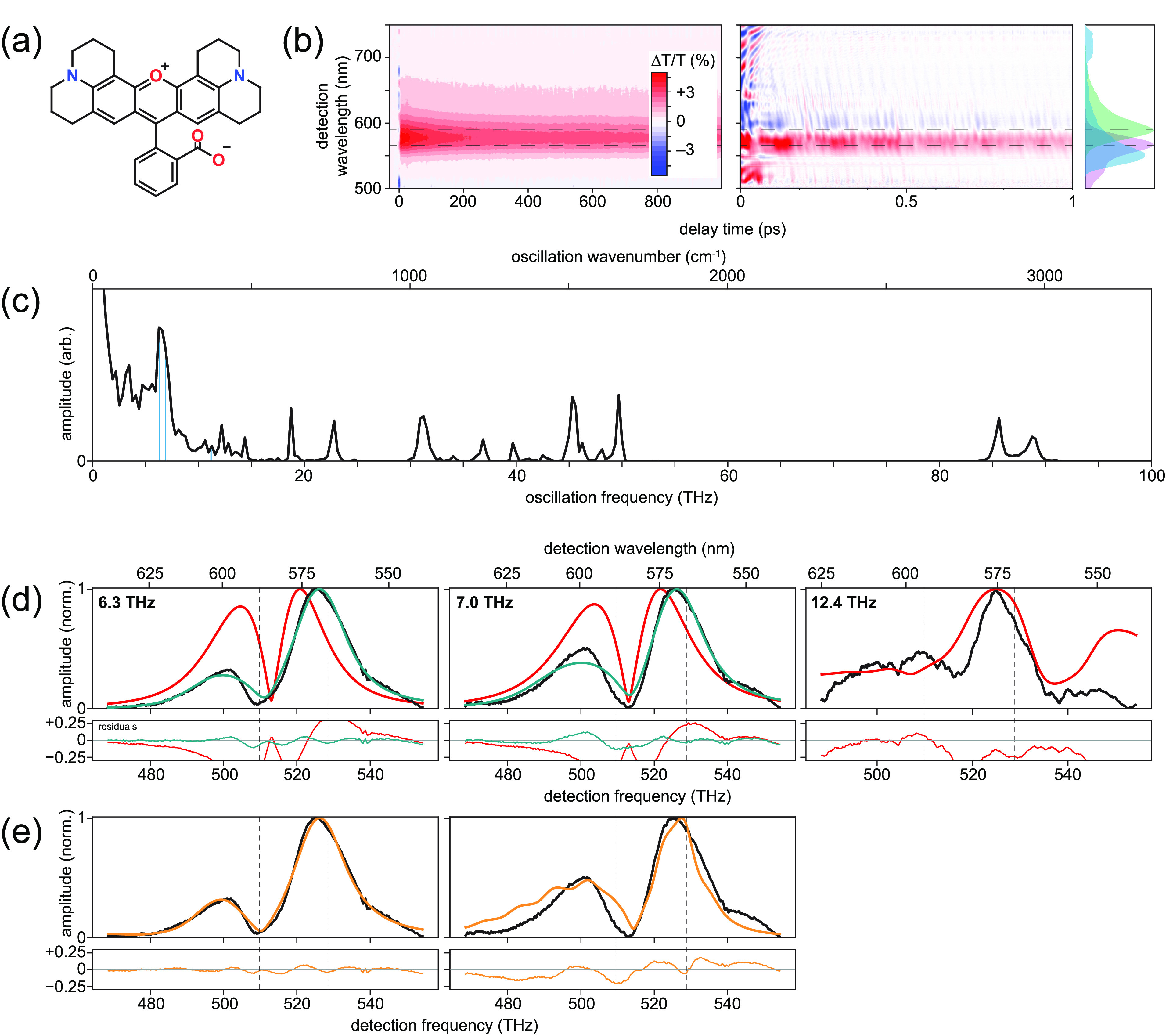
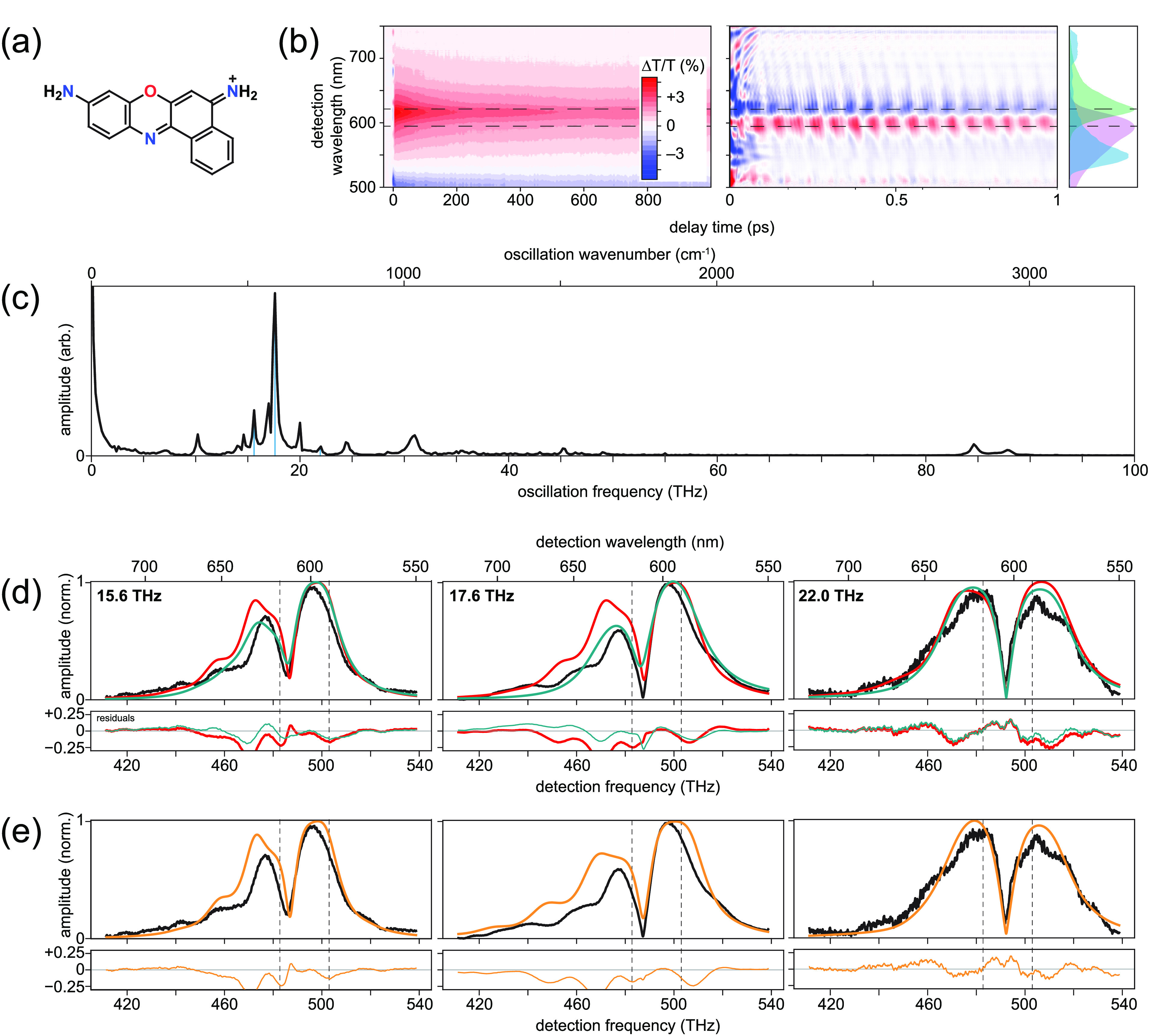
Femtosecond laser pulses readily produce coherent quantum beats in transient-absorption spectra. These oscillatory signals often arise from molecular vibrations and therefore may contain information about the excited-state potential energy surface near the Franck-Condon region. Here, by fitting the measured spectra of two laser dyes to microscopic models of femtosecond coherence spectra (FCS) arising from molecular vibrations, we classify coherent quantum-beat signals as fundamentals or overtones and quantify their Huang-Rhys factors and anharmonicity values. We discuss the extracted Huang-Rhys factors in the context of quantum-chemical computations. This work solidifies the use of FCS for analysis of coherent quantum beats arising from molecular vibrations, which will aid studies of molecular aggregates and photosynthetic proteins.
飞秒激光脉冲很容易在瞬态吸收光谱中产生相干量子拍频。这些振荡信号通常来自分子振动,因此可能包含有关 Franck-Condon 区域附近激发态势能面的信息。在这里,通过将两种激光染料的测量光谱拟合到由分子振动产生的飞秒相干光谱(FCS)的微观模型中,我们将相干量子拍频信号分类为基频或泛频,并量化它们的 Huang-Rhys 因子和非谐性值。我们在量子化学计算的背景下讨论了提取的 Huang-Rhys 因子。这项工作巩固了使用 FCS 分析来自分子振动的相干量子拍频的方法,这将有助于对分子聚集体和光合蛋白的研究。