Yamashita Nami, Fushimi Atsushi, Morimoto Yoshihiro, Bhattacharya Atrayee, Hagiwara Masayuki, Yamamoto Masaaki, Hata Tsuyoshi, Shapiro Geoffrey I, Long Mark D, Liu Song, Kufe Donald
Dana-Farber Cancer Institute, Harvard Medical School, 450 Brookline Avenue, D830, Boston, MA 02215, USA.
Department of Biostatistics & Bioinformatics, Roswell Park Comprehensive Cancer Center,Buffalo, NY 14263, USA.
Cancers (Basel). 2022 May 24;14(11):2580. doi: 10.3390/cancers14112580.
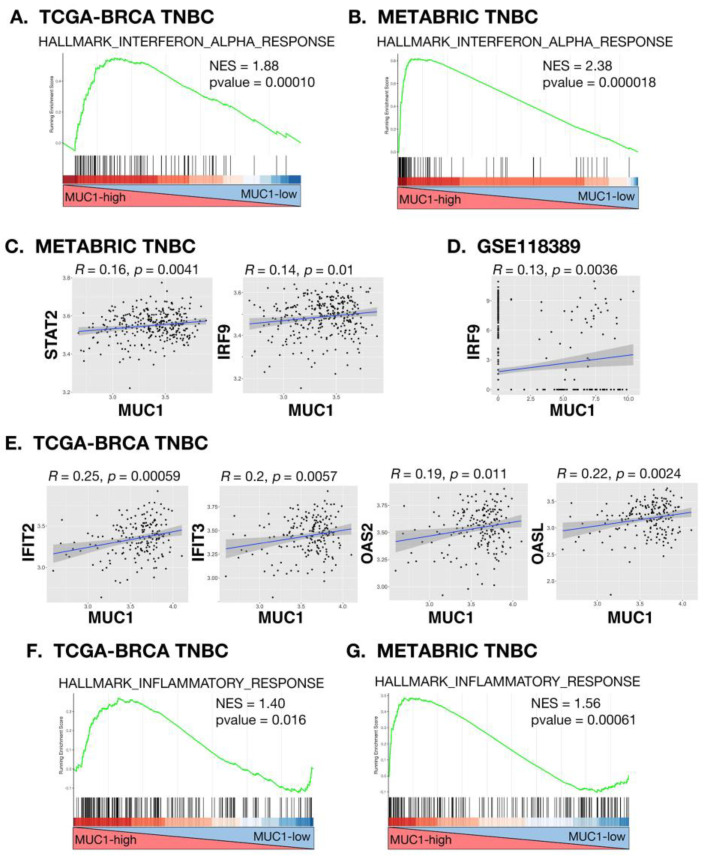
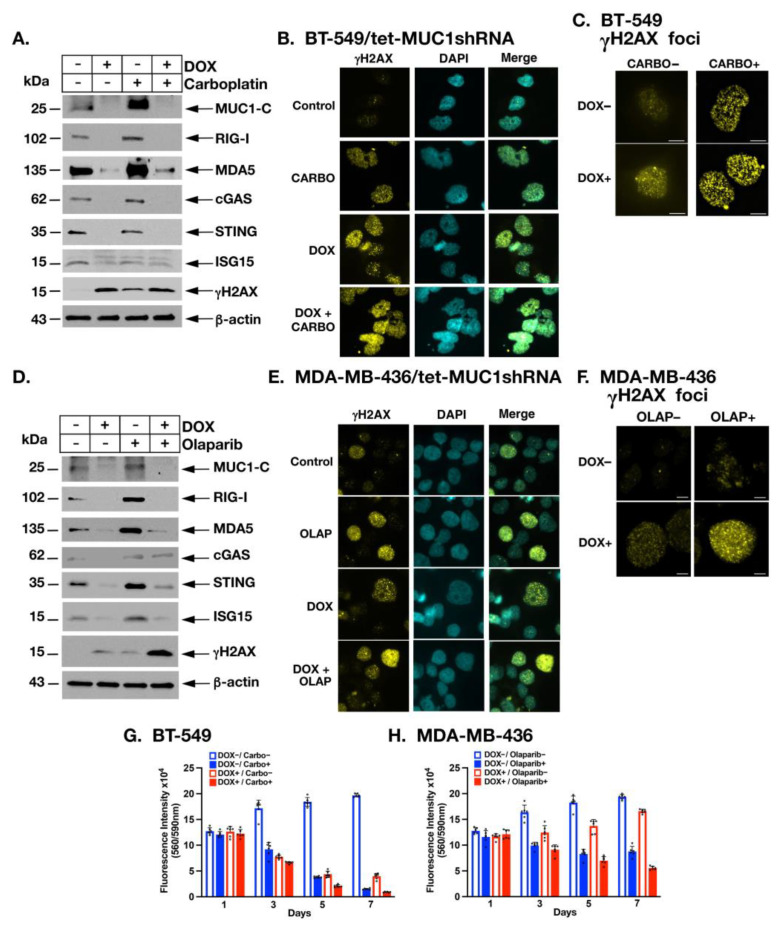
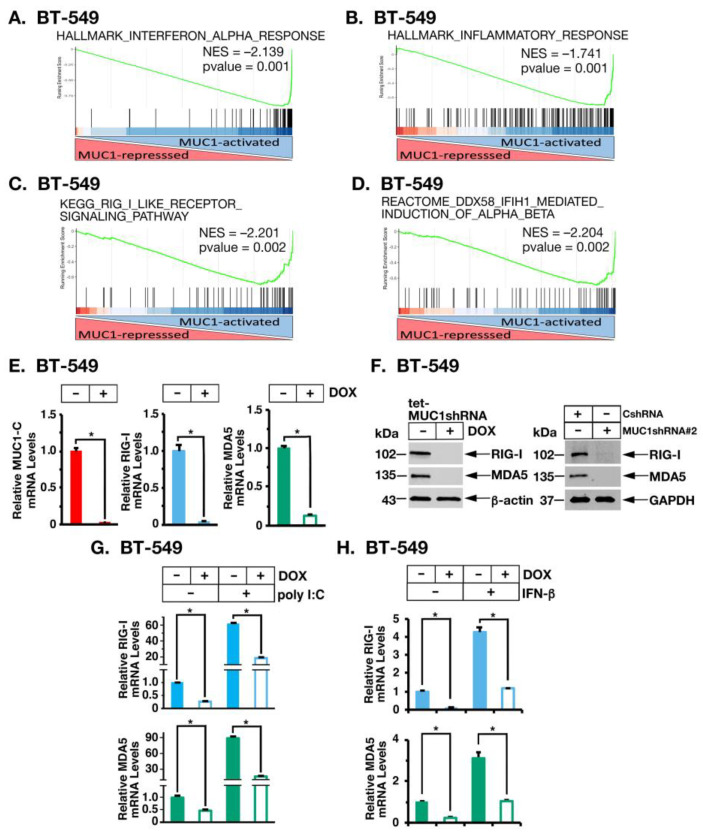
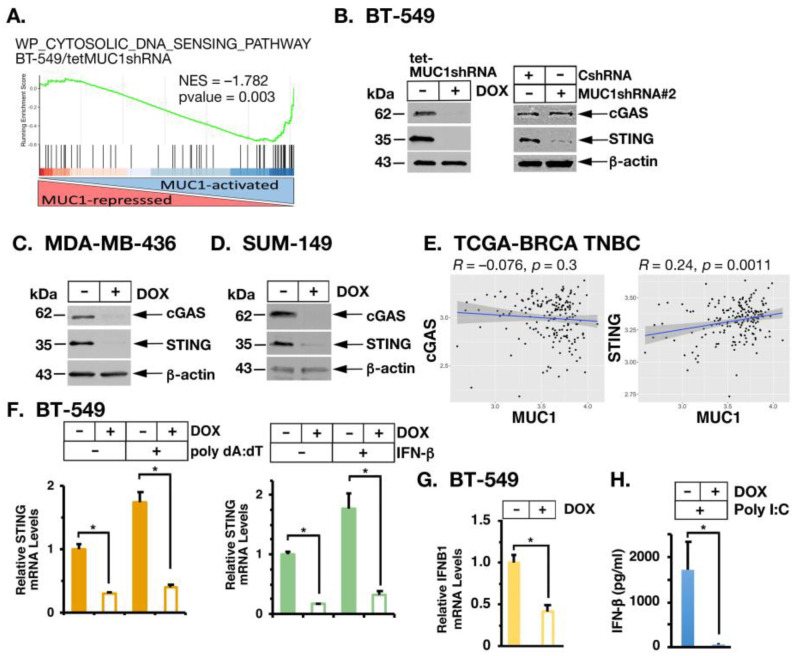
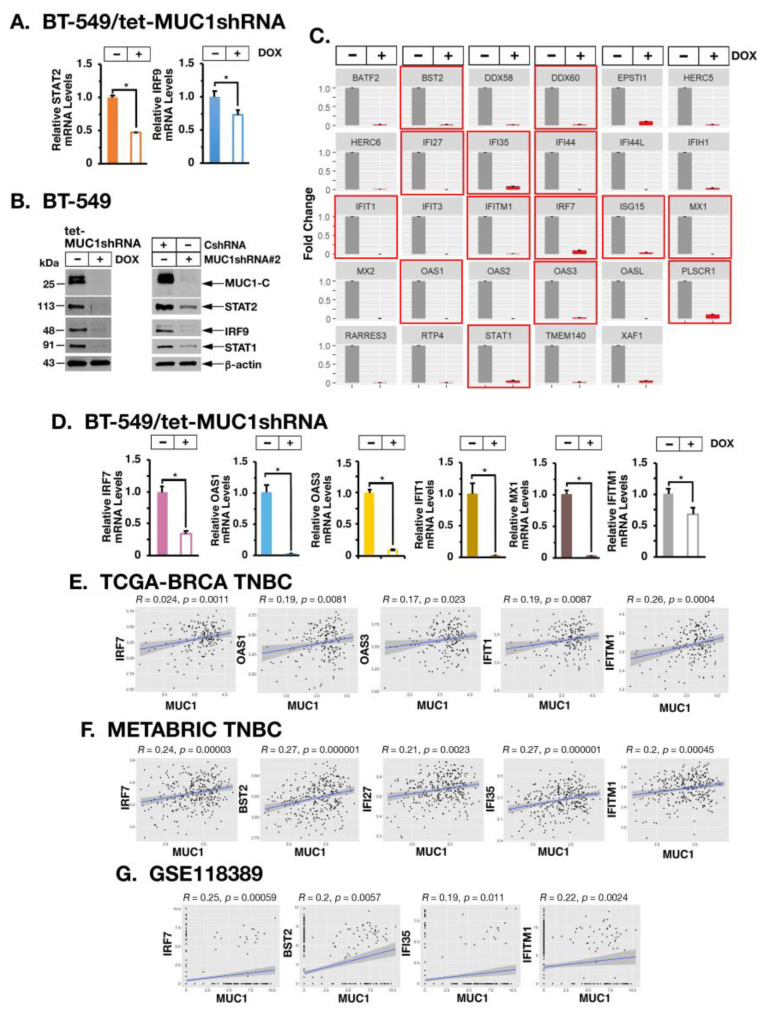
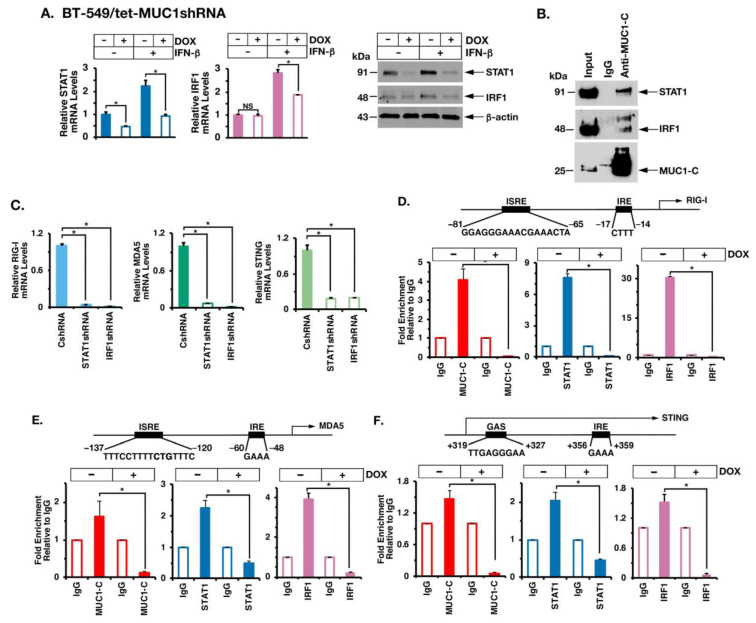
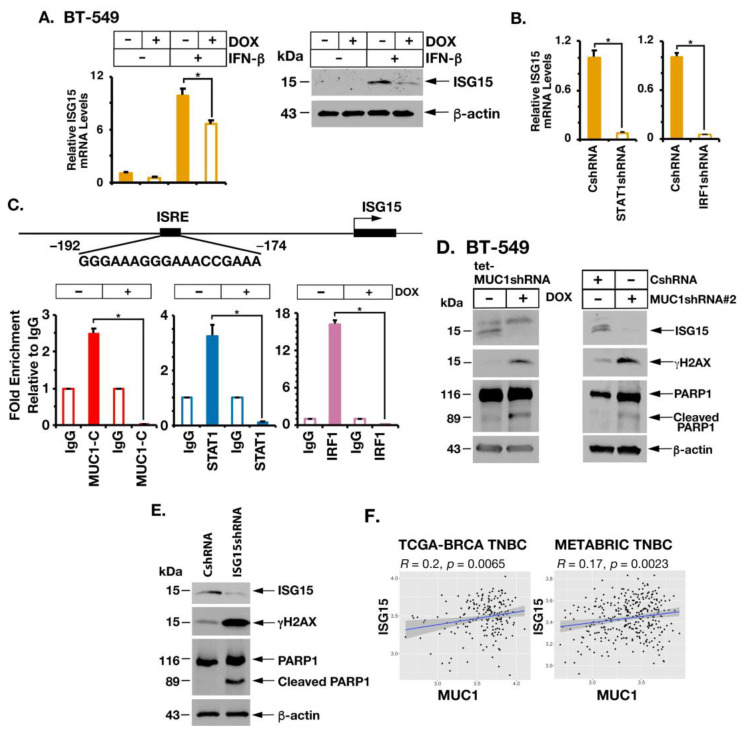
The MUC1-C apical transmembrane protein is activated in the acute response of epithelial cells to inflammation. However, chronic MUC1-C activation promotes cancer progression, emphasizing the importance of MUC1-C as a target for treatment. We report here that MUC1-C is necessary for intrinsic expression of the RIG-I, MDA5 and cGAS cytosolic nucleotide pattern recognition receptors (PRRs) and the cGAS-stimulator of IFN genes (STING) in triple-negative breast cancer (TNBC) cells. Consistent with inducing the PRR/STING axis, MUC1-C drives chronic IFN-β production and activation of the type I interferon (IFN) pathway. MUC1-C thereby induces the IFN-related DNA damage resistance gene signature (IRDS), which includes ISG15, in linking chronic inflammation with DNA damage resistance. Targeting MUC1-C in TNBC cells treated with carboplatin or the PARP inhibitor olaparib further demonstrated that MUC1-C is necessary for expression of PRRs, STING and ISG15 and for intrinsic DNA damage resistance. Of translational relevance, MUC1 significantly associates with upregulation of STING and ISG15 in TNBC tumors and is a target for treatment with CAR T cells, antibody-drug conjugates (ADCs) and direct inhibitors that are under preclinical and clinical development.
MUC1-C顶端跨膜蛋白在上皮细胞对炎症的急性反应中被激活。然而,MUC1-C的慢性激活会促进癌症进展,这凸显了MUC1-C作为治疗靶点的重要性。我们在此报告,在三阴性乳腺癌(TNBC)细胞中,MUC1-C对于视黄酸诱导基因I(RIG-I)、黑色素瘤分化相关基因5(MDA5)和环鸟苷酸-腺苷酸合成酶(cGAS)等胞质核苷酸模式识别受体(PRRs)以及干扰素基因刺激因子(STING)的内在表达是必需的。与诱导PRR/STING轴一致,MUC1-C驱动慢性干扰素-β的产生和I型干扰素(IFN)途径的激活。MUC1-C从而诱导干扰素相关的DNA损伤抗性基因特征(IRDS),其中包括ISG15,将慢性炎症与DNA损伤抗性联系起来。在用卡铂或聚(ADP-核糖)聚合酶(PARP)抑制剂奥拉帕利处理的TNBC细胞中靶向MUC1-C进一步证明,MUC1-C对于PRRs、STING和ISG15的表达以及内在DNA损伤抗性是必需的。在转化相关性方面,MUC1在TNBC肿瘤中与STING和ISG15的上调显著相关,并且是嵌合抗原受体(CAR)T细胞、抗体药物偶联物(ADCs)和处于临床前和临床开发阶段的直接抑制剂治疗的靶点。