Somppi Sanni, Törnqvist Heini, Koskela Aija, Vehkaoja Antti, Tiira Katriina, Väätäjä Heli, Surakka Veikko, Vainio Outi, Kujala Miiamaaria V
Department of Equine and Small Animal Medicine, Faculty of Veterinary Medicine, University of Helsinki, P.O. Box 57, FI-00014 Helsinki, Finland.
Department of Psychology, Faculty of Education and Psychology, University of Jyväskylä, P.O. Box 35, FI-40014 Jyväskylä, Finland.
Animals (Basel). 2022 May 24;12(11):1338. doi: 10.3390/ani12111338.
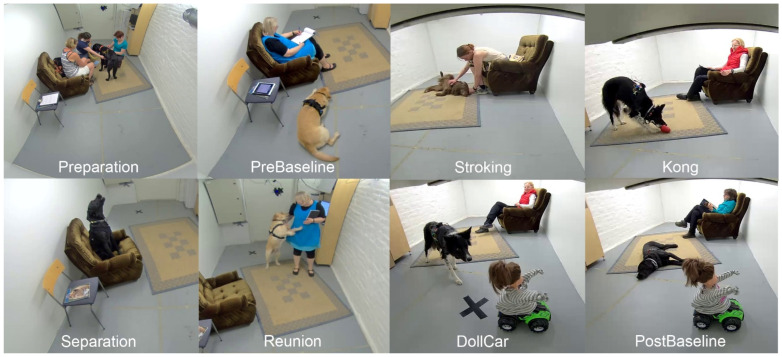
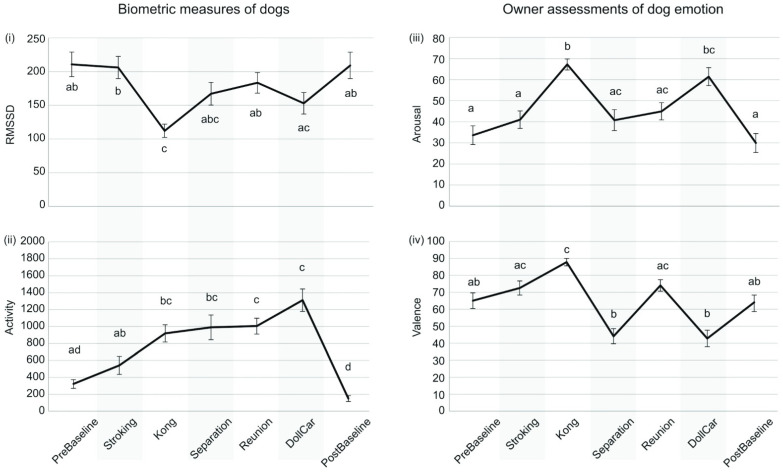
We evaluated the effect of the dog-owner relationship on dogs' emotional reactivity, quantified with heart rate variability (HRV), behavioral changes, physical activity and dog owner interpretations. Twenty nine adult dogs encountered five different emotional situations (i.e., stroking, a feeding toy, separation from the owner, reunion with the owner, a sudden appearance of a novel object). The results showed that both negative and positive situations provoked signs of heightened arousal in dogs. During negative situations, owners' ratings about the heightened emotional arousal correlated with lower HRV, higher physical activity and more behaviors that typically index arousal and fear. The three factors of The Monash Dog-Owner Relationship Scale (MDORS) were reflected in the dogs' heart rate variability and behaviors: the Emotional Closeness factor was related to increased HRV ( = 0.009), suggesting this aspect is associated with the secure base effect, and the Shared Activities factor showed a trend toward lower HRV ( = 0.067) along with more owner-directed behaviors reflecting attachment related arousal. In contrast, the Perceived Costs factor was related to higher HRV ( = 0.009) along with less fear and less owner-directed behaviors, which may reflect the dog's more independent personality. In conclusion, dogs' emotional reactivity and the dog-owner relationship modulate each other, depending on the aspect of the relationship and dogs' individual responsivity.
我们评估了狗与主人的关系对狗的情绪反应性的影响,通过心率变异性(HRV)、行为变化、身体活动以及狗主人的解读来进行量化。29只成年狗经历了五种不同的情绪情境(即抚摸、喂食玩具、与主人分离、与主人团聚、新物体突然出现)。结果表明,负面和正面情境都会引发狗的兴奋迹象增强。在负面情境中,主人对情绪兴奋增强的评分与较低的HRV、较高的身体活动以及更多通常表明兴奋和恐惧的行为相关。莫纳什狗主人关系量表(MDORS)的三个因素反映在狗的心率变异性和行为中:情感亲密因素与HRV增加有关(=0.009),表明这一方面与安全基地效应相关,共享活动因素显示出HRV降低的趋势(=0.067)以及更多反映依恋相关兴奋的指向主人的行为。相比之下,感知成本因素与较高的HRV(=0.009)以及较少的恐惧和较少的指向主人的行为相关,这可能反映了狗更独立的个性。总之,狗的情绪反应性和狗与主人的关系相互调节,这取决于关系的方面和狗的个体反应性。