Key Laboratory of Forest Protection of National Forestry and Grassland Administration, Ecology and Nature Conservation Institute, Chinese Academy of Forestry, Beijing 100091, China.
Int J Mol Sci. 2022 May 31;23(11):6182. doi: 10.3390/ijms23116182.
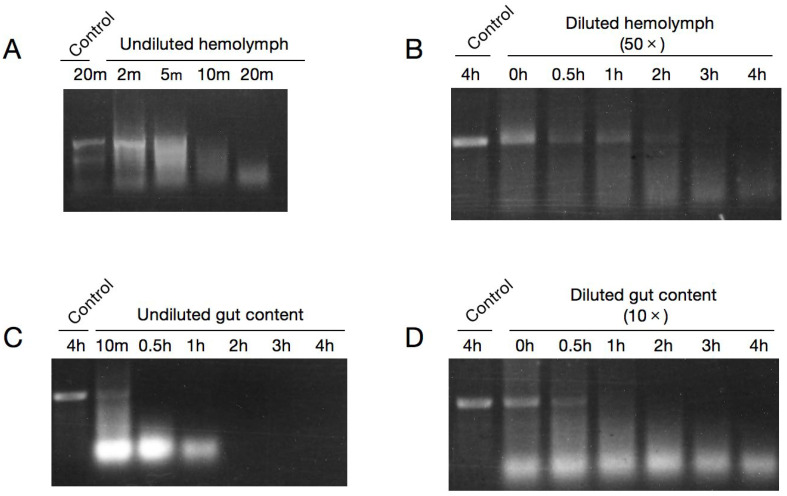
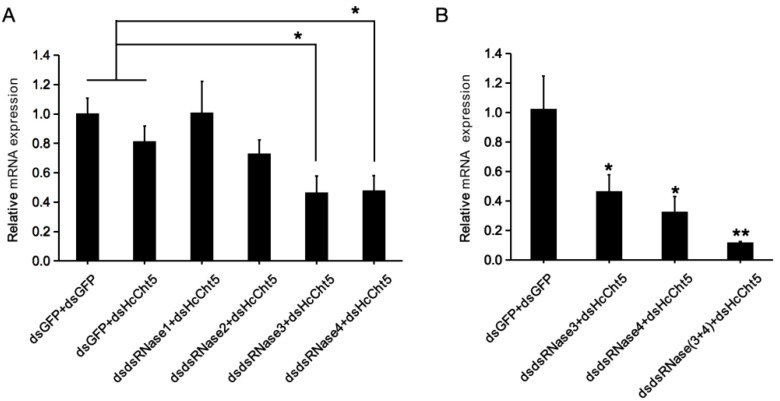
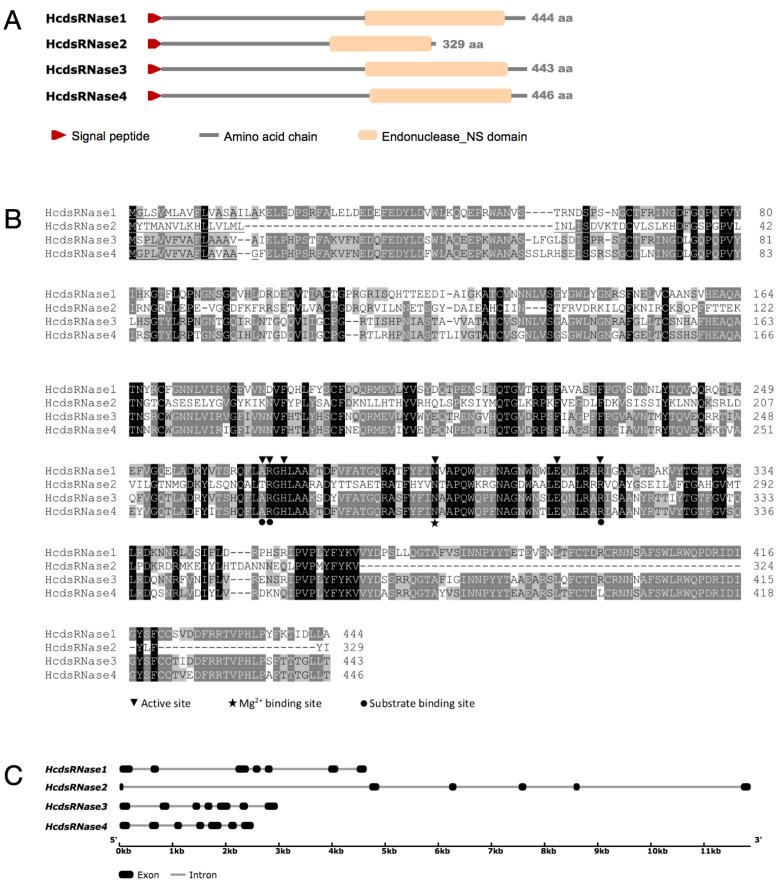
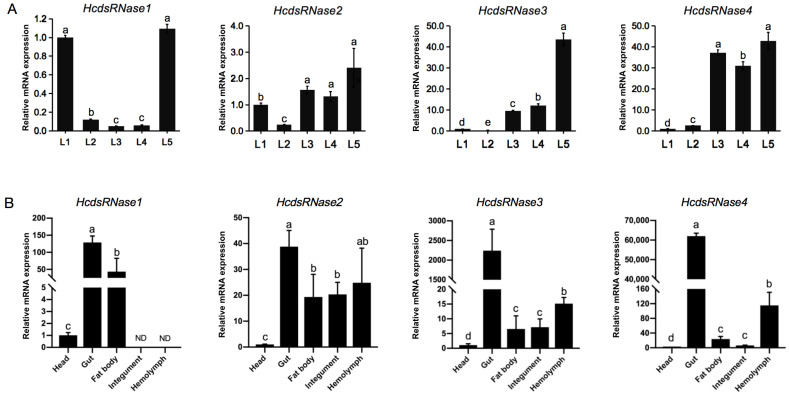
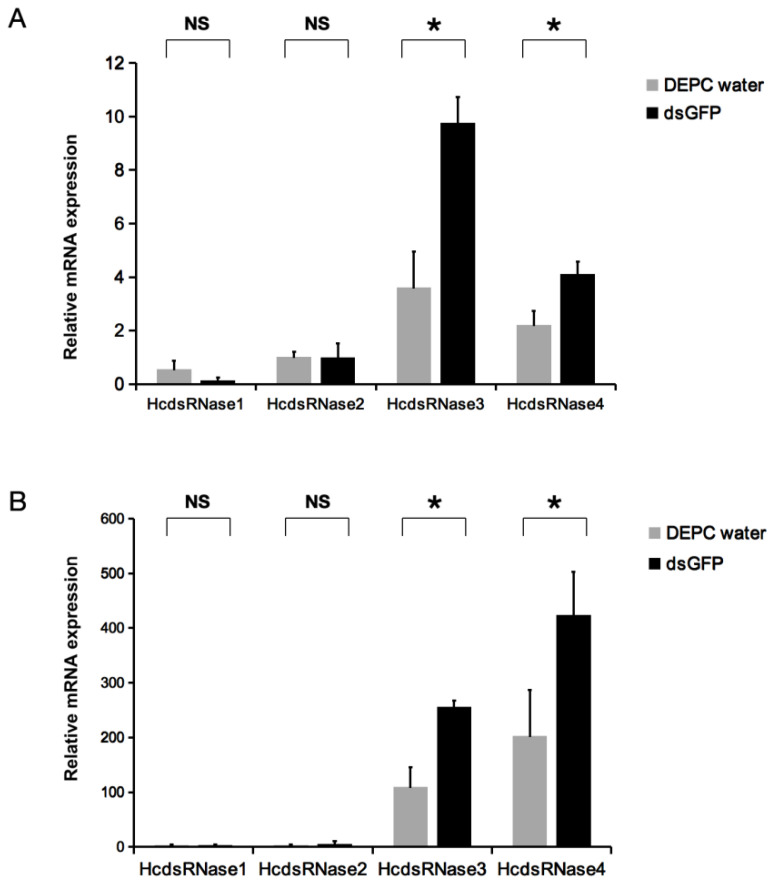
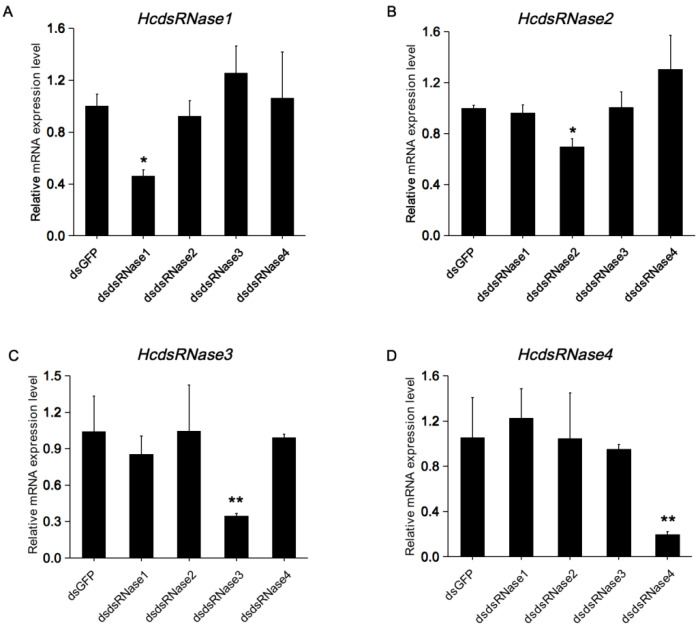
RNA interference (RNAi) technology is a promising approach used in pest control. The efficiency of RNAi varies considerably among different insect species, and growing evidence suggests that degradation of double-stranded RNA (dsRNA) prior to uptake is an important factor that limits RNAi efficiency in insects. Our recent work on fall webworm (), an important invasive pest in China, showed a relatively low silencing efficiency of RNAi through dsRNA injection, which is considered the most feasible dsRNA delivery method for inducing RNAi, and the factors involved in the mechanism remain unknown. Herein, we first detected the dsRNA-degrading activity in the hemolymph and gut content of in ex vivo assays and observed rapid degradation of dsRNA, especially in the hemolymph, which was complete within only 10 min. To determine whether dsRNA degradation could contribute to the low effectiveness of RNAi in , four dsRNA nuclease () genes, , and were identified by homology searching against the transcriptome database, and their transcript levels were subsequently investigated in different tissues, developmental stages, and after dsRNA injection. Our results show that are highly expressed mainly in gut tissues and hemolymph, and the expression of and were significantly upregulated by dsGFP induction. RNAi-of-RNAi studies, using as a reporter gene, demonstrated that silencing and significantly increases RNAi efficacy via dsHcCht5 injection, and co-silencing these two genes results in a more significant improvement in efficacy. These results confirm that the RNAi efficacy in through dsRNA injection is certainly impaired by dsRNase activity, and that blocking could potentially improve RNAi, providing a reference for related studies on insects where RNAi has low efficiency.
RNA 干扰(RNAi)技术是一种用于害虫防治的有前途的方法。RNAi 的效率在不同的昆虫物种中差异很大,越来越多的证据表明,在吸收之前双链 RNA(dsRNA)的降解是限制昆虫中 RNAi 效率的一个重要因素。我们最近在中国重要的入侵害虫舞毒蛾()上的研究表明,通过 dsRNA 注射的 RNAi 沉默效率相对较低,dsRNA 注射被认为是诱导 RNAi 最可行的 dsRNA 递送方法,而涉及的机制因素尚不清楚。在此,我们首先在离体实验中检测了舞毒蛾的血淋巴和肠道内容物中的 dsRNA 降解活性,并观察到 dsRNA 的快速降解,特别是在血淋巴中,仅在 10 分钟内就完全降解。为了确定 dsRNA 降解是否会导致 RNAi 在舞毒蛾中的低效率,我们通过同源搜索对转录组数据库进行了搜索,鉴定了四个 dsRNA 核酸酶()基因、和,并随后在不同组织、发育阶段以及 dsRNA 注射后研究了它们的转录水平。我们的结果表明,主要在肠道组织和血淋巴中高度表达,并且 dsGFP 诱导显著上调了和的表达。使用作为报告基因的 RNAi-of-RNAi 研究表明,沉默和可显著通过 dsHcCht5 注射提高 RNAi 效率,并且这两个基因的共沉默导致效率的显著提高。这些结果证实了通过 dsRNA 注射在舞毒蛾中 RNAi 的功效确实受到 dsRNase 活性的损害,并且阻断可能潜在地提高 RNAi,为 RNAi 效率低的昆虫相关研究提供了参考。