Health Sciences Research Centre (CICS-UBI), Faculty of Health Sciences, University of Beira Interior, 6200-506 Covilhã, Portugal.
Department of Molecular Genetics, Faculty of Sciences and Engineering, Maastricht University, Maastricht 6200, the Netherlands; CNC-Center for Neuroscience and Cell Biology, CIBB-Centre for Innovative Biomedicine and Biotechnology, University of Coimbra, UC, Biotech Parque Tecnológico de Cantanhede, 3060-197 Cantanhede, Portugal.
Mol Ther. 2022 Oct 5;30(10):3176-3192. doi: 10.1016/j.ymthe.2022.06.003. Epub 2022 Jun 9.
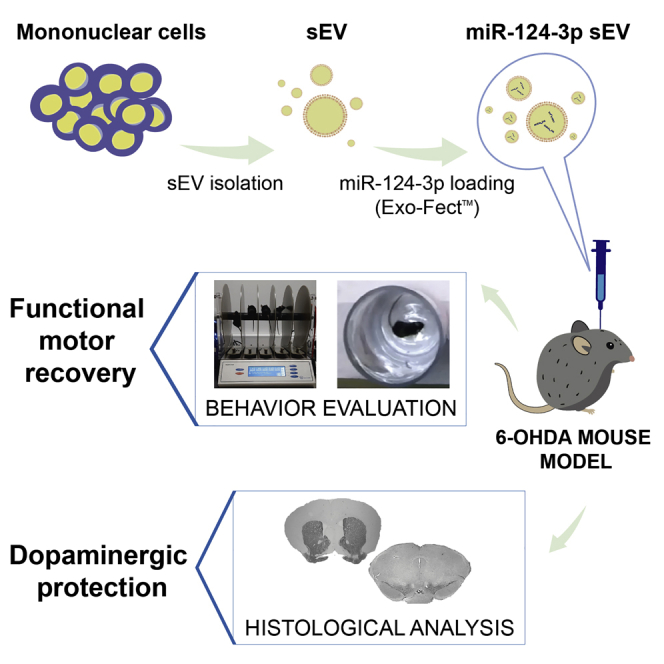
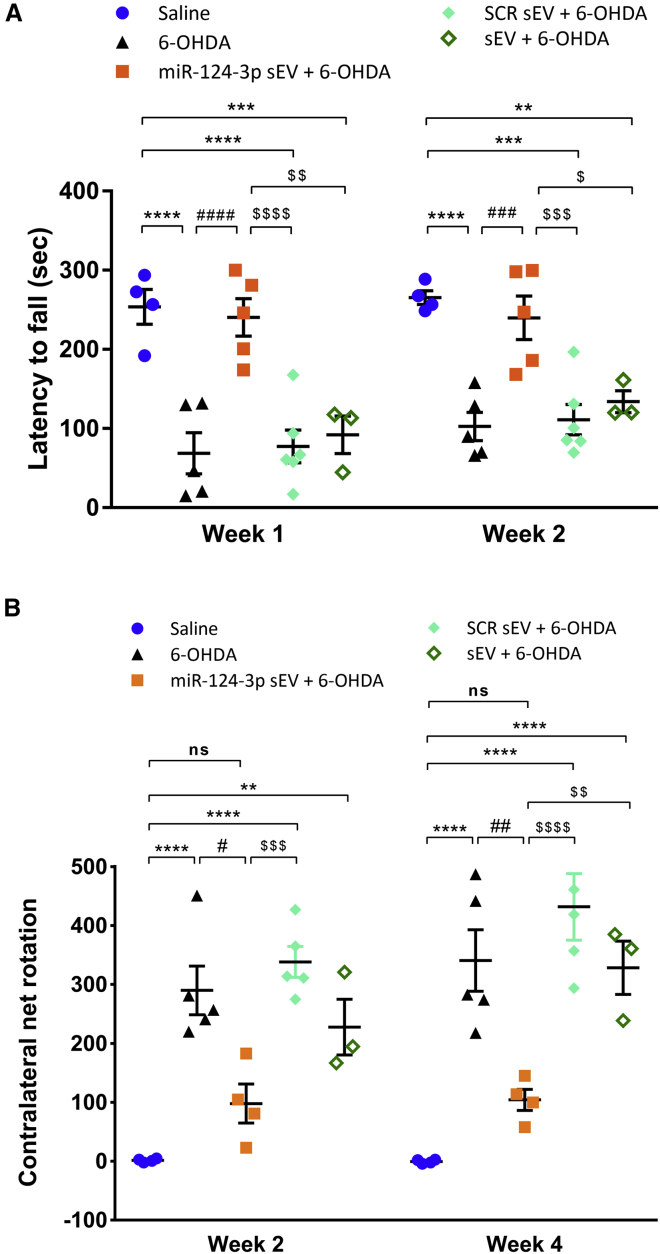
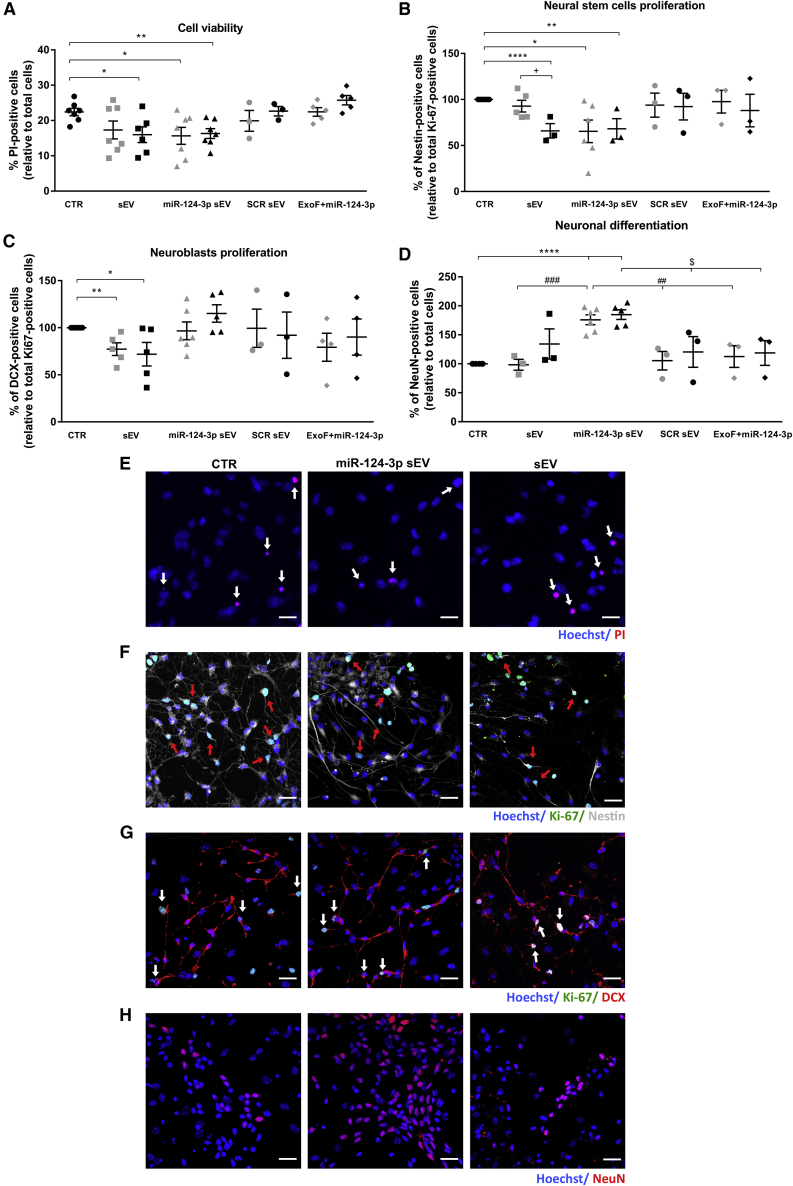
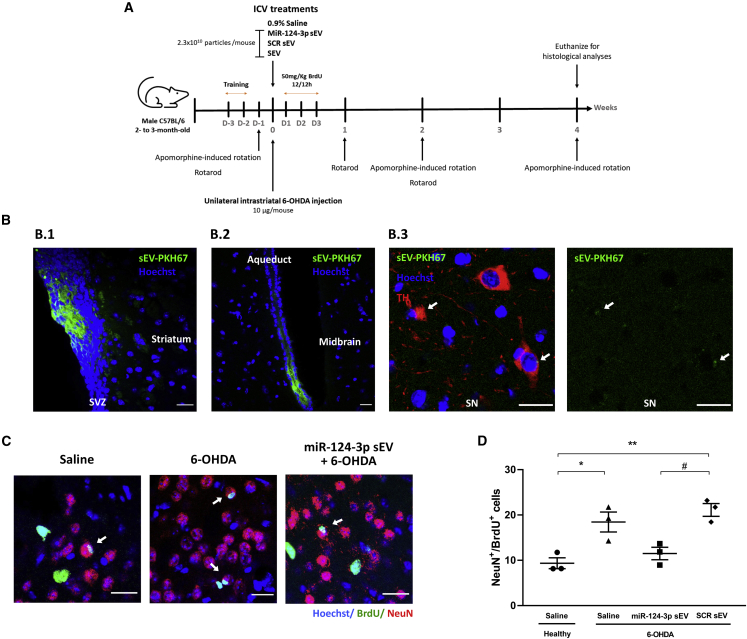
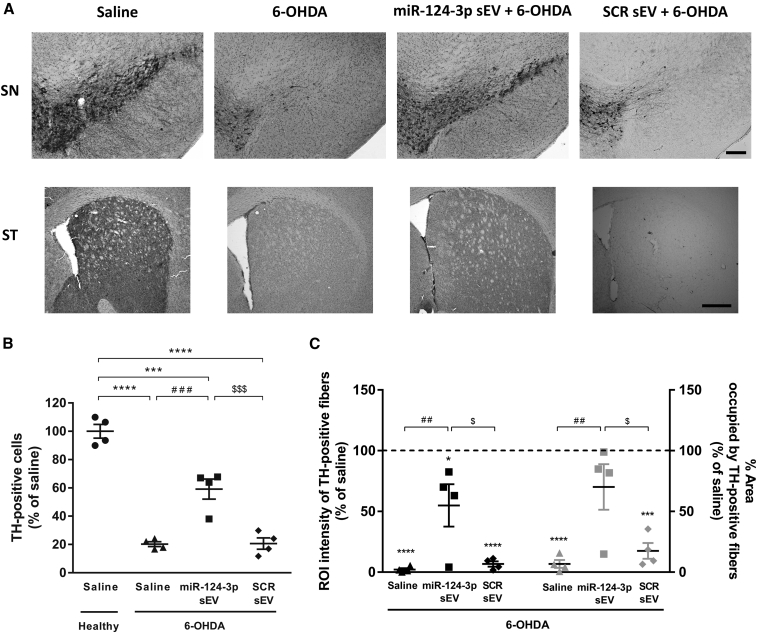
Parkinson's disease is a neurodegenerative disease characterized by the loss of dopaminergic neurons in the substantia nigra with no effective cure available. MicroRNA-124 has been regarded as a promising therapeutic entity for Parkinson's disease due to its pro-neurogenic and neuroprotective roles. However, its efficient delivery to the brain remains challenging. Here, we used umbilical cord blood mononuclear cell-derived extracellular vesicles as a biological vehicle to deliver microRNA (miR)-124-3p and evaluate its therapeutic effects in a mouse model of Parkinson's disease. In vitro, miR-124-3p-loaded small extracellular vesicles induced neuronal differentiation in subventricular zone neural stem cell cultures and protected N27 dopaminergic cells against 6-hydroxydopamine-induced toxicity. In vivo, intracerebroventricularly administered small extracellular vesicles were detected in the subventricular zone lining the lateral ventricles and in the striatum and substantia nigra, the brain regions most affected by the disease. Most importantly, although miR-124-3p-loaded small extracellular vesicles did not increase the number of new neurons in the 6-hydroxydopamine-lesioned striatum, the formulation protected dopaminergic neurons in the substantia nigra and striatal fibers, which fully counteracted motor behavior symptoms. Our findings reveal a novel promising therapeutic application of small extracellular vesicles as delivery agents for miR-124-3p in the context of Parkinson's disease.
帕金森病是一种神经退行性疾病,其特征是黑质中多巴胺能神经元丧失,目前尚无有效的治疗方法。由于其具有促神经生成和神经保护作用,微小 RNA-124 被认为是治疗帕金森病的一种有前途的治疗实体。然而,将其有效地递送到大脑仍然具有挑战性。在这里,我们使用脐带血单核细胞衍生的细胞外囊泡作为生物载体来递送微小 RNA(miR)-124-3p,并在帕金森病小鼠模型中评估其治疗效果。在体外,负载 miR-124-3p 的小细胞外囊泡诱导侧脑室下区神经干细胞培养物中的神经元分化,并保护 N27 多巴胺能细胞免受 6-羟多巴胺诱导的毒性。在体内,脑室内给予的小细胞外囊泡在侧脑室衬里的室下区和纹状体以及黑质中被检测到,这些是受疾病影响最严重的大脑区域。最重要的是,尽管负载 miR-124-3p 的小细胞外囊泡并未增加 6-羟多巴胺损伤纹状体中新神经元的数量,但该制剂保护了黑质中的多巴胺能神经元和纹状体纤维,完全对抗了运动行为症状。我们的研究结果揭示了小细胞外囊泡作为 miR-124-3p 在帕金森病背景下的递药载体的新的有前途的治疗应用。