Department of Neurology & Institute of Neurology, Ruijin Hospital, Affiliated with Shanghai Jiao Tong University School of Medicine, Shanghai, 200025, China.
School of Life Science and Technology, ShanghaiTech University, Shanghai, 201210, China.
J Neuroinflammation. 2022 Jun 11;19(1):140. doi: 10.1186/s12974-022-02520-z.
Anti-IgLON5 disease is a rare neurological disorder associated with autoantibodies against the neuronal cell adhesion protein, IgLON5. Cellular investigations with human IgLON5 antibodies have suggested an antibody-mediated pathogenesis, but whether human IgLON5 autoantibodies can induce disease symptoms in mice is yet to be shown. Moreover, the effects of anti-IgLON5 autoantibodies on neurons and the precise molecular mechanisms in vivo remain controversial.
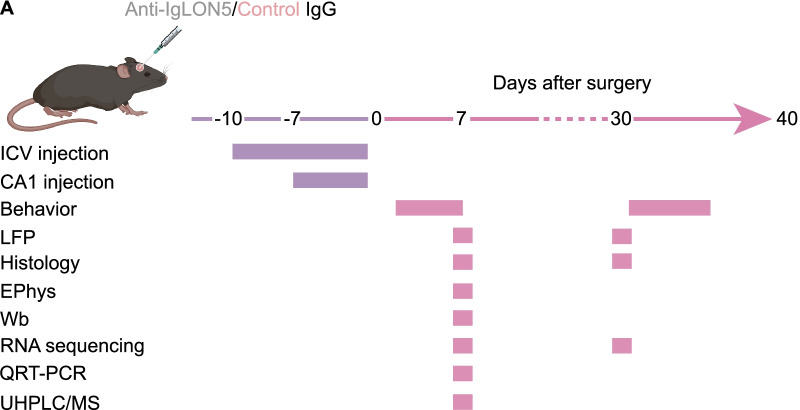
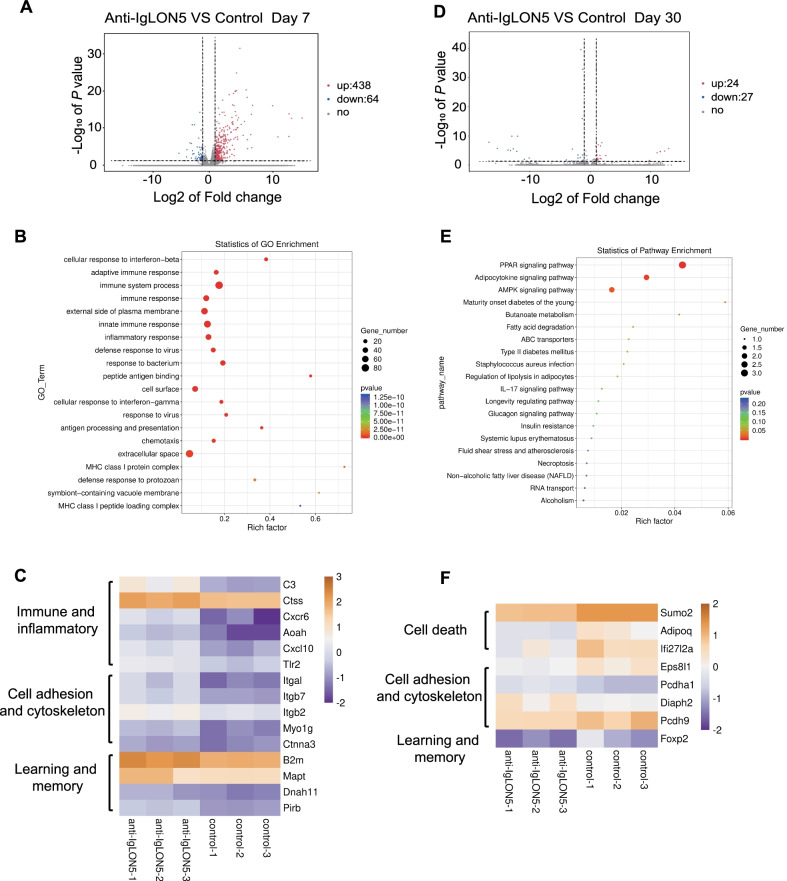
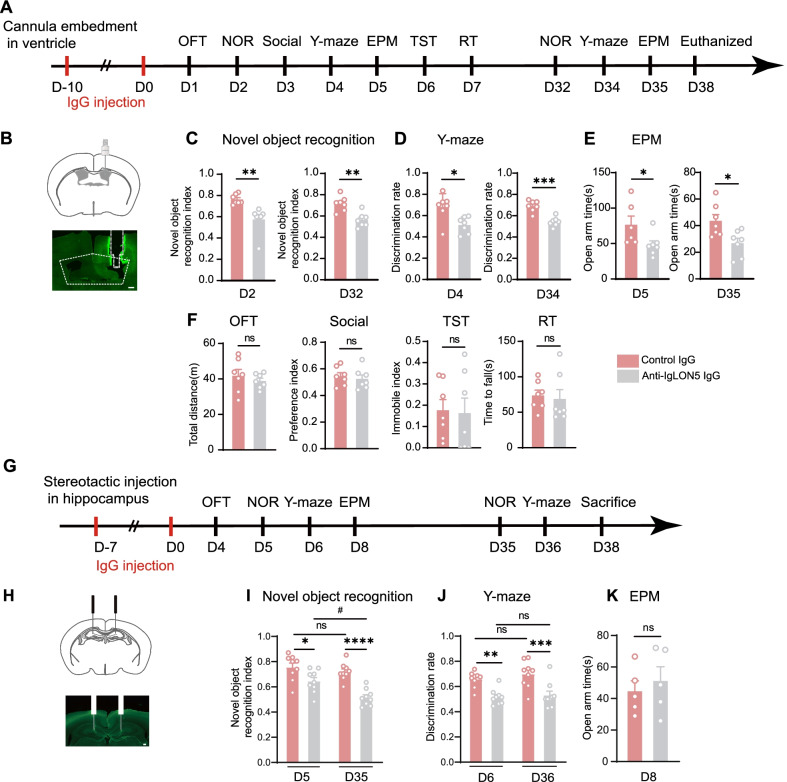
We investigated the effects of anti-IgLON5 antibodies in vivo and evaluated their long-term effects. We used two independent passive-transfer animal models and evaluated the effects of the antibodies on mouse behaviors at different time points from day 1 until day 30 after IgG infusion. A wide range of behaviors, including tests of locomotion, coordination, memory, anxiety, depression and social interactions were established. At termination, brain tissue was analyzed for human IgG, neuronal markers, glial markers, synaptic markers and RNA sequencing.
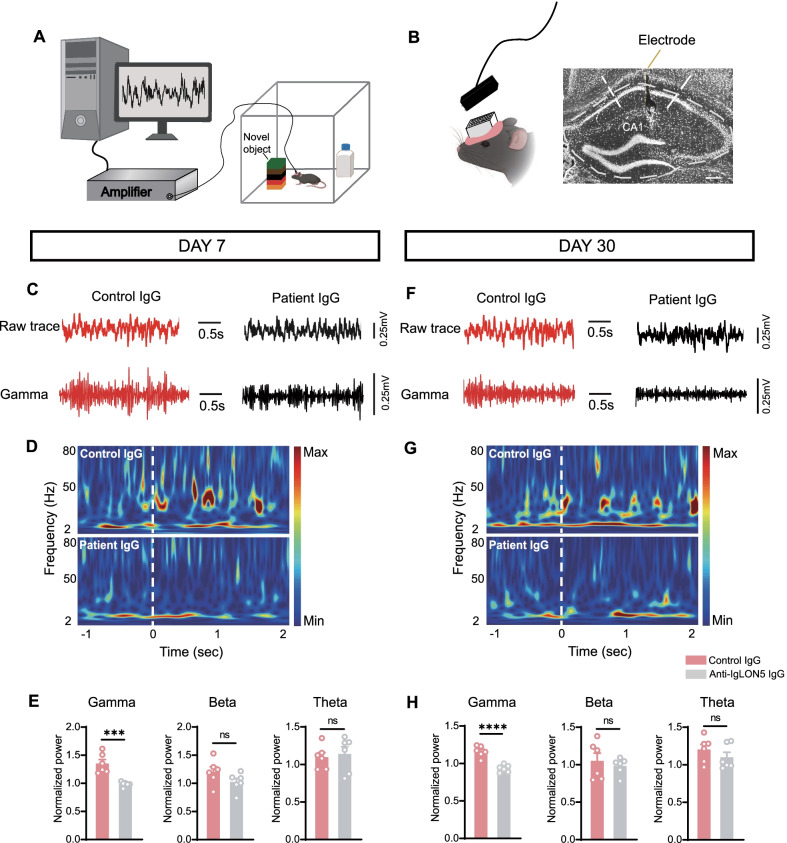
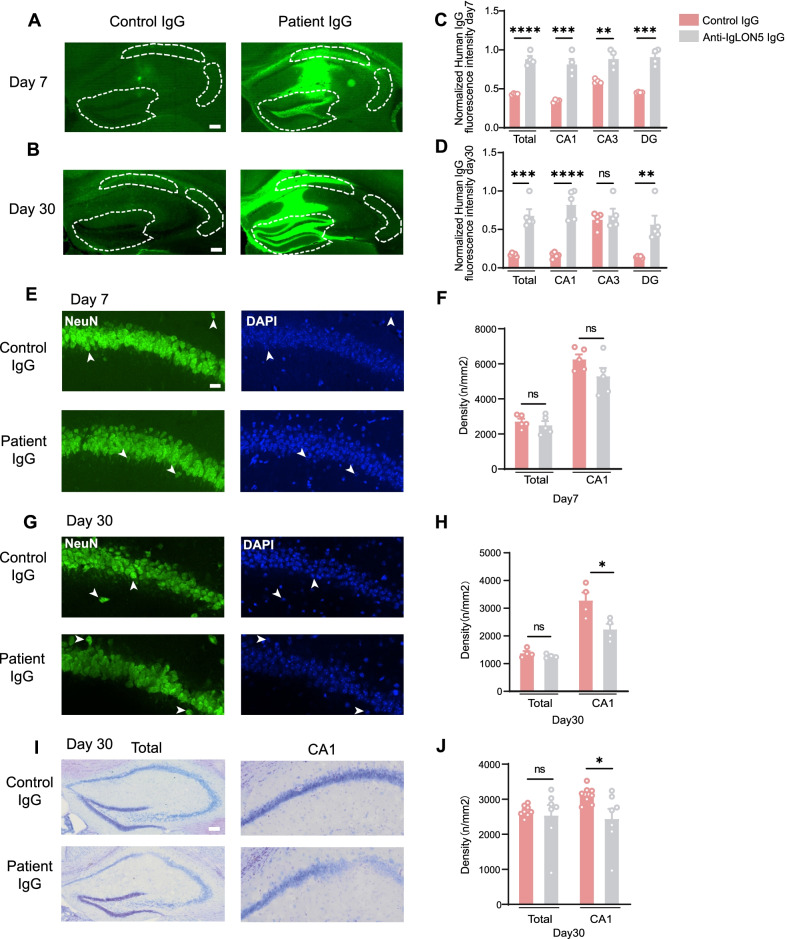
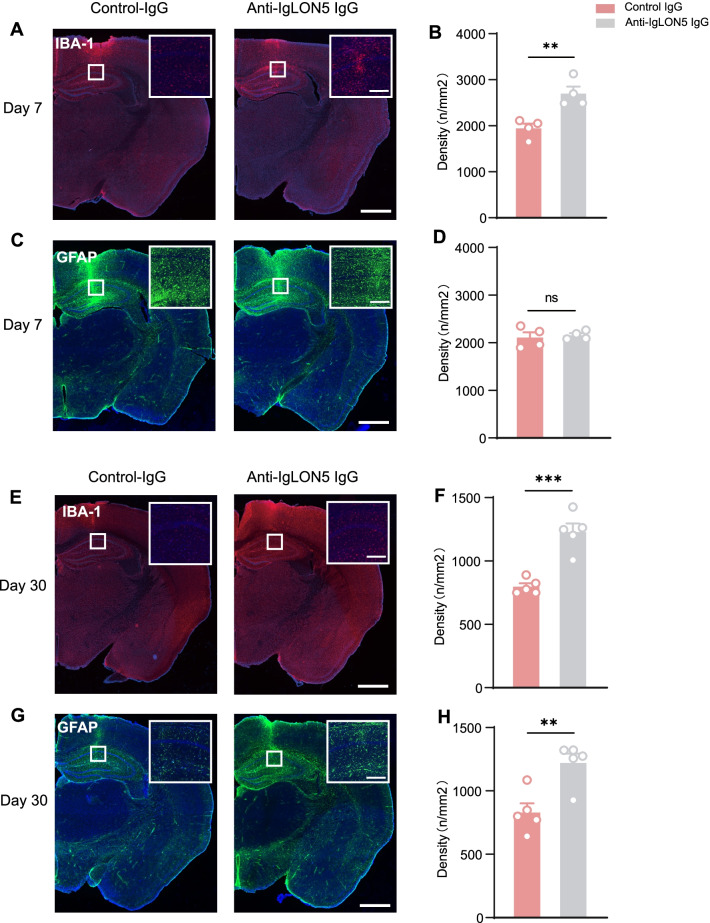
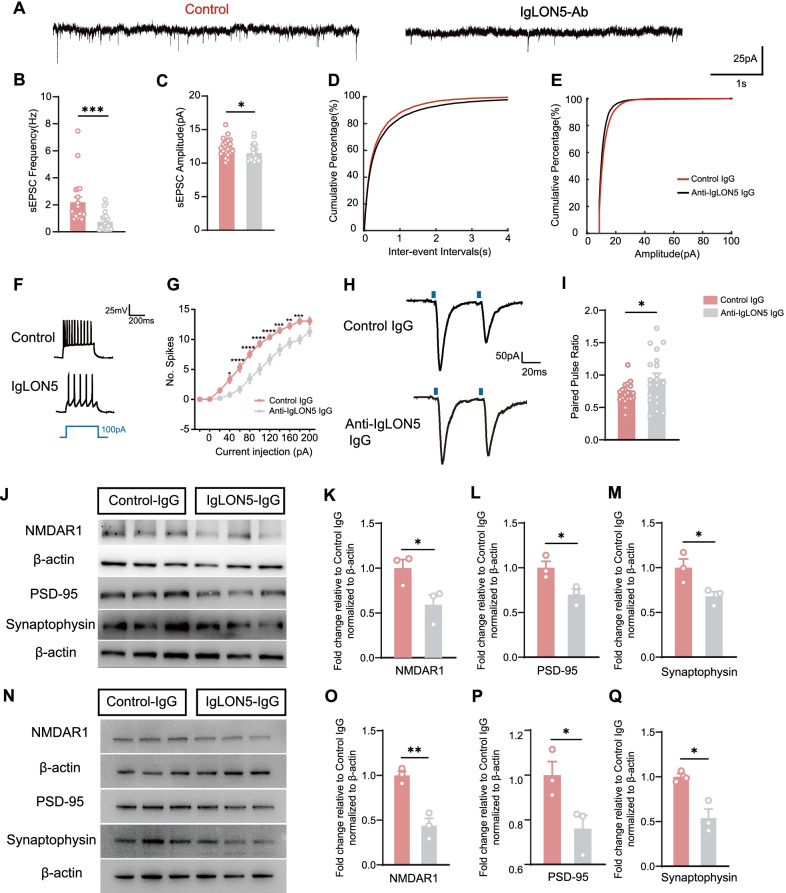
These experiments showed that patient's anti-IgLON5 antibodies induced progressive and irreversible behavioral deficits in vivo. Notably, cognitive abnormality was supported by impaired average gamma power in the CA1 during novel object recognition testing. Accompanying brain tissue studies showed progressive increase of brain-bound human antibodies in the hippocampus of anti-IgLON5 IgG-injected mice, which persisted 30 days after the injection of patient's antibodies was stopped. Microglial and astrocyte density was increased in the hippocampus of anti-IgLON5 IgG-injected mice at Day 30. Whole-cell voltage clamp recordings proved that anti-IgLON5 antibodies affected synaptic homeostasis. Further western blot investigation of synaptic proteins revealed a reduction of presynaptic (synaptophysin) and post-synaptic (PSD95 and NMDAR1) expression in anti-IgLON5 IgG-injected mice.
Overall, our findings indicated an irreversible effect of anti-IgLON5 antibodies and supported the pathogenicity of these antibodies in vivo.
抗 IgLON5 病是一种罕见的神经疾病,与神经元细胞粘附蛋白 IgLON5 的自身抗体有关。对人类 IgLON5 抗体的细胞研究表明存在抗体介导的发病机制,但人类 IgLON5 自身抗体是否能在小鼠中引起疾病症状尚待证实。此外,抗 IgLON5 自身抗体对神经元的影响以及体内的确切分子机制仍存在争议。
我们研究了抗 IgLON5 抗体在体内的作用,并评估了它们的长期影响。我们使用了两种独立的被动转移动物模型,并在 IgG 输注后第 1 天至第 30 天的不同时间点评估了抗体对小鼠行为的影响。建立了广泛的行为测试,包括运动、协调、记忆、焦虑、抑郁和社交互动测试。在实验结束时,分析脑组织中的人 IgG、神经元标志物、神经胶质标志物、突触标志物和 RNA 测序。
这些实验表明,患者的抗 IgLON5 抗体在体内诱导进行性和不可逆转的行为缺陷。值得注意的是,认知异常得到了在新颖物体识别测试中 CA1 区平均伽马功率受损的支持。伴随的脑组织研究表明,在抗 IgLON5 IgG 注射小鼠的海马体中,脑结合的人抗体逐渐增加,并且在停止注射患者的抗体后 30 天仍持续存在。在抗 IgLON5 IgG 注射小鼠的海马体中,小胶质细胞和星形胶质细胞密度增加。全细胞膜片钳记录证明抗 IgLON5 抗体影响突触稳态。进一步对突触蛋白的 Western blot 研究表明,在抗 IgLON5 IgG 注射小鼠中,突触前(突触小体蛋白)和突触后(PSD95 和 NMDAR1)表达减少。
总的来说,我们的研究结果表明抗 IgLON5 抗体具有不可逆转的作用,并支持这些抗体在体内的致病性。