Yi Xiaochun, Wan Yueming, Cao Weiwei, Peng Keliang, Li Xin, Liao Wangchun
Department of Urology, Yueyang People's Hospital, Hunan Normal University, Yueyang, China.
Front Mol Biosci. 2022 May 25;9:878073. doi: 10.3389/fmolb.2022.878073. eCollection 2022.
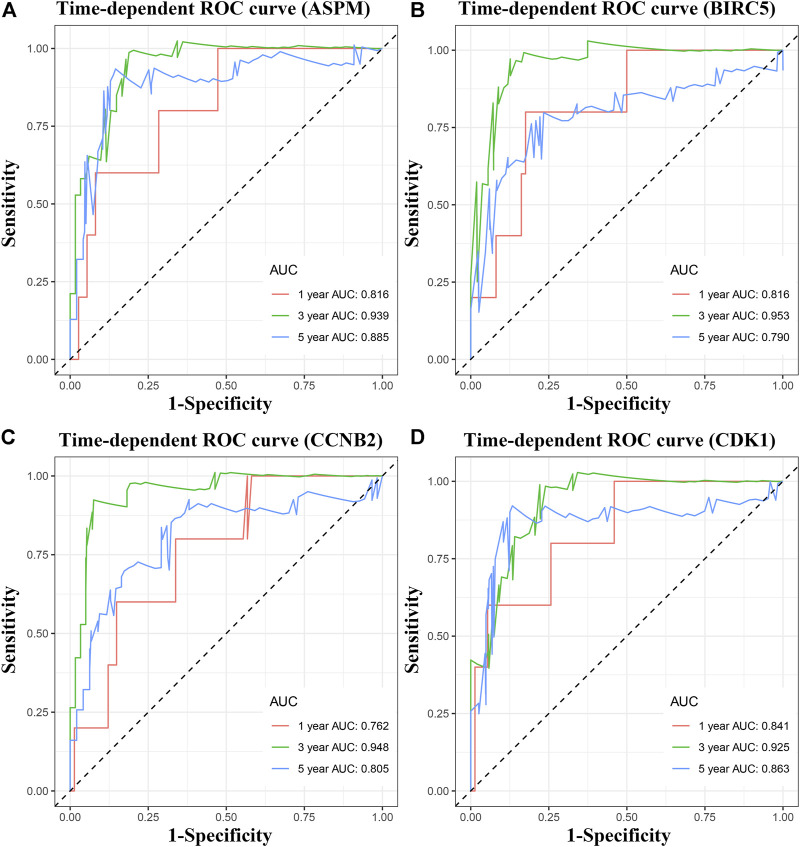
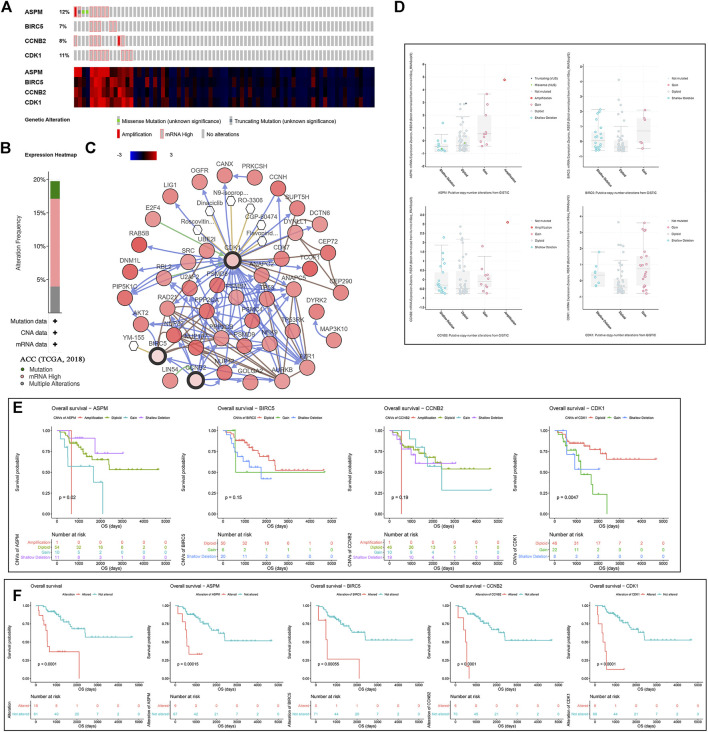
Adrenocortical carcinoma (ACC) is an orphan tumor which has poor prognoses. Therefore, it is of urgent need for us to find candidate prognostic biomarkers and provide clinicians with an accurate method for survival prediction of ACC via bioinformatics and machine learning methods. Eight different methods including differentially expressed gene (DEG) analysis, weighted correlation network analysis (WGCNA), protein-protein interaction (PPI) network construction, survival analysis, expression level comparison, receiver operating characteristic (ROC) analysis, and decision curve analysis (DCA) were used to identify potential prognostic biomarkers for ACC via seven independent datasets. Linear discriminant analysis (LDA), K-nearest neighbor (KNN), support vector machine (SVM), and time-dependent ROC were performed to further identify meaningful prognostic biomarkers (MPBs). Cox regression analyses were performed to screen factors for nomogram construction. We identified nine hub genes correlated to prognosis of patients with ACC. Furthermore, four MPBs (ASPM, BIRC5, CCNB2, and CDK1) with high accuracy of survival prediction were screened out, which were enriched in the cell cycle. We also found that mutations and copy number variants of these MPBs were associated with overall survival (OS) of ACC patients. Moreover, MPB expressions were associated with immune infiltration level. Two nomograms [OS-nomogram and disease-free survival (DFS)-nomogram] were established, which could provide clinicians with an accurate, quick, and visualized method for survival prediction. Four novel MPBs were identified and two nomograms were constructed, which might constitute a breakthrough in treatment and prognosis prediction of patients with ACC.
肾上腺皮质癌(ACC)是一种预后较差的罕见肿瘤。因此,我们迫切需要通过生物信息学和机器学习方法找到候选预后生物标志物,并为临床医生提供一种准确预测ACC患者生存情况的方法。我们使用了八种不同的方法,包括差异表达基因(DEG)分析、加权基因共表达网络分析(WGCNA)、蛋白质-蛋白质相互作用(PPI)网络构建、生存分析、表达水平比较、受试者工作特征(ROC)分析和决策曲线分析(DCA),通过七个独立数据集来识别ACC的潜在预后生物标志物。进行线性判别分析(LDA)、K近邻算法(KNN)、支持向量机(SVM)和时间依赖ROC分析,以进一步识别有意义的预后生物标志物(MPB)。进行Cox回归分析以筛选用于构建列线图的因素。我们确定了九个与ACC患者预后相关的核心基因。此外,筛选出四个生存预测准确性高的MPB(ASPM、BIRC5、CCNB2和CDK1),它们在细胞周期中富集。我们还发现这些MPB的突变和拷贝数变异与ACC患者的总生存期(OS)相关。此外,MPB表达与免疫浸润水平相关。建立了两个列线图[OS列线图和无病生存期(DFS)列线图],可为临床医生提供一种准确、快速且可视化的生存预测方法。我们识别出四个新的MPB并构建了两个列线图,这可能成为ACC患者治疗和预后预测的一个突破。