Li Jing, Shen Hongtao, Owens Gary K, Guo Lian-Wang
Department of Surgery, School of Medicine, University of Virginia, Charlottesville, VA 22908, USA.
Department of Molecular Physiology and Biophysics, University of Virginia, Charlottesville, VA 22908, USA.
Mol Ther Nucleic Acids. 2022 May 18;28:892-909. doi: 10.1016/j.omtn.2022.05.028. eCollection 2022 Jun 14.
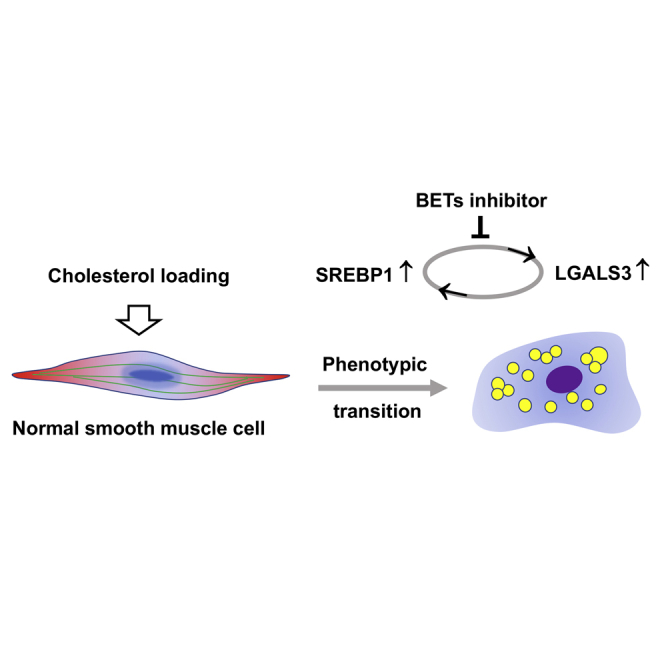
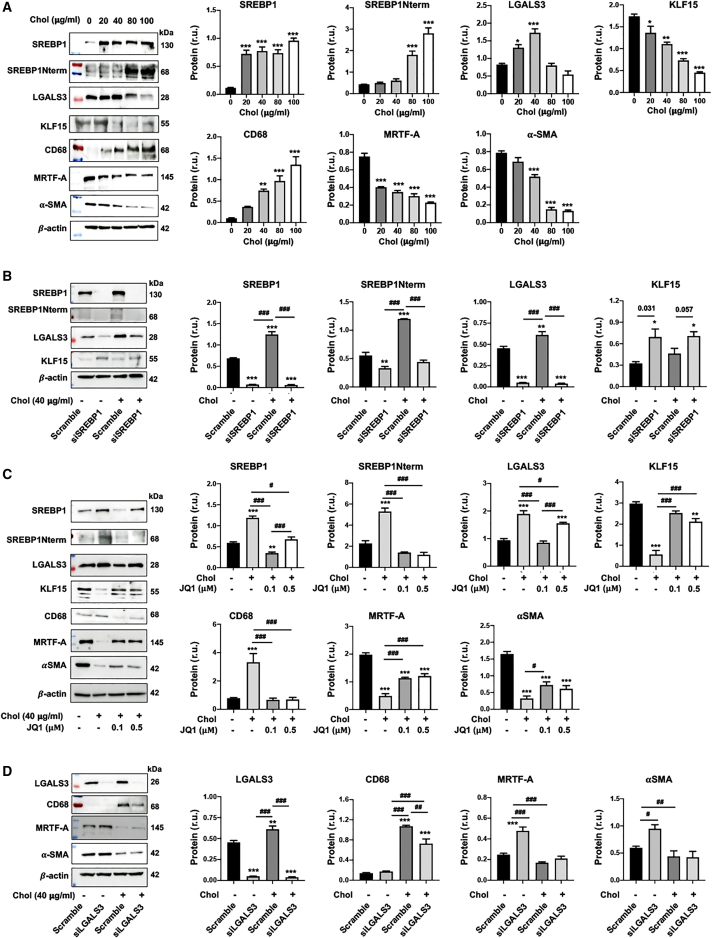
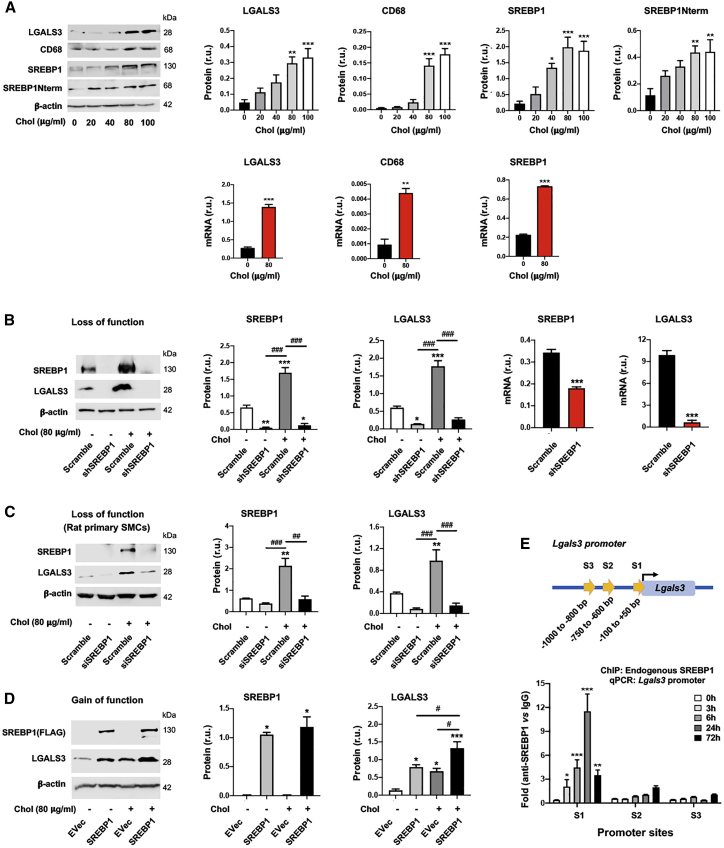
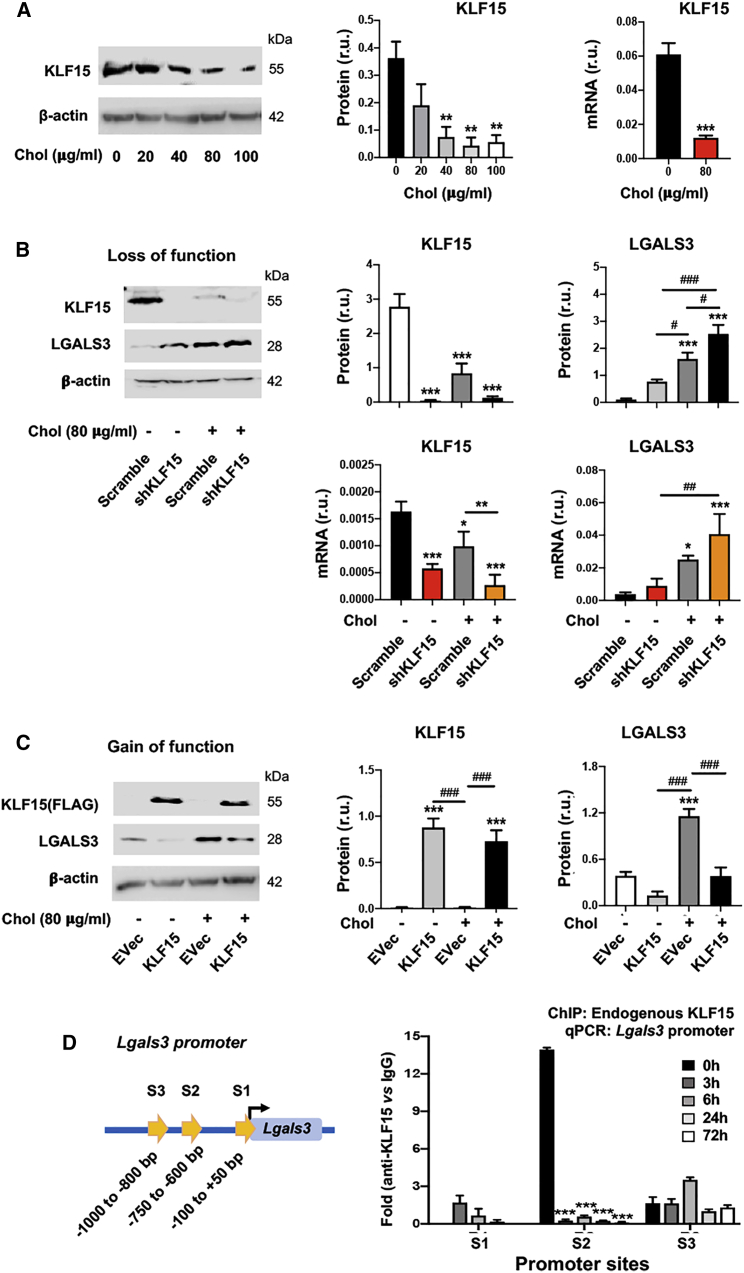
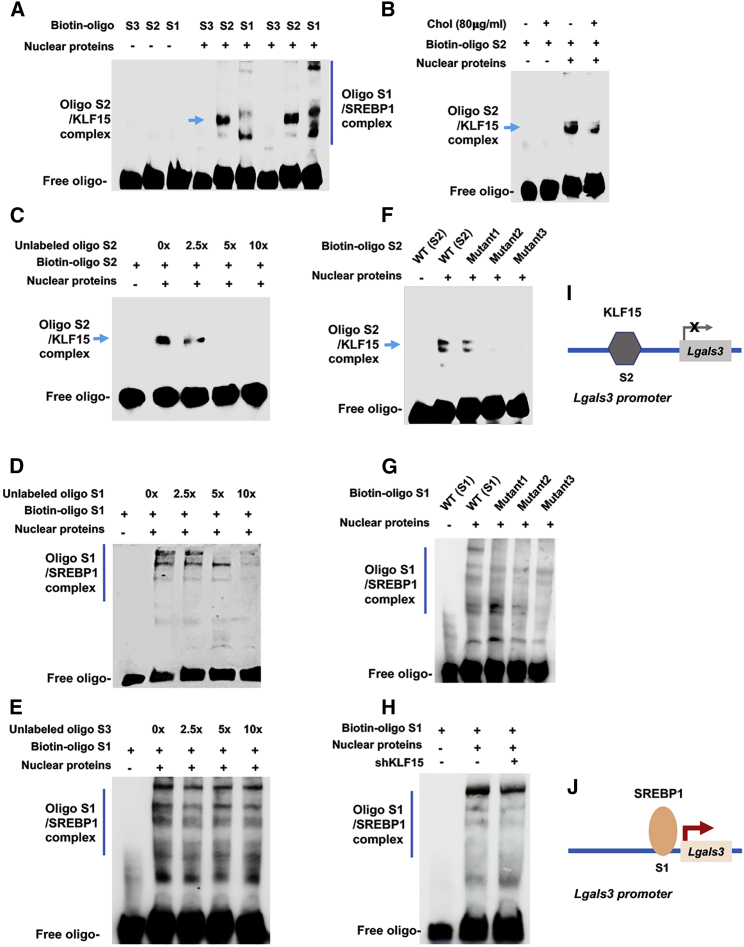
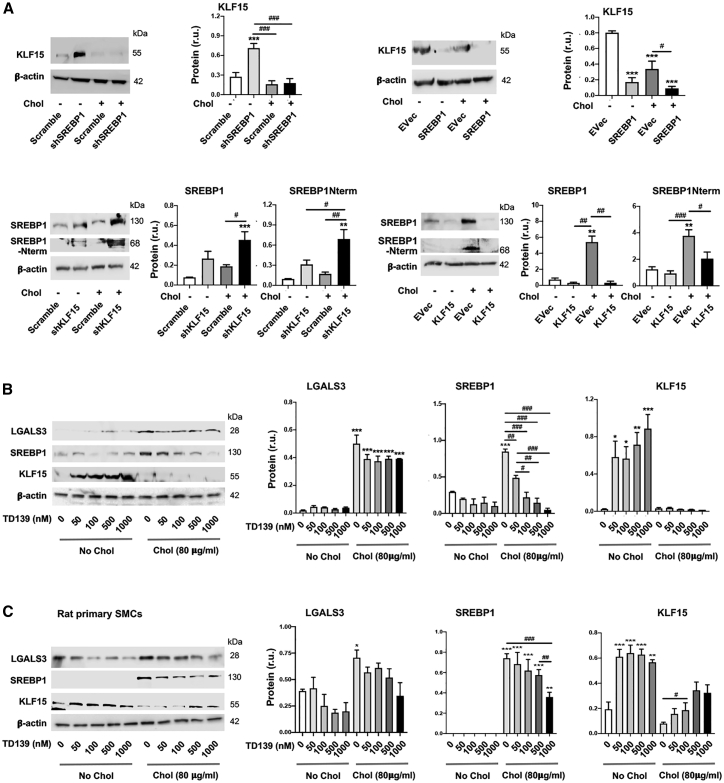
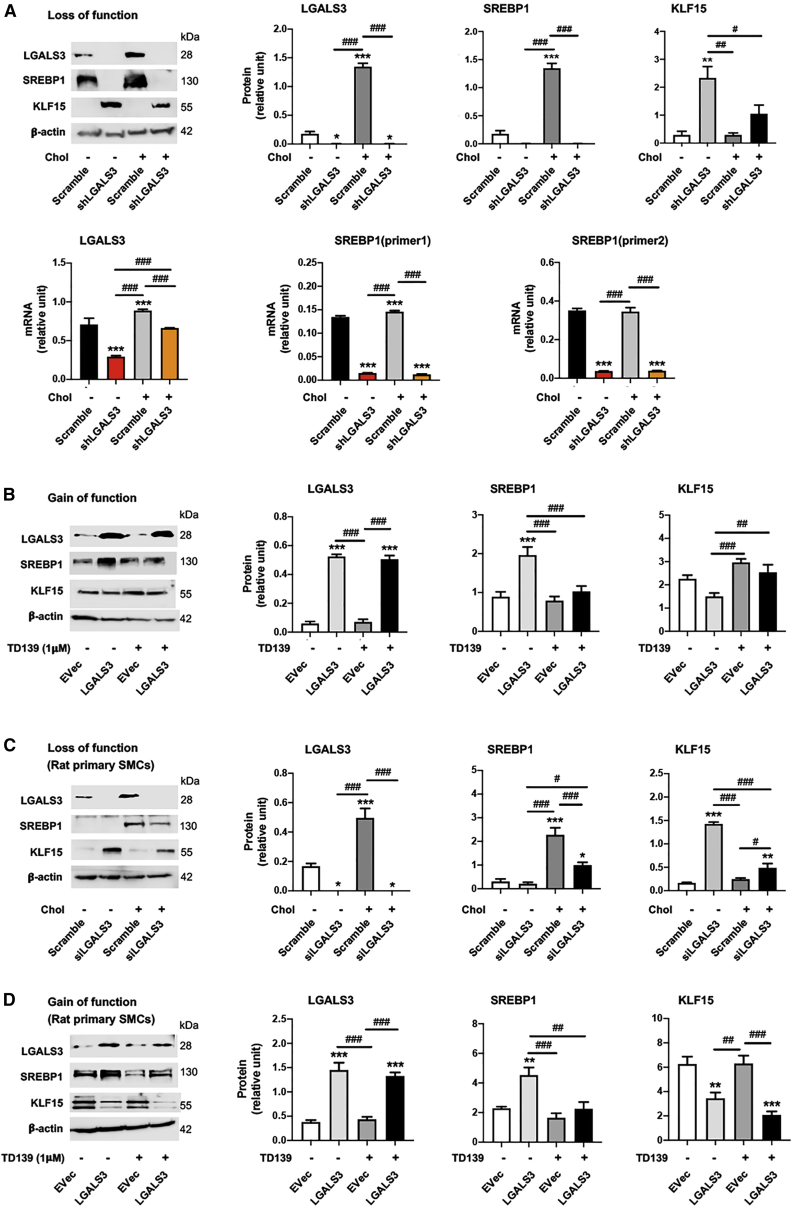
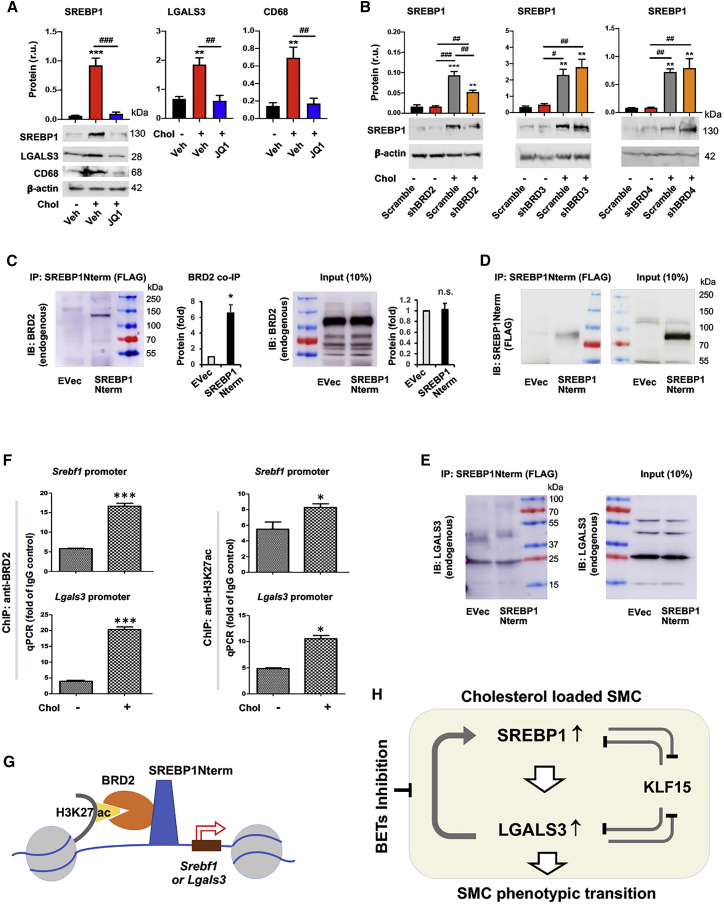
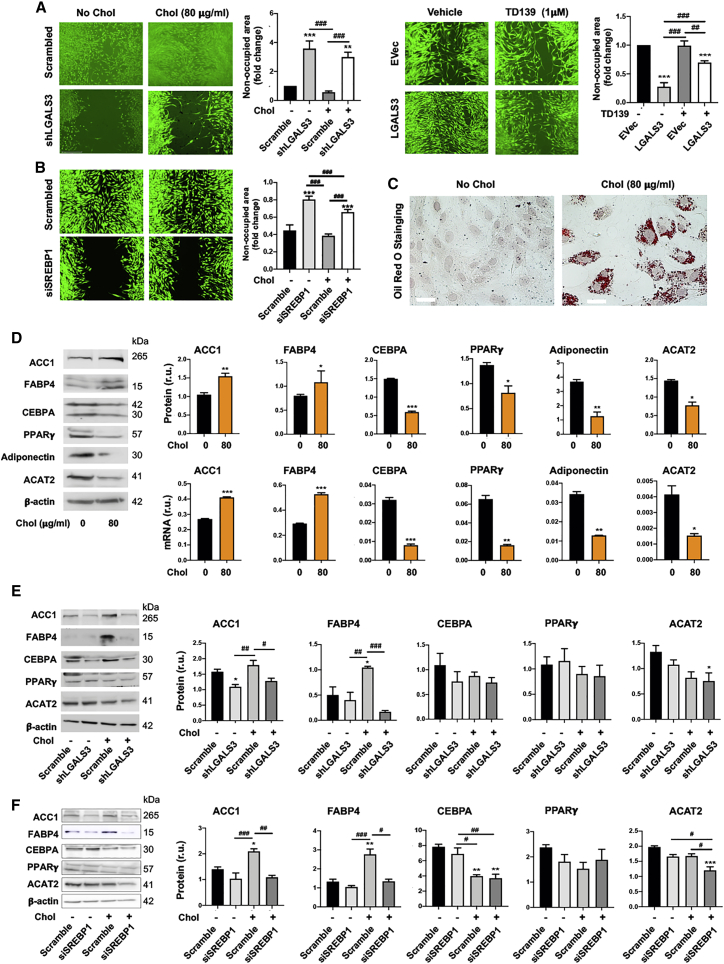
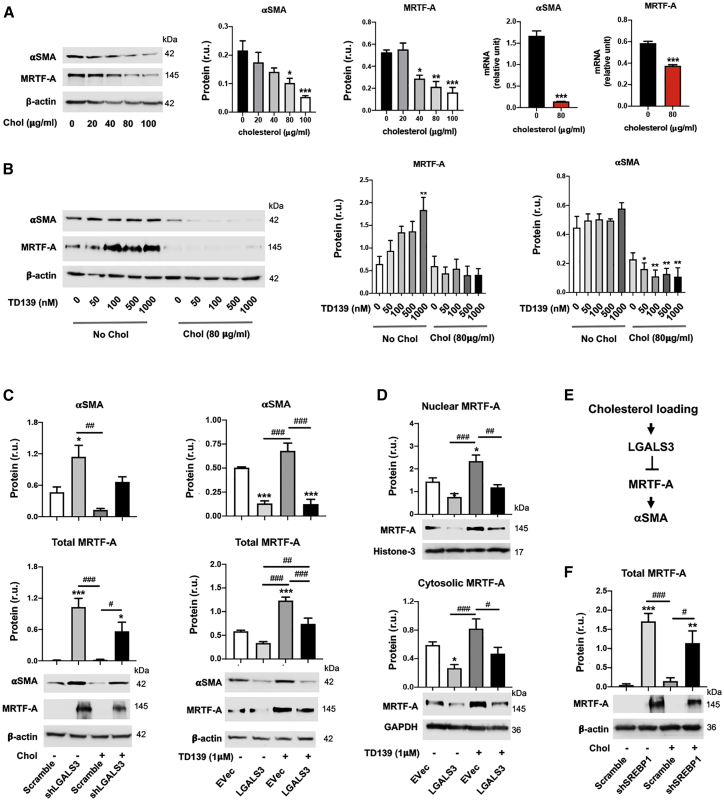
Aberrant smooth muscle cell (SMC) plasticity is etiological to vascular diseases. Cholesterol induces SMC phenotypic transition featuring high LGALS3 (galectin-3) expression. This proatherogenic process is poorly understood for its molecular underpinnings, in particular, the mechanistic role of sterol regulatory-element binding protein-1 (SREBP1), a master regulator of lipid metabolism. Herein we show that cholesterol loading stimulated SREBP1 expression in mouse, rat, and human SMCs. SREBP1 positively regulated LGALS3 expression (and vice versa), whereas Krüppel-like factor-15 (KLF15) acted as a negative regulator. Both bound to the promoter, yet at discrete sites, as revealed by chromatin immunoprecipitation-qPCR and electrophoretic mobility shift assays. SREBP1 and LGALS3 each abated KLF15 protein, and blocking the bromo/extraterminal domain-containing proteins (BETs) family of acetyl-histone readers abolished cholesterol-stimulated SREBP1/LGALS3 protein production. Furthermore, silencing bromodomain protein 2 (BRD2; but not other BETs) reduced SREBP1; endogenous BRD2 co-immunoprecipitated with SREBP1's transcription-active domain, its own promoter DNA, and that of . Thus, results identify a previously uncharacterized cholesterol-responsive dyad-SREBP1 and LGALS3, constituting a feedforward circuit that can be blocked by BETs inhibition. This study provides new insights into SMC phenotypic transition and potential interventional targets.
异常的平滑肌细胞(SMC)可塑性是血管疾病的病因。胆固醇诱导SMC表型转变,其特征是高LGALS3(半乳糖凝集素-3)表达。这种促动脉粥样硬化过程的分子基础尚不清楚,尤其是脂质代谢的主要调节因子固醇调节元件结合蛋白-1(SREBP1)的作用机制。在此,我们表明胆固醇加载刺激了小鼠、大鼠和人SMC中SREBP1的表达。SREBP1正向调节LGALS3的表达(反之亦然),而Krüppel样因子-15(KLF15)起负调节作用。染色质免疫沉淀-qPCR和电泳迁移率变动分析表明,两者都与启动子结合,但结合位点不同。SREBP1和LGALS3各自降低了KLF15蛋白的水平,并且阻断含溴结构域/额外末端结构域的乙酰化组蛋白读取蛋白(BETs)家族消除了胆固醇刺激的SREBP1/LGALS3蛋白产生。此外,沉默溴结构域蛋白2(BRD2;而非其他BETs)可降低SREBP1;内源性BRD2与SREBP1的转录活性结构域、其自身的启动子DNA以及 的启动子DNA共免疫沉淀。因此,研究结果确定了一种以前未被表征的胆固醇反应二元组——SREBP1和LGALS3,它们构成了一个可被BETs抑制阻断的前馈回路。这项研究为SMC表型转变和潜在的干预靶点提供了新的见解。