Children's Hospital of Zhejiang University School of Medicine, No. 3333 Binsheng Road, Hangzhou, 310003, China.
Children's Hospital of Fudan University, Shanghai, China.
Orphanet J Rare Dis. 2022 Jun 13;17(1):221. doi: 10.1186/s13023-022-02302-z.
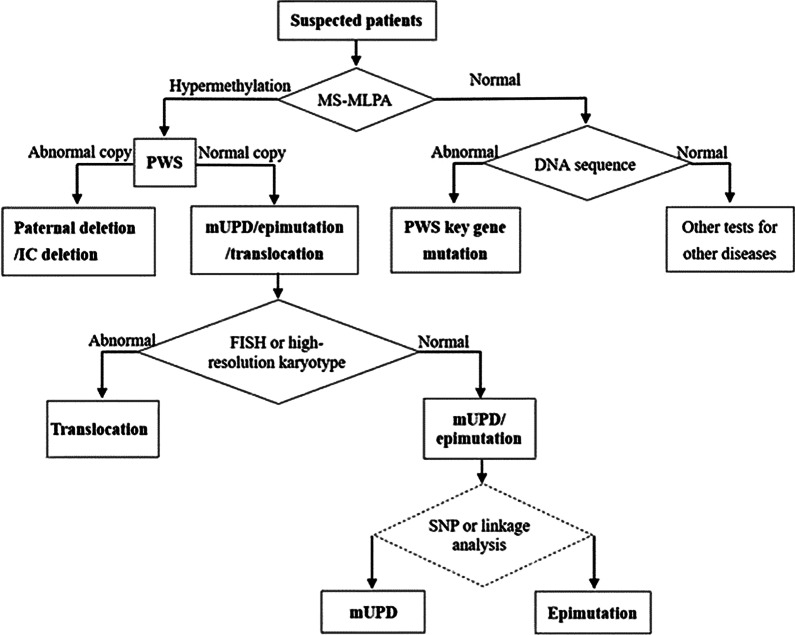
Prader-Willi syndrome (PWS) is a complex and multisystem neurobehavioral disease, which is caused by the lack of expression of paternally inherited imprinted genes on chromosome15q11.2-q13.1. The clinical manifestations of PWS vary with age. It is characterized by severe hypotonia with poor suck and feeding difficulties in the early infancy, followed by overeating in late infancy or early childhood and progressive development of morbid obesity unless the diet is externally controlled. Compared to Western PWS patients, Chinese patients have a higher ratio of deletion type. Although some rare disease networks, including PWS Cooperation Group of Rare Diseases Branch of Chinese Pediatric Society, Zhejiang Expert Group for PWS, were established recently, misdiagnosis, missed diagnosis and inappropriate intervention were usually noted in China. Therefore, there is an urgent need for an integrated multidisciplinary approach to facilitate early diagnosis and optimize management to improve quality of life, prevent complications, and prolong life expectancy. Our purpose is to evaluate the current literature and evidences on diagnosis and management of PWS in order to provide evidence-based guidelines for this disease, specially from China.
普拉德-威利综合征(PWS)是一种复杂的多系统神经行为疾病,由 15q11.2-q13.1 染色体上父源印迹基因表达缺失引起。PWS 的临床表现随年龄而变化。其特征为婴儿早期严重的肌张力低下,吸吮和喂养困难,随后在婴儿后期或幼儿期出现暴食,并逐渐发展为病态肥胖,除非进行饮食的外部控制。与西方 PWS 患者相比,中国患者的缺失型比例更高。尽管最近成立了一些罕见病网络,包括中国儿科协会罕见病分会 PWS 协作组、浙江 PWS 专家组,但在中国,通常存在误诊、漏诊和不当干预的情况。因此,迫切需要采用综合多学科方法,以促进早期诊断和优化管理,从而提高生活质量,预防并发症,并延长预期寿命。我们的目的是评估当前关于 PWS 的诊断和管理的文献和证据,以便为该疾病提供循证指南,特别是来自中国的指南。