Sorbonne Université, Institut du Cerveau - Paris Brain Institute - ICM, Inserm, CNRS, AP-HP, Hôpital de la Pitié Salpêtrière, Paris, France; Univ Rennes, CHU Rennes, Inserm, LTSI - UMR 1099, F-35000 Rennes, France.
Sorbonne Université, Institut du Cerveau - Paris Brain Institute - ICM, Inserm, CNRS, AP-HP, Hôpital de la Pitié Salpêtrière, Paris, France.
Neuroimage Clin. 2022;35:103079. doi: 10.1016/j.nicl.2022.103079. Epub 2022 Jun 7.
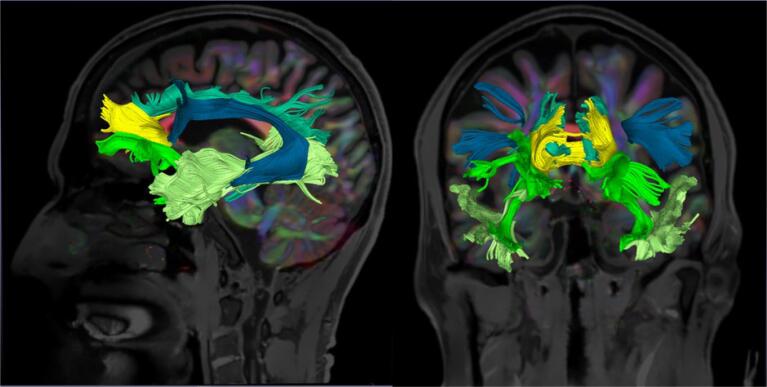
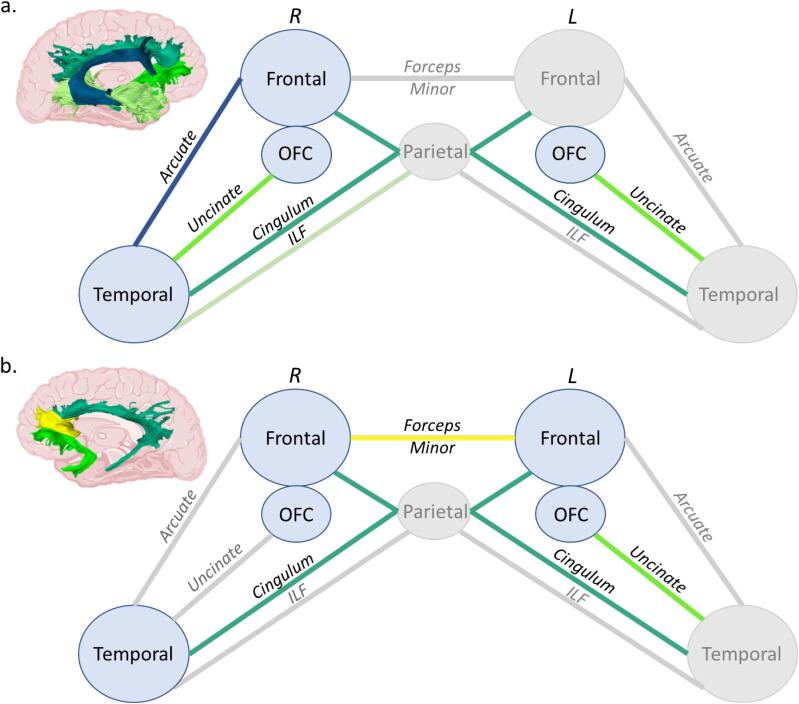
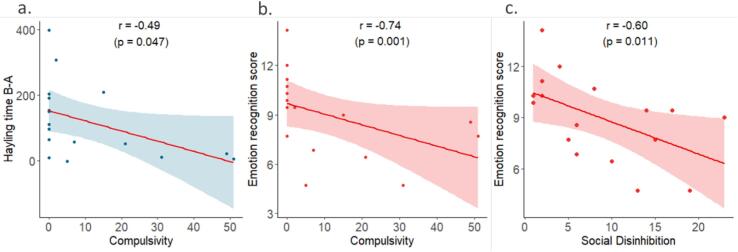
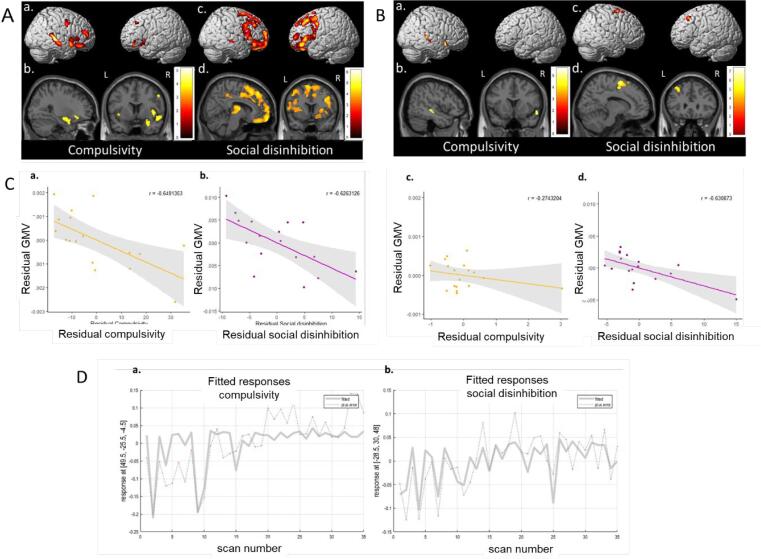
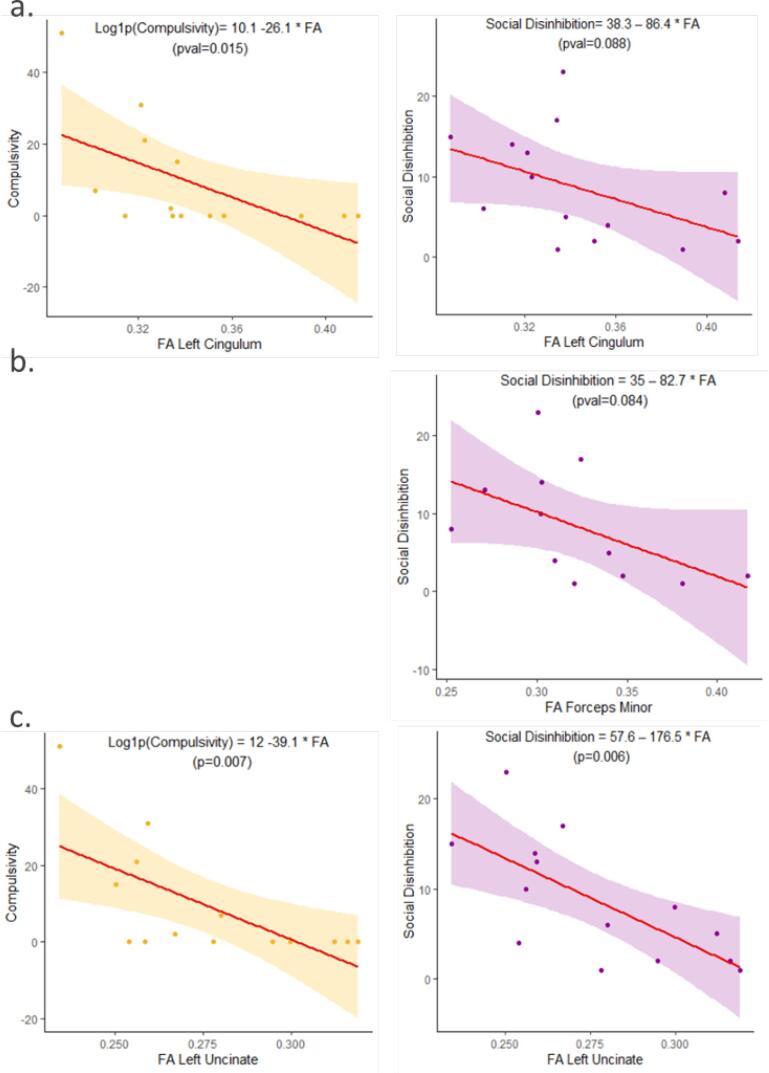
Disinhibition is a core symptom of many neurodegenerative diseases, particularly frontotemporal dementia, and is a major cause of stress for caregivers. While a distinction between behavioural and cognitive disinhibition is common, an operational definition of behavioural disinhibition is still missing. Furthermore, conventional assessment of behavioural disinhibition, based on questionnaires completed by the caregivers, often lacks ecological validity. Therefore, their neuroanatomical correlates are non-univocal. In the present work, we used an original behavioural approach in a semi-ecological situation to assess two specific dimensions of behavioural disinhibition: compulsivity and social disinhibition. First, we investigated disinhibition profile in patients compared to controls. Then, to validate our approach, compulsivity and social disinhibition scores were correlated with classic cognitive tests measuring disinhibition (Hayling Test) and social cognition (mini-Social cognition & Emotional Assessment). Finally, we disentangled the anatomical networks underlying these two subtypes of behavioural disinhibition, taking in account the grey (voxel-based morphometry) and white matter (diffusion tensor imaging tractography). We included 17 behavioural variant frontotemporal dementia patients and 18 healthy controls. We identified patients as more compulsive and socially disinhibited than controls. We found that behavioural metrics in the semi-ecological task were related to cognitive performance: compulsivity correlated with the Hayling test and both compulsivity and social disinhibition were associated with the emotion recognition test. Based on voxel-based morphometry and tractography, compulsivity correlated with atrophy in the bilateral orbitofrontal cortex, the right temporal region and subcortical structures, as well as with alterations of the bilateral cingulum and uncinate fasciculus, the right inferior longitudinal fasciculus and the right arcuate fasciculus. Thus, the network of regions related to compulsivity matched the "semantic appraisal" network. Social disinhibition was associated with bilateral frontal atrophy and impairments in the forceps minor, the bilateral cingulum and the left uncinate fasciculus, regions corresponding to the frontal component of the "salience" network. Summarizing, this study validates our semi-ecological approach, through the identification of two subtypes of behavioural disinhibition, and highlights different neural networks underlying compulsivity and social disinhibition. Taken together, these findings are promising for clinical practice by providing a better characterisation of inhibition disorders, promoting their detection and consequently a more adapted management of patients.
去抑制是许多神经退行性疾病的核心症状,特别是额颞叶痴呆,也是照顾者的主要压力源。虽然行为和认知去抑制之间存在区别,但行为去抑制的操作定义仍然缺失。此外,基于照顾者完成的问卷对行为去抑制的常规评估往往缺乏生态有效性。因此,它们的神经解剖学相关性并不一致。在本工作中,我们使用一种原始的行为方法在半生态环境中评估了行为去抑制的两个特定维度:强迫性和社交去抑制。首先,我们比较了患者和对照组的去抑制特征。然后,为了验证我们的方法,强迫性和社交去抑制得分与经典的抑制认知测试(海灵测试)和社会认知(小型社会认知和情绪评估)相关。最后,我们考虑了灰质(基于体素的形态测量学)和白质(弥散张量成像轨迹),分离了这两种行为去抑制亚型的解剖网络。我们纳入了 17 名行为变异型额颞叶痴呆患者和 18 名健康对照组。我们发现患者比对照组更具有强迫性和社交去抑制性。我们发现,半生态任务中的行为指标与认知表现相关:强迫性与海灵测试相关,而强迫性和社交去抑制性与情绪识别测试相关。基于基于体素的形态测量学和轨迹,强迫性与双侧眶额皮质、右侧颞区和皮质下结构的萎缩相关,也与双侧扣带束和钩束、右侧下纵束和右侧弓状束的改变相关。因此,与强迫性相关的区域网络与“语义评估”网络相匹配。社交去抑制与双侧额叶萎缩以及内侧额上回、双侧扣带束和左侧钩束、额叶“突显”网络的前部区域的损伤相关。总之,这项研究通过识别两种行为去抑制亚型,验证了我们的半生态方法,并强调了强迫性和社交去抑制的不同神经网络。总的来说,这些发现通过提供对抑制障碍的更好描述,促进了它们的检测,并因此为患者提供了更适应的管理,为临床实践提供了希望。