Sánchez-Clavijo Lina María, Martínez-Callejas Sindy Jineth, Acevedo-Charry Orlando, Diaz-Pulido Angélica, Gómez-Valencia Bibiana, Ocampo-Peñuela Natalia, Ocampo David, Olaya-Rodríguez María Helena, Rey-Velasco Juan Carlos, Soto-Vargas Carolina, Ochoa-Quintero Jose Manuel
Instituto de Investigación de Recursos Biológicos Alexander von Humboldt, Bogotá, Colombia.
Biol Conserv. 2021 Apr;256:109077. doi: 10.1016/j.biocon.2021.109077. Epub 2021 Mar 18.
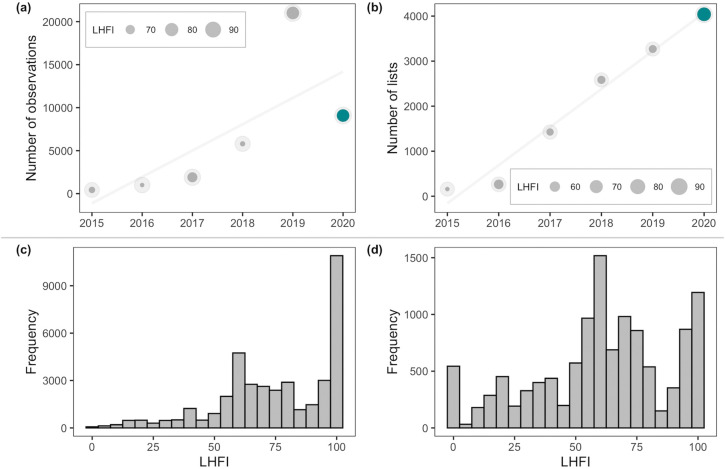
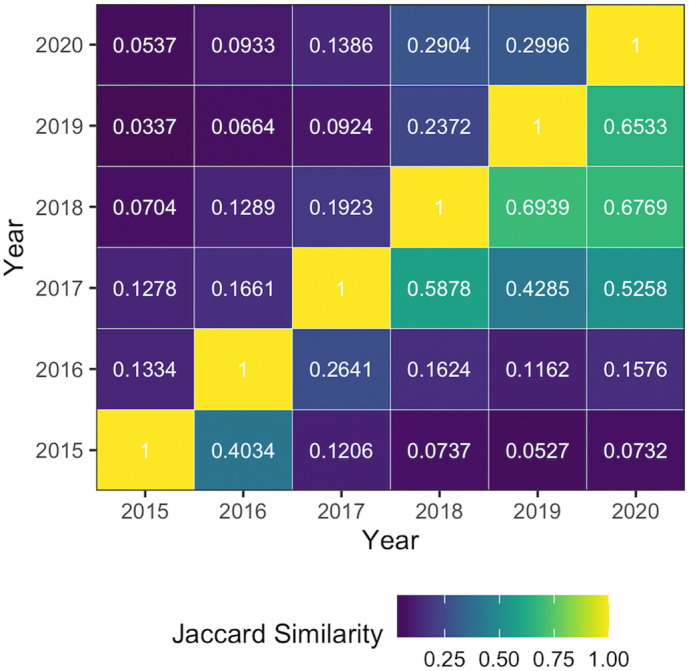
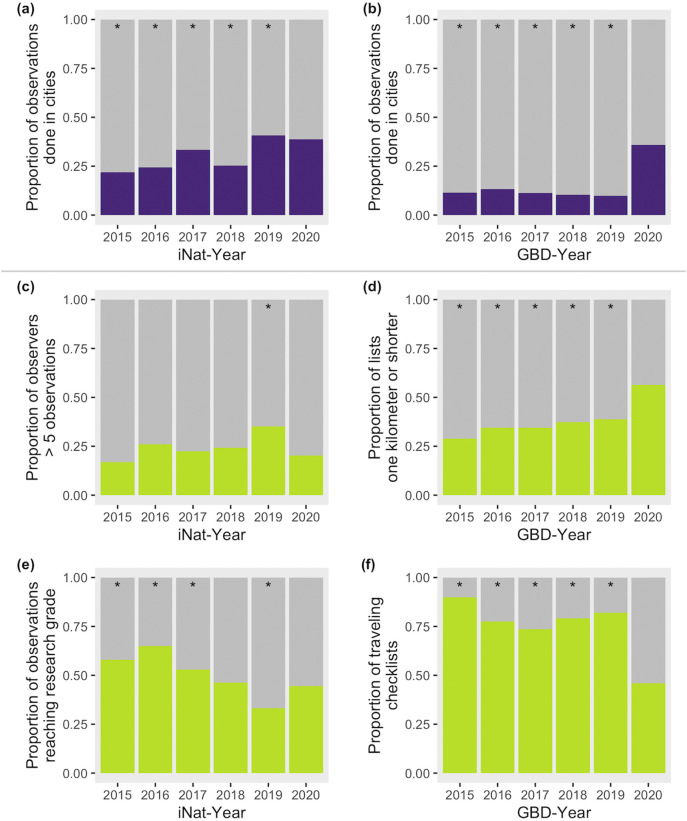
The COVID-19 pandemic highlighted the potential of using data from long-term citizen science projects to answer questions about the impacts of unexpected events on biodiversity. We evaluate the suitability of data from the citizen science platforms iNaturalist and eBird to describe the effects of the "anthropause" on biodiversity observation in Colombia. We compared record distribution according to human footprint, sampling behaviors, overall and conservation priority species composition during the strictest phase of the COVID-19 lockdown in 2020 to the same periods in 2015-2019. Overall participation in both platforms during the lockdown was high when compared to previous years, but records were concentrated on highly-transformed regions, had lower sampling efforts, and fewer species were recorded. For eBird, species composition was similar to that observed in previous years, and records of species of conservation concern declined in proportion to the decrease in overall species richness across samples. For iNaturalist, the species pool sampled each year remained too dissimilar for comparisons. Once differences in observer behaviors are accounted for, data from these platforms can be used in unplanned comparisons of relatively common species, in regions with high levels of human transformation, and at narrowly defined geographical contexts. To increase the potential of citizen science to monitor rarer species, more natural areas, or be used in large-scale analyses, we need to build and strengthen more diverse networks of observers that can further promote decentralization, democratization, and cost-effectiveness in biodiversity research.
新冠疫情凸显了利用长期公民科学项目的数据来回答有关突发事件对生物多样性影响问题的潜力。我们评估了公民科学平台iNaturalist和eBird的数据对于描述“人类活动暂停”对哥伦比亚生物多样性观测的影响的适用性。我们将2020年新冠疫情封锁最严格阶段的记录分布情况(根据人类足迹、采样行为、总体和保护优先物种组成)与2015 - 2019年同期进行了比较。与前几年相比,封锁期间两个平台的总体参与度都很高,但记录集中在高度改造的地区,采样力度较低,记录的物种较少。对于eBird,物种组成与前几年观察到的相似,受保护物种的记录随着样本中总体物种丰富度的下降而按比例减少。对于iNaturalist,每年采样的物种库差异太大,无法进行比较。一旦考虑到观察者行为的差异,这些平台的数据可用于在人类改造程度高的地区以及狭义定义的地理背景下对相对常见物种进行非计划比较。为了提高公民科学监测稀有物种、更多自然区域或用于大规模分析的潜力,我们需要建立和加强更多样化的观察者网络,以进一步促进生物多样性研究的去中心化、民主化和成本效益。