Heart Center, Guangdong Provincial Key Laboratory of Research in Structural Birth Defect Disease, Guangzhou Women and Children's Medical Center, Guangzhou Medical University, Guangzhou, 510623, China.
Department of Paediatrics, Guangdong Provincial Key Laboratory of Research in Structural Birth Defect Disease, Guangzhou Women and Children's Medical Center, Guangzhou Medical University, Guangzhou, 510623, China.
Cardiovasc Diabetol. 2022 Jun 15;21(1):106. doi: 10.1186/s12933-022-01532-6.
Empagliflozin has been reported to protect endothelial cell function, regardless of diabetes status. However, the role of empagliflozin in microvascular protection during myocardial ischemia reperfusion injury (I/R) has not been fully understood.
Electron microscopy, western blots, immunofluorescence, qPCR, mutant plasmid transfection, co-immunoprecipitation were employed to explore whether empagliflozin could alleviate microvascular damage and endothelial injury during cardiac I/R injury.
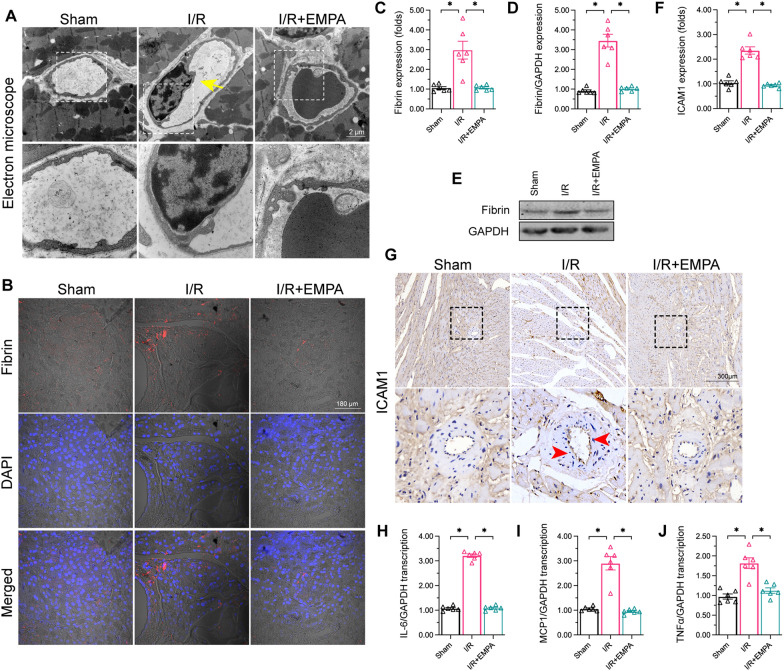
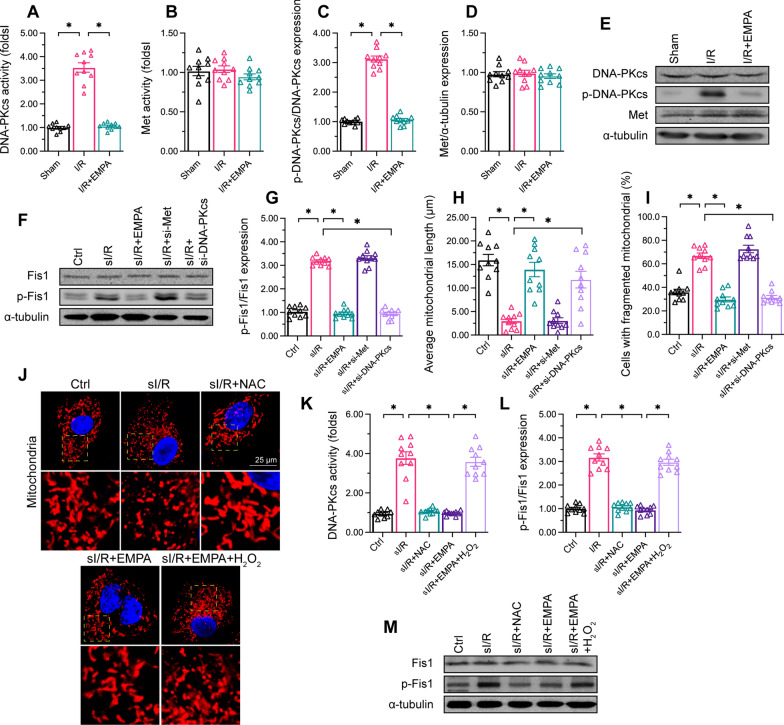
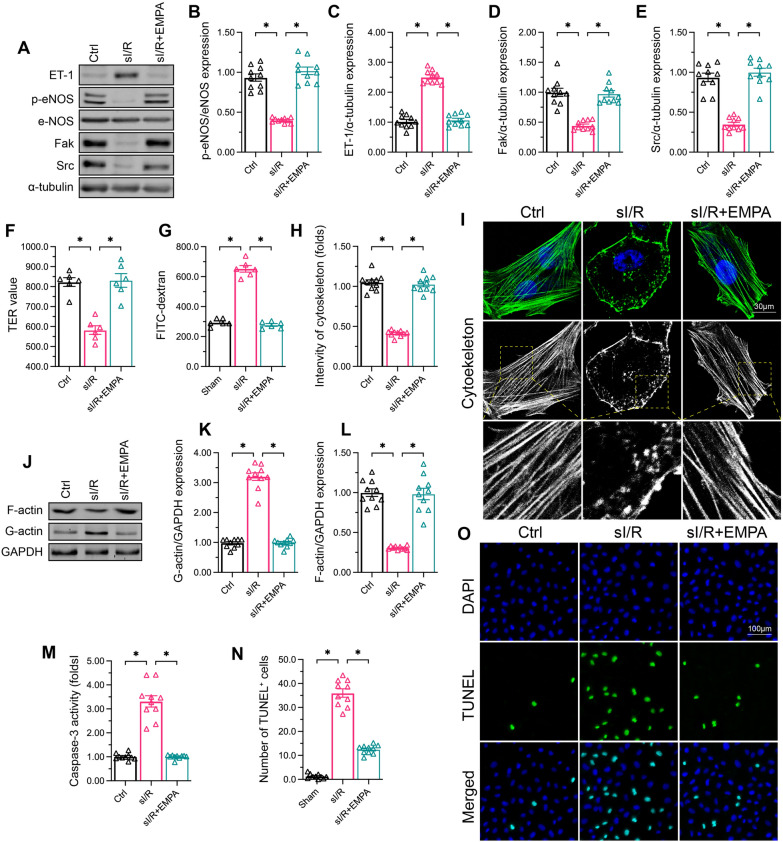
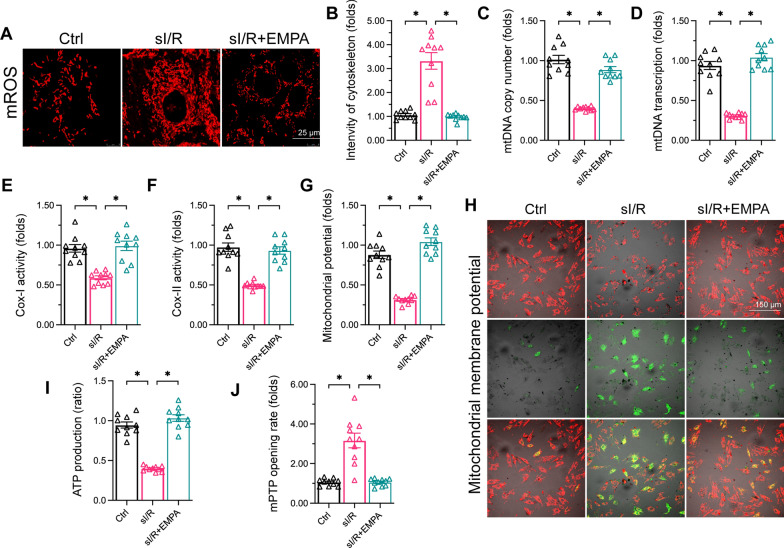
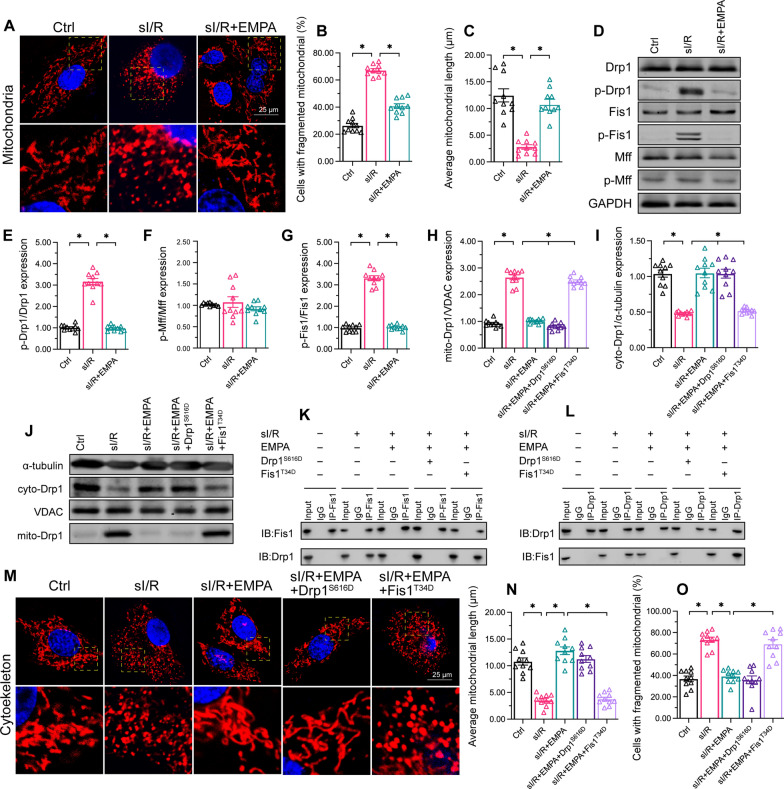
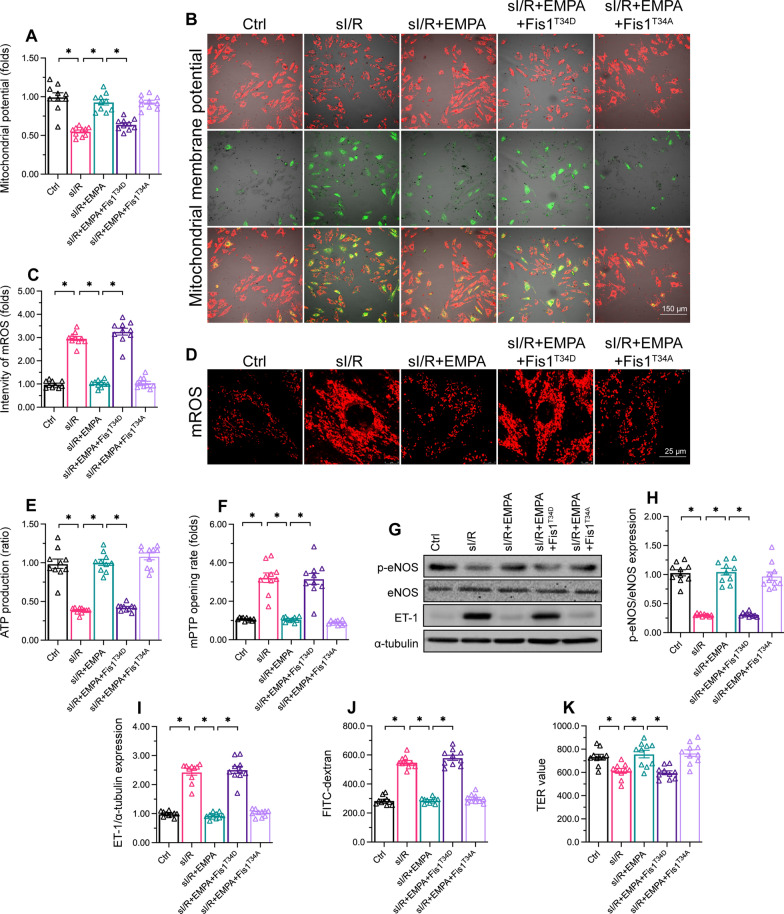
In mice, empagliflozin attenuated I/R injury-induced microvascular occlusion and microthrombus formation. In human coronary artery endothelial cells, I/R injury led to adhesive factor upregulation, endothelial nitric oxide synthase inactivation, focal adhesion kinase downregulation, barrier dysfunction, cytoskeletal degradation and cellular apoptosis; however, empagliflozin treatment diminished these effects. Empagliflozin improved mitochondrial oxidative stress, mitochondrial respiration and adenosine triphosphate metabolism in I/R-treated human coronary artery endothelial cells by preventing the phosphorylation of dynamin-related protein 1 (Drp1) and mitochondrial fission 1 protein (Fis1), thus repressing mitochondrial fission. The protective effects of empagliflozin on mitochondrial homeostasis and endothelial function were abrogated by the re-introduction of phosphorylated Fis1, but not phosphorylated Drp1, suggesting that Fis1 dephosphorylation is the predominant mechanism whereby empagliflozin inhibits mitochondrial fission during I/R injury. Besides, I/R injury induced Fis1 phosphorylation primarily by activating the DNA-dependent protein kinase catalytic subunit (DNA-PKcs) pathway, while empagliflozin inactivated this pathway by exerting anti-oxidative effects.
These results demonstrated that empagliflozin can protect the microvasculature by inhibiting the DNA-PKcs/Fis1/mitochondrial fission pathway during myocardial I/R injury.
恩格列净已被报道可保护内皮细胞功能,无论糖尿病状态如何。然而,恩格列净在心肌缺血再灌注损伤(I/R)期间对微血管的保护作用尚未完全阐明。
电子显微镜、western blot、免疫荧光、qPCR、突变质粒转染、共免疫沉淀等方法用于探讨恩格列净是否可以减轻心脏 I/R 损伤期间的微血管损伤和内皮损伤。
在小鼠中,恩格列净减轻了 I/R 损伤引起的微血管闭塞和微血栓形成。在人冠状动脉内皮细胞中,I/R 损伤导致黏附因子上调、内皮型一氧化氮合酶失活、黏着斑激酶下调、屏障功能障碍、细胞骨架降解和细胞凋亡;然而,恩格列净处理减轻了这些作用。恩格列净通过防止动力相关蛋白 1(Drp1)和线粒体分裂蛋白 1(Fis1)的磷酸化,从而抑制线粒体分裂,改善 I/R 处理的人冠状动脉内皮细胞中的线粒体氧化应激、线粒体呼吸和三磷酸腺苷代谢。恩格列净对线粒体动态平衡和内皮功能的保护作用被再引入磷酸化 Fis1 所消除,但不是磷酸化 Drp1,这表明 Fis1 去磷酸化是恩格列净在 I/R 损伤期间抑制线粒体分裂的主要机制。此外,I/R 损伤主要通过激活 DNA 依赖性蛋白激酶催化亚基(DNA-PKcs)途径诱导 Fis1 磷酸化,而恩格列净通过发挥抗氧化作用来使该途径失活。
这些结果表明,恩格列净可以通过抑制心肌 I/R 损伤期间的 DNA-PKcs/Fis1/线粒体分裂途径来保护微血管。