Department of Cell and Molecular Biology, Manipal School of Life Sciences, Manipal Academy of Higher Education, Manipal, Karnataka, 576104, India.
School of Biomedical Sciences, University of West London, London, W5 5RF, UK.
Sci Rep. 2022 Jun 16;12(1):10123. doi: 10.1038/s41598-022-14412-6.
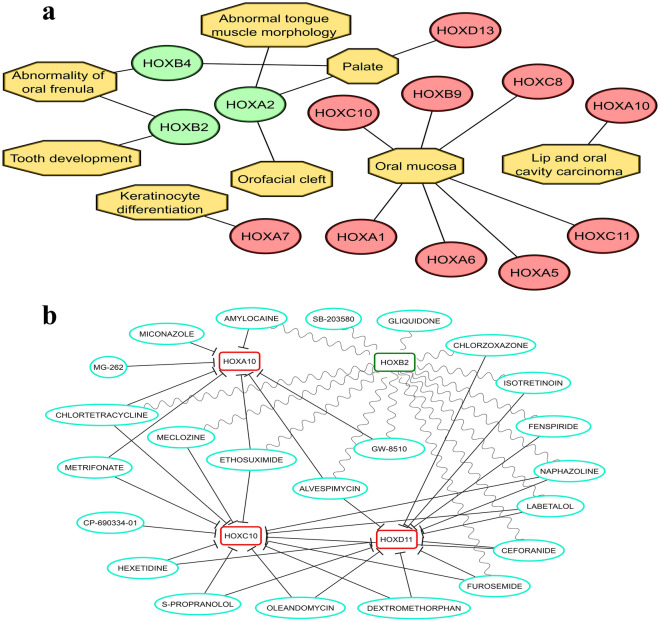
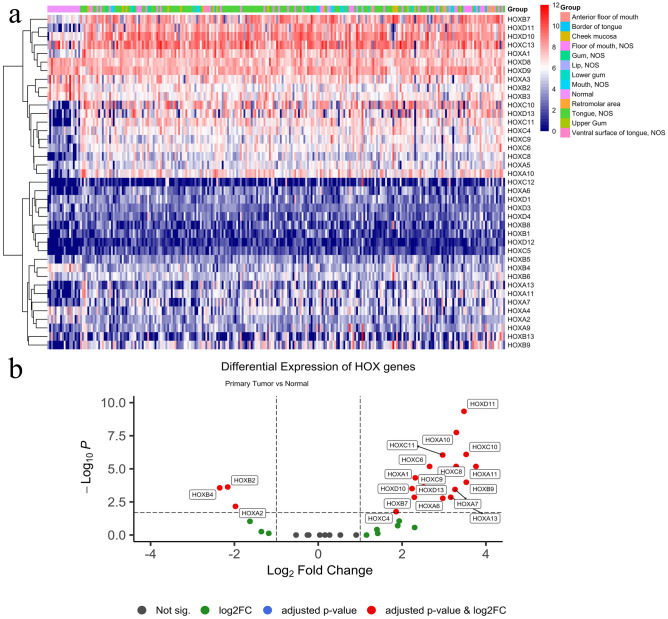
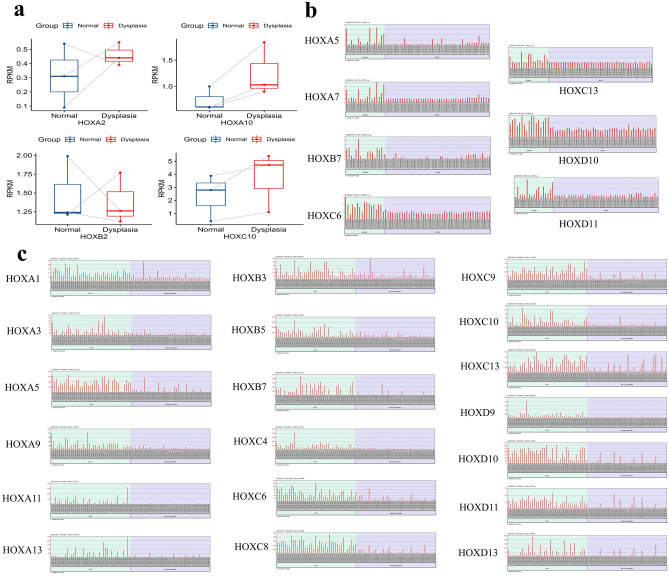
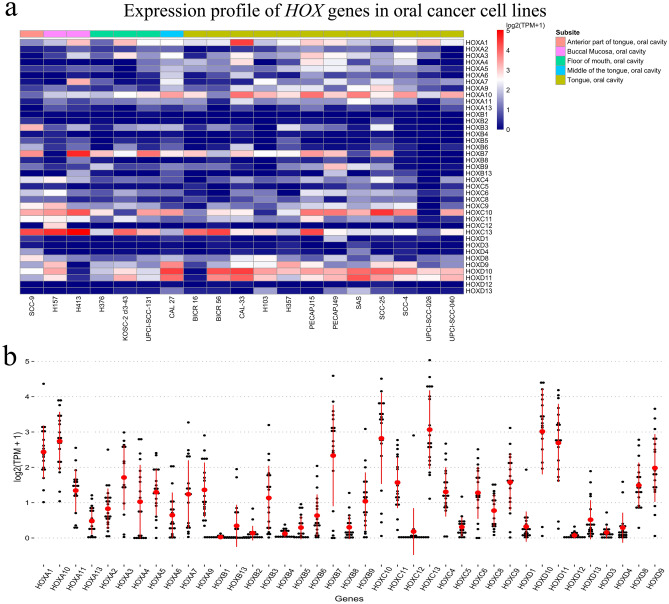
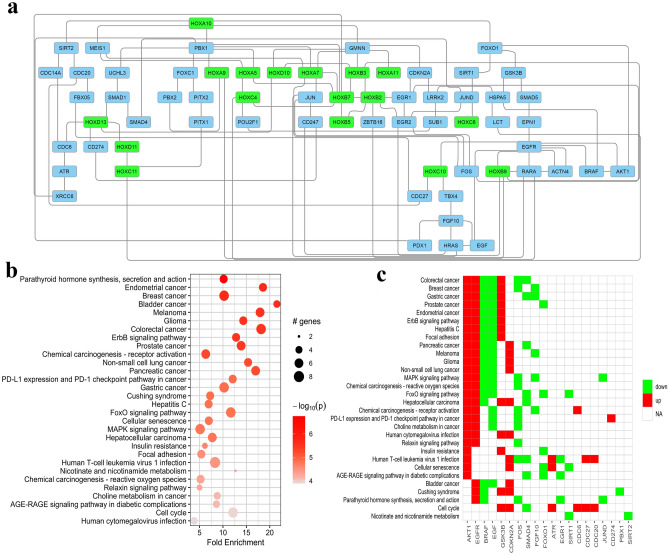
The role of evolutionarily conserved homeobox-containing HOX genes as transcriptional regulators in the developmental specification of organisms is well known. The contribution of HOX genes involvement in oral cancer phenotype has yet to be fully ascertained. TCGA-HNSC HTSeq-counts and clinical data were retrieved from the GDC portal for oral cavity neoplasms. GEO datasets (GSE72627, GSE30784, GSE37991) were accessed and analyzed using GEO2R. Differential HOX gene expression was profiled using the DESeq2 R package with a log2 fold change cut-off (- 1 and + 1) and Benjamini-Hochberg p-adjusted value at ≤ 0.01. Gene set over-representation analysis and semantic analysis associated with the disease ontology was performed using the ClusterProfiler R package, and pathway over-representation analysis was performed using IMPaLa. HOX protein interaction network was constructed using the Pathfind R package. HOX phenotype associations were performed using Mammalian Phenotype Ontology, Human Phenotype Ontology, PhenGenI associations, Jensen tissues, and OMIM entries. Drug connectivity mapping was carried out with Dr. Insight R package. HOXA2 was upregulated in oral dysplasia but silenced during tumor progression. Loss of HOXB2 expression was consistent in the potentially malignant oral lesions as well as in the primary tumor. HOXA7, HOXA10, HOXB7, HOXC6, HOXC10, HOXD10, and HOXD11 were consistently upregulated from premalignancy to malignancy and were notably associated with risk factors. Overrepresentation analysis suggested HOXA10 was involved in the transcriptional misregulation contributing to the oral cancer phenotype. HOX genes subnetwork analysis showed crucial interactions with cell cycle regulators, growth responsive elements, and proto-oncogenes. Phenotype associations specific to the oral region involving HOX genes provide intrinsic cues to tumor development. The 5' HOX genes were aberrantly upregulated during oral carcinogenesis reflecting their posterior prevalence.
HOX 基因作为转录调节因子在生物体的发育特化中的作用已被广泛认识。HOX 基因参与口腔癌表型的作用尚未被完全确定。TCGA-HNSC HTSeq 计数和临床数据从 GDC 门户网站获取,用于口腔肿瘤。访问 GEO 数据集(GSE72627、GSE30784、GSE37991)并使用 GEO2R 进行分析。使用 DESeq2 R 包对差异 HOX 基因表达进行分析,对数 2 倍变化截止值(-1 和 +1)和 Benjamini-Hochberg p 调整值≤0.01。使用 ClusterProfiler R 包进行基因集过表达分析和与疾病本体相关的语义分析,使用 IMPaLa 进行途径过表达分析。使用 Pathfind R 包构建 HOX 蛋白相互作用网络。使用哺乳动物表型本体、人类表型本体、PhenGenI 关联、Jensen 组织和 OMIM 条目进行 HOX 表型关联。使用 Dr. Insight R 包进行药物连接性映射。HOXA2 在口腔发育不良中上调,但在肿瘤进展过程中沉默。HOXB2 表达缺失在潜在恶性口腔病变以及原发性肿瘤中一致。HOXA7、HOXA10、HOXB7、HOXC6、HOXC10、HOXD10 和 HOXD11 从癌前病变到恶性肿瘤持续上调,并与危险因素显著相关。过表达分析表明,HOXA10 参与了导致口腔癌表型的转录失调。HOX 基因子网络分析显示与细胞周期调节剂、生长反应元件和原癌基因的关键相互作用。涉及 HOX 基因的口腔区域的表型关联为肿瘤发展提供了内在线索。HOX 基因在口腔癌发生过程中异常上调,反映了它们在后部的普遍性。