Immunochemistry Laboratory, Instituto Butantan, São Paulo, Brazil.
School of Biomedical Sciences, Faculty of Medicine, The University of Queensland, St Lucia, QLD, Australia.
Front Immunol. 2022 Jun 2;13:885223. doi: 10.3389/fimmu.2022.885223. eCollection 2022.
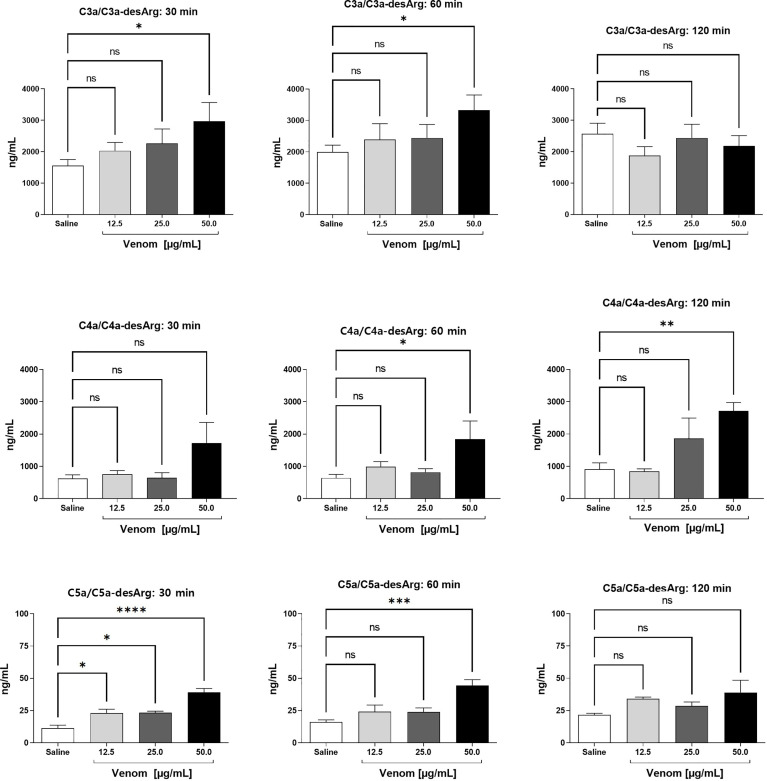
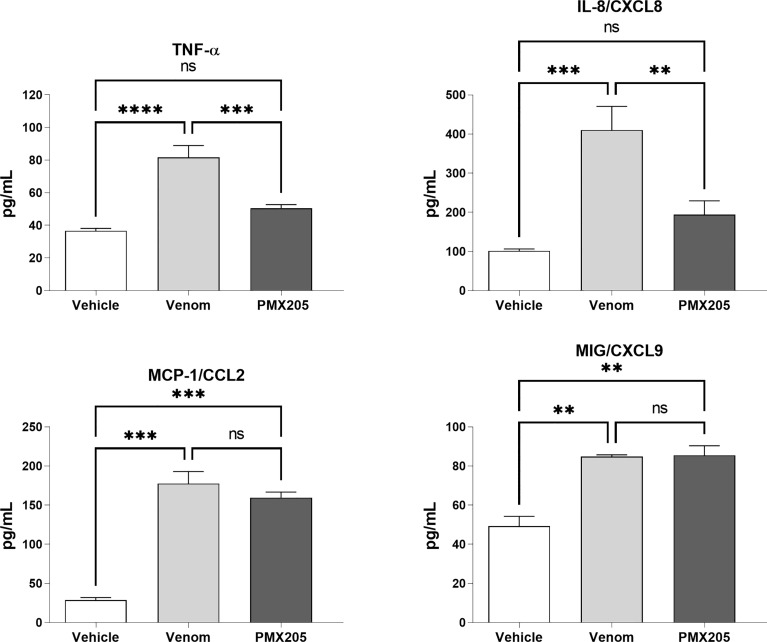
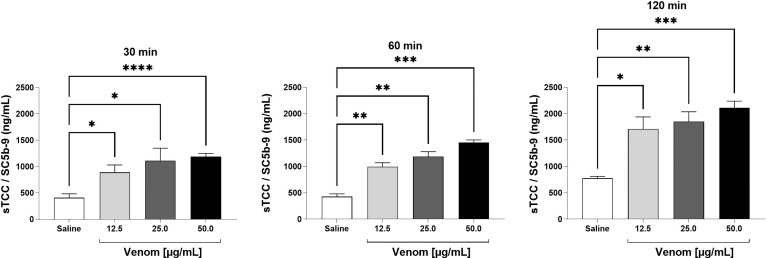
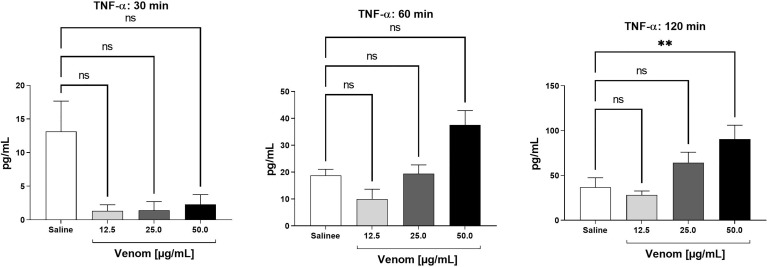
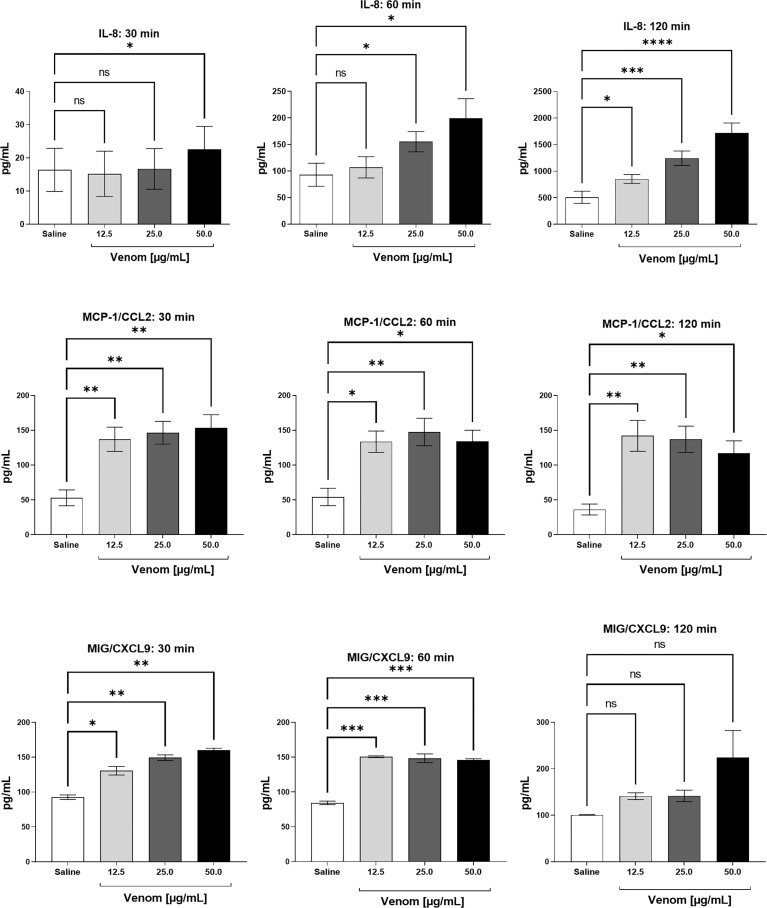
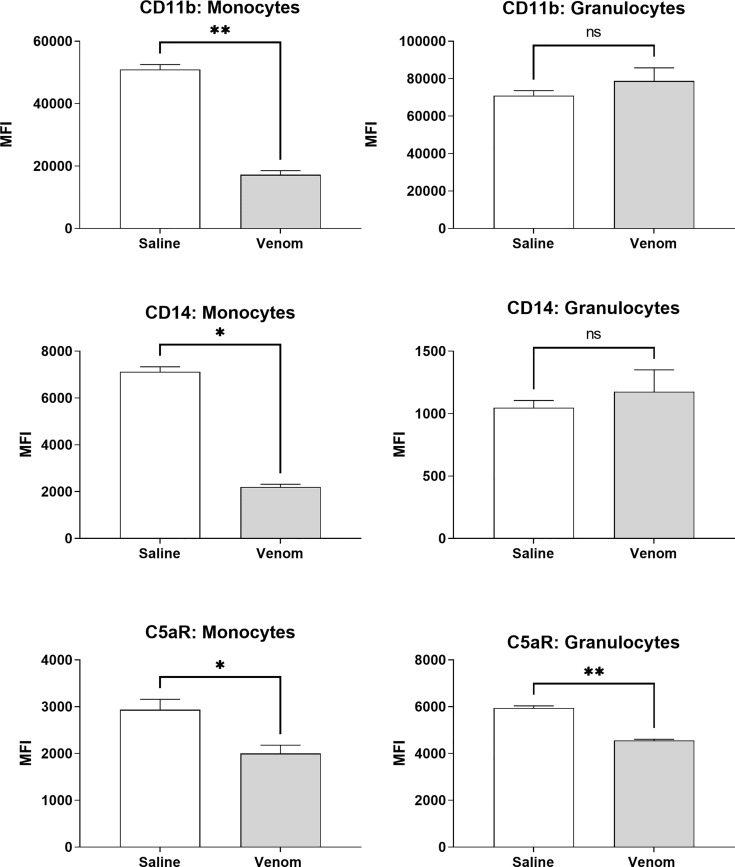
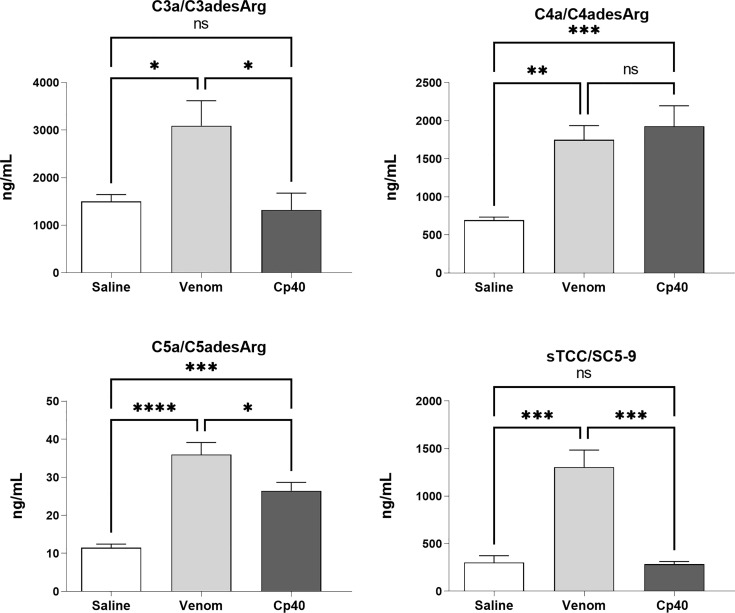
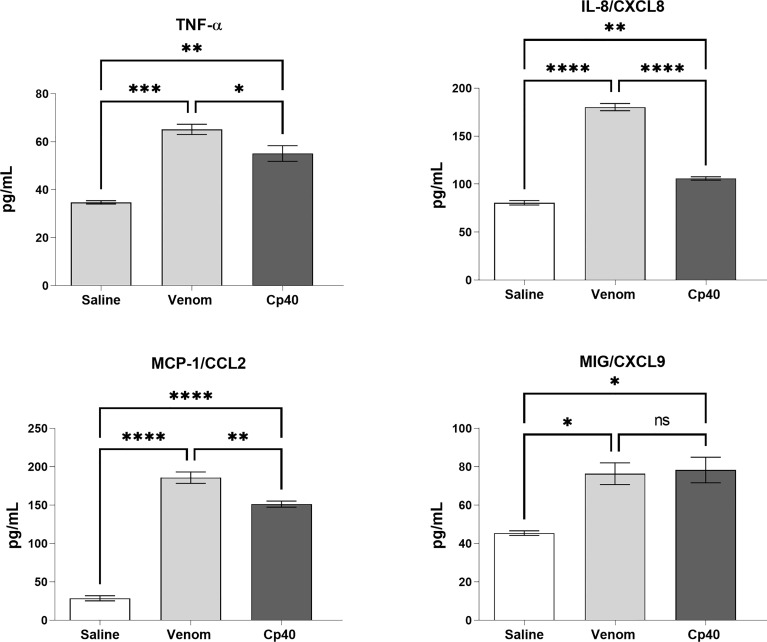
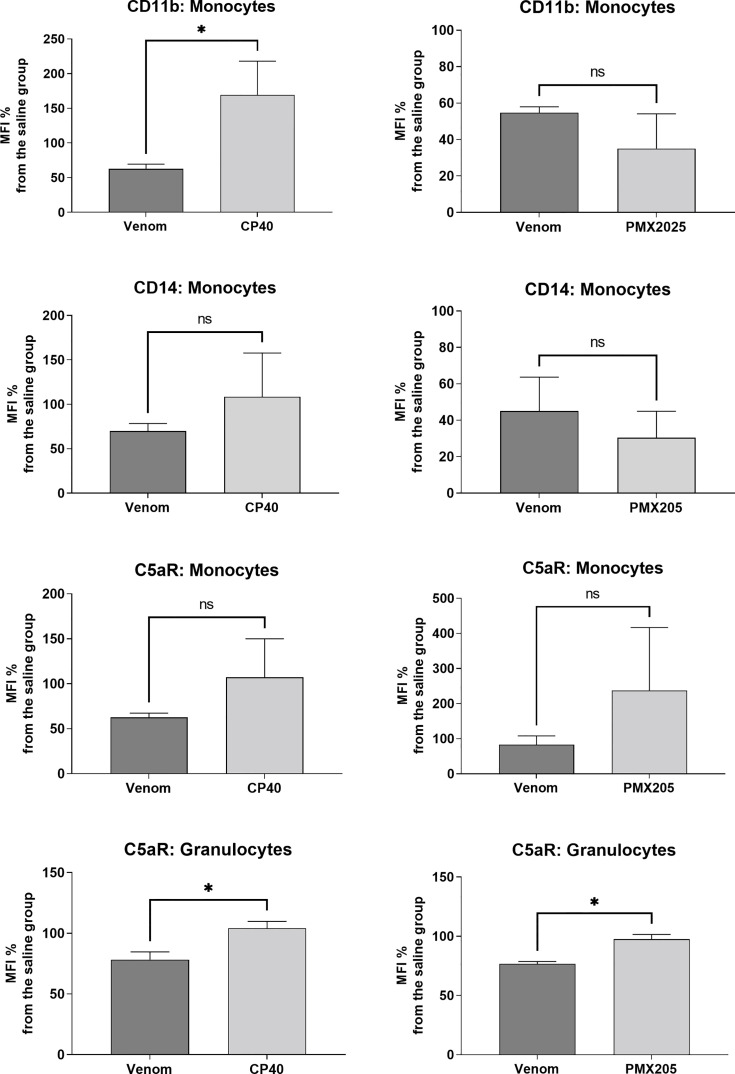
The clinical manifestations of envenomation by species are complex and characterized by prominent local effects that can progress to tissue loss, physical disability, or amputation. Systemic signs can also occur, such as hemorrhage, coagulopathy, shock, and acute kidney failure. The rapid development of local clinical manifestations is accompanied by the presence of mediators of the inflammatory process originating from tissues damaged by the bothropic venom. Considering the important role that the complement system plays in the inflammatory response, in this study, we analyzed the action of snake venom on the complement system and cell surface receptors involved in innate immunity using an human whole blood model. venom was able to induce activation of the complement system in the human whole blood model and promoted a significant increase in the production of anaphylatoxins C3a/C3a-desArg, C4a/C4a-desArg, C5a/C5a-desArg and sTCC. In leukocytes, the venom of reduced the expression of CD11b, CD14 and C5aR1. Inhibition of the C3 component by Cp40, an inhibitor of C3, resulted in a reduction of C3a/C3a-desArg, C5a/C5a-desArg and sTCC to basal levels in samples stimulated with the venom. Exposure to venom induced the production of inflammatory cytokines and chemokines such as TNF-α, IL-8/CXCL8, MCP-1/CCL2 and MIG/CXCL9 in the human whole blood model. Treatment with Cp40 promoted a significant reduction in the production of TNF-α, IL-8/CXCL8 and MCP-1/CCL2. C5aR1 inhibition with PMX205 also promoted a reduction of TNF-α and IL-8/CXCL8 to basal levels in the samples stimulated with venom. In conclusion, the data presented here suggest that the activation of the complement system promoted by the venom of the snake in the human whole blood model significantly contributes to the inflammatory process. The control of several inflammatory parameters using Cp40, an inhibitor of the C3 component, and PMX205, a C5aR1 antagonist, indicates that complement inhibition may represent a potential therapeutic tool in envenoming.
物种的蛇毒会导致复杂的临床表现,其特征是明显的局部效应,这些效应可能会导致组织损失、身体残疾或截肢。也可能出现全身症状,如出血、凝血功能障碍、休克和急性肾衰竭。局部临床表现的快速发展伴随着炎症过程介质的出现,这些介质来源于被蛇毒损伤的组织。考虑到补体系统在炎症反应中起着重要作用,在这项研究中,我们使用人类全血模型分析了蛇毒对补体系统和参与固有免疫的细胞表面受体的作用。结果表明,蛇毒能够在人类全血模型中诱导补体系统的激活,并显著增加过敏毒素 C3a/C3a-desArg、C4a/C4a-desArg、C5a/C5a-desArg 和 sTCC 的产生。在白细胞中,蛇毒降低了 CD11b、CD14 和 C5aR1 的表达。用 Cp40(一种 C3 抑制剂)抑制 C3 成分,可使刺激蛇毒后 C3a/C3a-desArg、C5a/C5a-desArg 和 sTCC 降低到基础水平。暴露于蛇毒会诱导人全血模型中产生炎症细胞因子和趋化因子,如 TNF-α、IL-8/CXCL8、MCP-1/CCL2 和 MIG/CXCL9。Cp40 处理可显著降低 TNF-α、IL-8/CXCL8 和 MCP-1/CCL2 的产生。用 PMX205 抑制 C5aR1 也可使刺激蛇毒后的 TNF-α和 IL-8/CXCL8 降低到基础水平。总之,本文的数据表明,蛇毒在人类全血模型中激活补体系统,这对炎症过程有重要贡献。使用 Cp40(一种 C3 成分抑制剂)和 PMX205(一种 C5aR1 拮抗剂)控制几个炎症参数表明,补体抑制可能是蛇毒中毒的潜在治疗工具。