Boterberg Sofie, Zanatta Arianna, Moerman Floor, Schaubroeck Sarah, Siew Jasmine, De Schryver Maarten, Roeyers Herbert
Research in Developmental Disorders Lab, Department of Experimental Clinical and Health Psychology, Faculty of Psychology and Educational Sciences, Ghent University, Henri Dunantlaan 2, 9000, Ghent, Belgium.
Research Support Office, Faculty of Psychology and Educational Sciences, Ghent University, Henri Dunantlaan 2, 9000, Ghent, Belgium.
Heliyon. 2022 Jun 12;8(6):e09727. doi: 10.1016/j.heliyon.2022.e09727. eCollection 2022 Jun.
COVID-19 restrictive measures have had a considerable impact on daily life routines, which may be especially challenging for families of children with autism. In pre-schoolers with autism, it is likely that the disruption of routines mainly impacts the presence of restrictive and repetitive behaviours (RRBs). Furthermore, influence of comorbid conditions, secondary behavioural difficulties and home environment characteristics on RRBs was explored.
A cross-sectional online survey design was used to collect parent-report data on 254 children with autism (2.5-6 years) during lockdown in the early months of the pandemic. RRBs were assessed using the Repetitive Behaviour Scale-Revised (RBS-R).
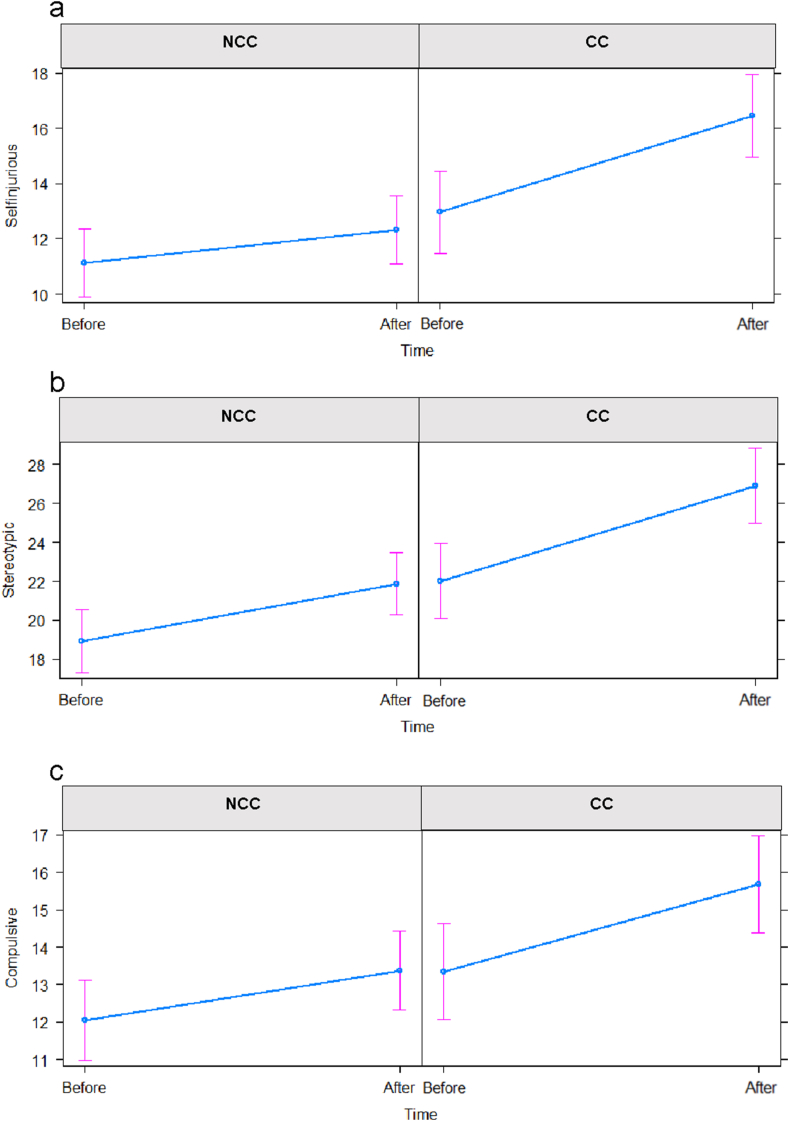
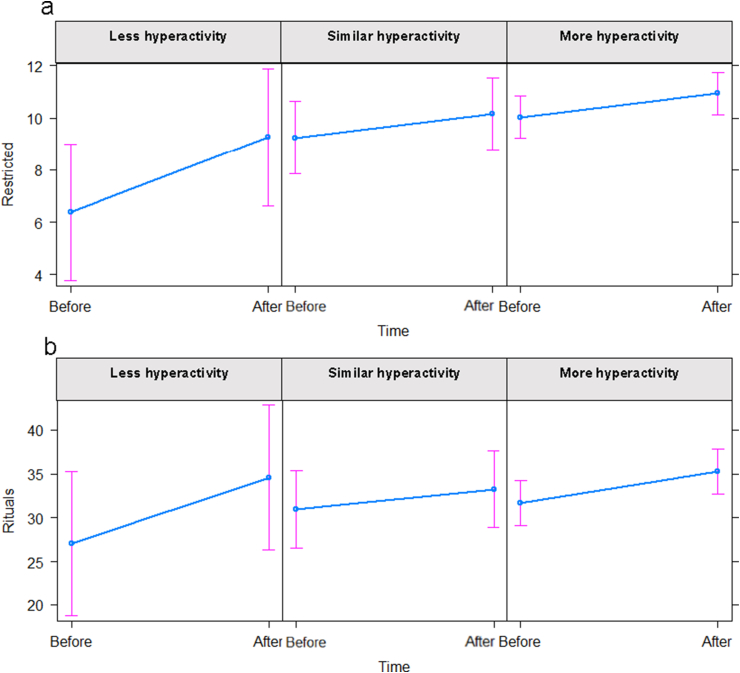
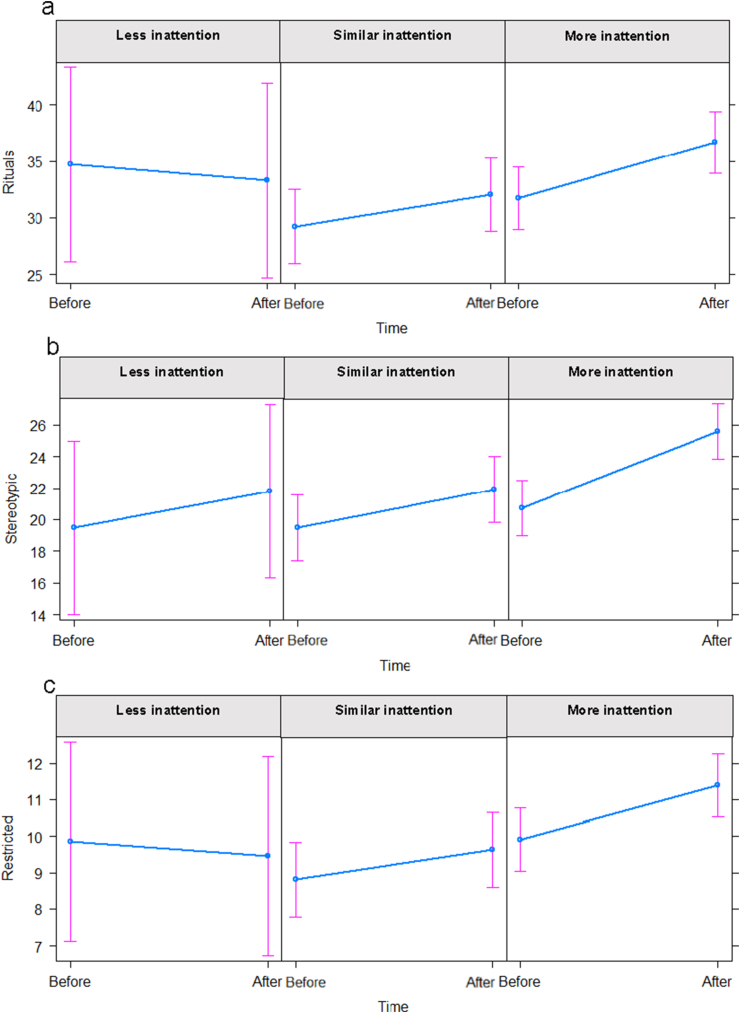
Parents reported a significant increase in stereotypic, self-injurious, compulsive and ritualistic behaviour, and restricted interests after implementation of COVID-19 restrictions. The presence of a co-occurring condition, such as language impairments or intellectual disability, was associated with more self-injurious and stereotypic behaviour. However, there was no effect of home environment on RRBs. Further, most children showed increases in internalising and/or externalising behaviour. Increased inattentive behaviour was associated with more ritualistic and stereotypic behaviour, and restricted interests. Decreases in hyperactivity were related to more restricted interests. Importantly, in a subset of children, parents reported less behavioural difficulties during the lockdown.
Findings highlight the importance of flexible implementation and continuity of care for pre-schoolers with autism and support for parents. Further follow-up of children with autism and RRBs, and co-occurring behavioural difficulties is needed and could enhance our understanding of the long-term effects associated with sudden restrictive measures to daily routines.
新冠疫情防控措施对日常生活规律产生了重大影响,这对自闭症儿童的家庭来说可能尤其具有挑战性。对于自闭症学龄前儿童,日常生活规律的 disrupted 可能主要影响限制性和重复性行为(RRB)的出现。此外,还探讨了共病状况、继发性行为困难和家庭环境特征对RRB的影响。
采用横断面在线调查设计,在疫情初期封锁期间收集254名自闭症儿童(2.5 - 6岁)家长报告的数据。使用修订后的重复行为量表(RBS - R)评估RRB。
家长报告称,新冠疫情防控措施实施后,刻板行为、自伤行为、强迫行为和仪式化行为以及兴趣受限显著增加。同时存在语言障碍或智力残疾等共病状况与更多的自伤行为和刻板行为相关。然而,家庭环境对RRB没有影响。此外,大多数儿童的内化和/或外化行为增加。注意力不集中行为增加与更多的仪式化和刻板行为以及兴趣受限相关。多动减少与更多的兴趣受限有关。重要的是,在一部分儿童中,家长报告称封锁期间行为困难较少。
研究结果强调了灵活实施和持续照顾自闭症学龄前儿童以及支持家长的重要性。需要对自闭症儿童和RRB以及同时存在的行为困难进行进一步随访,这有助于我们了解与日常活动突然限制措施相关的长期影响。