Department of Pharmaceutical Bioscience, Translational Drug Discovery and Development, Uppsala University, Uppsala, Sweden.
DMPK, Research and Early Development Cardiovascular, Renal and Metabolism, BioPharmaceuticals R&D, AstraZeneca, Gothenburg, Sweden.
CPT Pharmacometrics Syst Pharmacol. 2022 Sep;11(9):1194-1209. doi: 10.1002/psp4.12837. Epub 2022 Jul 16.
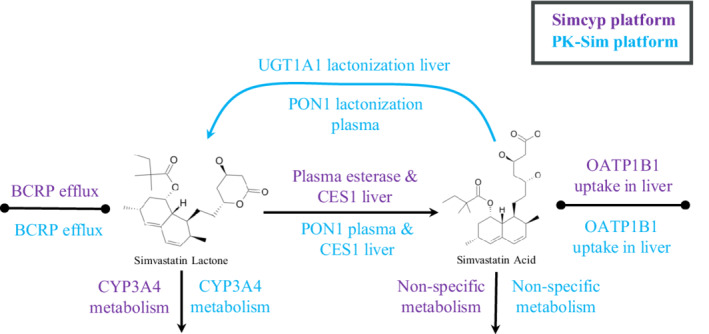
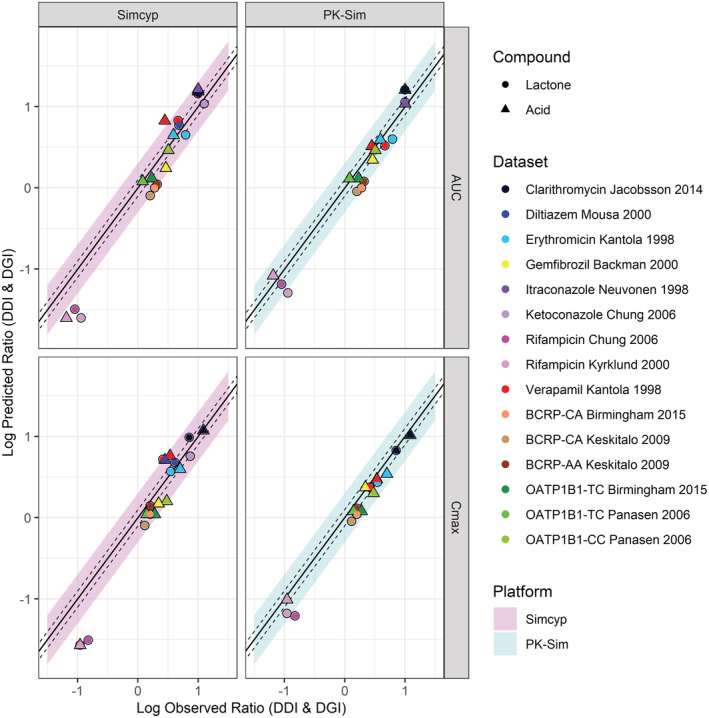
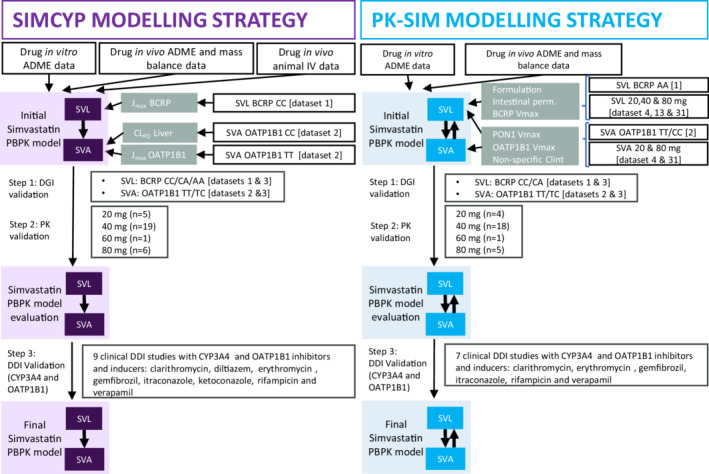
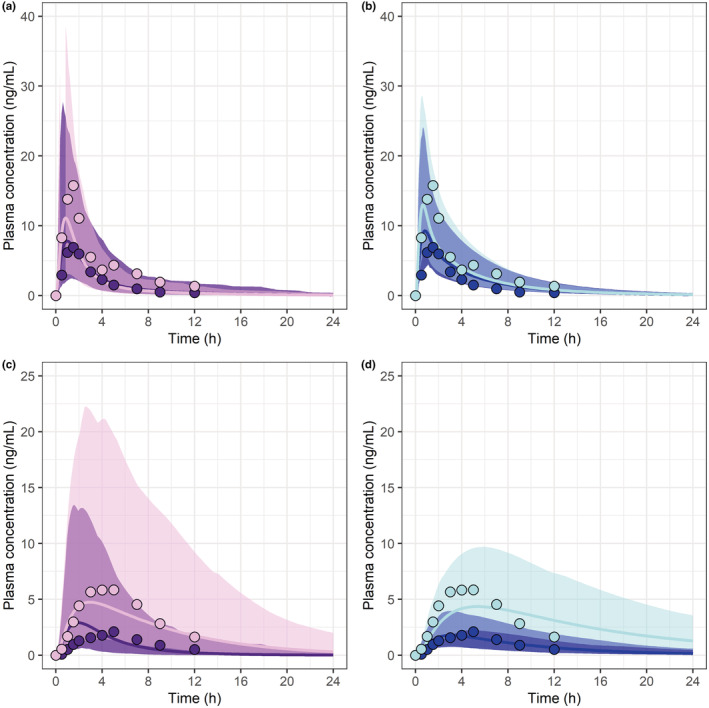
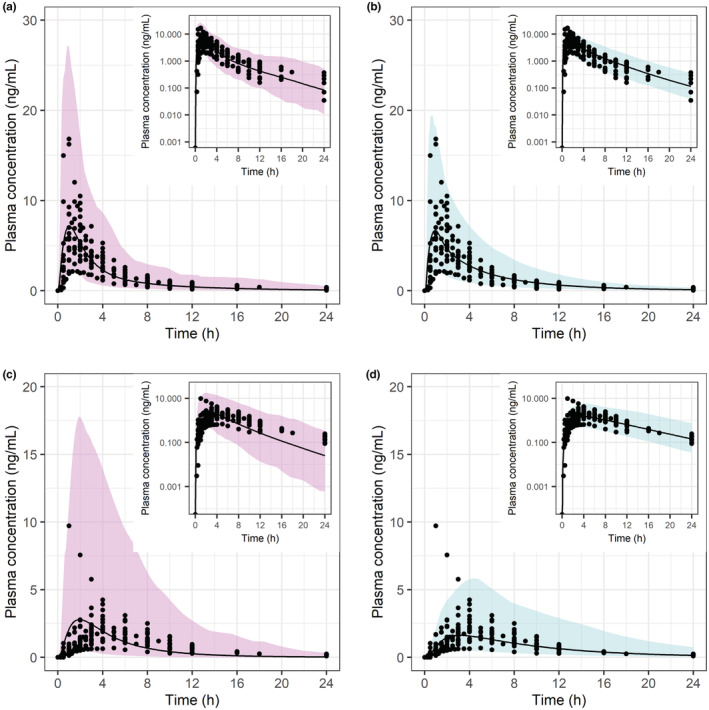
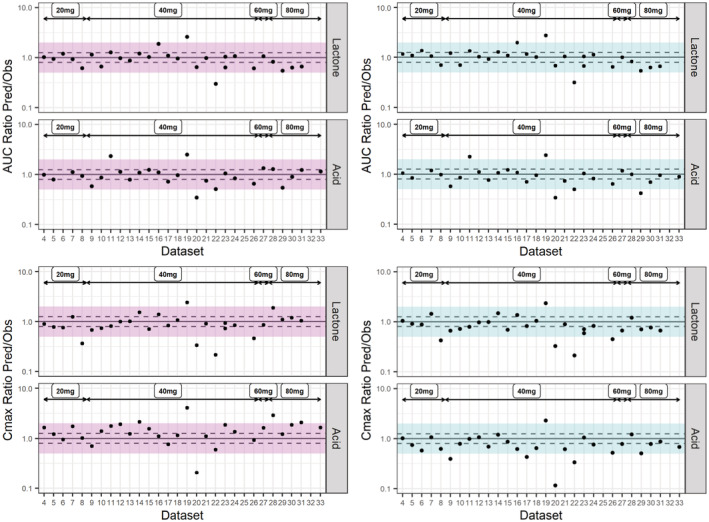
Physiologically-based pharmacokinetic (PBPK) models have an important role in drug discovery/development and decision making in regulatory submissions. This is facilitated by predefined PBPK platforms with user-friendly graphical interface, such as Simcyp and PK-Sim. However, evaluations of platform differences and the potential implications for disposition-related applications are still lacking. The aim of this study was to assess how PBPK model development, input parameters, and model output are affected by the selection of PBPK platform. This is exemplified via the establishment of simvastatin PBPK models (workflow, final models, and output) in PK-Sim and Simcyp as representatives of established whole-body PBPK platforms. The major finding was that the choice of PBPK platform influenced the model development strategy and the final model input parameters, however, the predictive performance of the simvastatin models was still comparable between the platforms. The main differences between the structure and implementation of Simcyp and PK-Sim were found in the absorption and distribution models. Both platforms predicted equally well the observed simvastatin (lactone and acid) pharmacokinetics (20-80 mg), BCRP and OATP1B1 drug-gene interactions (DGIs), and drug-drug interactions (DDIs) when co-administered with CYP3A4 and OATP1B1 inhibitors/inducers. This study illustrates that in-depth knowledge of established PBPK platforms is needed to enable an assessment of the consequences of PBPK platform selection. Specifically, this work provides insights on software differences and potential implications when bridging PBPK knowledge between Simcyp and PK-Sim users. Finally, it provides a simvastatin model implemented in both platforms for risk assessment of metabolism- and transporter-mediated DGIs and DDIs.
基于生理学的药代动力学(PBPK)模型在药物发现/开发和监管提交决策中具有重要作用。这得益于具有用户友好图形界面的预定义 PBPK 平台,例如 Simcyp 和 PK-Sim。然而,对于平台差异的评估以及对处置相关应用的潜在影响仍然缺乏。本研究旨在评估选择 PBPK 平台如何影响 PBPK 模型的开发、输入参数和模型输出。这通过在 PK-Sim 和 Simcyp 中建立辛伐他汀 PBPK 模型(工作流程、最终模型和输出)来举例说明,这两个平台代表了成熟的全身 PBPK 平台。主要发现是,PBPK 平台的选择影响了模型开发策略和最终模型输入参数,但这两个平台的辛伐他汀模型的预测性能仍然相当。Simcyp 和 PK-Sim 的结构和实施之间的主要区别在于吸收和分布模型。这两个平台都同样很好地预测了观察到的辛伐他汀(内酯和酸)药代动力学(20-80mg)、BCRP 和 OATP1B1 药物-基因相互作用(DGIs)以及当与 CYP3A4 和 OATP1B1 抑制剂/诱导剂共同给药时的药物-药物相互作用(DDIs)。本研究表明,需要深入了解成熟的 PBPK 平台,以评估 PBPK 平台选择的后果。具体而言,这项工作提供了有关软件差异的见解,以及在 Simcyp 和 PK-Sim 用户之间桥接 PBPK 知识时的潜在影响。最后,它提供了在这两个平台上实现的辛伐他汀模型,用于评估代谢和转运体介导的 DGIs 和 DDIs 的风险。