Department of Chemical Engineering, Isfahan University of Technology, Isfahan, 84156-83111, Iran.
Sci Rep. 2022 Jun 20;12(1):10388. doi: 10.1038/s41598-022-14676-y.
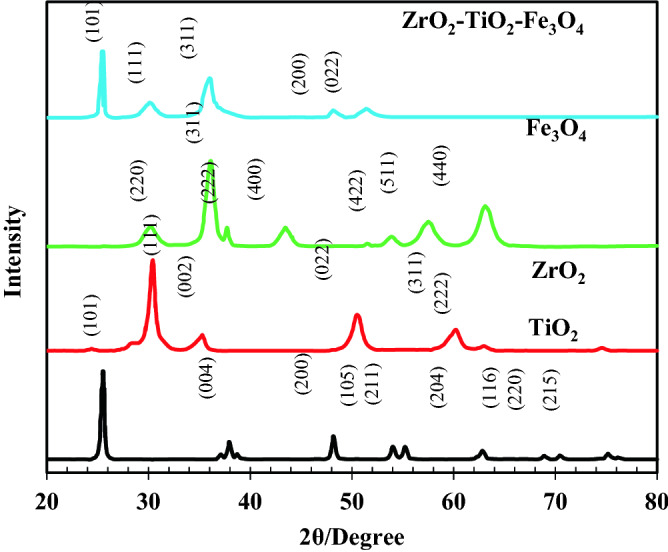
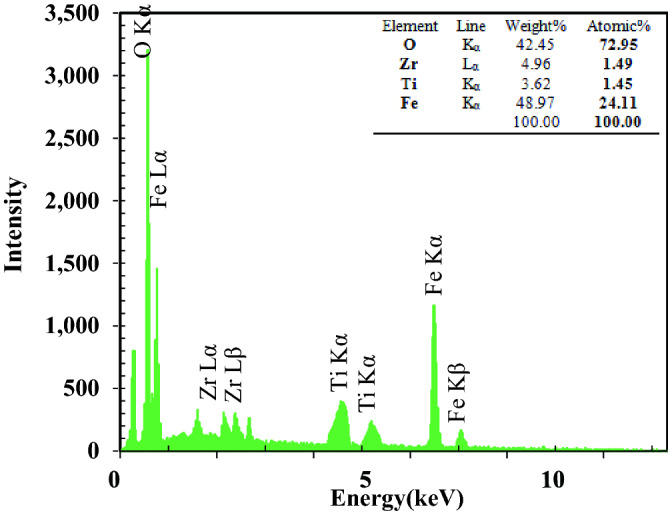
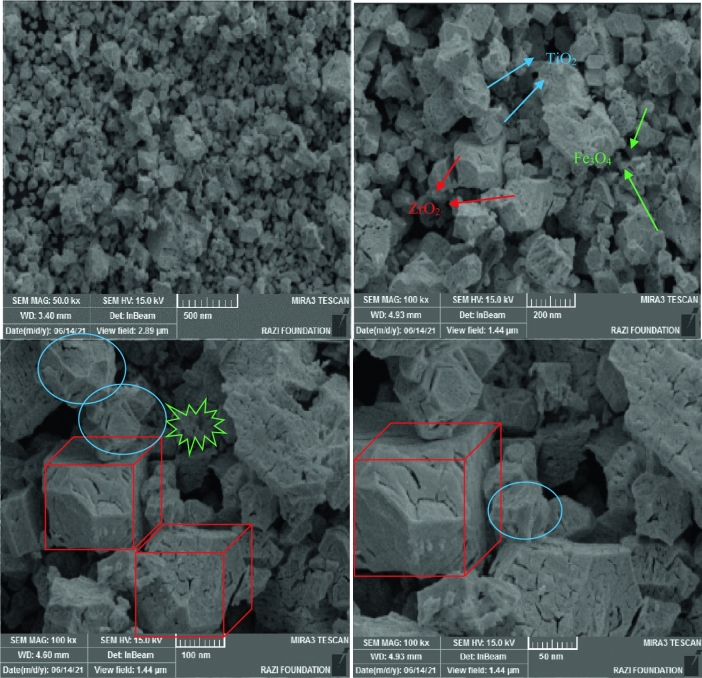
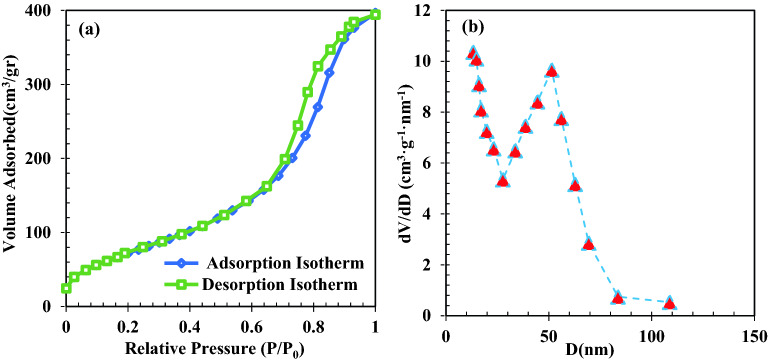
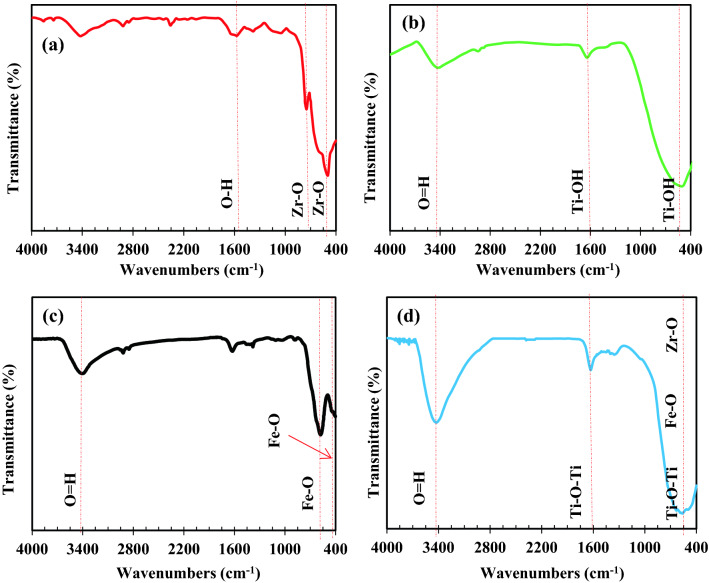
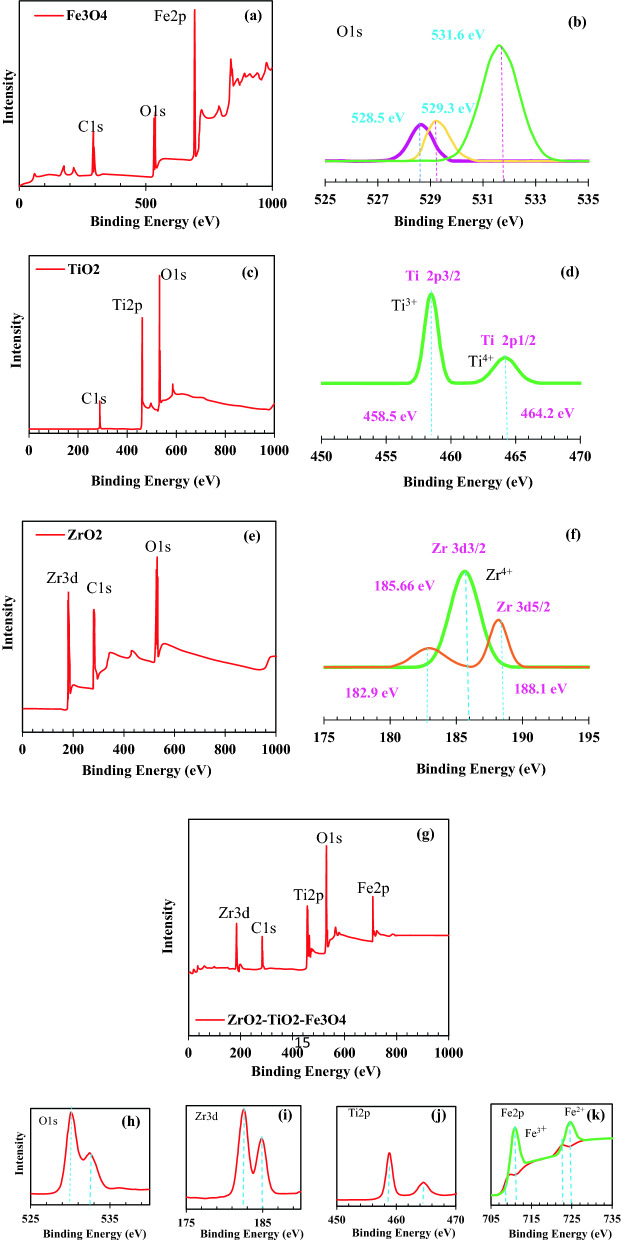
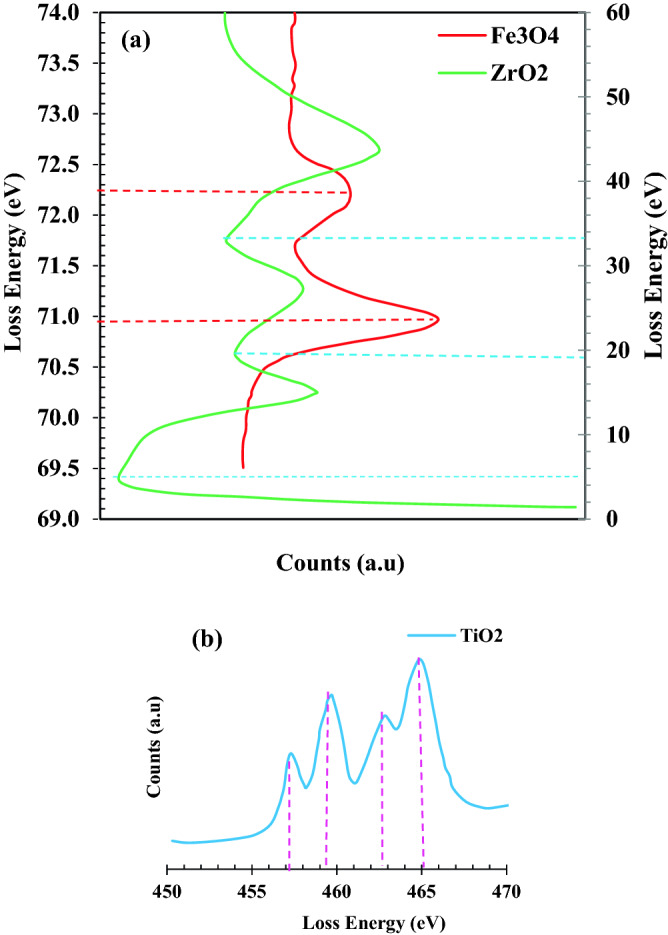
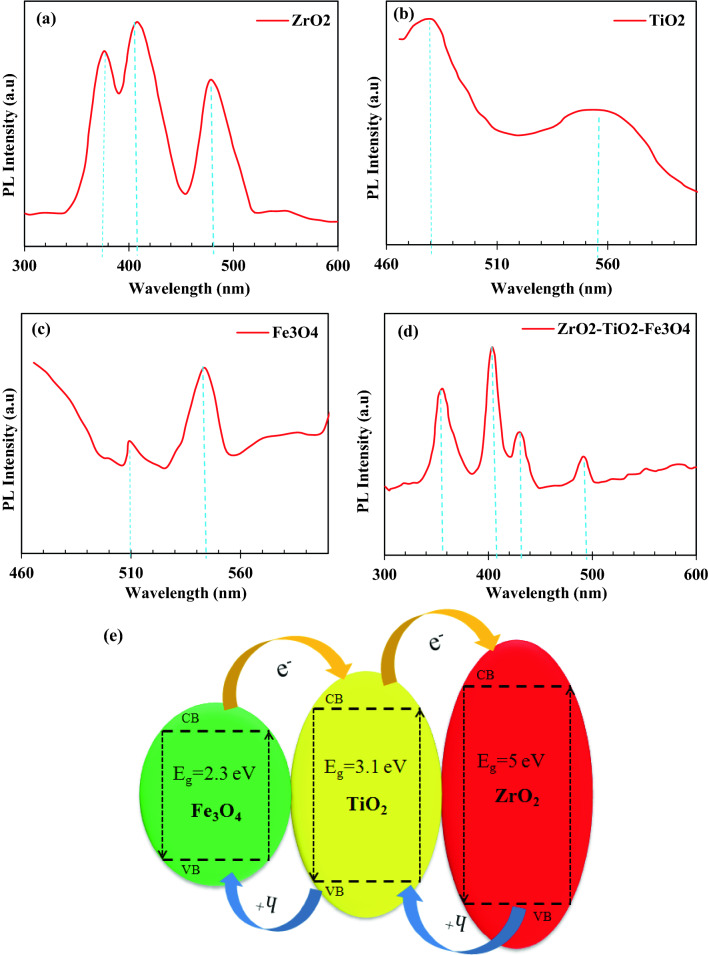
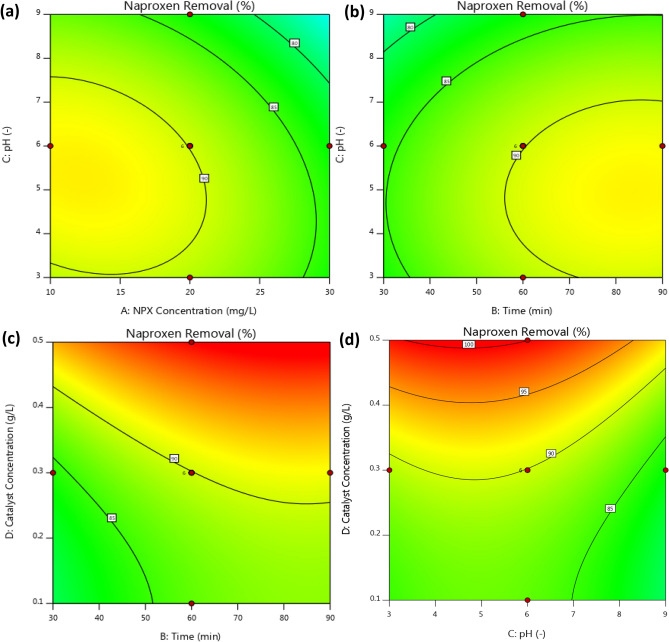
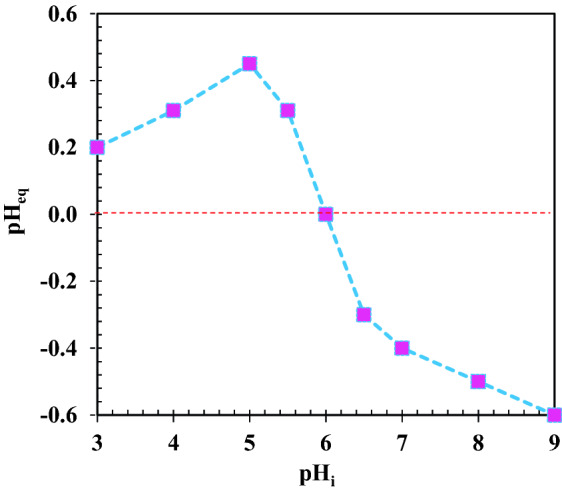
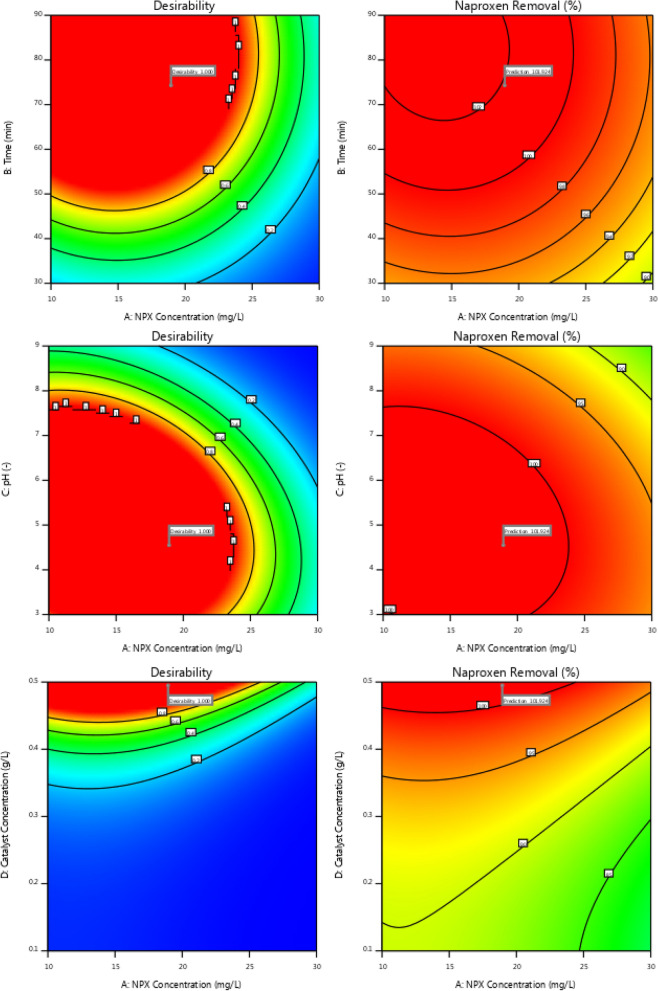
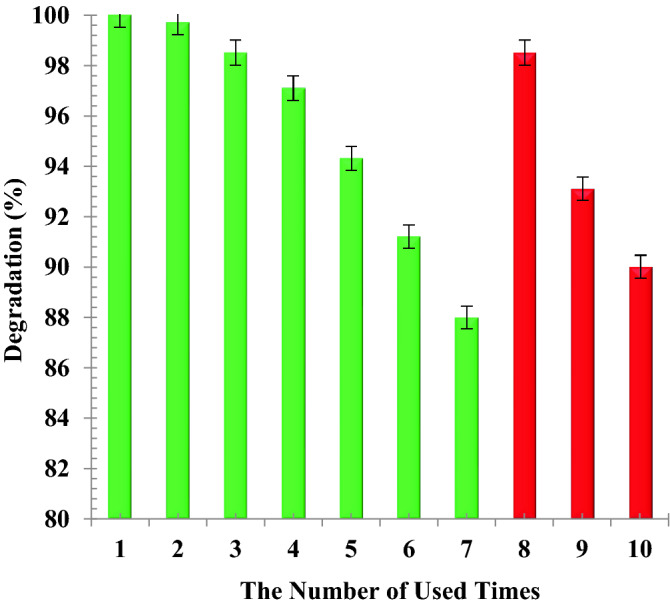
In this study, ZrO, TiO, and FeO components were synthesized by co-precipitation, sol-gel, and co-precipitation methods, respectively. In addition, solid-state dispersion method was used for synthesizing of ZrO/TiO/FeO ternary nanocomposite. The ZrO/TiO/FeO nanocomposite was characterized by different techniques including XRD, EDX, SEM, BET, FTIR, XPS, EELS, and Photoluminescence (PL). The FTIR analysis of ZrO/TiO/FeO photocatalyst showed strong peaks in the range of 450 to 700 cm, which represent stretching vibrations of Zr-O, Ti-O, and Fe-O. The results of FTIR and XRD, XPS analyses and PL spectra confirmed that the solid-state dispersion method produced ZrO/TiO/FeO nanocomposites. The EELS analysis confirmed the pure samples of FeO, TiO and ZrO. The EDAX analysis showed that the Zr:Ti:Fe atomic ratio was 0.42:2.08:1.00. The specific surface area, pores volume and average pores size of the photocatalyst were obtained 280 m/g, 0.92 cm/g, and 42 nm respectively. Furthermore, the performance of ZrO/TiO/FeO nanocomposite was evaluated for naproxen removal using the response surface method (RSM). The four parameters such as NPX concentration, time, pH and catalyst concentration was investigated. The point of zero charge of the photocatalyst was 6. The maximum and minimum degradation of naproxen using photocatalyst were 100% (under conditions: NPX concentration = 10 mg/L, time = 90 min, pH = 3 and catalyst concentration = 0.5 g/L) and 66.10% respectively. The stability experiment revealed that the ternary nanocatalyst demonstrates a relatively higher photocatalytic activity after 7 recycles.
在这项研究中,分别采用共沉淀法、溶胶-凝胶法和共沉淀法合成了 ZrO、TiO 和 FeO 组分。此外,还采用固态分散法合成了 ZrO/TiO/FeO 三元纳米复合材料。采用 XRD、EDX、SEM、BET、FTIR、XPS、EELS 和光致发光(PL)等多种技术对 ZrO/TiO/FeO 纳米复合材料进行了表征。ZrO/TiO/FeO 光催化剂的 FTIR 分析表明,在 450 至 700 cm 的范围内有很强的峰,代表 Zr-O、Ti-O 和 Fe-O 的伸缩振动。FTIR 和 XRD、XPS 分析及 PL 光谱的结果证实,固态分散法制备了 ZrO/TiO/FeO 纳米复合材料。EELS 分析证实了 FeO、TiO 和 ZrO 的纯样品。能谱分析(EDAX)表明,Zr:Ti:Fe 原子比为 0.42:2.08:1.00。光催化剂的比表面积、孔体积和平均孔径分别为 280 m/g、0.92 cm/g 和 42nm。此外,采用响应面法(RSM)评价了 ZrO/TiO/FeO 纳米复合材料对萘普生的去除性能。考察了 NPX 浓度、时间、pH 和催化剂浓度等四个参数。光催化剂的等电点为 6。使用光催化剂时,萘普生的最大和最小降解率分别为 100%(在条件下:NPX 浓度= 10mg/L,时间= 90min,pH= 3,催化剂浓度= 0.5g/L)和 66.10%。稳定性实验表明,三元纳米催化剂在 7 次循环后表现出相对较高的光催化活性。