Department Neuroscience, Yale University School of Medicine, New Haven, CT, USA.
Department Psychiatry, Yale University School of Medicine, New Haven, CT, USA.
Mol Psychiatry. 2022 Oct;27(10):4252-4263. doi: 10.1038/s41380-022-01656-x. Epub 2022 Jun 22.
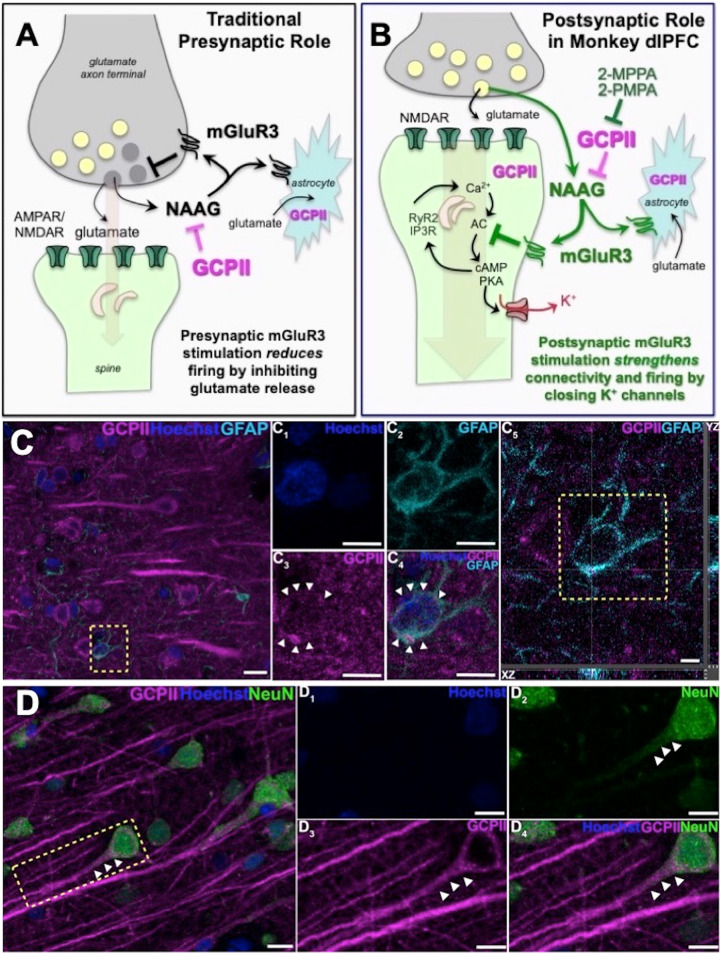
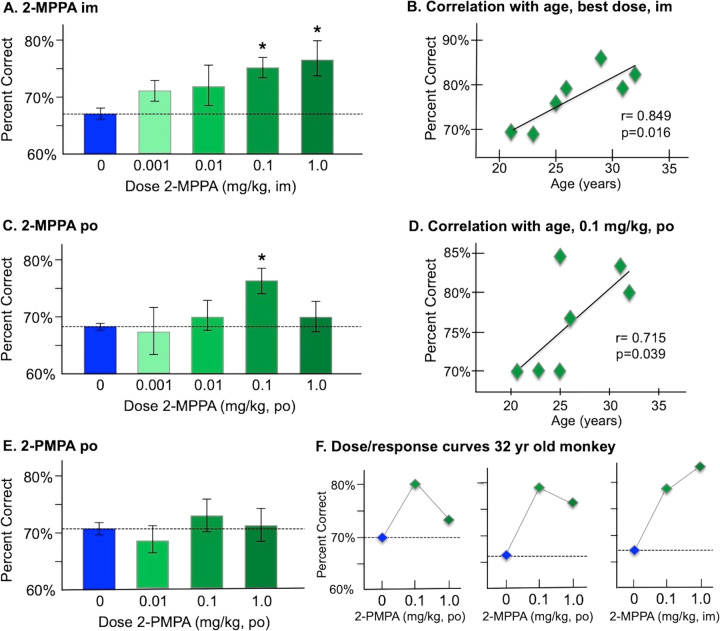
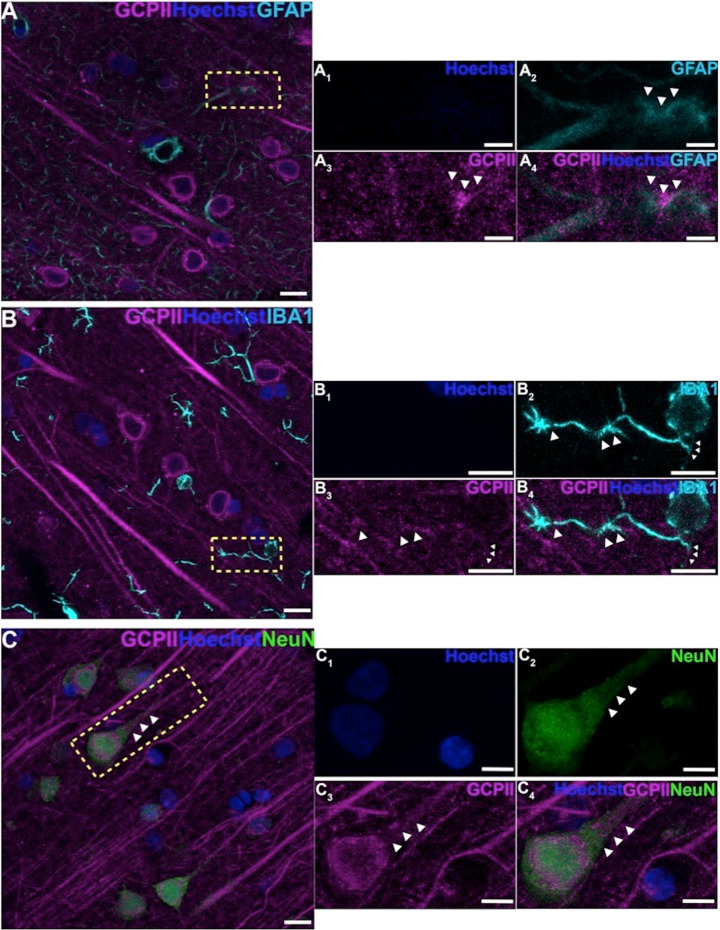
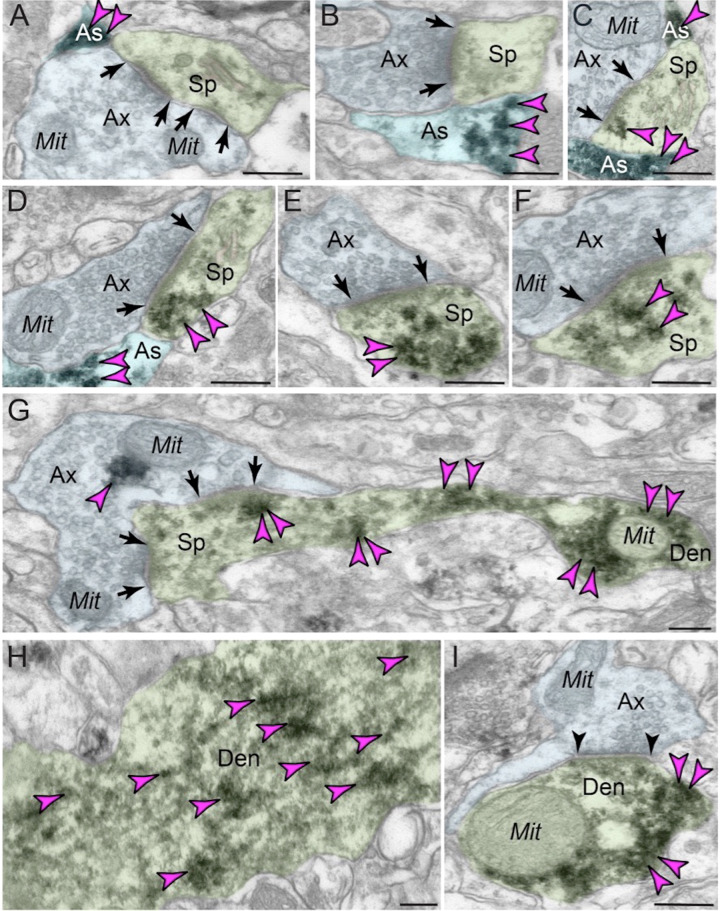
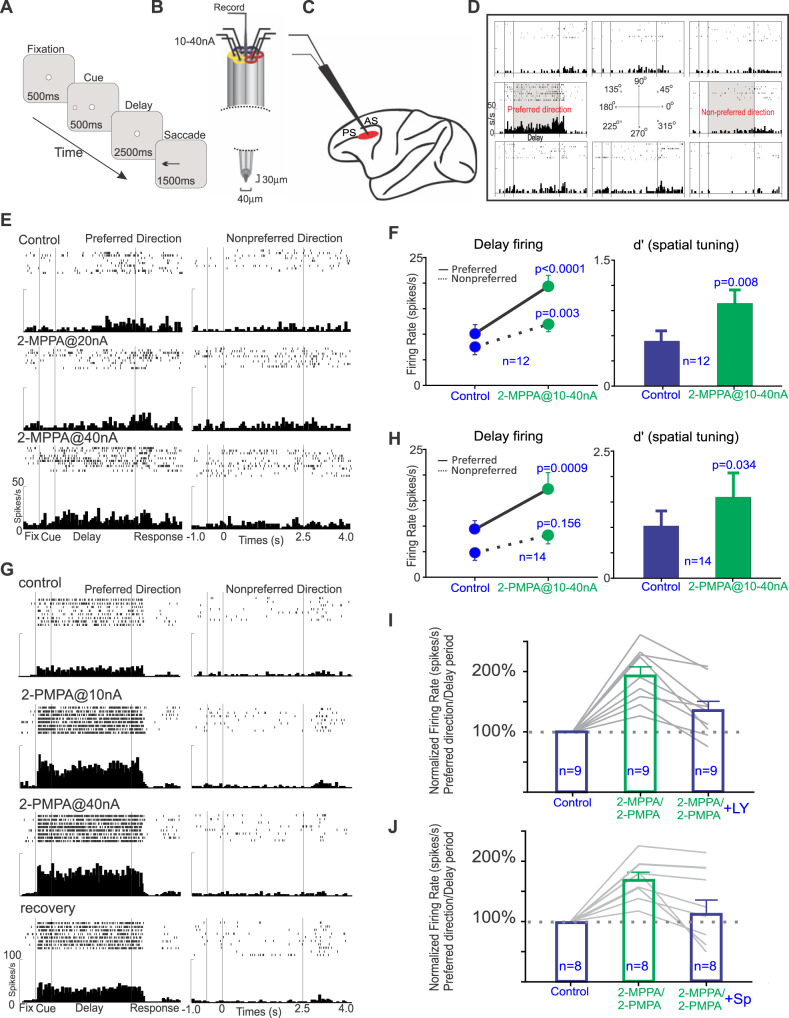
Glutamate carboxypeptidase-II (GCPII) expression in brain is increased by inflammation, e.g. by COVID19 infection, where it reduces NAAG stimulation of metabotropic glutamate receptor type 3 (mGluR3). GCPII-mGluR3 signaling is increasingly linked to higher cognition, as genetic alterations that weaken mGluR3 or increase GCPII signaling are associated with impaired cognition in humans. Recent evidence from macaque dorsolateral prefrontal cortex (dlPFC) shows that mGluR3 are expressed on dendritic spines, where they regulate cAMP-PKA opening of potassium (K) channels to enhance neuronal firing during working memory. However, little is known about GCPII expression and function in the primate dlPFC, despite its relevance to inflammatory disorders. The present study used multiple label immunofluorescence and immunoelectron microscopy to localize GCPII in aging macaque dlPFC, and examined the effects of GCPII inhibition on dlPFC neuronal physiology and working memory function. GCPII was observed in astrocytes as expected, but also on neurons, including extensive expression in dendritic spines. Recordings in dlPFC from aged monkeys performing a working memory task found that iontophoresis of the GCPII inhibitors 2-MPPA or 2-PMPA markedly increased working memory-related neuronal firing and spatial tuning, enhancing neural representations. These beneficial effects were reversed by an mGluR2/3 antagonist, or by a cAMP-PKA activator, consistent with mGluR3 inhibition of cAMP-PKA-K channel signaling. Systemic administration of the brain penetrant inhibitor, 2-MPPA, significantly improved working memory performance without apparent side effects, with largest effects in the oldest monkeys. Taken together, these data endorse GCPII inhibition as a potential strategy for treating cognitive disorders associated with aging and/or neuroinflammation.
谷氨酸羧肽酶-II(GCPII)在大脑中的表达可被炎症增加,例如 COVID19 感染,从而减少 N-乙酰天冬氨酸谷氨酸盐对代谢型谷氨酸受体 3(mGluR3)的刺激。GCPII-mGluR3 信号与更高的认知能力越来越相关,因为削弱 mGluR3 或增加 GCPII 信号的遗传改变与人类认知障碍有关。最近来自猕猴背外侧前额叶皮层(dlPFC)的证据表明,mGluR3 表达在树突棘上,在那里它们调节 cAMP-PKA 打开钾(K)通道,以增强工作记忆期间的神经元放电。然而,尽管 GCPII 与炎症性疾病有关,但人们对灵长类动物 dlPFC 中的 GCPII 表达和功能知之甚少。本研究使用多标记免疫荧光和免疫电子显微镜来定位衰老猕猴 dlPFC 中的 GCPII,并研究 GCPII 抑制对 dlPFC 神经元生理学和工作记忆功能的影响。GCPII 如预期的那样在星形胶质细胞中观察到,但也在神经元上观察到,包括在树突棘上广泛表达。在执行工作记忆任务的老年猴子的 dlPFC 中进行记录时发现,GCPII 抑制剂 2-MPPA 或 2-PMPA 的离子电渗法显著增加了与工作记忆相关的神经元放电和空间调谐,增强了神经表现。这些有益作用被 mGluR2/3 拮抗剂或 cAMP-PKA 激活剂逆转,这与 mGluR3 抑制 cAMP-PKA-K 通道信号一致。脑穿透抑制剂 2-MPPA 的系统给药显著改善了工作记忆表现,没有明显的副作用,在最老的猴子中效果最大。总之,这些数据支持 GCPII 抑制作为治疗与衰老和/或神经炎症相关的认知障碍的潜在策略。