College of Pharmaceutical Sciences, Soochow University, Suzhou, 215123, China.
Research Center of Occupational Medicine, Peking University Third Hospital, Beijing, 100191, China.
Acta Pharmacol Sin. 2023 Jan;44(1):105-119. doi: 10.1038/s41401-022-00933-3. Epub 2022 Jun 22.
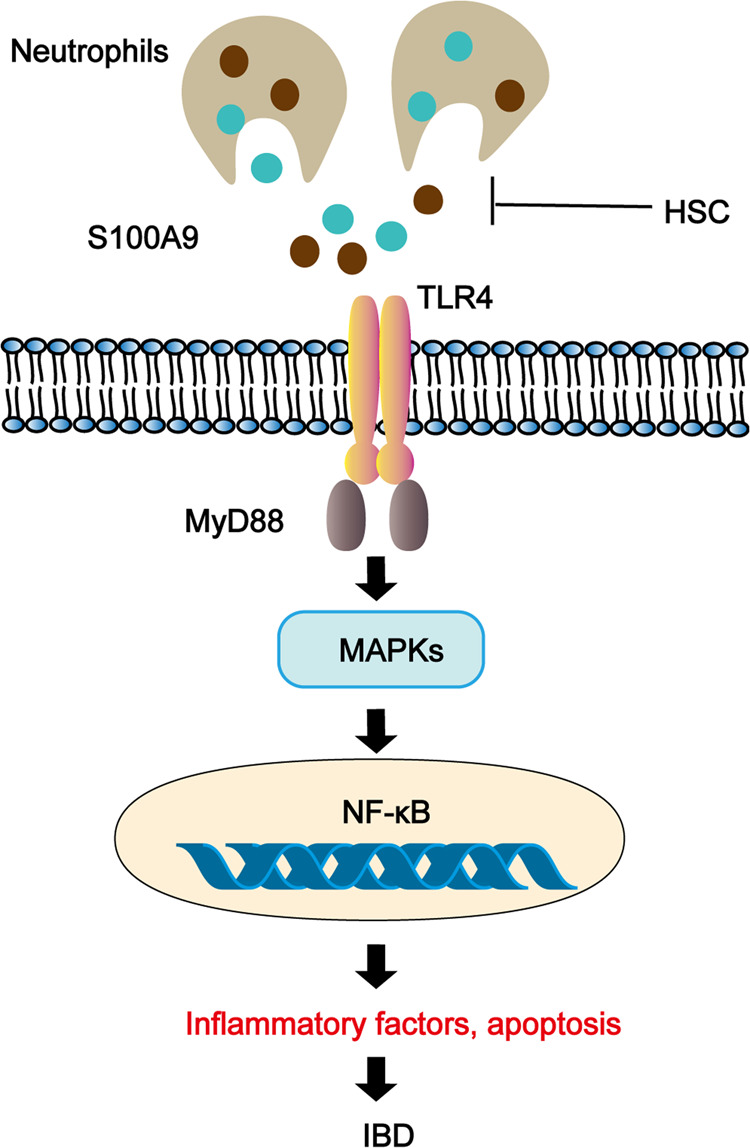
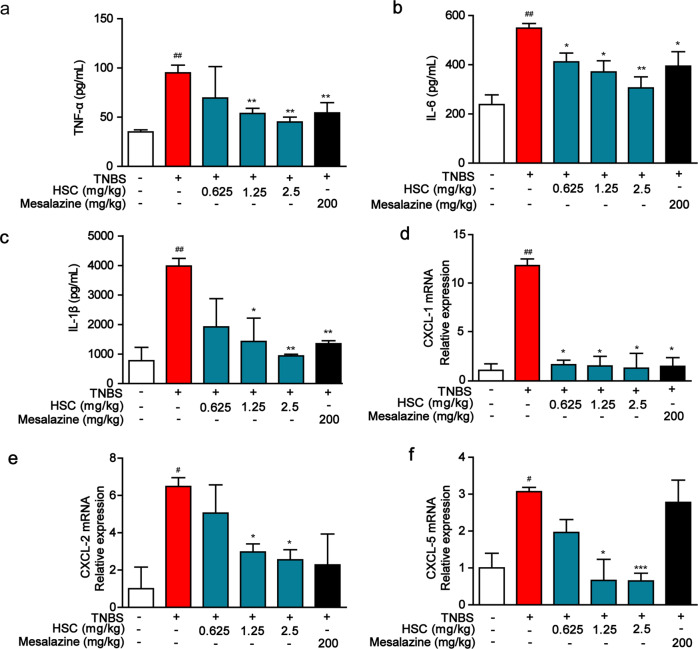
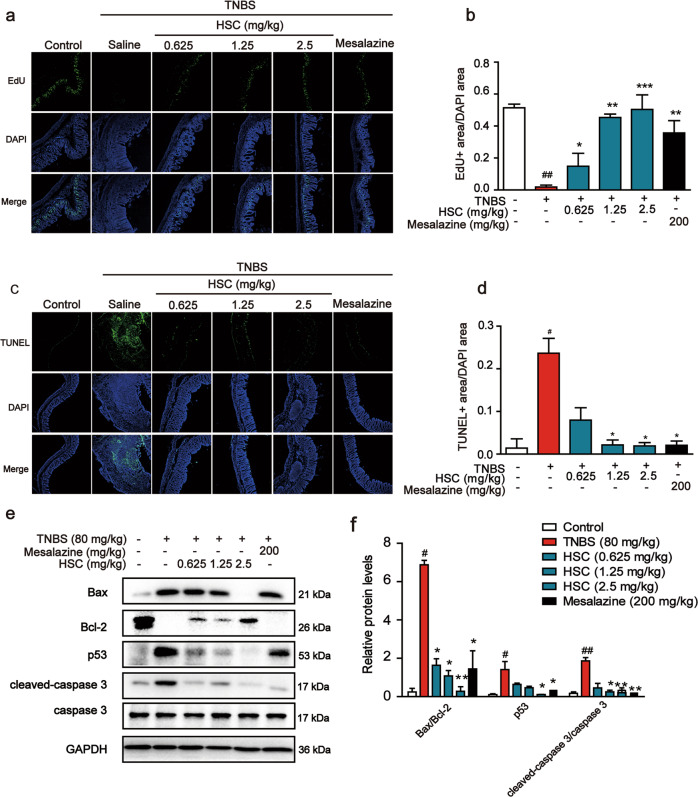
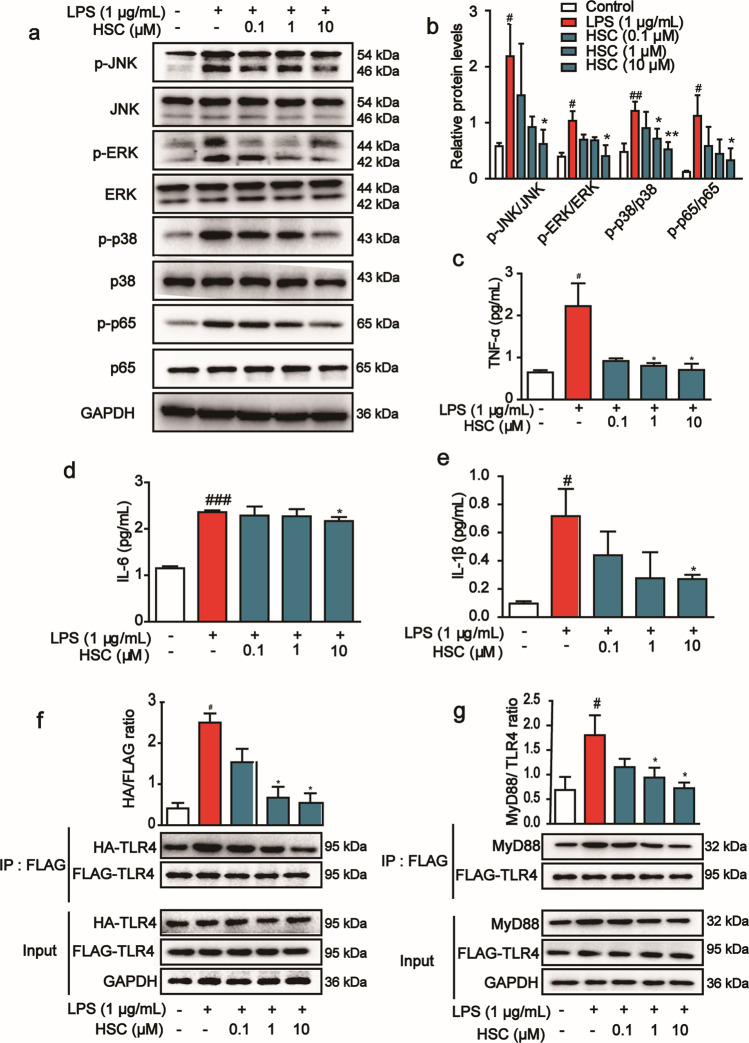
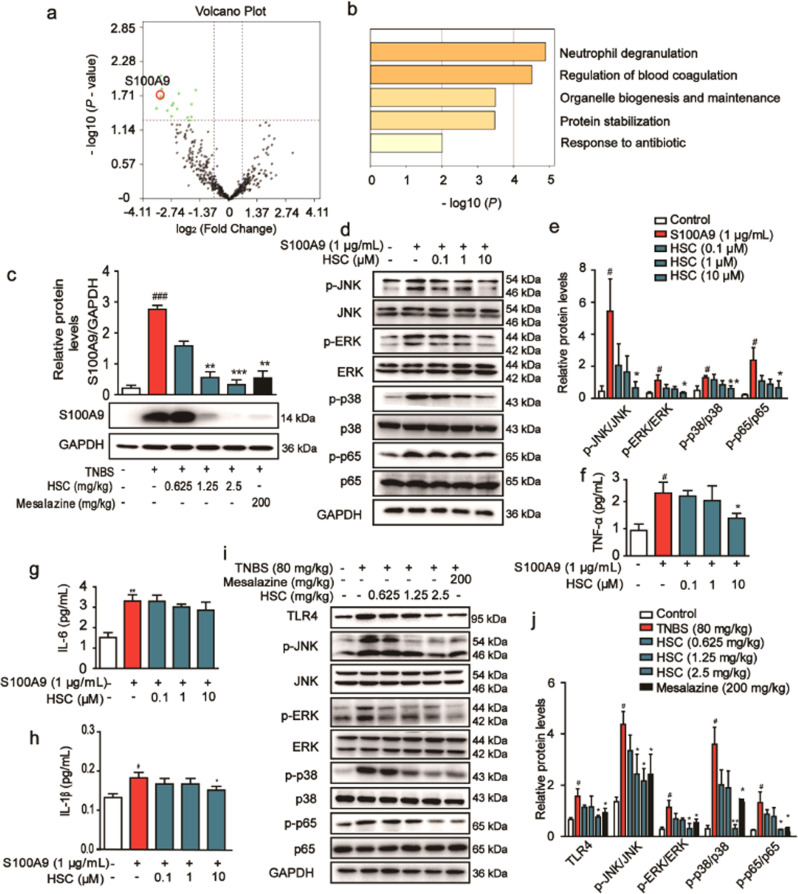
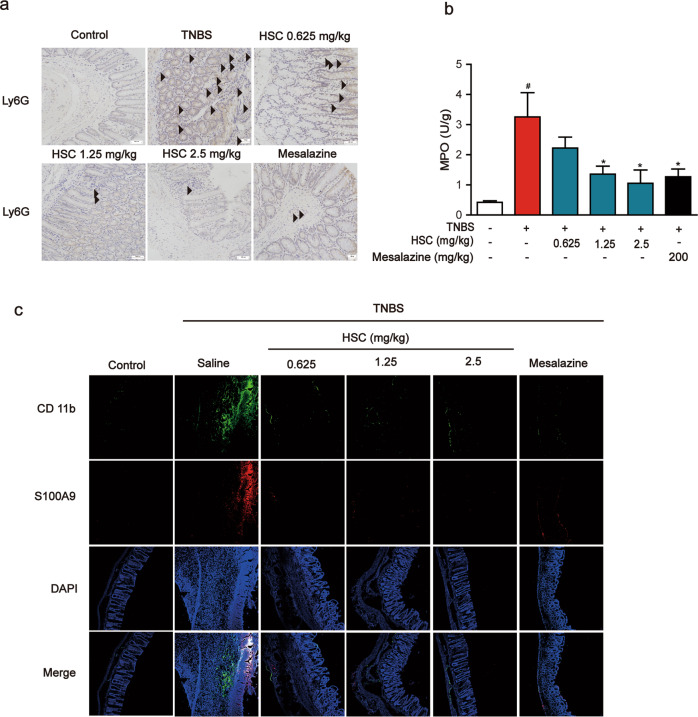
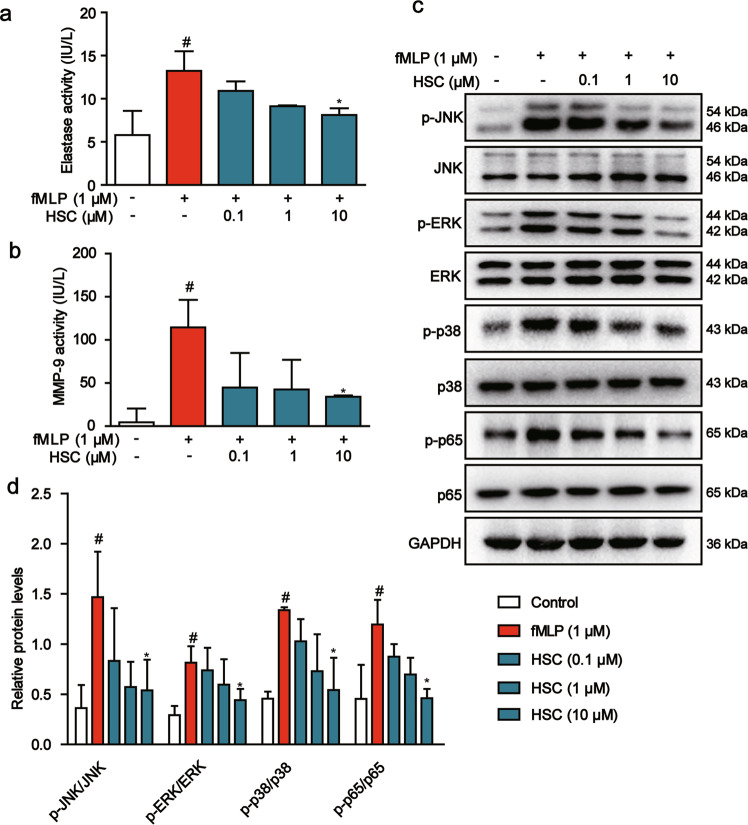
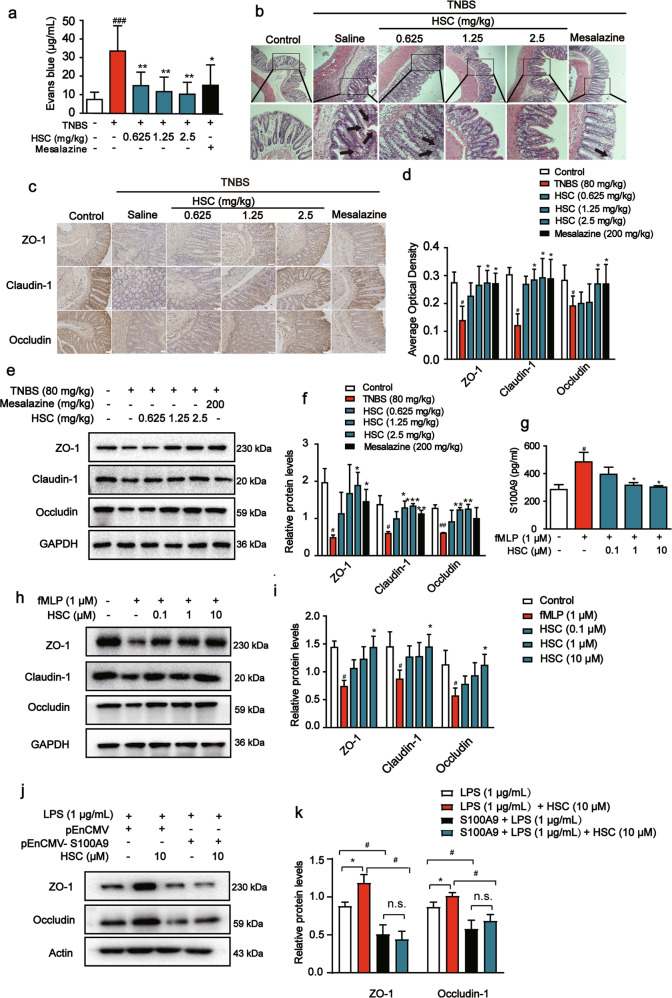
Hederacoside C (HSC) has attracted much attention as a novel modulator of inflammation, but its anti-inflammatory mechanism remains elusive. In the present study, we investigated how HSC attenuated intestinal inflammation in vivo and in vitro. HSC injection significantly alleviated TNBS-induced colitis by inhibiting pro-inflammatory cytokine production and colonic epithelial cell apoptosis, and partially restored colonic epithelial cell proliferation. The therapeutic effect of HSC injection was comparable to that of oral administration of mesalazine (200 mg·kg·d, i.g.). In LPS-stimulated human intestinal epithelial Caco-2 cells, pretreatment with HSC (0.1, 1, 10 μM) significantly inhibited activation of MAPK/NF-κB and its downstream signaling pathways. Pretreatment with HSC prevented LPS-induced TLR4 dimerization and MyD88 recruitment in vitro. Quantitative proteomic analysis revealed that HSC injection regulated 18 proteins in the colon samples, mainly clustered in neutrophil degranulation. Among them, S100A9 involved in the degranulation of neutrophils was one of the most significantly down-regulated proteins. HSC suppressed the expression of S100A9 and its downstream genes including TLR4, MAPK, and NF-κB axes in colon. In Caco-2 cells, recombinant S100A9 protein activated the MAPK/NF-κB signaling pathway and induced inflammation, which were ameliorated by pretreatment with HSC. Notably, HSC attenuated neutrophil recruitment and degranulation as well as S100A9 release in vitro and in vivo. In addition, HSC promoted the expression of tight junction proteins and repaired the epithelial barrier via inhibiting S100A9. Our results verify that HSC ameliorates colitis via restoring impaired intestinal barrier through moderating S100A9/MAPK and neutrophil recruitment inactivation, suggesting that HSC is a promising therapeutic candidate for colitis.
山茱萸苷 C(HSC)作为一种新型炎症调节剂引起了广泛关注,但它的抗炎机制仍不清楚。在本研究中,我们研究了 HSC 如何在体内和体外减轻肠道炎症。HSC 注射显著减轻了 TNBS 诱导的结肠炎,抑制了促炎细胞因子的产生和结肠上皮细胞凋亡,并部分恢复了结肠上皮细胞的增殖。HSC 注射的治疗效果可与口服美沙拉嗪(200mg·kg·d,ig)相媲美。在 LPS 刺激的人肠道上皮细胞 Caco-2 中,HSC(0.1、1、10μM)预处理显著抑制了 MAPK/NF-κB 及其下游信号通路的激活。HSC 预处理可防止 LPS 诱导的 TLR4 二聚化和 MyD88 募集。定量蛋白质组学分析显示,HSC 注射调节了结肠样本中的 18 种蛋白质,主要聚集在中性粒细胞脱颗粒中。其中,参与中性粒细胞脱颗粒的 S100A9 是下调最显著的蛋白质之一。HSC 抑制了 S100A9 及其下游基因包括 TLR4、MAPK 和 NF-κB 轴在结肠中的表达。在 Caco-2 细胞中,重组 S100A9 蛋白激活了 MAPK/NF-κB 信号通路并诱导了炎症,而 HSC 的预处理则改善了这一情况。值得注意的是,HSC 减轻了中性粒细胞募集、脱颗粒以及 S100A9 的释放,无论是在体外还是体内。此外,HSC 通过抑制 S100A9 促进了紧密连接蛋白的表达并修复了上皮屏障。我们的结果证实,HSC 通过调节 S100A9/MAPK 和中性粒细胞募集失活来恢复受损的肠道屏障从而改善结肠炎,这表明 HSC 是一种有前途的结肠炎治疗候选药物。