• 文献检索
  • 文档翻译
  • 深度研究
  • 学术资讯
  • Suppr Zotero 插件Zotero 插件
  • 邀请有礼
  • 套餐&价格
  • 历史记录
应用&插件
Suppr Zotero 插件Zotero 插件浏览器插件Mac 客户端Windows 客户端微信小程序
定价
高级版会员购买积分包购买API积分包
服务
文献检索文档翻译深度研究API 文档MCP 服务
关于我们
关于 Suppr公司介绍联系我们用户协议隐私条款
关注我们

Suppr 超能文献

核心技术专利:CN118964589B侵权必究
粤ICP备2023148730 号-1Suppr @ 2026

文献检索

告别复杂PubMed语法,用中文像聊天一样搜索,搜遍4000万医学文献。AI智能推荐,让科研检索更轻松。

立即免费搜索

文件翻译

保留排版,准确专业,支持PDF/Word/PPT等文件格式,支持 12+语言互译。

免费翻译文档

深度研究

AI帮你快速写综述,25分钟生成高质量综述,智能提取关键信息,辅助科研写作。

立即免费体验

肯尼亚青年中新冠病毒疫苗接种行为意向的决定因素:一项横断面研究

Determinants of COVID-19 vaccine behaviour intentions among the youth in Kenya: a cross-sectional study.

作者信息

Osur Joachim O, Chengo Rehema, Muinga Evelyne, Kemboi Jackline, Sidibe Myriam, Rarieya Maggie

机构信息

Department of Rehabilitative Medicine, School of medical Sciences, Amref International University, P.O. Box 27691-00506, Nairobi, Kenya.

Department of Technical Directorate Unit, Amref Health Africa Headquarters, P.O. Box 27691-00506, Nairobi, Kenya.

出版信息

Arch Public Health. 2022 Jun 23;80(1):159. doi: 10.1186/s13690-022-00904-4.

DOI:10.1186/s13690-022-00904-4
PMID:35733196
原文链接:https://pmc.ncbi.nlm.nih.gov/articles/PMC9217729/
Abstract

INTRODUCTION

COVID-19 has become a public health concern globally with increased numbers of cases of the disease and deaths reported daily. The key strategy for the prevention of COVID-19 disease is to enhance mass COVID-19 vaccination. However, mass vaccination faces challenges of hesitation to acceptance of the vaccine in the community. The youth may not be among the vulnerable population to severe COVID-19 disease but are highly susceptible to contracting the virus and spreading it. The aim of the study was to assess COVID-19 vaccine youth behavior intentions and their determinants in Kenya.

METHODS

The study used a mixed method design, employing a cross-sectional survey and focused group discussions across 47 counties in Urban, Peri-Urban and Rural settings of Kenya. The interviewees were youths aged 18-35, registered in online platforms/peer groups that included Shujaaz, Brck Moja, Aiffluence, Y Act and Heroes for Change. Quantitative data was collected using Google forms. A total of 665 interviews were conducted. Quantitative data was analysed using STATA version 16. In this paper we report quantitative study findings.

RESULTS

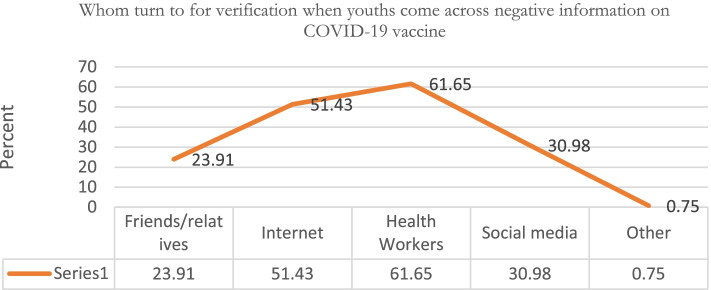
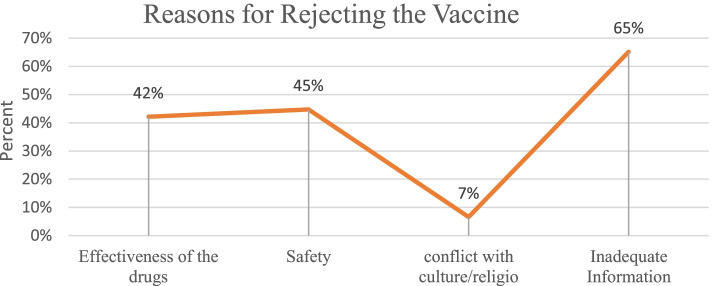
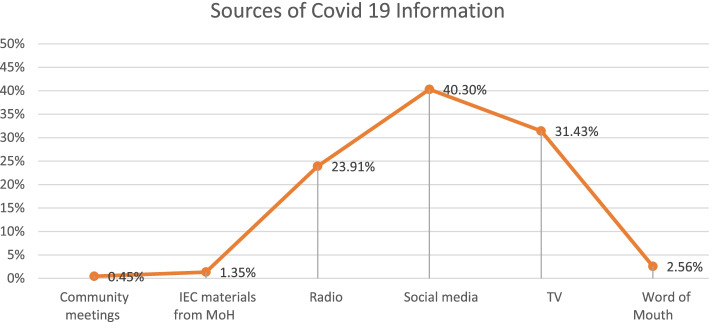
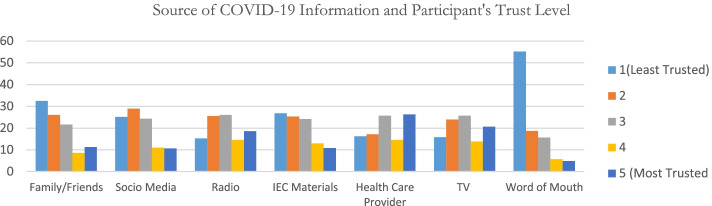
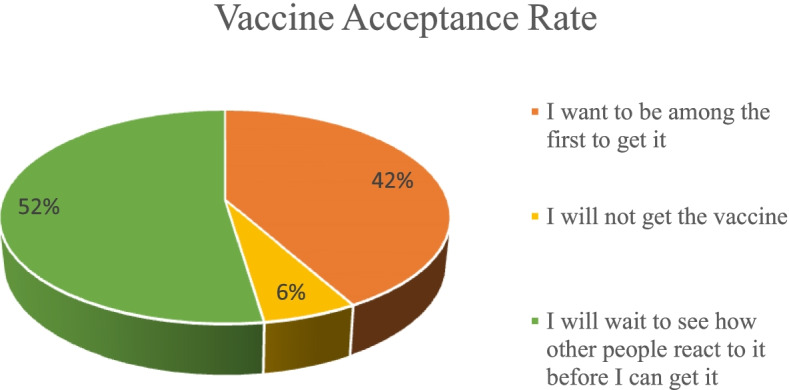
The findings of the study indicated that only 42% of the youth were ready to be vaccinated, with 52% adopting a wait and see approach to what happens to those who had received the vaccine and 6% totally unwilling to be vaccinated. The determinants of these behavior intentions included: the perceived adverse effects of the vaccine on health, inadequate information about the COVID-19 vaccine, conflicting information about COVID-19 vaccine from the social media, religious implications of the vaccine, impact of education level on understanding of the vaccine, perceived risk of contracting the COVID-19 disease, efficacy of the COVID-19 vaccine, COVID-19 affecting women than men and trust in the ministry of health to lead COVID-19 interventions. Significantly it was found that hesitancy is higher among females, protestants and those with post-secondary education. Lack of information and concerns around vaccine safety and effectiveness were main cause of COVID-19 vaccine hesitancy. Social media was the major source of information contributing to hesitancy. Other contributors to hesitancy included low trust in the MoH and belief that mass vaccination is not helpful.

CONCLUSION

Vaccine hesitancy remains high among the youth but the causes of it are modifiable and health systems need to have evidence based engagements with the youth to reduce vaccine hesitancy.

摘要

引言

随着每日报告的新冠病毒病病例和死亡人数不断增加,新冠病毒病已成为全球公共卫生问题。预防新冠病毒病的关键策略是加强大规模新冠病毒疫苗接种。然而,大规模疫苗接种面临着社区中人们对接种疫苗犹豫不决的挑战。年轻人可能不属于新冠病毒病重症的易感人群,但极易感染病毒并传播病毒。本研究的目的是评估肯尼亚年轻人对新冠病毒疫苗的行为意向及其决定因素。

方法

本研究采用混合方法设计,在肯尼亚城市、城郊和农村地区的47个县进行横断面调查和焦点小组讨论。受访者为年龄在18至35岁之间、注册于包括Shujaaz、Brck Moja、Aiffluence、Y Act和Heroes for Change等在线平台/同龄人群体的年轻人。定量数据通过谷歌表单收集。共进行了665次访谈。定量数据使用STATA 16版本进行分析。在本文中,我们报告定量研究结果。

结果

研究结果表明,只有42%的年轻人愿意接种疫苗,52%的人采取观望态度,看看接种疫苗的人会怎样,6%的人完全不愿意接种疫苗。这些行为意向的决定因素包括:认为疫苗对健康有不良影响、关于新冠病毒疫苗的信息不足、社交媒体上关于新冠病毒疫苗的信息相互矛盾、疫苗的宗教影响、教育水平对理解疫苗的影响、感染新冠病毒病的感知风险、新冠病毒疫苗的效力、新冠病毒对女性的影响大于男性以及对卫生部领导新冠病毒干预措施的信任。值得注意的是,发现女性、新教徒和受过高等教育的人犹豫程度更高。缺乏信息以及对疫苗安全性和有效性的担忧是新冠病毒疫苗犹豫的主要原因。社交媒体是导致犹豫的主要信息来源。导致犹豫的其他因素包括对卫生部的信任度低以及认为大规模疫苗接种没有帮助。

结论

年轻人中疫苗犹豫现象仍然严重,但导致这种现象的原因是可以改变的,卫生系统需要与年轻人进行基于证据的沟通,以减少疫苗犹豫。
https://cdn.ncbi.nlm.nih.gov/pmc/blobs/5540/9219189/0c56135a6ee6/13690_2022_904_Fig5_HTML.jpg
https://cdn.ncbi.nlm.nih.gov/pmc/blobs/5540/9219189/20d57dc58a3d/13690_2022_904_Fig1_HTML.jpg
https://cdn.ncbi.nlm.nih.gov/pmc/blobs/5540/9219189/0a3f436d8997/13690_2022_904_Fig2_HTML.jpg
https://cdn.ncbi.nlm.nih.gov/pmc/blobs/5540/9219189/f1ca26e8874e/13690_2022_904_Fig3_HTML.jpg
https://cdn.ncbi.nlm.nih.gov/pmc/blobs/5540/9219189/a28a2987ac1f/13690_2022_904_Fig4_HTML.jpg
https://cdn.ncbi.nlm.nih.gov/pmc/blobs/5540/9219189/0c56135a6ee6/13690_2022_904_Fig5_HTML.jpg
https://cdn.ncbi.nlm.nih.gov/pmc/blobs/5540/9219189/20d57dc58a3d/13690_2022_904_Fig1_HTML.jpg
https://cdn.ncbi.nlm.nih.gov/pmc/blobs/5540/9219189/0a3f436d8997/13690_2022_904_Fig2_HTML.jpg
https://cdn.ncbi.nlm.nih.gov/pmc/blobs/5540/9219189/f1ca26e8874e/13690_2022_904_Fig3_HTML.jpg
https://cdn.ncbi.nlm.nih.gov/pmc/blobs/5540/9219189/a28a2987ac1f/13690_2022_904_Fig4_HTML.jpg
https://cdn.ncbi.nlm.nih.gov/pmc/blobs/5540/9219189/0c56135a6ee6/13690_2022_904_Fig5_HTML.jpg

相似文献

1
Determinants of COVID-19 vaccine behaviour intentions among the youth in Kenya: a cross-sectional study.肯尼亚青年中新冠病毒疫苗接种行为意向的决定因素:一项横断面研究
Arch Public Health. 2022 Jun 23;80(1):159. doi: 10.1186/s13690-022-00904-4.
2
Assessing the Level and Determinants of COVID-19 Vaccine Confidence in Kenya.评估肯尼亚民众对新冠疫苗的信心水平及其影响因素。
Vaccines (Basel). 2021 Aug 23;9(8):936. doi: 10.3390/vaccines9080936.
3
The effect of framing and communicating COVID-19 vaccine side-effect risks on vaccine intentions for adults in the UK and the USA: A structured summary of a study protocol for a randomized controlled trial.在英国和美国,针对成年人的 COVID-19 疫苗副作用风险的描述和沟通对疫苗接种意愿的影响:一项随机对照试验研究方案的结构化总结。
Trials. 2021 Sep 6;22(1):592. doi: 10.1186/s13063-021-05484-2.
4
COVID-19 vaccine hesitancy: Vaccination intention and attitudes of community health volunteers in Kenya.新冠疫情疫苗犹豫:肯尼亚社区卫生志愿者的接种意愿与态度
PLOS Glob Public Health. 2022 Mar 16;2(3):e0000233. doi: 10.1371/journal.pgph.0000233. eCollection 2022.
5
COVID-19 vaccine hesitancy and vaccine passports: a cross-sectional conjoint experiment in Japan.COVID-19 疫苗犹豫和疫苗护照:日本的一项横断面联合实验。
BMJ Open. 2022 Jun 16;12(6):e060829. doi: 10.1136/bmjopen-2022-060829.
6
A qualitative inquiry on drivers of COVID-19 vaccine hesitancy among adults in Kenya.关于肯尼亚成年人对新冠疫苗犹豫态度驱动因素的定性调查。
PLOS Glob Public Health. 2024 Mar 28;4(3):e0002986. doi: 10.1371/journal.pgph.0002986. eCollection 2024.
7
COVID-19 Vaccine Hesitancy and Acceptance Among Individuals With Cancer, Autoimmune Diseases, or Other Serious Comorbid Conditions: Cross-sectional, Internet-Based Survey.COVID-19 疫苗犹豫和接受情况在癌症、自身免疫性疾病或其他严重合并症患者中的调查:基于互联网的横断面研究。
JMIR Public Health Surveill. 2022 Jan 5;8(1):e29872. doi: 10.2196/29872.
8
Assessing vaccine hesitancy among health-care workers in Jammu and Kashmir: A cross-sectional study.评估查谟和克什米尔地区医护人员的疫苗犹豫情况:一项横断面研究。
J Educ Health Promot. 2022 Feb 26;11:73. doi: 10.4103/jehp.jehp_374_21. eCollection 2022.
9
COVID-19 vaccine hesitancy among rural Oklahomans.农村俄克拉荷马人对 COVID-19 疫苗的犹豫。
Rural Remote Health. 2022 Jun;22(2):7128. doi: 10.22605/RRH7128. Epub 2022 Jun 4.
10
Direct and Indirect Associations of Media Use With COVID-19 Vaccine Hesitancy in South Korea: Cross-sectional Web-Based Survey.直接和间接关联的媒体使用与 COVID-19 疫苗犹豫在韩国:横断面网络调查。
J Med Internet Res. 2022 Jan 6;24(1):e32329. doi: 10.2196/32329.

引用本文的文献

1
Kenyans' Perceptions of the Risks of COVID-19 Vaccines: A Scoping Review.肯尼亚人对新冠疫苗风险的认知:一项范围综述
Pan Afr J Health Environ Sci. 2024;3(2):21-38. doi: 10.56893/ajhes2024v03i02.02. Epub 2024 Dec 26.
2
Integrating routine immunization into COVID-19 vaccination improve coverage but could create equity issues: evidence from Niger State, Nigeria.将常规免疫纳入新冠疫苗接种可提高覆盖率,但可能引发公平性问题:来自尼日利亚尼日尔州的证据。
BMC Public Health. 2025 Apr 22;25(1):1490. doi: 10.1186/s12889-025-22796-z.
3
Factors shaping Covid-19 vaccine acceptability among young people in South Africa and Nigeria: An exploratory qualitative study.

本文引用的文献

1
Understanding COVID-19 vaccination willingness among youth: A survey study in the Netherlands.理解青少年对 COVID-19 疫苗接种的意愿:荷兰的一项调查研究。
Vaccine. 2022 Feb 7;40(6):833-836. doi: 10.1016/j.vaccine.2021.12.062. Epub 2022 Jan 5.
2
Factors Influencing COVID-19 Vaccination Intentions Among College Students: A Cross-Sectional Study in India.影响印度大学生 COVID-19 疫苗接种意愿的因素:一项横断面研究。
Front Public Health. 2021 Dec 15;9:735902. doi: 10.3389/fpubh.2021.735902. eCollection 2021.
3
Factors influencing COVID-19 vaccine acceptance in Indonesia: an adoption of Technology Acceptance Model.
影响南非和尼日利亚年轻人对新冠疫苗接受度的因素:一项探索性定性研究。
PLOS Glob Public Health. 2025 Mar 18;5(3):e0003795. doi: 10.1371/journal.pgph.0003795. eCollection 2025.
4
Assessment of COVID-19 Vaccine Knowledge, Uptake, and Factors Influencing its Uptake Among Medical Students at the University of Jos.乔斯大学医学生对新冠疫苗的知识、接种情况及影响接种因素的评估
Niger Med J. 2025 Jan 10;65(6):1047-1061. doi: 10.60787/nmj.v65i6.555. eCollection 2024 Nov-Dec.
5
Behavioral and social predictors of COVID-19 vaccine uptake among persons with disabilities in Kenya.肯尼亚残疾人中新冠疫苗接种的行为和社会预测因素
Front Public Health. 2024 Dec 12;12:1472677. doi: 10.3389/fpubh.2024.1472677. eCollection 2024.
6
Uptake of COVID-19 vaccine and associated factors among Health Care Workers at Queen Elizabeth Central Hospital in Malawi: A cross-section study.马拉维伊丽莎白女王中央医院医护人员对新冠疫苗的接种情况及相关因素:一项横断面研究。
PLOS Glob Public Health. 2024 Dec 5;4(12):e0003993. doi: 10.1371/journal.pgph.0003993. eCollection 2024.
7
Vaccine hesitancy in context of COVID-19 in East Africa: systematic review and meta-analysis.东非 COVID-19 背景下的疫苗犹豫:系统评价和荟萃分析。
BMC Public Health. 2024 Oct 12;24(1):2796. doi: 10.1186/s12889-024-20324-z.
8
Determinants of COVID-19 vaccine acceptance and hesitancy among adolescents and youths aged 10-35 years in sub-Saharan African countries: A systematic review and meta-analysis.撒哈拉以南非洲国家 10-35 岁青少年和年轻人对 COVID-19 疫苗的接受和犹豫的决定因素:系统评价和荟萃分析。
PLoS One. 2024 Oct 7;19(10):e0310827. doi: 10.1371/journal.pone.0310827. eCollection 2024.
9
Low COVID-19 vaccine uptake in people living with HIV and those with hypertension and diabetes without HIV at Mbarara and Masaka regional referral hospitals: A cross-sectional survey.姆巴拉拉和马萨卡地区转诊医院中,艾滋病毒感染者以及非艾滋病毒感染的高血压和糖尿病患者对新冠疫苗的接种率较低:一项横断面调查。
PLOS Glob Public Health. 2024 May 23;4(5):e0003270. doi: 10.1371/journal.pgph.0003270. eCollection 2024.
10
Enablers and barriers to vaccine uptake and handwashing practices to prevent and control COVID-19 in Kenya, Uganda, and Tanzania: a systematic review.肯尼亚、乌干达和坦桑尼亚预防和控制 COVID-19 的疫苗接种和洗手实践的促进因素和障碍:系统评价。
Front Public Health. 2024 Mar 27;12:1352787. doi: 10.3389/fpubh.2024.1352787. eCollection 2024.
影响印度尼西亚人接受 COVID-19 疫苗的因素:对技术接受模型的采用。
F1000Res. 2021 Jun 16;10:476. doi: 10.12688/f1000research.53506.2. eCollection 2021.
4
Factors associated with decision making on COVID-19 vaccine acceptance among college students in South Carolina.南卡罗来纳州大学生对 COVID-19 疫苗接种接受意愿的决策因素。
Psychol Health Med. 2022 Jan;27(1):150-161. doi: 10.1080/13548506.2021.1983185. Epub 2021 Sep 23.
5
Factors influencing COVID-19 vaccine hesitancy and acceptance among the Pakistani population.影响巴基斯坦民众对 COVID-19 疫苗犹豫和接受的因素。
Hum Vaccin Immunother. 2021 Oct 3;17(10):3365-3370. doi: 10.1080/21645515.2021.1944743. Epub 2021 Jul 8.
6
Attitudes towards vaccines and intention to vaccinate against COVID-19: Implications for public health communications.对疫苗的态度及接种新冠疫苗的意愿:对公共卫生传播的启示
Lancet Reg Health Eur. 2021 Feb;1:100012. doi: 10.1016/j.lanepe.2020.100012.
7
Factors Associated with COVID-19 Vaccine Hesitancy.与新冠疫苗犹豫相关的因素
Vaccines (Basel). 2021 Mar 22;9(3):300. doi: 10.3390/vaccines9030300.
8
A global pandemic in the time of viral memes: COVID-19 vaccine misinformation and disinformation on TikTok.病毒表情包时代的全球大流行:TikTok 上的 COVID-19 疫苗错误信息和虚假信息。
Hum Vaccin Immunother. 2021 Aug 3;17(8):2373-2377. doi: 10.1080/21645515.2021.1894896. Epub 2021 Mar 25.
9
Building Confidence to CONVINCE.建立信心以说服。
J Health Commun. 2020 Oct 2;25(10):838-842. doi: 10.1080/10810730.2021.1884149.
10
The COVID-19 vaccines rush: participatory community engagement matters more than ever.新冠疫苗接种热潮:社区参与比以往任何时候都更重要。
Lancet. 2021 Jan 2;397(10268):8-10. doi: 10.1016/S0140-6736(20)32642-8. Epub 2020 Dec 10.