Key Laboratory of Molecular Biophysics, Hebei Province, Institute of Biophysics, School of Health Science & Biomedical Engineering, Hebei University of Technology, Tianjin, China.
Key Laboratory of Molecular Biophysics, Hebei Province, Institute of Biophysics, School of Health Science & Biomedical Engineering, Hebei University of Technology, Tianjin, China; State Key Laboratory of Reliability and Intelligence of Electrical Equipment, Hebei University of Technology, Tianjin, China; Key Laboratory of Electromagnetic Field and Electrical Apparatus Reliability of Hebei Province, Hebei University of Technology, Tianjin, China.
Biophys J. 2022 Jul 19;121(14):2671-2683. doi: 10.1016/j.bpj.2022.06.021. Epub 2022 Jun 22.
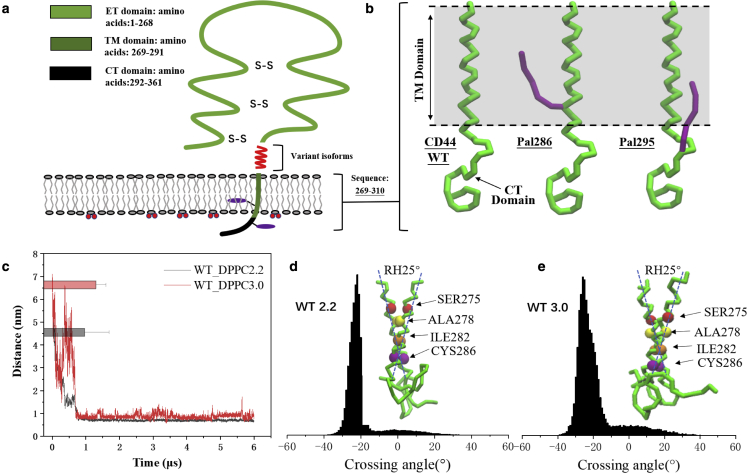
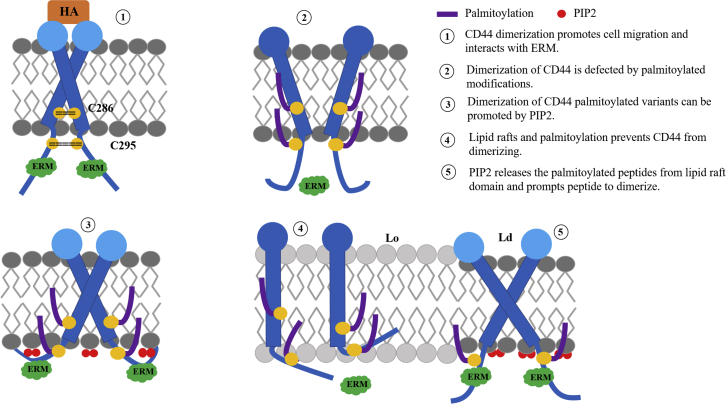
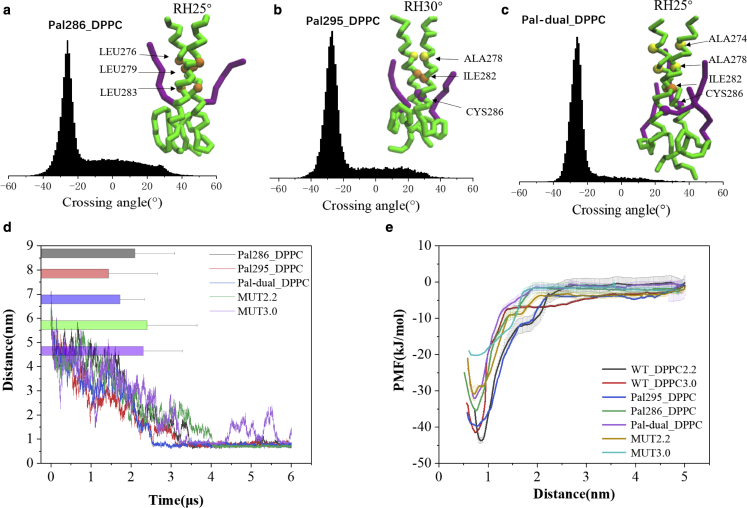
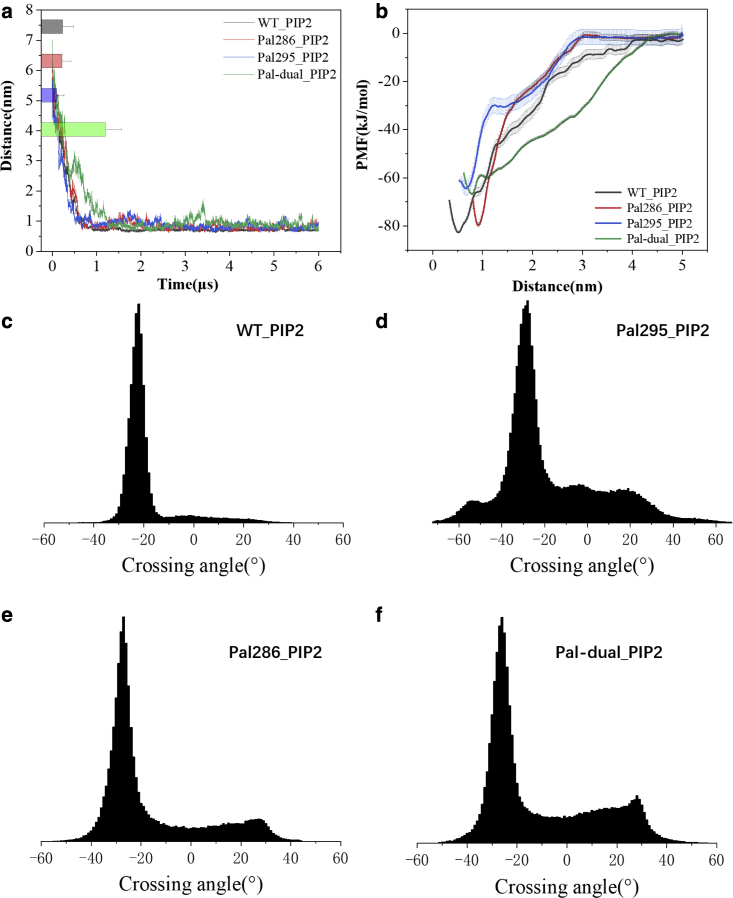
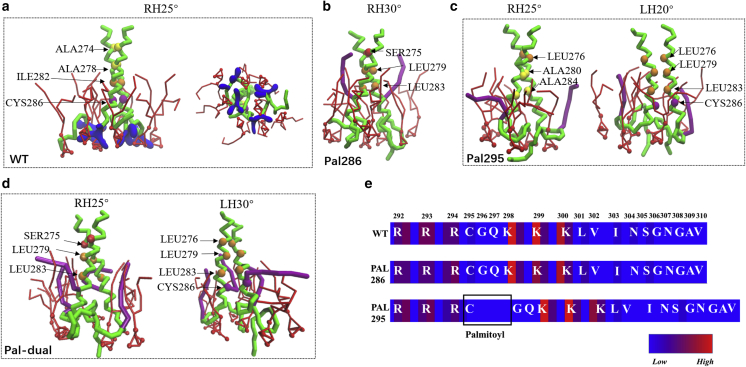
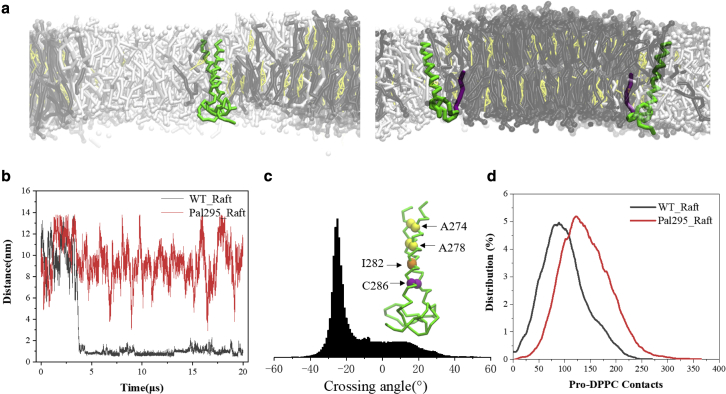
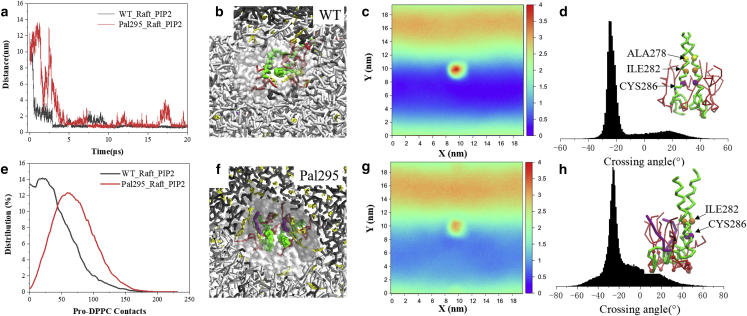
The homodimerization of CD44 plays a key role in an intercellular-to-extracellular signal transduction and tumor progression. Acylated modification and specific membrane environments have been reported to mediate translocation and oligomerization of CD44; however, the underlying molecular mechanism remains elusive. In this study, extensive molecular dynamics simulations are performed to characterize the dimerization of palmitoylated CD44 variants in different bilayer environments. CD44 forms homodimer depending on the cysteines on the juxta-membrane domains, and the dimerization efficiency and packing configurations are defected by their palmitoylated modifications. In the phase-segregated (raft included) membrane, homodimerization of the palmitoylated CD44 is hardly observed, whereas PIP2 addition compensates to realize dimerization. However, the structure of CD44 homodimer formed in the phase-segregated bilayer turns susceptive and PIP2 addition allows for an extensive conformation of the cytoplasmic domain, a proposal prerequisite to access the cytoskeleton linker proteins. The results unravel a delicate competitive relationship between PIP2, lipid raft, and palmitoylation in mediating protein homodimerization, which helps to clarify the dynamic dimer conformations and involved cellular signaling of the CD44 likewise proteins.
CD44 的同源二聚化在细胞内到细胞外的信号转导和肿瘤进展中起着关键作用。酰化修饰和特定的膜环境被报道介导 CD44 的易位和寡聚化;然而,潜在的分子机制仍不清楚。在这项研究中,进行了广泛的分子动力学模拟,以表征不同双层环境中棕榈酰化 CD44 变体的二聚化。CD44 依赖于跨膜域上的半胱氨酸形成同源二聚体,其棕榈酰化修饰会影响二聚体的效率和堆积构型。在相分离(包括筏)的膜中,很难观察到棕榈酰化 CD44 的同源二聚化,而 PIP2 的添加可以补偿以实现二聚化。然而,在相分离双层中形成的 CD44 同源二聚体的结构变得敏感,并且 PIP2 的添加允许细胞质结构域的广泛构象,这是与细胞骨架连接蛋白相互作用的前提。这些结果揭示了 PIP2、脂质筏和棕榈酰化在介导蛋白质同源二聚化中的微妙竞争关系,有助于阐明 CD44 及其类似蛋白的动态二聚体构象和涉及的细胞信号。