Khogeer Asim A, AboMansour Iman S, Mohammed Dia A
Research Department, The Strategic Planning Administration, General Directorate of Health Affairs of Makkah Region, Ministry of Health, Makkah 24382, Saudi Arabia.
Medical Genetics Unit, Maternity & Children Hospital, Makkah Healthcare Cluster, Ministry of Health, Makkah 24382, Saudi Arabia.
Epigenomes. 2022 Jun 19;6(2):15. doi: 10.3390/epigenomes6020015.
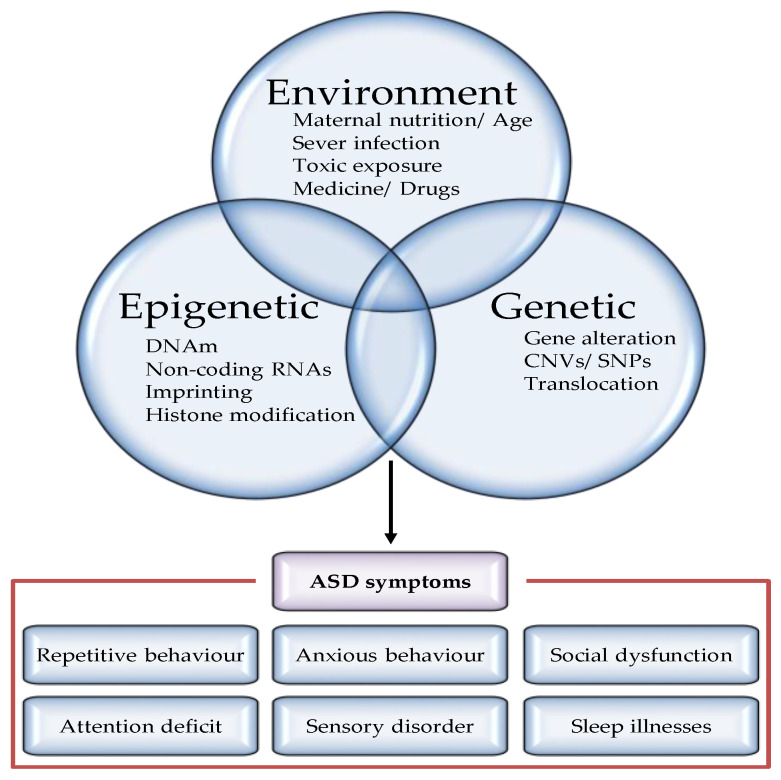
According to recent findings, variances in autism spectrum disorder (ASD) risk factors might be determined by several factors, including molecular genetic variants. Accumulated evidence has also revealed the important role of biological and chemical pathways in ASD aetiology. In this paper, we assess several reviews with regard to their quality of evidence and provide a brief outline of the presumed mechanisms of the genetic, epigenetic, and environmental risk factors of ASD. We also review some of the critical literature, which supports the basis of each factor in the underlying and specific risk patterns of ASD. Finally, we consider some of the implications of recent research regarding potential molecular targets for future investigations.
根据最近的研究结果,自闭症谱系障碍(ASD)风险因素的差异可能由多种因素决定,包括分子遗传变异。越来越多的证据也揭示了生物和化学途径在ASD病因学中的重要作用。在本文中,我们评估了几篇综述的证据质量,并简要概述了ASD遗传、表观遗传和环境风险因素的推测机制。我们还回顾了一些关键文献,这些文献支持了每个因素在ASD潜在和特定风险模式中的基础。最后,我们考虑了近期研究对未来调查潜在分子靶点的一些启示。