Satoh Ryusei, Kawakami Kiyoharu, Nakadate Kazuhiko
Department of Basic Science, Educational and Research Center for Pharmacy, Meiji Pharmaceutical University, 2-522-1 Noshio, Kiyose 204-8588, Tokyo, Japan.
J Clin Med. 2022 Jun 9;11(12):3310. doi: 10.3390/jcm11123310.
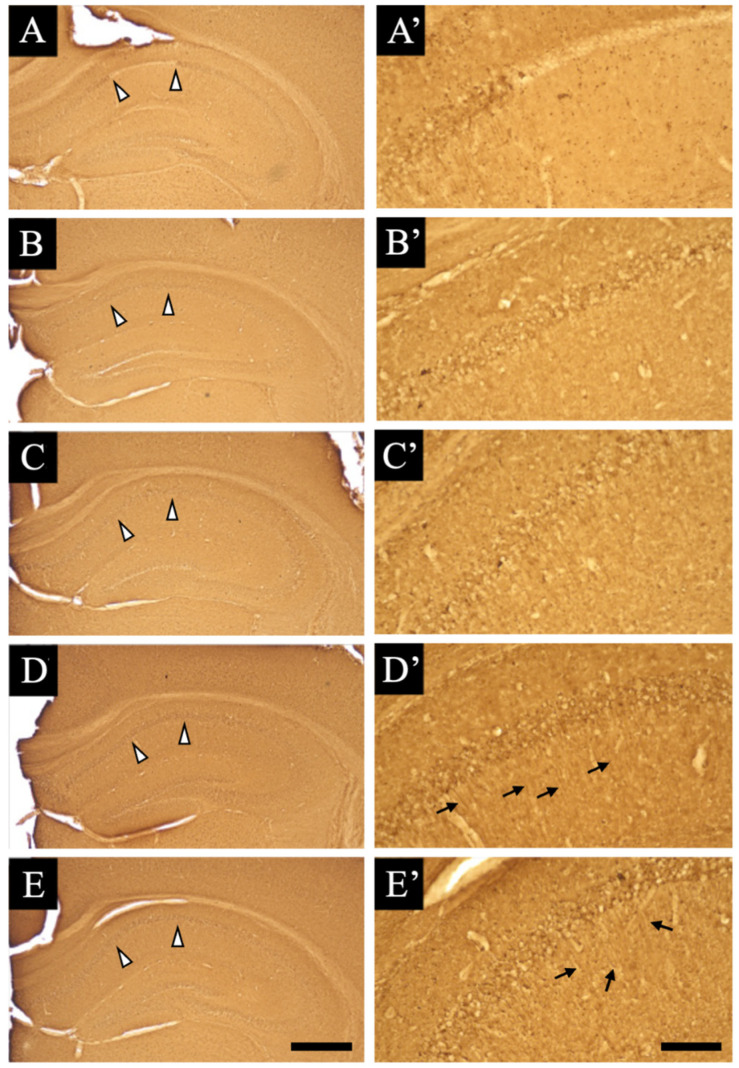
In recent years, people in the United States and other countries have been using smart drugs, called nootropic or cognitive enhancers, to improve concentration and memory learning skills. However, these drugs were originally prescribed for attention-deficit hyperactivity disorder and dementia, and their efficacy in healthy people has not yet been established. We focused on acetylcholine in the hippocampus, which is responsible for memory learning, and elucidate the long-term effects of smart drugs on the neural circuits. Smart drugs were administered orally in normal young mice for seven weeks. The hippocampus was sectioned and compared histologically by hematoxylin and eosin (HE) staining, immunohistochemistry for acetylcholine, and immunoelectron microscopy. There were no significant changes in acetylcholinesterase staining. However, in HE, we found perivascular edema, and choline acetyltransferase staining showed increased staining throughout the hippocampus and new signal induction in the perivascular area in the CA3, especially in the aniracetam and α-glyceryl phosphoryl choline group. Additionally, new muscarinic acetylcholine receptor signals were observed in the CA1 due to smart drug intake, suggesting that vasodilation might cause neuronal activation by increasing the influx of nutrients and oxygen. Moreover, these results suggest a possible new mechanism of acetylcholine-mediated neural circuit activation by smart drug intake.
近年来,美国和其他国家的人们一直在使用被称为促智药或认知增强剂的智能药物来提高注意力、记忆力和学习能力。然而,这些药物最初是用于治疗注意力缺陷多动障碍和痴呆症的,其对健康人的疗效尚未得到证实。我们关注的是海马体中负责记忆学习的乙酰胆碱,并阐明智能药物对神经回路的长期影响。将智能药物口服给予正常的年轻小鼠,持续七周。对海马体进行切片,并通过苏木精和伊红(HE)染色、乙酰胆碱免疫组织化学和免疫电子显微镜进行组织学比较。乙酰胆碱酯酶染色没有显著变化。然而,在HE染色中,我们发现了血管周围水肿,胆碱乙酰转移酶染色显示整个海马体的染色增加,并且在CA3区的血管周围区域有新的信号诱导,尤其是在阿尼西坦和α-甘油磷酸胆碱组。此外,由于摄入智能药物,在CA1区观察到了新的毒蕈碱型乙酰胆碱受体信号,这表明血管舒张可能通过增加营养物质和氧气的流入来引起神经元激活。此外,这些结果提示了摄入智能药物后乙酰胆碱介导的神经回路激活的一种可能的新机制。