
基于家庭的综合认知康复方案改善多发性硬化症患者的认知功能:一项随机对照研究。
Integrated Cognitive Rehabilitation Home-Based Protocol to Improve Cognitive Functions in Multiple Sclerosis Patients: A Randomized Controlled Study.
作者信息
Sharbafshaaer Minoo, Trojsi Francesca, Bonavita Simona, Azimi Amirreza
机构信息
MS Research Center, Neuroscience Institute, Tehran University of Medical Science, Tehran 1136746911, Iran.
MRI Research Center SUN-FISM, Department of Advanced Medical and Surgical Sciences, Università degli Studi della Campania "Luigi Vanvitelli", 80138 Naples, Italy.
出版信息
J Clin Med. 2022 Jun 20;11(12):3560. doi: 10.3390/jcm11123560.
UNLABELLED
Cognitive impairment (CI) occurs in about 40-65% of people with multiple sclerosis (MS) during the disease course. Cognitive rehabilitation has produced non-univocal results in MS patients.
OBJECTIVE
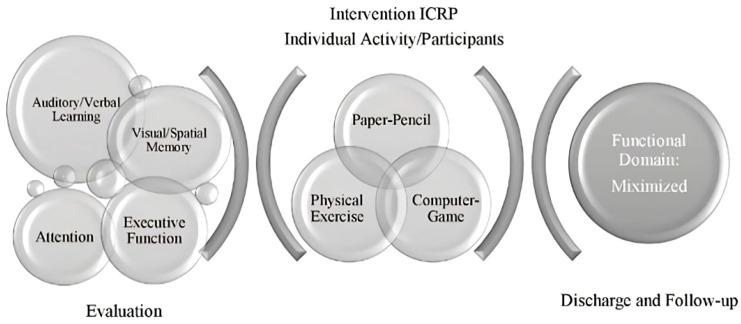
The present study aimed to evaluate whether an Integrated Cognitive Rehabilitation Program (ICRP) in MS patients might significantly improve CI.
METHODS
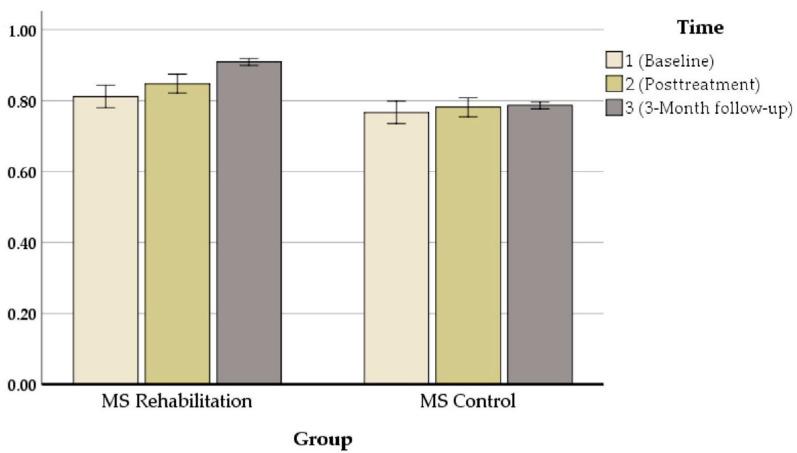
Forty patients with three phenotypes of MS were randomly assigned into two groups: the experimental group (EG, n = 20), which participated in the ICRP for 10 weeks of training; and the control group (CG, n = 20). All participants' cognitive functions were assessed at three timepoints (baseline, post-treatment, and 3-month follow-up) with the California Verbal Learning (CVLT), Brief Visuospatial Memory (BVMTR), Numerical Stroop, and Wisconsin tests.
RESULTS
When compared to CG patients, EG patients showed significant improvements in several measures of cognitive performance after ICRP, including verbal learning, visuospatial memory, attention, and executive functions.
CONCLUSIONS
Home-based ICRP can improve cognitive functions and prevent the deterioration of patients' cognitive deficits. As an integrated cognitive rehabilitation program aimed at potentiation of restorative and compensatory mechanisms, this approach might suggest an effective role in preserving neuronal flexibility as well as limiting the progression of cognitive dysfunction in MS.
未标注
在疾病过程中,约40%-65%的多发性硬化症(MS)患者会出现认知障碍(CI)。认知康复在MS患者中产生的结果并不一致。
目的
本研究旨在评估MS患者的综合认知康复计划(ICRP)是否能显著改善CI。
方法
40例具有三种MS表型的患者被随机分为两组:实验组(EG,n = 20),参加为期10周的ICRP训练;对照组(CG,n = 20)。在三个时间点(基线、治疗后和3个月随访)使用加利福尼亚言语学习测试(CVLT)、简短视觉空间记忆测试(BVMTR)、数字色词测试和威斯康星测试对所有参与者的认知功能进行评估。
结果
与CG患者相比,EG患者在ICRP后多项认知表现指标上有显著改善,包括言语学习、视觉空间记忆、注意力和执行功能。
结论
基于家庭的ICRP可以改善认知功能,预防患者认知缺陷的恶化。作为一种旨在增强恢复和代偿机制的综合认知康复计划,这种方法可能在保持神经元灵活性以及限制MS认知功能障碍进展方面发挥有效作用。



 Zotero 插件