Department of Chemistry, Josip Juraj Strossmayer University of Osijek, Cara Hadrijana 8/A, 31000 Osijek, Croatia.
Faculty of Chemistry and Chemical Technology, University of Ljubljana, Večna pot 113, 1000 Ljubljana, Slovenia.
Molecules. 2022 Jun 12;27(12):3781. doi: 10.3390/molecules27123781.
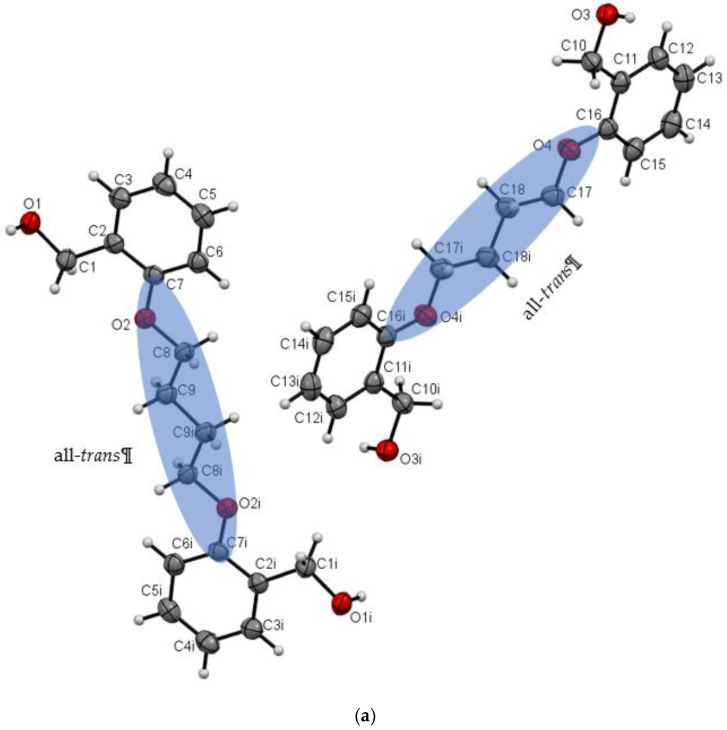
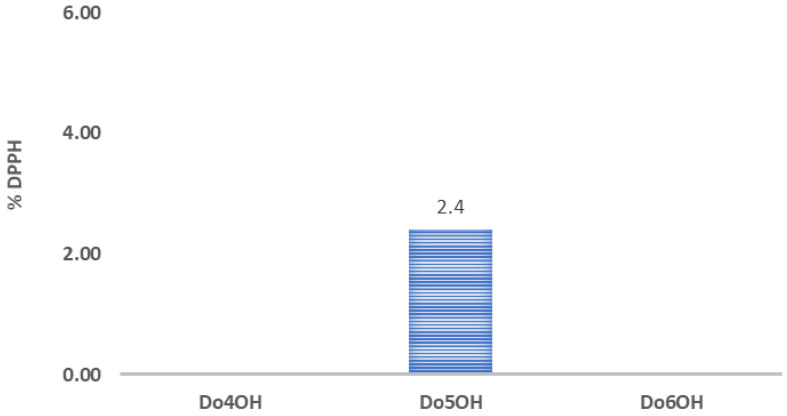
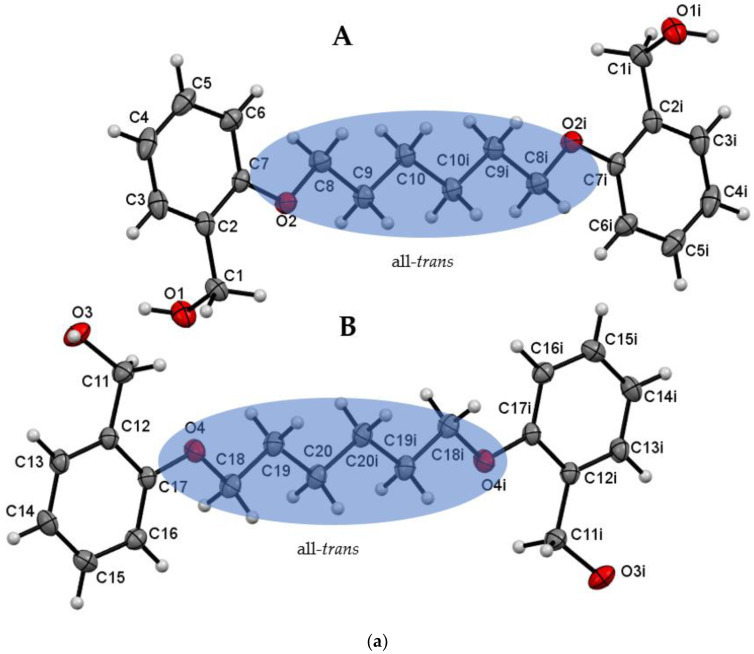
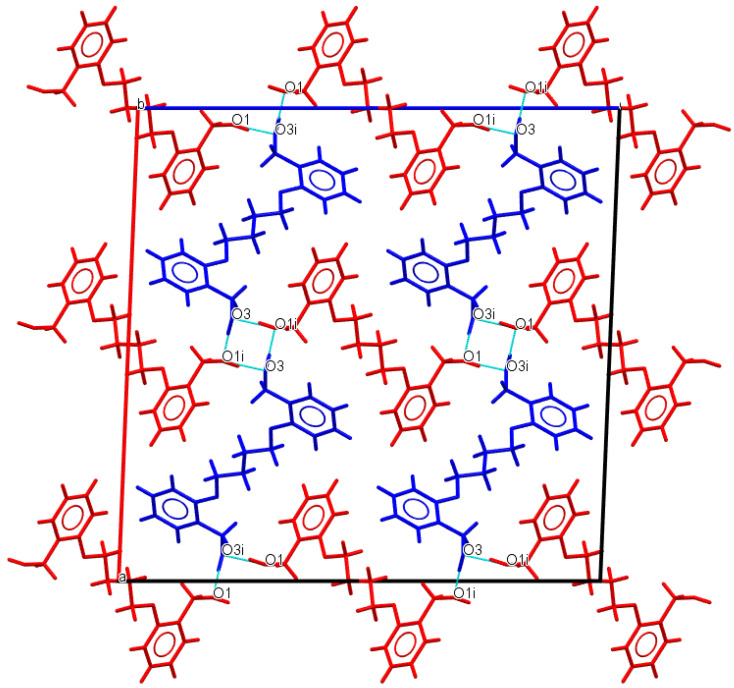
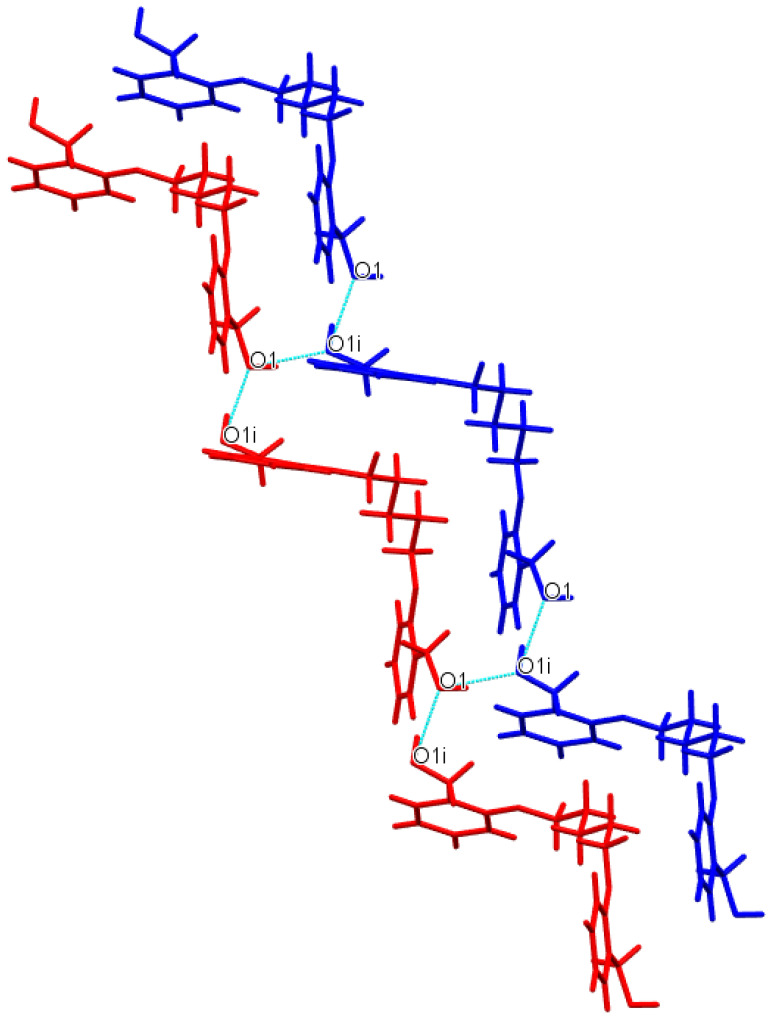
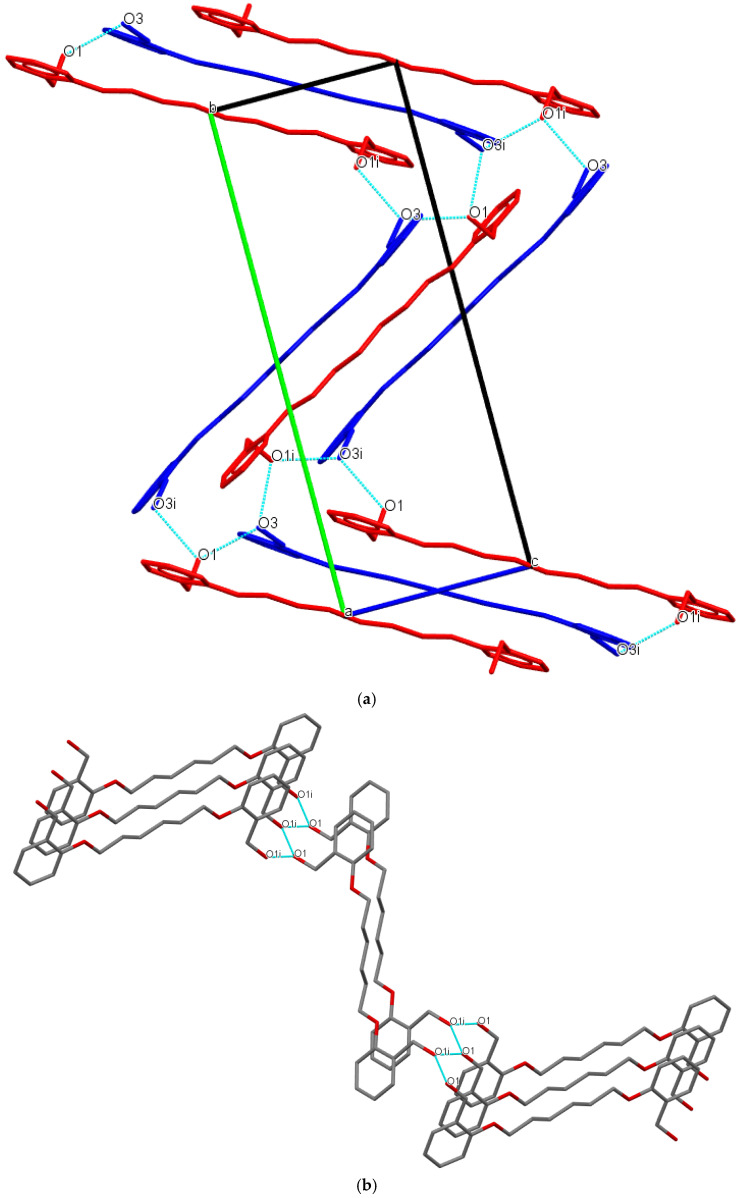
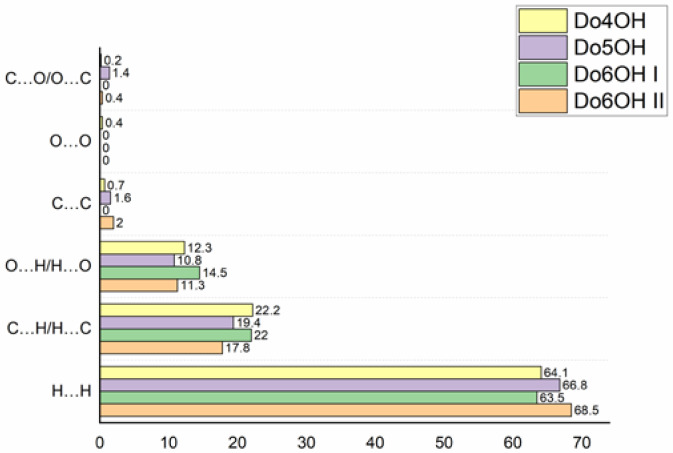
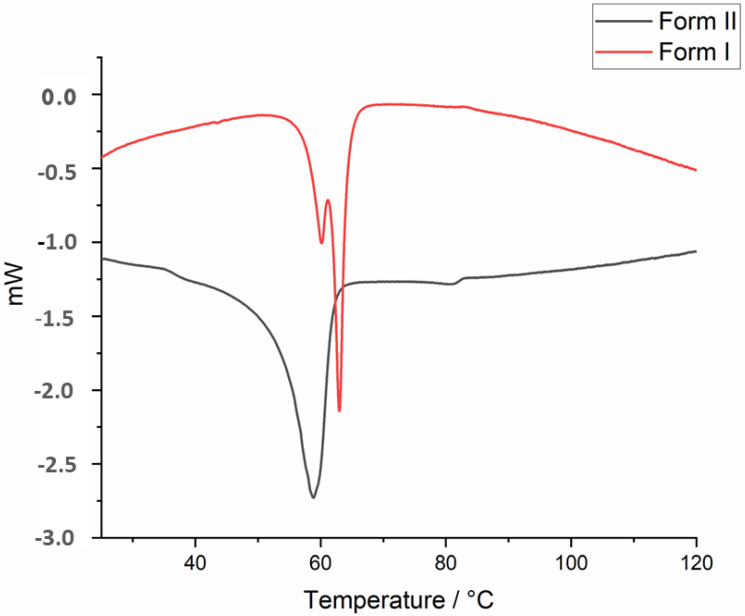
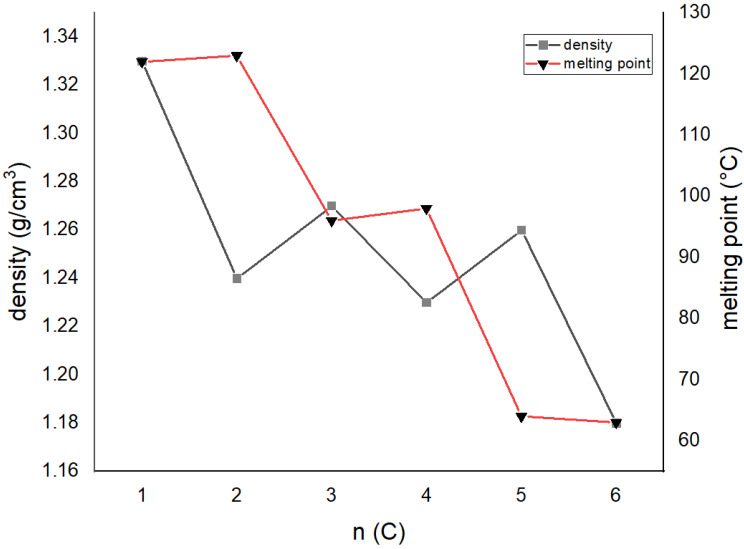
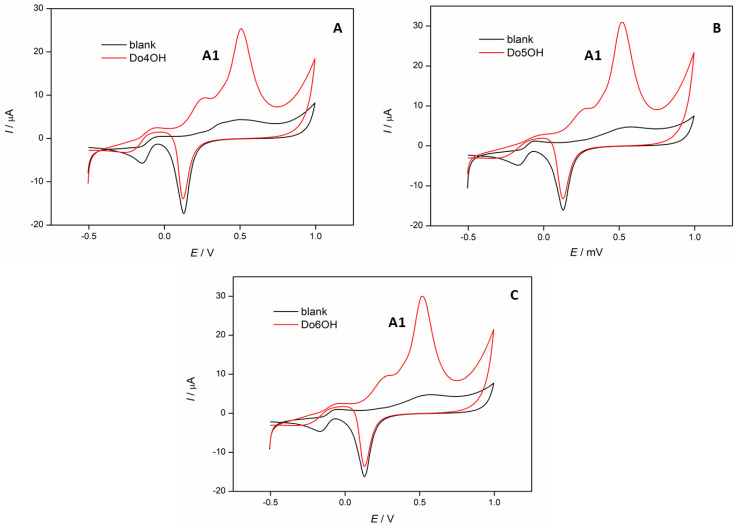
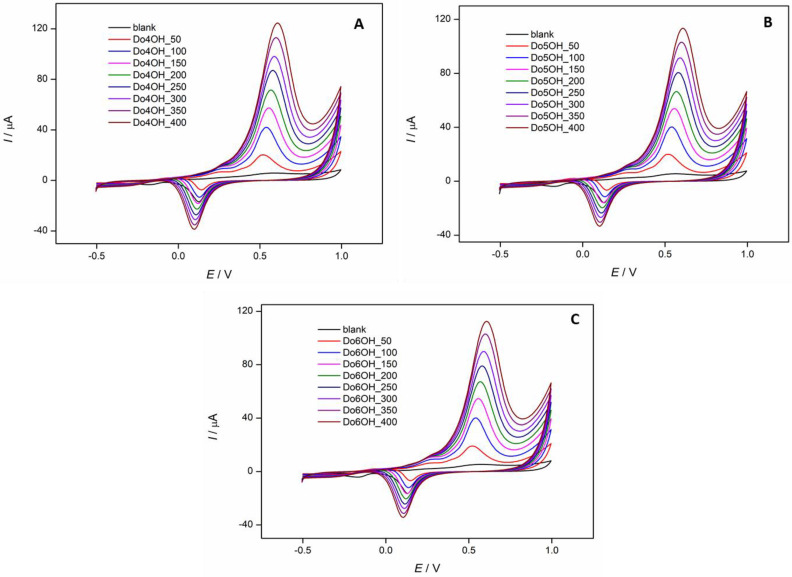
The century-old, well-known odd-even effect phenomenon is still a very attractive and intriguing topic in supramolecular and nano-scale organic chemistry. As a part of our continuous efforts in the study of supramolecular chemistry, we have prepared three novel aromatic alcohols (1,2-bis[2-(hydroxymethyl)phenoxy]butylene (), 1,2-bis[2-(hydroxymethyl)phenoxy]pentylene () and 1,2-bis[2-(hydroxymethyl)phenoxy]hexylene ()) and determined their crystal and molecular structures by single-crystal X-ray diffraction. In all compounds, two benzyl alcohol groups are linked by an aliphatic chain of different lengths (CH); = , and . The major differences in the molecular structures were found in the overall planarity of the molecules and the conformation of the aliphatic chain. Molecules with an even number of CH groups tend to be planar with an all- conformation of the aliphatic chain, while the odd-numbered molecule is non-planar, with partial conformation. A direct consequence of these structural differences is visible in the melting points-odd-numbered compounds of a particular series display systematically lower melting points. Crystal and molecular structures were additionally studied by the theoretical calculations and the melting points were correlated with packing density and the number of CH groups. The results have shown that the generally accepted rule, higher density = higher stability = higher melting point, could not be applied to these compounds. It was found that the denser packaging causes an increase in the percentage of repulsive H‧‧‧H interactions, thereby reducing the stability of the crystal, and consequently, the melting points. Another interesting consequence of different molecular structures is their electrochemical and antioxidative properties-a non-planar structure displays the highest oxidation peak of hydroxyl groups and moderate antioxidant activity.
具有百年历史的著名奇偶效应现象仍然是超分子和纳米尺度有机化学中非常有吸引力和有趣的课题。作为我们在超分子化学研究中持续努力的一部分,我们合成了三种新型芳香醇(1,2-双[2-(羟甲基)苯氧基]丁烯()、1,2-双[2-(羟甲基)苯氧基]戊烯()和 1,2-双[2-(羟甲基)苯氧基]己烯()),并通过单晶 X 射线衍射确定了它们的晶体和分子结构。在所有化合物中,两个苄醇基团通过不同长度的脂肪链(CH)连接;n=2, 3 和 4。分子结构的主要差异在于分子的整体平面性和脂肪链的构象。具有偶数个 CH 基团的分子倾向于具有平面性和全-构象的脂肪链,而奇数分子则是非平面的,具有部分-构象。这些结构差异的直接结果在熔点中可见-特定系列的奇数化合物显示出系统地较低的熔点。晶体和分子结构还通过理论计算进行了研究,并将熔点与堆积密度和 CH 基团的数量相关联。结果表明,通常接受的规则,较高的密度=较高的稳定性=较高的熔点,不适用于这些化合物。发现更密集的包装会导致排斥性 H‧‧‧H 相互作用的百分比增加,从而降低晶体的稳定性,进而降低熔点。不同分子结构的另一个有趣后果是它们的电化学和抗氧化性能-非平面结构显示出最高的羟基氧化峰和适度的抗氧化活性。