Marcell Lauren, Dokania Ekta, Navia Ikram, Baxter Carly, Crary Isabelle, Rutz Sara, Soto Monteverde Maria Jose, Simlai Samriddhi, Hernandez Cassandra, Huebner Emily M, Sanchez Magali, Cox Elizabeth, Stonehill Alex, Koltai Kolina, Adams Waldorf Kristina M
School of Medicine and Department of Obstetrics and Gynecology, University of Washington, Seattle, WA.
Department of Communication, University of Washington, Seattle, WA.
Am J Obstet Gynecol. 2022 Nov;227(5):685-695.e2. doi: 10.1016/j.ajog.2022.06.022. Epub 2022 Jun 23.
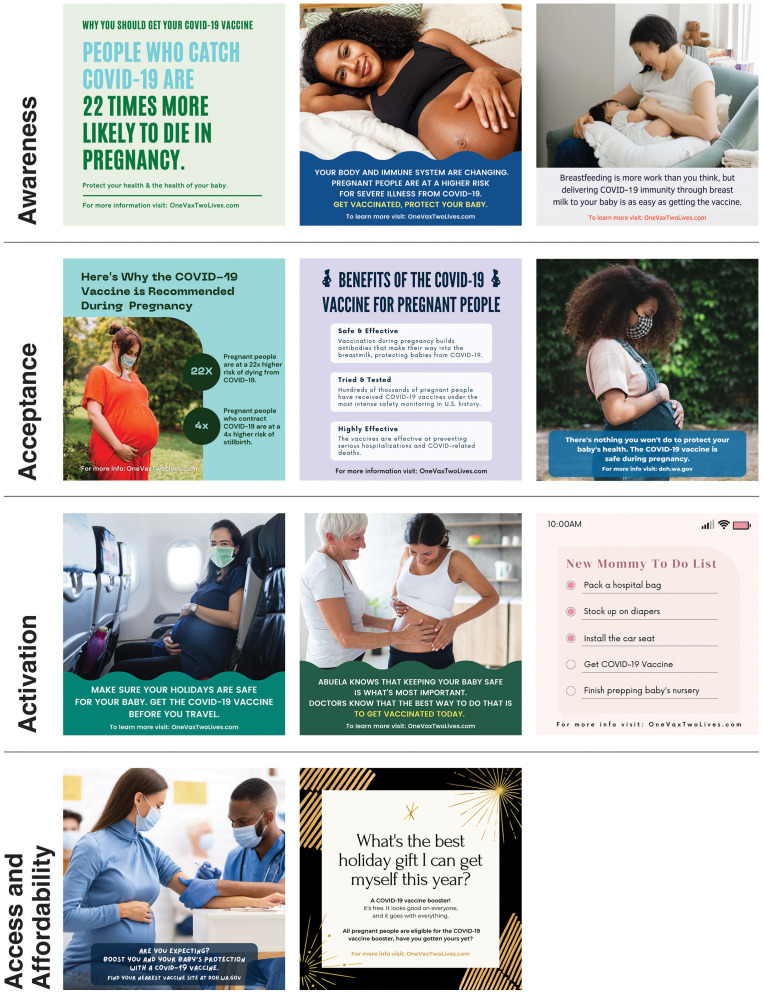
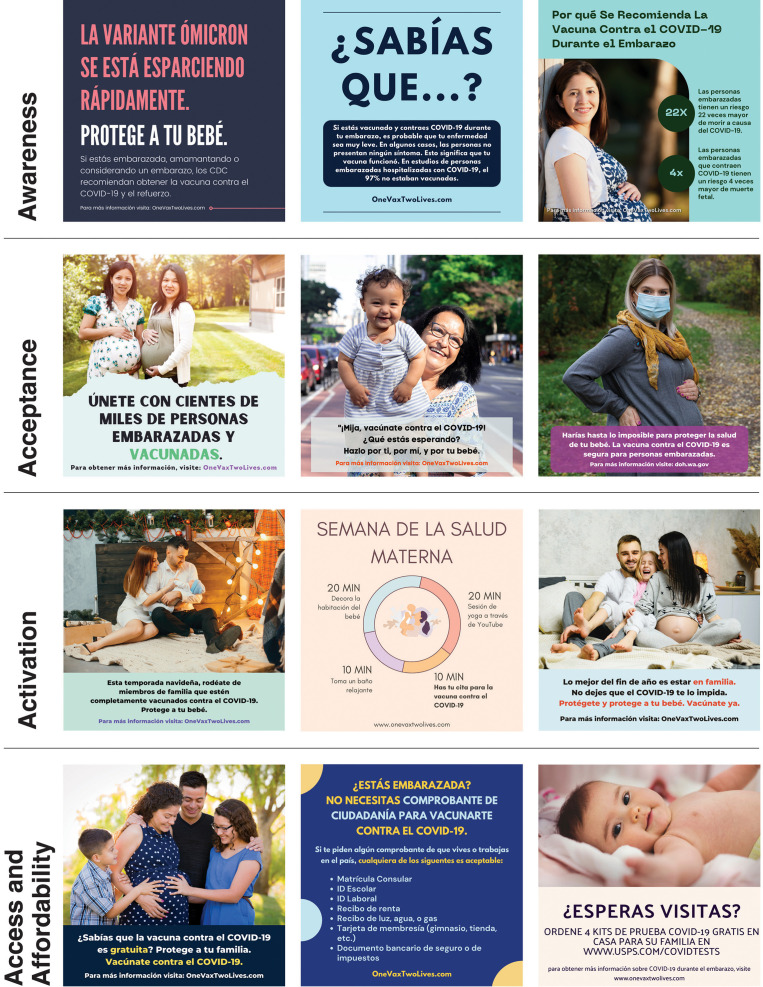
The COVID-19 pandemic has disproportionately affected pregnant people by increasing health risks of maternal morbidity and mortality, stillbirth, and preterm birth. Although numerous studies have supported the safety and efficacy of COVID-19 vaccination in pregnancy in preventing or mitigating the risk for these adverse outcomes, many pregnant people remain hesitant. Approximately half of US adults regularly consume news from social media platforms, which are a fertile ground for the spread of vaccine disinformation. The lack of information regarding COVID-19 vaccine safety early in the pandemic fueled vaccine myths targeting the fears of pregnant people about vaccination risks. Saddened by the spike in maternal deaths of unvaccinated individuals during the COVID-19 Delta variant surge in the fall of 2021, we created a social media campaign to promote scientific communication regarding the risks of COVID-19 disease in pregnancy and the benefits of vaccination. We called the campaign "One Vax Two Lives," which refers to the ability of 1 maternal vaccine to benefit the health and lives of both the pregnant individual and their fetus. We present a blueprint of how we leveraged a large, interdisciplinary student workforce to create a social media campaign and research program studying vaccine hesitancy, which can be replicated by other groups. Community engagement and partnerships with key stakeholders, such as the Washington State Department of Health, were essential for amplifying the campaign and providing our team with feedback on content and approach. We present the analytics of our social media advertisements, web articles, and video content that helped inform the iterative design process of the multimedia content. Moving forward, we are launching collaborative research programs to study vaccine hesitancy and inform the development of new social media content designed for pregnant individuals who are: (1) Spanish-speaking Hispanic/Latina/x, (2) Black or Afro-Latinx, and (3) residents of rural communities in the State of Washington. Data from these mixed methods studies will inform new communication campaigns to reach vaccine-hesitant individuals. Finally, we discuss lessons learned and how the most impactful elements of the campaign can be translated to related areas of maternal public health.
新冠疫情对孕妇产生了尤为严重的影响,增加了孕产妇发病和死亡、死产以及早产的健康风险。尽管众多研究都支持孕期接种新冠疫苗在预防或降低这些不良后果风险方面的安全性和有效性,但许多孕妇仍犹豫不决。大约一半的美国成年人经常从社交媒体平台获取新闻,而这些平台是疫苗虚假信息传播的温床。疫情初期缺乏关于新冠疫苗安全性的信息,助长了针对孕妇对疫苗接种风险的恐惧的疫苗谣言。看到2021年秋季新冠病毒德尔塔变异株激增期间未接种疫苗者的孕产妇死亡人数飙升,我们感到痛心,于是发起了一场社交媒体宣传活动,以促进关于孕期新冠疾病风险和疫苗接种益处的科学交流。我们将该活动命名为“一针双命”,指的是一剂孕产妇疫苗能够惠及孕妇本人及其胎儿的健康和生命。我们展示了一份蓝图,说明我们如何利用庞大的跨学科学生队伍开展一场社交媒体宣传活动以及一项研究疫苗犹豫问题的研究项目,其他团队可以复制这一模式。与关键利益相关方(如华盛顿州卫生部)的社区参与和合作对于扩大宣传活动并为我们的团队提供有关内容和方法的反馈至关重要。我们展示了社交媒体广告、网络文章和视频内容的分析结果,这些分析为多媒体内容的迭代设计过程提供了参考。展望未来,我们将启动合作研究项目,以研究疫苗犹豫问题,并为针对以下三类孕妇设计的新社交媒体内容的开发提供信息:(1)讲西班牙语的西班牙裔/拉丁裔/x群体;(2)黑人或非裔拉丁裔;(3)华盛顿州农村社区居民。这些混合方法研究的数据将为针对对疫苗持犹豫态度人群的新宣传活动提供信息。最后,我们讨论了所吸取的经验教训,以及如何将该活动中最具影响力的要素应用于孕产妇公共卫生的相关领域。