Schumacher Fabian, Edwards Michael J, Mühle Christiane, Carpinteiro Alexander, Wilson Greg C, Wilker Barbara, Soddemann Matthias, Keitsch Simone, Scherbaum Norbert, Müller Bernhard W, Lang Undine E, Linnemann Christoph, Kleuser Burkhard, Müller Christian P, Kornhuber Johannes, Gulbins Erich
Department of Molecular Biology, University Hospital Essen, University of Duisburg-Essen, Essen, Germany; Freie Universität Berlin, Institute of Pharmacy, Berlin, Germany.
Department of Molecular Biology, University Hospital Essen, University of Duisburg-Essen, Essen, Germany.
J Biol Chem. 2022 Aug;298(8):102185. doi: 10.1016/j.jbc.2022.102185. Epub 2022 Jun 24.
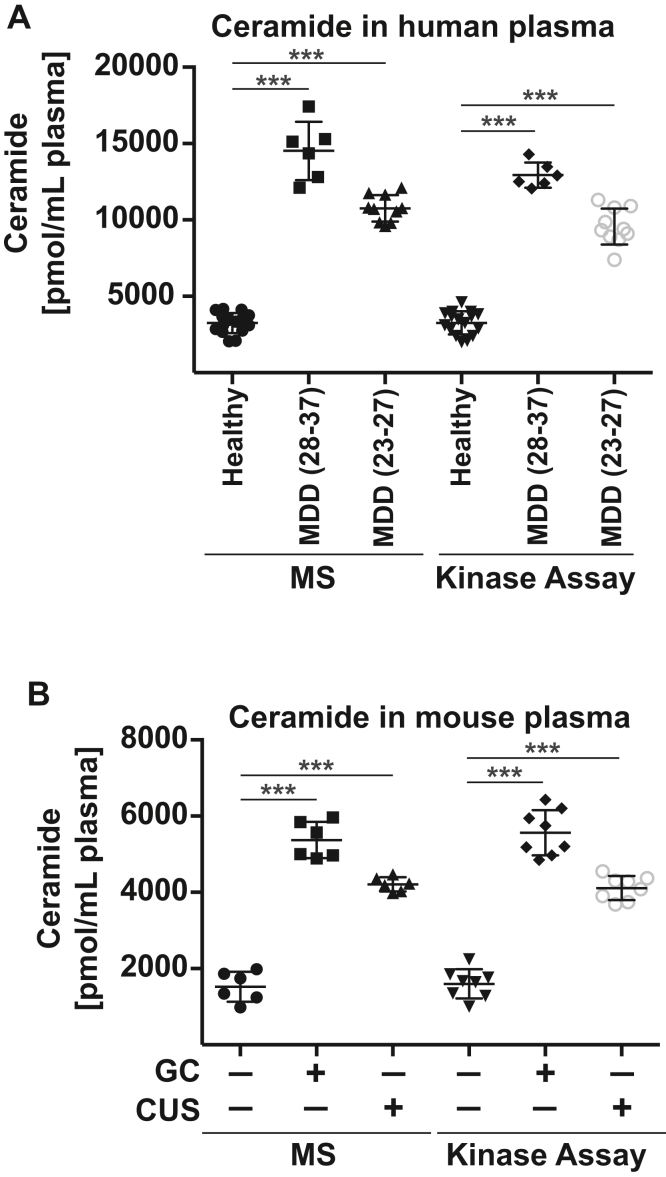
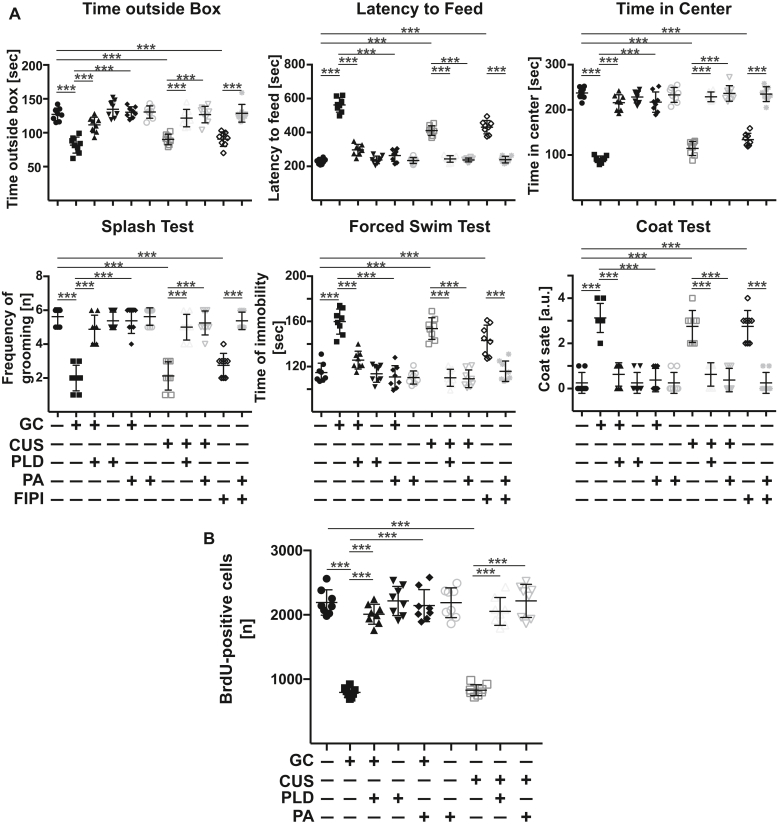
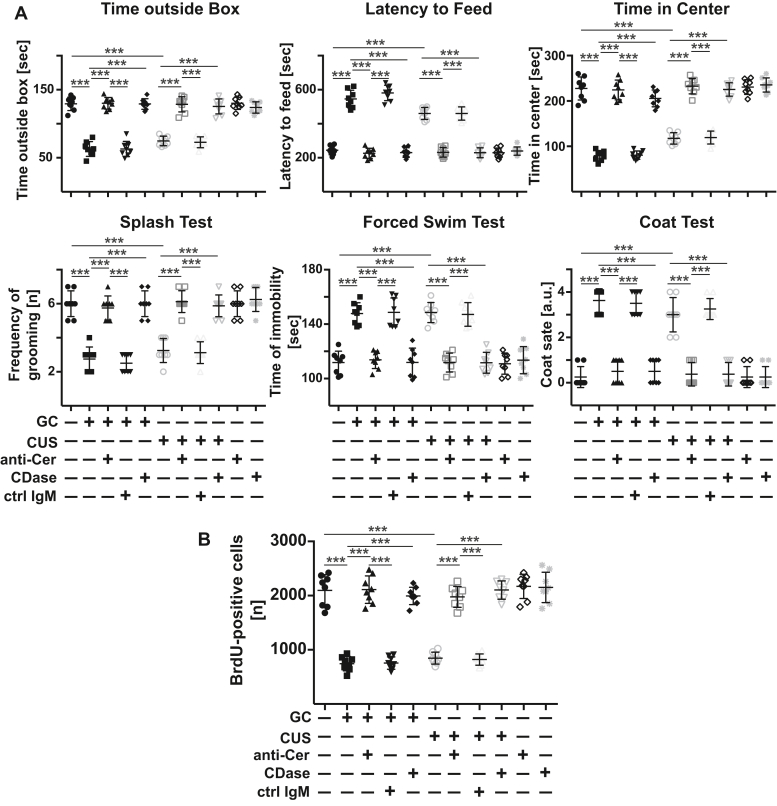
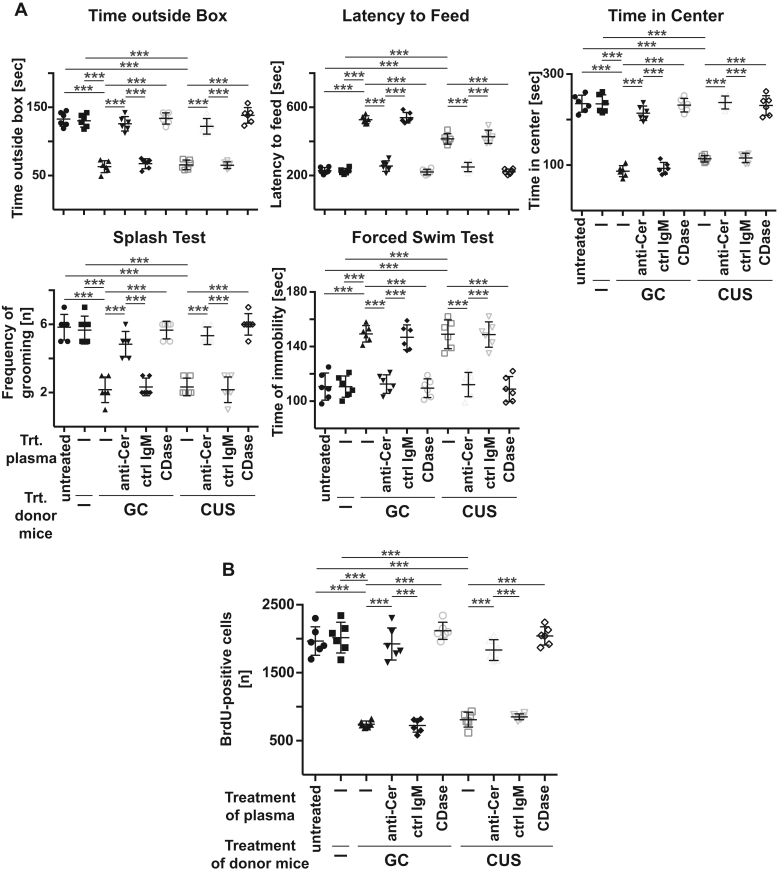
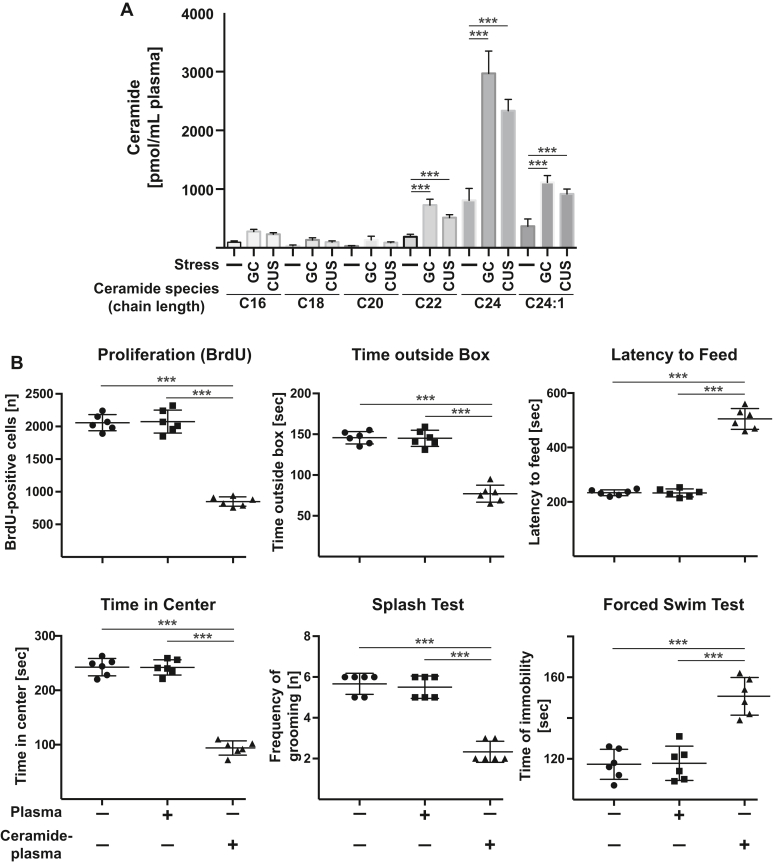
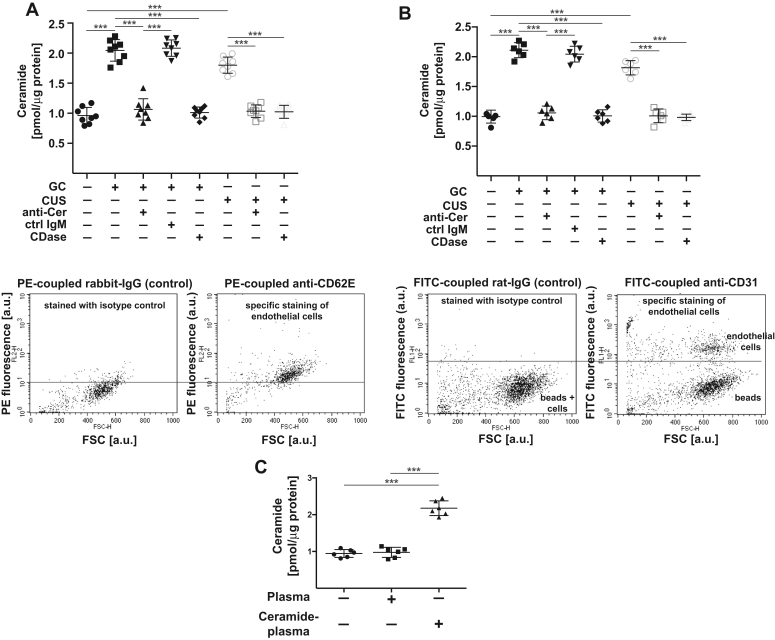
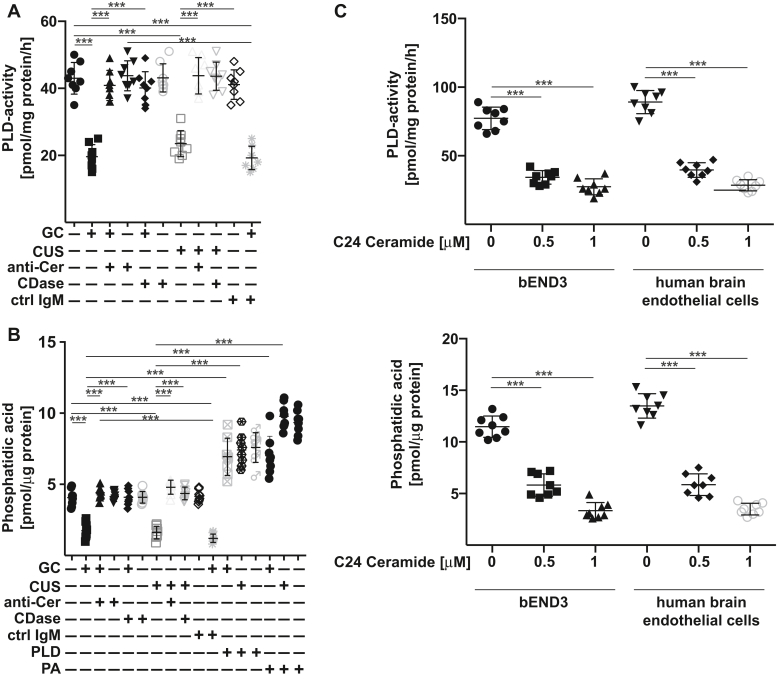
Major depressive disorder (MDD) is a severe disease of unknown pathogenesis that will affect ∼10% of people during their lifetime. Therapy for MDD requires prolonged treatment and often fails, predicating a need for novel treatment strategies. Here, we report increased ceramide levels in the blood plasma of MDD patients and in murine stress-induced models of MDD. These blood plasma ceramide levels correlated with the severity of MDD in human patients and were independent of age, sex, or body mass index. In addition, intravenous injection of anti-ceramide antibodies or neutral ceramidase rapidly abrogated stress-induced MDD, and intravenous injection of blood plasma from mice with MDD induced depression-like behavior in untreated mice, which was abrogated by ex vivo preincubation of the plasma with anti-ceramide antibodies or ceramidase. Mechanistically, we demonstrate that ceramide accumulated in endothelial cells of the hippocampus of stressed mice, evidenced by the quantitative measurement of ceramide in purified hippocampus endothelial cells. We found ceramide inhibited the activity of phospholipase D (PLD) in endothelial cells in vitro and in the hippocampus in vivo and thereby decreased phosphatidic acid in the hippocampus. Finally, we show intravenous injection of PLD or phosphatidic acid abrogated MDD, indicating the significance of this pathway in MDD pathogenesis. Our data indicate that ceramide controls PLD activity and phosphatidic acid formation in hippocampal endothelial cells and thereby mediates MDD. We propose that neutralization of plasma ceramide could represent a rapid-acting targeted treatment for MDD.
重度抑郁症(MDD)是一种发病机制不明的严重疾病,一生中约10%的人会受其影响。MDD的治疗需要长期进行,且常常失败,这就需要新的治疗策略。在此,我们报告了MDD患者血浆以及小鼠应激诱导的MDD模型中神经酰胺水平升高。这些血浆神经酰胺水平与人类患者MDD的严重程度相关,且与年龄、性别或体重指数无关。此外,静脉注射抗神经酰胺抗体或中性神经酰胺酶可迅速消除应激诱导的MDD,静脉注射MDD小鼠的血浆可在未治疗的小鼠中诱发类似抑郁的行为,而通过血浆与抗神经酰胺抗体或神经酰胺酶进行体外预孵育可消除这种行为。从机制上来说,我们证明了神经酰胺在应激小鼠海马体的内皮细胞中蓄积,这通过对纯化的海马体内皮细胞中的神经酰胺进行定量测量得以证实。我们发现神经酰胺在体外和体内的海马体中均抑制内皮细胞中磷脂酶D(PLD)的活性,从而降低海马体中的磷脂酸水平。最后,我们表明静脉注射PLD或磷脂酸可消除MDD,这表明该途径在MDD发病机制中的重要性。我们的数据表明,神经酰胺控制海马体内皮细胞中PLD的活性和磷脂酸的形成,从而介导MDD。我们提出,中和血浆神经酰胺可能是一种针对MDD的快速起效的靶向治疗方法。