Hayashi Yuka, Shimizu Ippei, Yoshida Yohko, Ikegami Ryutaro, Suda Masayoshi, Katsuumi Goro, Fujiki Shinya, Ozaki Kazuyuki, Abe Manabu, Sakimura Kenji, Okuda Shujiro, Hayano Toshiya, Nakamura Kazuhiro, Walsh Kenneth, Jespersen Naja Zenius, Nielsen Søren, Scheele Camilla, Minamino Tohru
Department of Cardiovascular Biology and Medicine, Niigata University Graduate School of Medical and Dental Sciences, Niigata 951-8510, Japan.
Department of Cardiovascular Biology and Medicine, Juntendo University Graduate School of Medicine, 2-1-1 Hongo, Bunkyo-ku, Tokyo 113-8431, Japan.
iScience. 2022 Jun 7;25(7):104547. doi: 10.1016/j.isci.2022.104547. eCollection 2022 Jul 15.
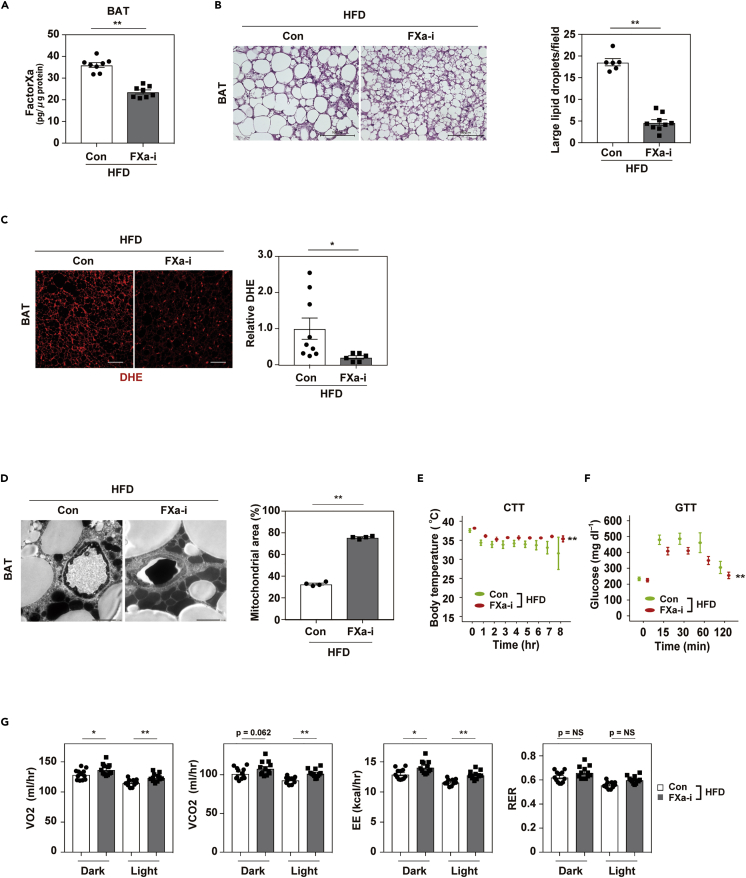
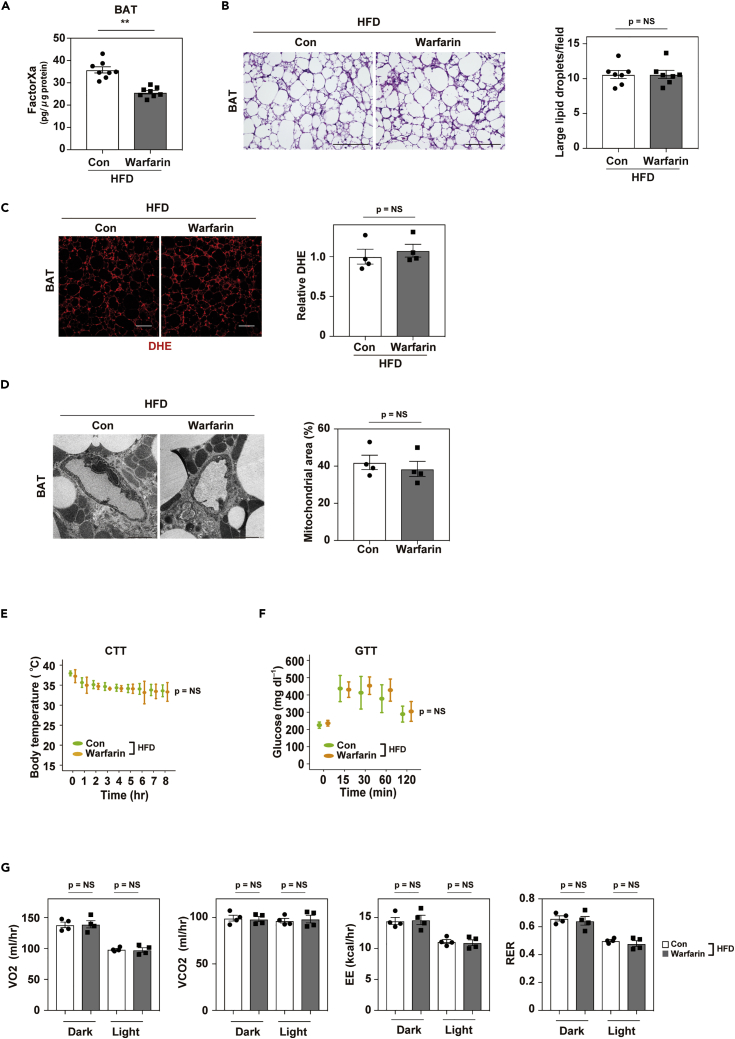
Brown adipose tissue (BAT) has a role in maintaining systemic metabolic health in rodents and humans. Here, we show that metabolic stress induces BAT to produce coagulation factors, which then-together with molecules derived from the circulation-promote BAT dysfunction and systemic glucose intolerance. When mice were fed a high-fat diet (HFD), the levels of tissue factor, coagulation Factor VII (FVII), activated coagulation Factor X (FXa), and protease-activated receptor 1 (PAR1) expression increased significantly in BAT. Genetic or pharmacological suppression of coagulation factor-PAR1 signaling in BAT ameliorated its whitening and improved thermogenic response and systemic glucose intolerance in mice with dietary obesity. Conversely, the activation of coagulation factor-PAR1 signaling in BAT caused mitochondrial dysfunction in brown adipocytes and systemic glucose intolerance in mice fed normal chow. These results indicate that BAT produces endogenous coagulation factors that mediate pleiotropic effects via PAR1 signaling under metabolic stress.
棕色脂肪组织(BAT)在维持啮齿动物和人类的全身代谢健康方面发挥着作用。在此,我们表明代谢应激会诱导BAT产生凝血因子,这些凝血因子随后与循环中衍生的分子一起促进BAT功能障碍和全身性葡萄糖不耐受。当给小鼠喂食高脂饮食(HFD)时,组织因子、凝血因子VII(FVII)、活化凝血因子X(FXa)以及蛋白酶激活受体1(PAR1)在BAT中的表达水平显著增加。对BAT中凝血因子 - PAR1信号进行基因或药理学抑制可改善其变白现象,并改善饮食性肥胖小鼠的产热反应和全身性葡萄糖不耐受。相反,激活BAT中的凝血因子 - PAR1信号会导致棕色脂肪细胞中的线粒体功能障碍以及喂食正常食物的小鼠出现全身性葡萄糖不耐受。这些结果表明,在代谢应激下,BAT会产生内源性凝血因子,这些凝血因子通过PAR1信号介导多效性作用。