Liu Yuqiu, Yang Canlin, Yang Xin, Xie Xiaotong, Liu Hong, Zhang Liuping, Ye Jianming, Jiang Dongsheng, Zhang Xiaoliang, Liu Bicheng
Institute of Nephrology, Zhong Da Hospital, School of Medicine, Southeast University, Nanjing, China.
Department of Nephrology, The First People's Hospital of Kunshan, Suzhou, China.
Front Med (Lausanne). 2022 Jun 10;9:902171. doi: 10.3389/fmed.2022.902171. eCollection 2022.
Calciphylaxis is a grievous life-threatening vascular disease that commonly affects dialysis population. This is the first epidemiological survey of calciphylaxis initiated in China.
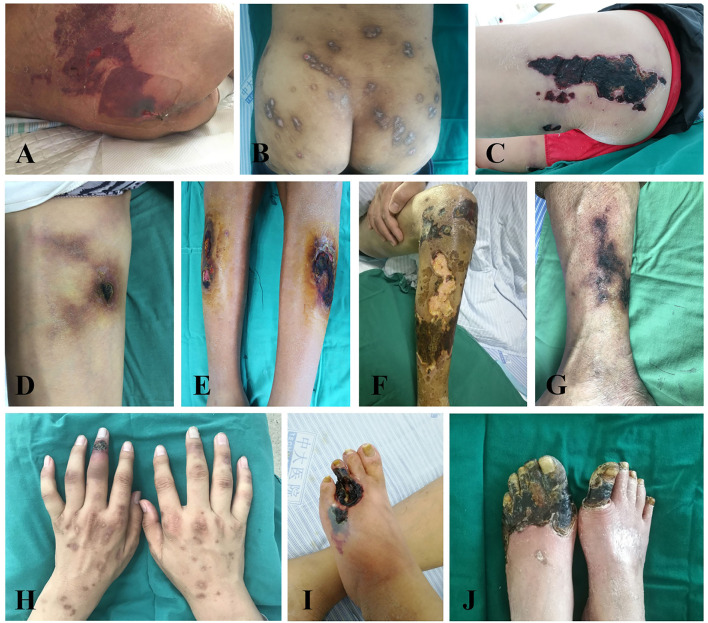
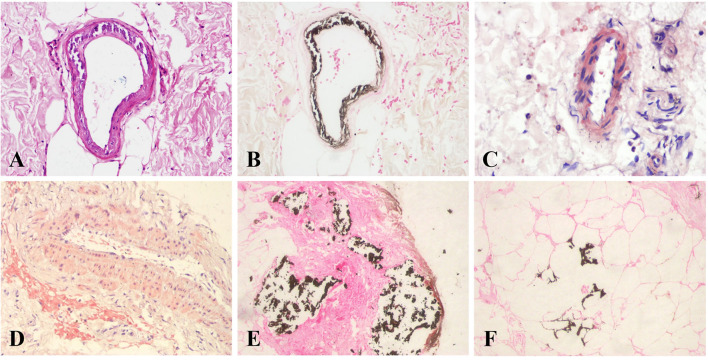
In the cross-sectional survey, a stratified sampling method was used to select 24 dialysis centers in Jiangsu Province. The participants were all adult patients in each center who had been on hemodialysis for more than 6 months. Calciphylaxis patients were uniformly diagnosed based on characteristic skin lesions and histopathological features.
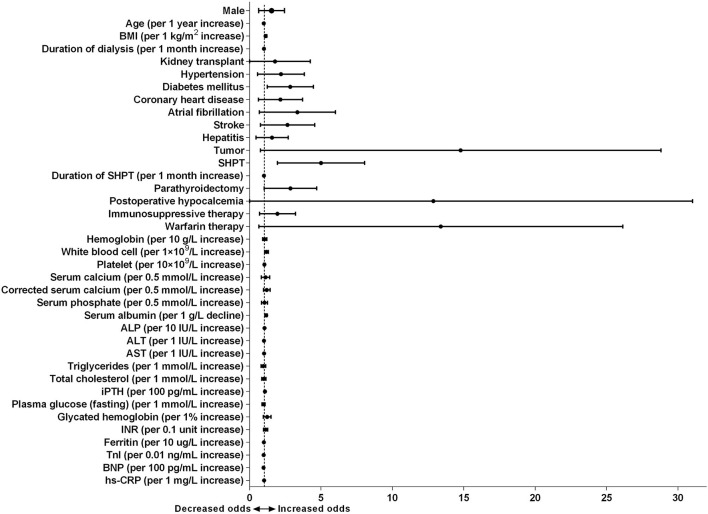
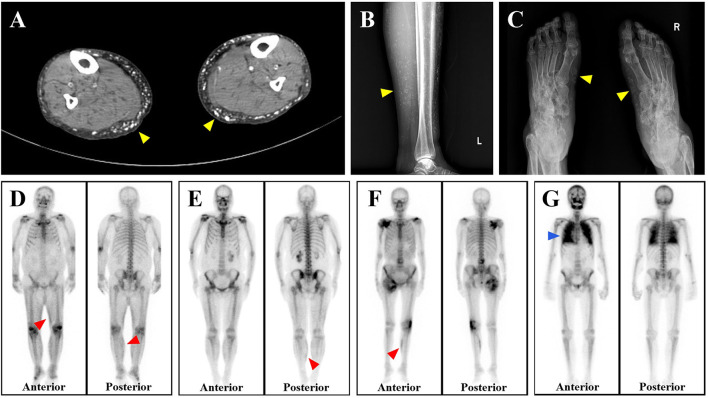
A total of 3,867 hemodialysis patients (average age of 55.33 ± 13.89 years; 61.81% of males) were included. Forty eight cases were diagnosed with calciphylaxis, and prevalence was 1.24%. Among calciphylaxis patients, 33 cases were male, and the average age and median dialysis duration were 53.85 ± 15.17 years and 84.00 (48.00, 138.75) months, respectively. Skin biopsy was performed in 70.83% of calciphylaxis patients, and positive rate was 64.71%. Meanwhile, the positive rate of bone scintigraphy in the diagnosis of calciphylaxis was 62.5%. The prevalence of hyperparathyroidism in case group was as high as 72.92% with longer duration, and 42.86% had undergone parathyroidectomy. Multivariate analysis indicated that increased BMI, prolonged dialysis duration, warfarin therapy, hyperparathyroidism, diabetes, tumors, low serum albumin and high serum alkaline phosphatase levels were high-risk factors for calciphylaxis.
The prevalence of calciphylaxis in Chinese hemodialysis patients was 1.24% according to regional epidemiological survey, but its actual prevalence would be presumably far beyond present data. It's urgent to improve clinical understanding of calciphylaxis, and multifaceted diagnostic methods should be applied for early screening.
钙过敏是一种严重的危及生命的血管疾病,常见于透析人群。这是中国开展的首次钙过敏流行病学调查。
在横断面调查中,采用分层抽样方法选取江苏省24个透析中心。参与者为各中心所有接受血液透析超过6个月的成年患者。根据特征性皮肤病变和组织病理学特征对钙过敏患者进行统一诊断。
共纳入3867例血液透析患者(平均年龄55.33±13.89岁;男性占61.81%)。48例被诊断为钙过敏,患病率为1.24%。在钙过敏患者中,男性33例,平均年龄和透析中位时长分别为53.85±15.17岁和84.00(48.00,138.75)个月。70.83%的钙过敏患者进行了皮肤活检,阳性率为64.71%。同时,骨闪烁显像在钙过敏诊断中的阳性率为62.5%。病例组甲状旁腺功能亢进患病率高达72.92%,病程较长,42.86%的患者接受了甲状旁腺切除术。多因素分析表明,体重指数增加、透析时间延长、华法林治疗、甲状旁腺功能亢进、糖尿病、肿瘤、低血清白蛋白和高血清碱性磷酸酶水平是钙过敏的高危因素。
根据地区流行病学调查,中国血液透析患者中钙过敏的患病率为1.24%,但其实际患病率可能远高于目前的数据。迫切需要提高临床对钙过敏的认识,应采用多方面的诊断方法进行早期筛查。