Kong Piaoping, Zhang Lingyu, Zhang Zhengliang, Feng Kangle, Sang Yiwen, Duan Xiuzhi, Liu Chunhua, Sun Tao, Tao Zhihua, Liu Weiwei
Department of Laboratory Medicine, The Second Affiliated Hospital of Zhejiang University School of Medicine, Hangzhou, China.
Department of Blood Transfusion, The Second Affiliated Hospital of Zhejiang University School of Medicine, Hangzhou, China.
Front Oncol. 2022 Jun 10;12:873876. doi: 10.3389/fonc.2022.873876. eCollection 2022.
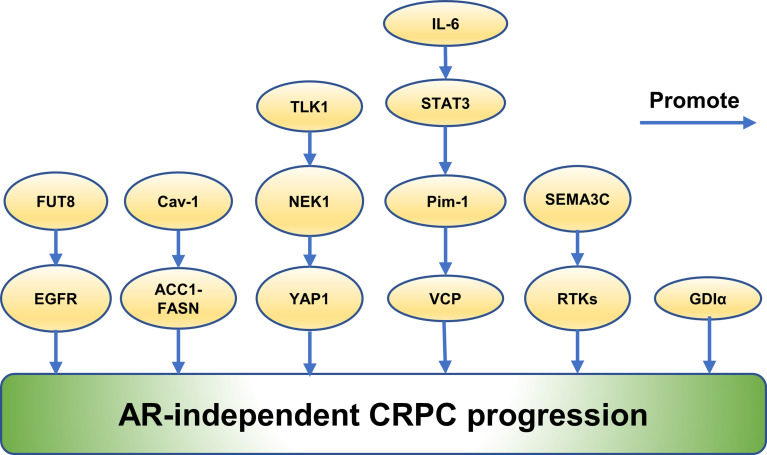
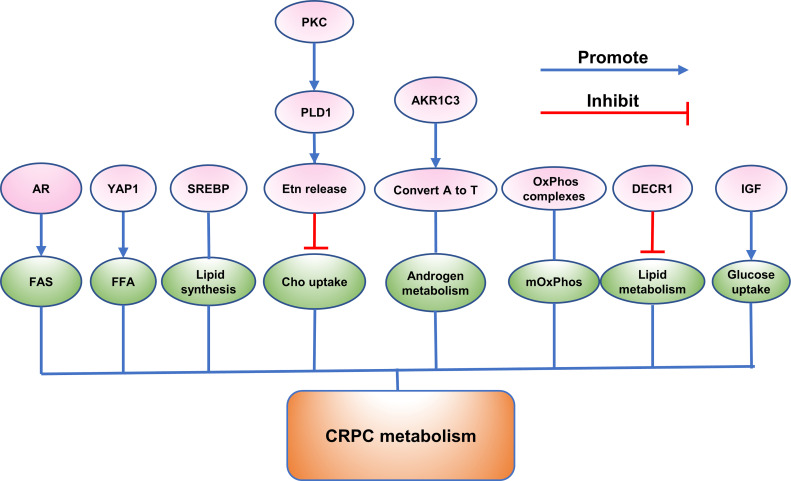
Prostate cancer (PCa) is the most common cancer in men in the western world, but the lack of specific and sensitive markers often leads to overtreatment of prostate cancer which eventually develops into castration-resistant prostate cancer (CRPC). Novel protein markers for diagnosis and management of CRPC will be promising. In this review, we systematically summarize and discuss the expression pattern of emerging proteins in tissue, cell lines, and serum when castration-sensitive prostate cancer (CSPC) progresses to CRPC; focus on the proteins involved in CRPC growth, invasion, metastasis, metabolism, and immune microenvironment; summarize the current understanding of the regulatory mechanisms of emerging proteins in CSPC progressed to CRPC at the molecular level; and finally summarize the clinical applications of emerging proteins as diagnostic marker, prognostic marker, predictive marker, and therapeutic marker.
前列腺癌(PCa)是西方世界男性中最常见的癌症,但缺乏特异性和敏感性的标志物常常导致前列腺癌的过度治疗,而前列腺癌最终会发展为去势抵抗性前列腺癌(CRPC)。用于CRPC诊断和治疗的新型蛋白质标志物将很有前景。在这篇综述中,我们系统地总结并讨论了去势敏感性前列腺癌(CSPC)进展为CRPC时,新兴蛋白质在组织、细胞系和血清中的表达模式;关注参与CRPC生长、侵袭、转移、代谢和免疫微环境的蛋白质;总结目前在分子水平上对CSPC进展为CRPC过程中新兴蛋白质调控机制的理解;最后总结新兴蛋白质作为诊断标志物、预后标志物、预测标志物和治疗标志物的临床应用。