Biochemistry, Molecular Biology and Biophysics Graduate Program, University of Minnesota, Twin Cities, Minnesota, USA.
Department of Veterinary and Biomedical Sciences College of Veterinary Medicine, University of Minnesota, Twin Cities, Minnesota, USA.
Virulence. 2022 Dec;13(1):1049-1061. doi: 10.1080/21505594.2022.2087948.
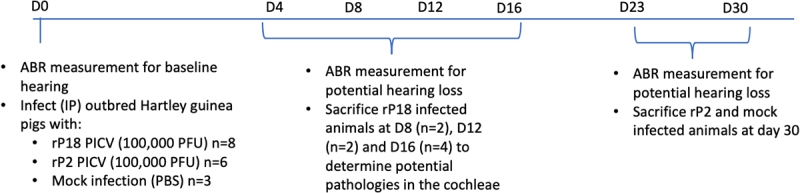
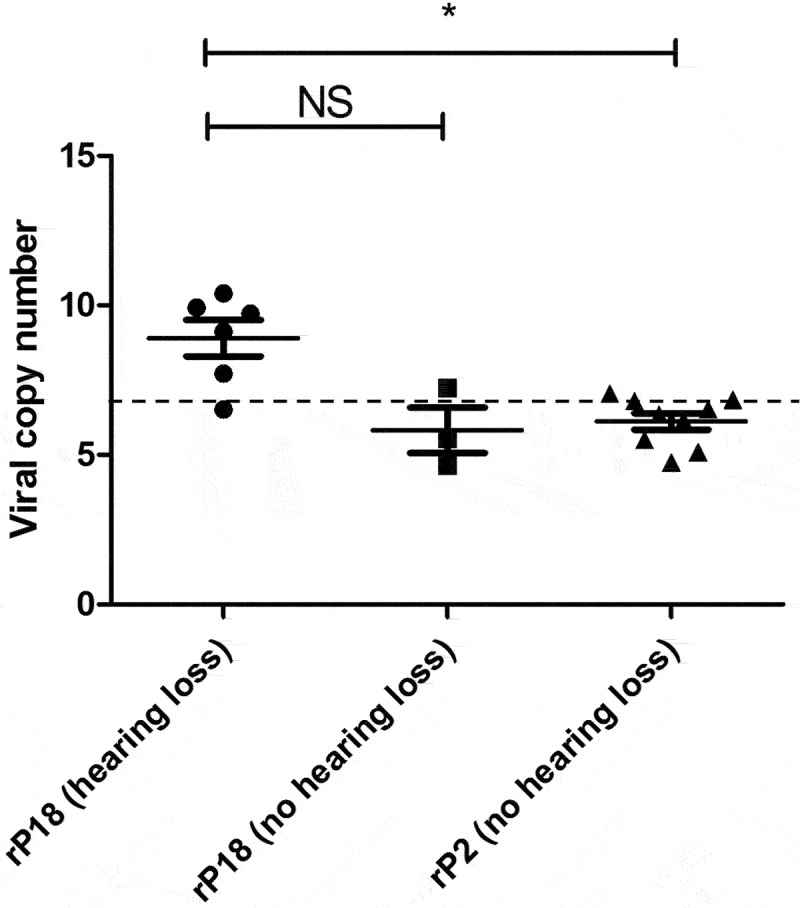
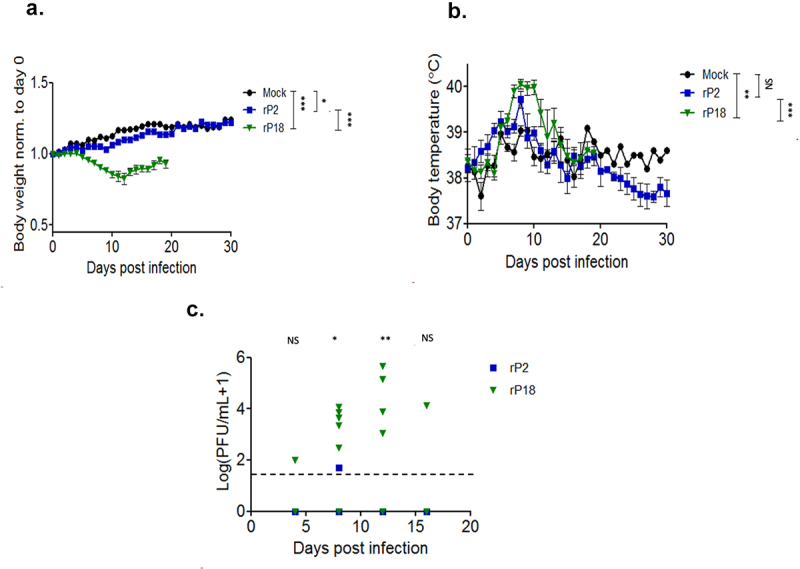
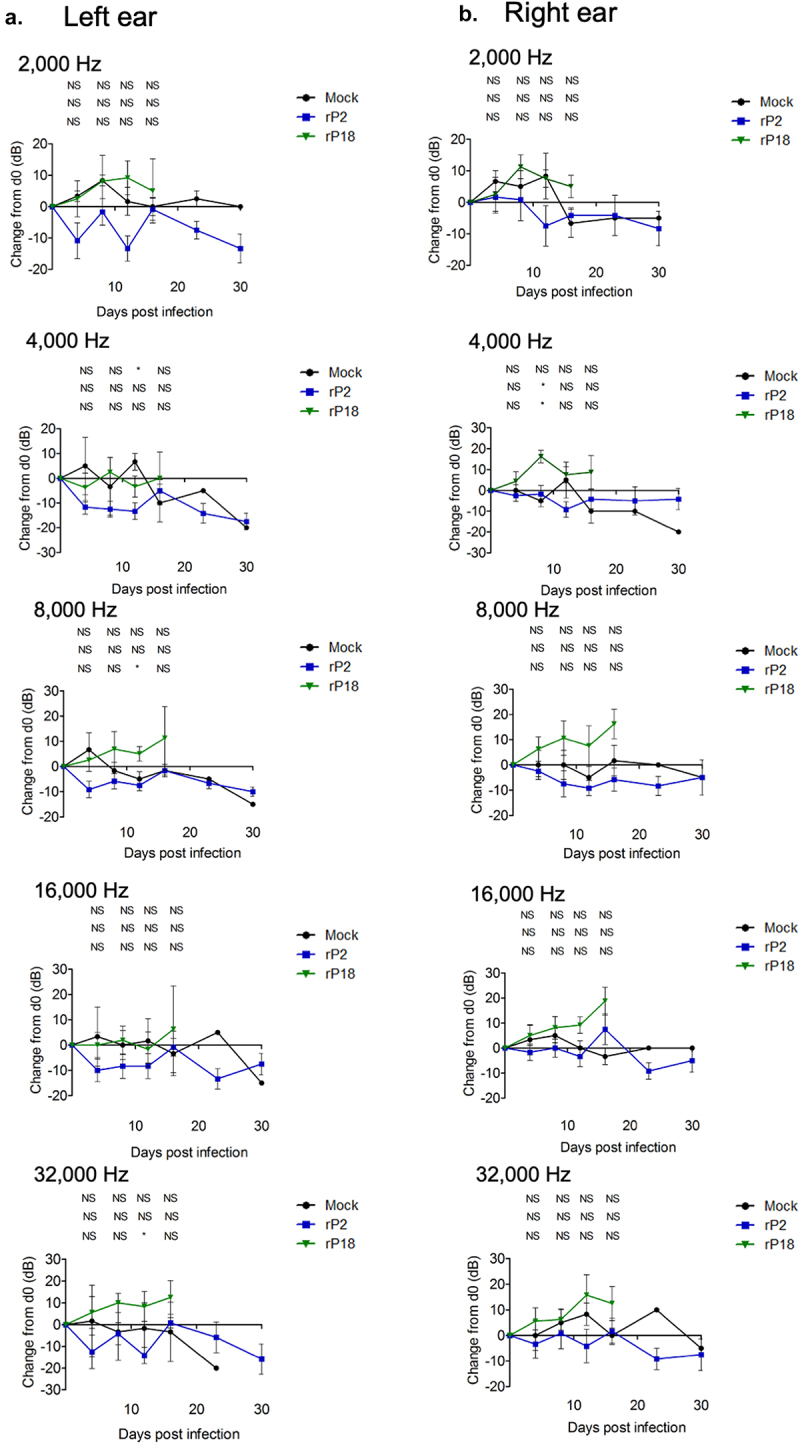
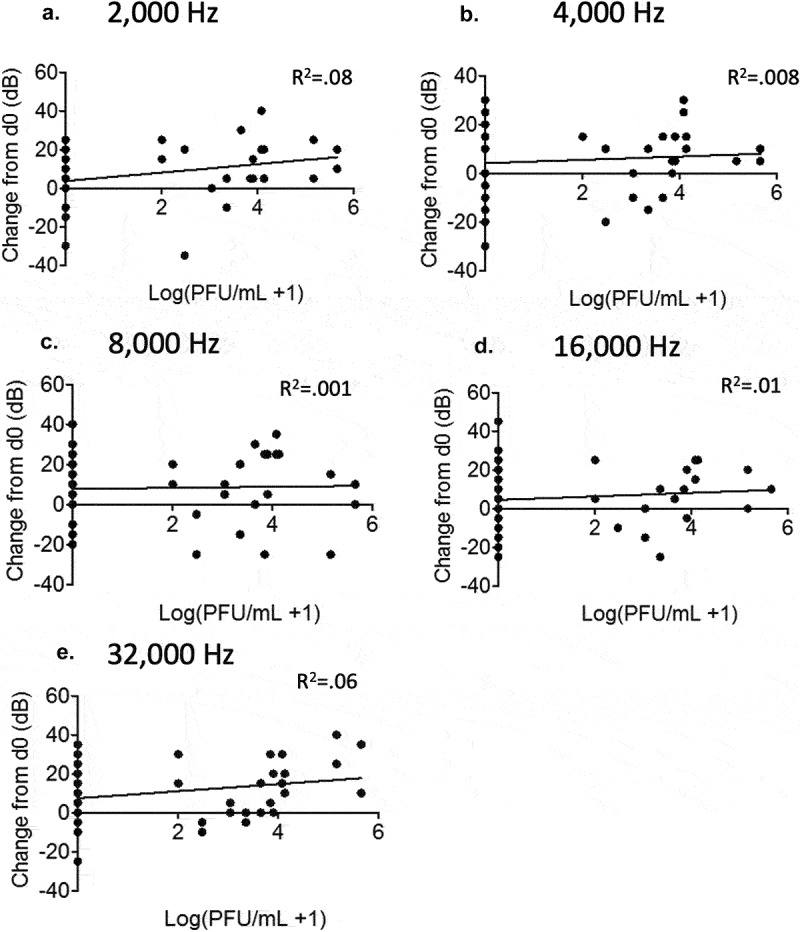
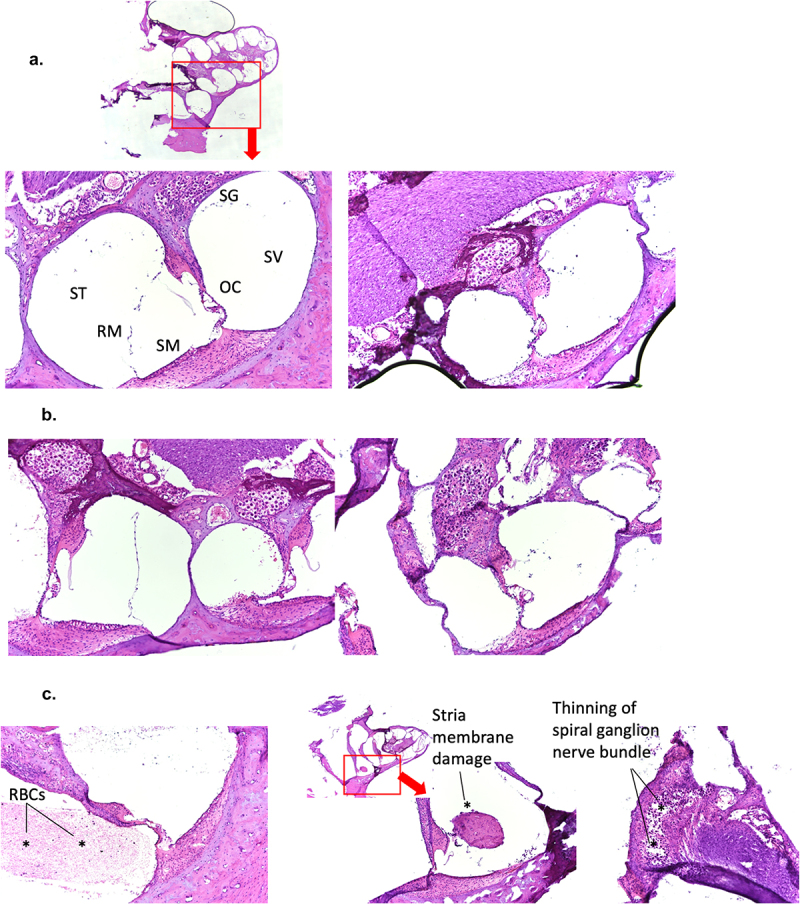
Lassa fever (LF) is a neglected tropical disease that is caused by Lassa virus (LASV), a human hemorrhagic fever-causing mammarenavirus. A notable sequela of LF is sensorineural hearing loss (SNHL) that can develop in about 33% of the patients. Animal models of LF-associated SNHL have been limited in size and scope because LASV is a biosafety level 4 (BSL4) pathogen that requires its handling in a high biocontainment laboratory. In this report, we describe the development of an alternative arenavirus hearing loss model by infecting outbred Hartley guinea pigs with a virulent strain (rP18) of the Pichinde virus (PICV), which is a guinea pig-adapted mammarenavirus that has been used as a surrogate model of mammarenaviral hemorrhagic fevers in a conventional (BSL2) laboratory. By measuring auditory brainstem response (ABR) throughout the course of the virulent rP18 PICV infection, we noticed that some of the animals experienced an acute but transient level of hearing loss. Cochleae of hearing-impaired animals, but not of controls, had demonstrable viral RNA by quantitative RT-PCR, indicating the presence of virus in the affected inner ear with no overt histopathological changes. In contrast, neither the outbred Hartley guinea pigs infected with a known avirulent strain (rP2) of PICV nor those that were mock-infected showed any evidence of hearing loss or viral infection of the inner ear. This is the first report of an immunocompetent small animal model of mammarenavirus-induced hearing loss that can be used to evaluate potential therapeutics against virus-induced hearing impairment under a conventional laboratory setting.
拉沙热 (LF) 是一种被忽视的热带病,由拉沙病毒 (LASV) 引起,LASV 是一种引起人类出血性发热的哺乳动物病毒。LF 的一个显著后遗症是感音神经性听力损失 (SNHL),大约 33%的患者会发展为 SNHL。由于 LASV 是生物安全 4 级 (BSL4) 病原体,需要在高生物安全实验室中处理,因此 LF 相关 SNHL 的动物模型在规模和范围上受到限制。在本报告中,我们描述了通过用一种强毒力的皮钦德病毒 (PICV) 株 (rP18) 感染杂交 Hartley 豚鼠来开发替代的沙粒病毒听力损失模型。PICV 是一种豚鼠适应的哺乳动物病毒,已被用作传统 (BSL2) 实验室中哺乳动物病毒出血热的替代模型。通过在强毒 rP18 PICV 感染过程中测量听觉脑干反应 (ABR),我们注意到一些动物经历了急性但短暂的听力损失。听障动物的耳蜗,而不是对照动物的耳蜗,通过定量 RT-PCR 检测到可检测的病毒 RNA,表明受影响的内耳中有病毒存在,没有明显的组织病理学变化。相比之下,感染已知弱毒 PICV 株 (rP2) 的杂交 Hartley 豚鼠或假感染的豚鼠均未出现听力损失或内耳病毒感染的迹象。这是首次报道可用于评估常规实验室环境下病毒引起的听力损伤潜在治疗方法的免疫活性小型动物沙粒病毒诱导听力损失模型。