Infection and Immunity Division, Roslin Institute, University of Edinburghgrid.4305.2, Easter Bush Campus, Midlothian, United Kingdom.
Department of Biochemistry, University of Cambridge, Cambridge, United Kingdom.
J Virol. 2022 Jul 27;96(14):e0048822. doi: 10.1128/jvi.00488-22. Epub 2022 Jun 27.
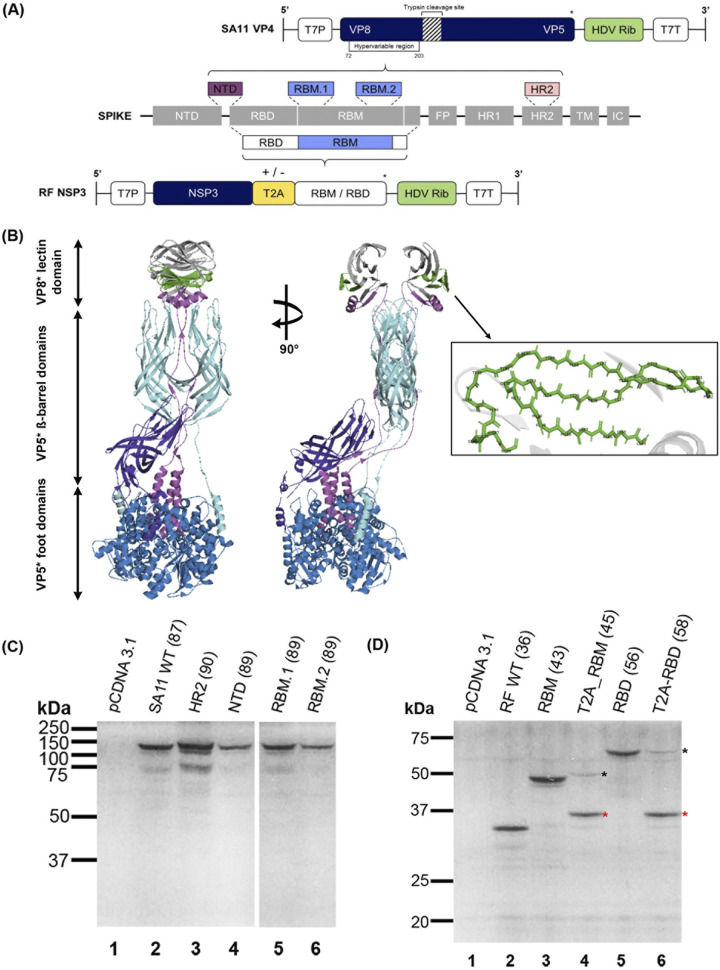
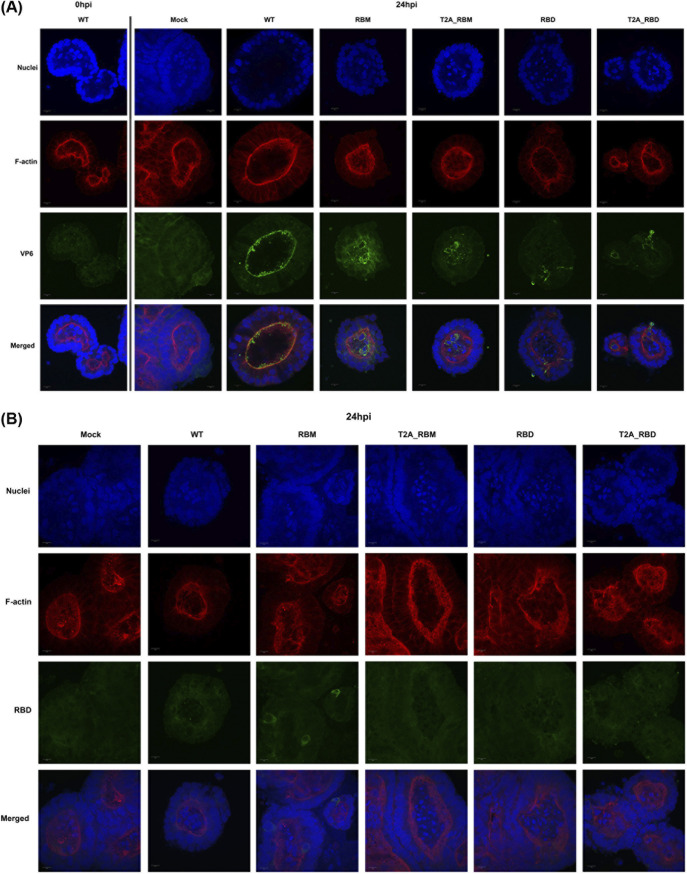
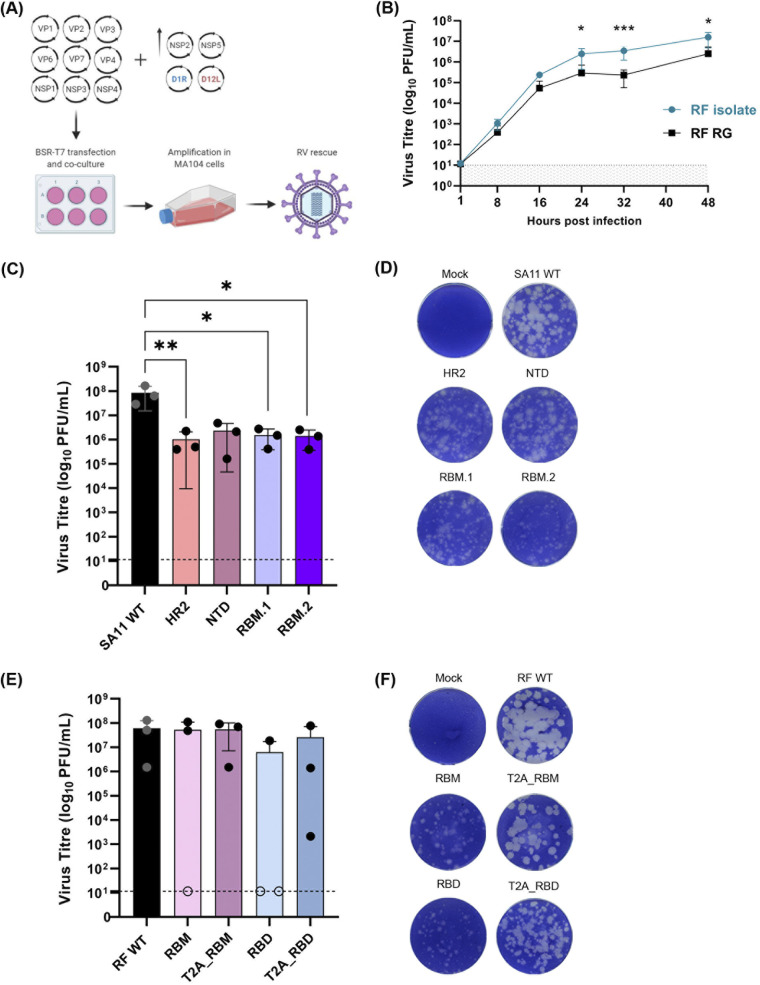
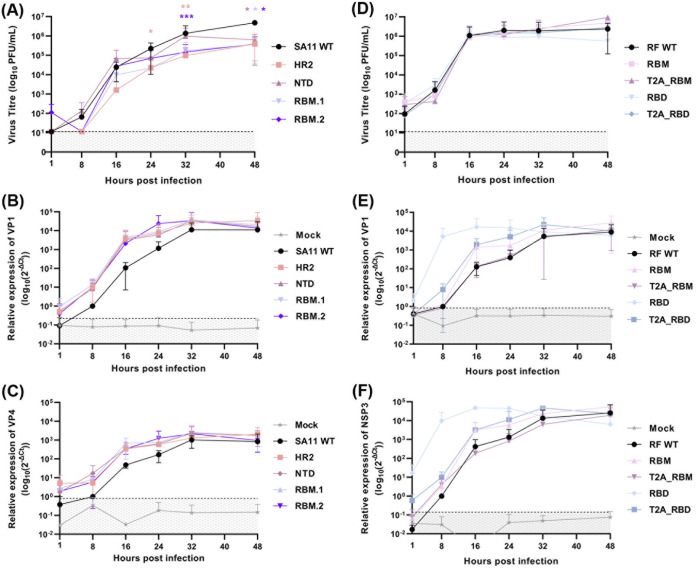
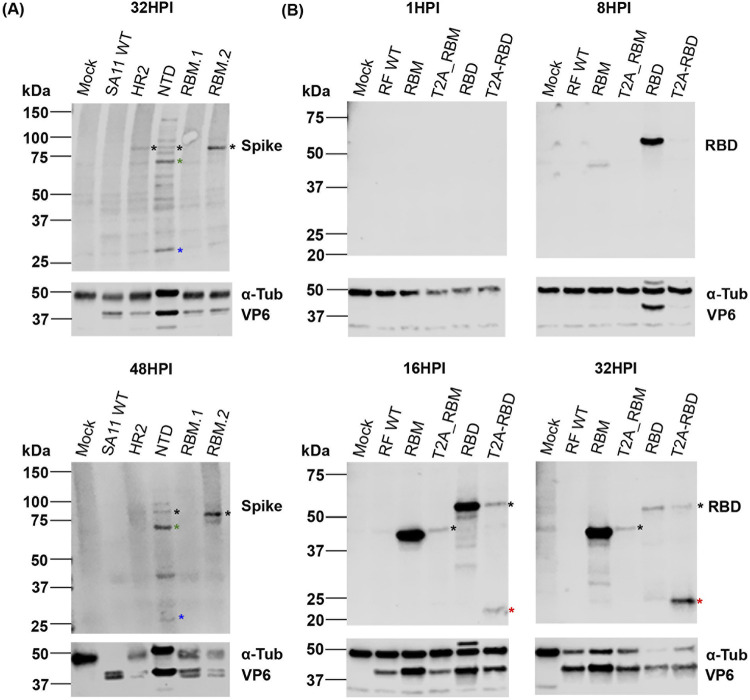
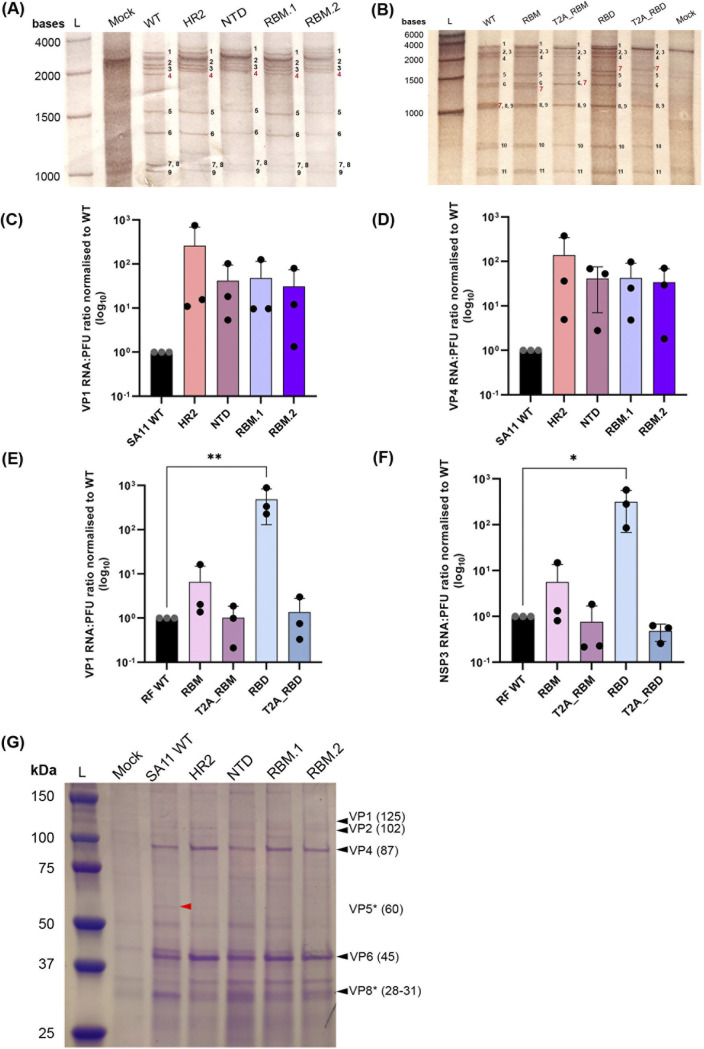
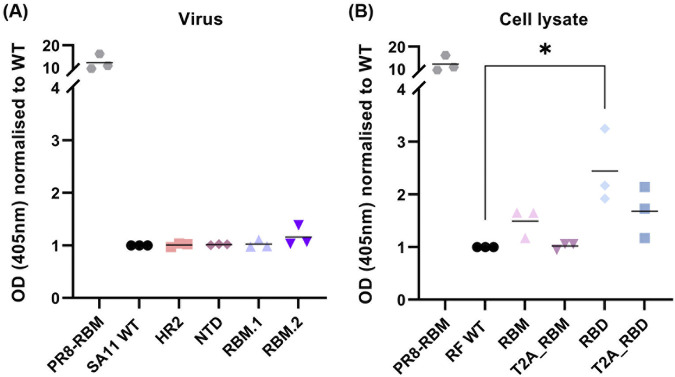
Species A rotavirus (RVA) vaccines based on live attenuated viruses are used worldwide in humans. The recent establishment of a reverse genetics system for rotoviruses (RVs) has opened the possibility of engineering chimeric viruses expressing heterologous peptides from other viral or microbial species in order to develop polyvalent vaccines. We tested the feasibility of this concept by two approaches. First, we inserted short SARS-CoV-2 spike peptides into the hypervariable region of the simian RV SA11 strain viral protein (VP) 4. Second, we fused the receptor binding domain (RBD) of the SARS-CoV-2 spike protein, or the shorter receptor binding motif (RBM) nested within the RBD, to the C terminus of nonstructural protein (NSP) 3 of the bovine RV RF strain, with or without an intervening Thosea asigna virus 2A (T2A) peptide. Mutating the hypervariable region of SA11 VP4 impeded viral replication, and for these mutants, no cross-reactivity with spike antibodies was detected. To rescue NSP3 mutants, we established a plasmid-based reverse genetics system for the bovine RV RF strain. Except for the RBD mutant that demonstrated a rescue defect, all NSP3 mutants delivered endpoint infectivity titers and exhibited replication kinetics comparable to that of the wild-type virus. In ELISAs, cell lysates of an NSP3 mutant expressing the RBD peptide showed cross-reactivity with a SARS-CoV-2 RBD antibody. 3D bovine gut enteroids were susceptible to infection by all NSP3 mutants, but cross-reactivity with SARS-CoV-2 RBD antibody was only detected for the RBM mutant. The tolerance of large SARS-CoV-2 peptide insertions at the C terminus of NSP3 in the presence of T2A element highlights the potential of this approach for the development of vaccine vectors targeting multiple enteric pathogens simultaneously. We explored the use of rotaviruses (RVs) to express heterologous peptides, using SARS-CoV-2 as an example. Small SARS-CoV-2 peptide insertions (<34 amino acids) into the hypervariable region of the viral protein 4 (VP4) of RV SA11 strain resulted in reduced viral titer and replication, demonstrating a limited tolerance for peptide insertions at this site. To test the RV RF strain for its tolerance for peptide insertions, we constructed a reverse genetics system. NSP3 was C-terminally tagged with SARS-CoV-2 spike peptides of up to 193 amino acids in length. With a T2A-separated 193 amino acid tag on NSP3, there was no significant effect on the viral rescue efficiency, endpoint titer, and replication kinetics. Tagged NSP3 elicited cross-reactivity with SARS-CoV-2 spike antibodies in ELISA. We highlight the potential for development of RV vaccine vectors targeting multiple enteric pathogens simultaneously.
基于活减毒病毒的 A 种轮状病毒(RVA)疫苗已在全球范围内用于人类。最近建立的轮状病毒(RV)反向遗传学系统为工程嵌合病毒提供了可能性,这些病毒可以表达来自其他病毒或微生物物种的异源肽,从而开发多价疫苗。我们通过两种方法测试了这一概念的可行性。首先,我们将短的 SARS-CoV-2 刺突肽插入猴轮状病毒 SA11 株病毒蛋白(VP)4 的高变区。其次,我们将 SARS-CoV-2 刺突蛋白的受体结合域(RBD)或嵌套在 RBD 内的较短受体结合基序(RBM)融合到牛轮状病毒 RF 株的非结构蛋白(NSP)3 的 C 末端,有或没有中间的 Thosea asigna 病毒 2A(T2A)肽。SA11 VP4 高变区的突变阻碍了病毒复制,对于这些突变体,没有检测到与刺突抗体的交叉反应。为了拯救 NSP3 突变体,我们建立了牛轮状病毒 RF 株的基于质粒的反向遗传学系统。除了显示拯救缺陷的 RBD 突变体外,所有 NSP3 突变体都达到了终点感染滴度,并表现出与野生型病毒相当的复制动力学。在 ELISA 中,表达 RBD 肽的 NSP3 突变体的细胞裂解物与 SARS-CoV-2 RBD 抗体发生交叉反应。所有 NSP3 突变体均可感染 3D 牛肠类器官,但仅在 RBM 突变体中检测到与 SARS-CoV-2 RBD 抗体的交叉反应。在存在 T2A 元件的情况下,NSP3 C 末端的 SARS-CoV-2 肽插入较大(<34 个氨基酸)耐受突出了该方法在同时针对多种肠道病原体开发疫苗载体方面的潜力。我们以 SARS-CoV-2 为例,探索了使用轮状病毒(RV)来表达异源肽。在 RV SA11 株病毒蛋白 4(VP4)的高变区插入小的 SARS-CoV-2 肽(<34 个氨基酸)会导致病毒滴度和复制减少,表明该部位对肽插入的耐受性有限。为了测试 RV RF 株对肽插入的耐受性,我们构建了一个反向遗传学系统。NSP3 的 C 末端标记有长达 193 个氨基酸的 SARS-CoV-2 刺突肽。在 NSP3 上带有 T2A 分隔的 193 个氨基酸标签,对病毒拯救效率、终点滴度和复制动力学没有显著影响。标记的 NSP3 在 ELISA 中与 SARS-CoV-2 刺突抗体发生交叉反应。我们强调了开发同时针对多种肠道病原体的 RV 疫苗载体的潜力。