Pusan National University, Yangsan, 50612, Republic of Korea.
BMC Cancer. 2022 Jun 27;22(1):708. doi: 10.1186/s12885-022-09807-7.
Ovarian cancer is the most lethal gynecologic disease and is one of the most commonly diagnosed cancers among women worldwide. The phosphatidylinositol 3-kinase (PI3K) family plays an important regulatory role in various cancer signaling pathways, including those involved in ovarian cancer development; however, its exact function remains to be fully understood. We conducted this study to understand the role of P13K in the molecular mechanisms underlying ovarian cancer development.
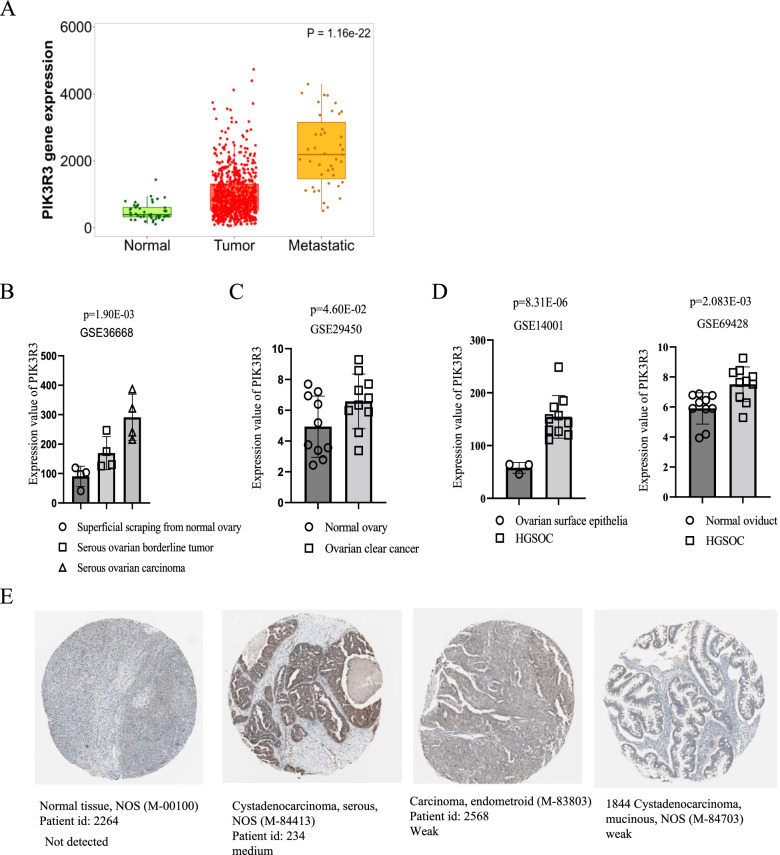
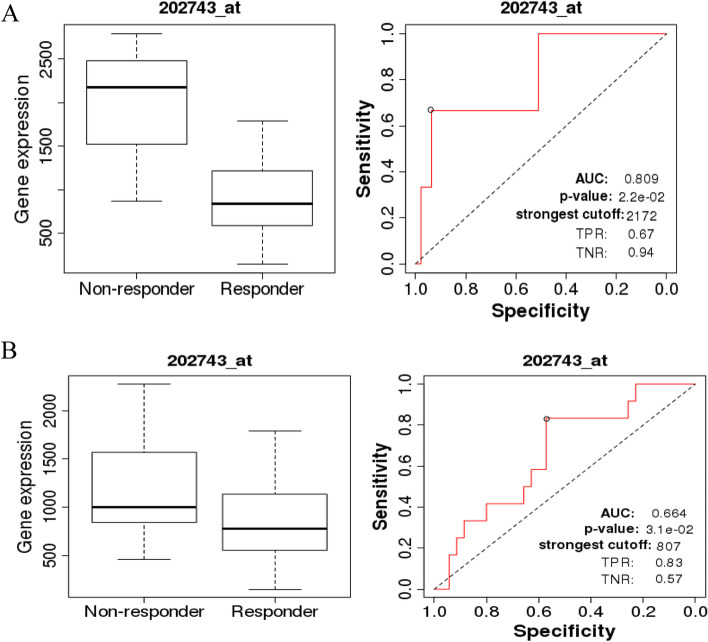
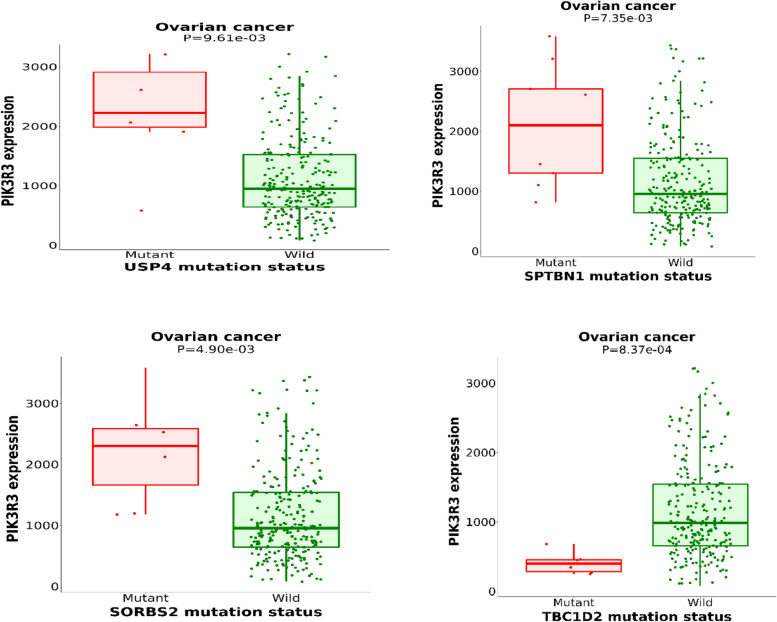
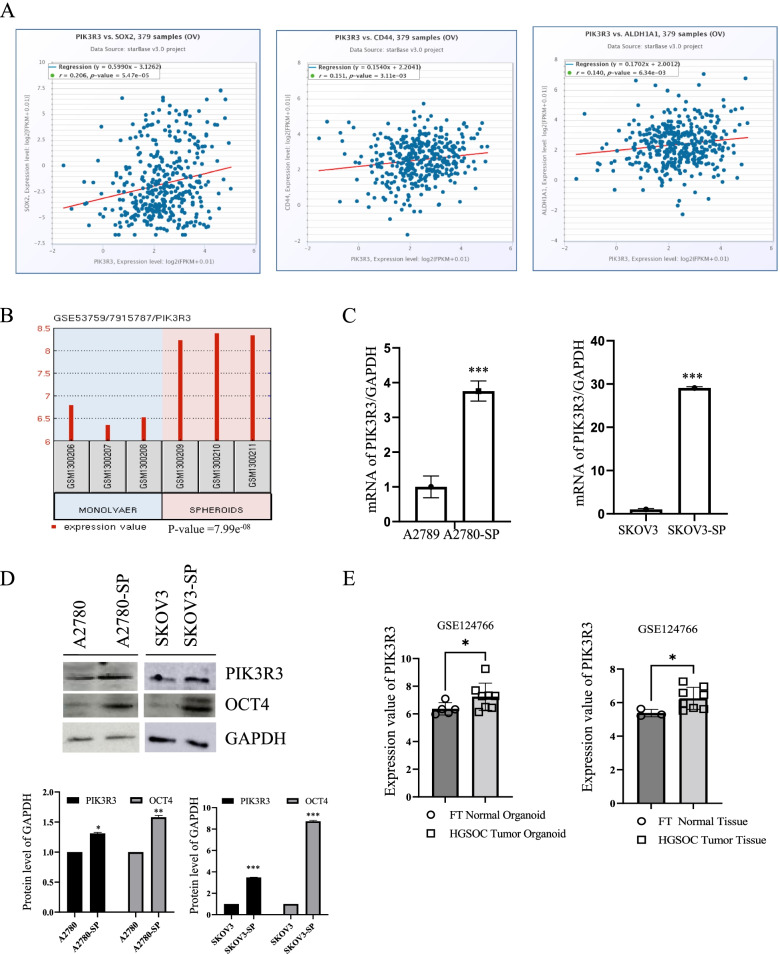
To determine the differential gene expression of phosphoinositide-3-kinase regulatory subunit 3 (PIK3R3), a regulatory subunit of PI3K, in normal, tumor, and metastatic ovary tissues, TNM plotter analysis was performed. The microarray dataset GSE53759 was downloaded from Gene Expression Omnibus. ROC plotter analysis was conducted to understand the potential of PIK3R3 as a predictive marker for effectiveness of therapy in ovarian cancer. muTarget was used to identify mutations that alter PIK3R3 expression in ovarian cancer. To determine the interacting partners for PIK3R3 in ovarian tissues, the interactome-atlas tool was used. The Kyoto encyclopedia of genes and genomes (KEGG) analysis was conducted to identify the pathways in which these interacting partners were primarily enriched.
PIK3R3 was overexpressed in ovarian and metastatic tumors. Elevated PIK3R3 levels were observed in ovarian cancer stem cells, wherein inhibiting PIK3R3 expression significantly reduced the size of ovarian cancer spheroids. Treatment of ovarian cancer stem cells with PF-04691502 (10 μM), an inhibitor of both PI3K and mTOR kinases, also reduced the size of spheroids and the level of OCT4. PIK3R3 was highly expressed in ovarian cancer with several somatic mutations and was predicted better outcomes in patients undergoing Avastin® chemotherapy using bioinformatic tool. Protein interaction analysis showed that PIK3R3 interacts with 157 genes, including GRB2, EGFR, ERBB3, PTK2, HCK, IGF1R, YES1, and PIK3CA, in the ovary. KEGG enrichment analysis revealed that the interacting partners of PIK3R3 are involved in the ErbB signaling pathway, proteoglycans in cancer, FoxO, prolactin, chemokine, and insulin signaling pathways.
PIK3R3 plays a pivotal role in ovarian cancer development and is therefore a potential candidate for developing novel therapeutic approaches.
卵巢癌是最致命的妇科疾病,也是全世界女性最常见的癌症之一。磷脂酰肌醇 3-激酶 (PI3K) 家族在各种癌症信号通路中发挥重要的调节作用,包括参与卵巢癌发展的信号通路;然而,其确切功能仍有待充分了解。我们进行这项研究是为了了解 P13K 在卵巢癌发展的分子机制中的作用。
为了确定磷酸肌醇-3-激酶调节亚基 3(PIK3R3)在正常、肿瘤和转移性卵巢组织中的差异基因表达,进行了 TNM 绘图器分析。从基因表达综合数据库下载了微阵列数据集 GSE53759。进行 ROC 绘图器分析以了解 PIK3R3 作为预测卵巢癌治疗效果的标志物的潜力。muTarget 用于鉴定改变卵巢癌中 PIK3R3 表达的突变。为了确定 PIK3R3 在卵巢组织中的相互作用伙伴,使用了相互作用图谱工具。进行京都基因与基因组百科全书 (KEGG) 分析以确定这些相互作用伙伴主要富集的途径。
PIK3R3 在卵巢癌和转移性肿瘤中过度表达。在卵巢癌干细胞中观察到 PIK3R3 水平升高,其中抑制 PIK3R3 表达显著减小了卵巢癌球体的大小。用 PI3K 和 mTOR 激酶的抑制剂 PF-04691502(10 μM)处理卵巢癌干细胞也减小了球体的大小和 OCT4 的水平。PIK3R3 在具有多种体细胞突变的卵巢癌中高表达,并使用生物信息学工具预测接受阿瓦斯汀®化疗的患者有更好的预后。蛋白质相互作用分析表明,PIK3R3 与卵巢中的 157 个基因相互作用,包括 GRB2、EGFR、ERBB3、PTK2、HCK、IGF1R、YES1 和 PIK3CA。KEGG 富集分析显示,PIK3R3 的相互作用伙伴参与 ErbB 信号通路、癌症中的糖蛋白、FoxO、催乳素、趋化因子和胰岛素信号通路。
PIK3R3 在卵巢癌的发展中起着关键作用,因此是开发新的治疗方法的潜在候选物。