Department of Gastroenterology, The Second Affiliated Hospital of Third Military Medical University, 400037, Chongqing, China.
Department of Gastroenterology, The Second Affiliated Hospital of Chongqing Medical University, Chongqing, 400010, China.
Microbiome. 2022 Jun 27;10(1):98. doi: 10.1186/s40168-022-01296-x.
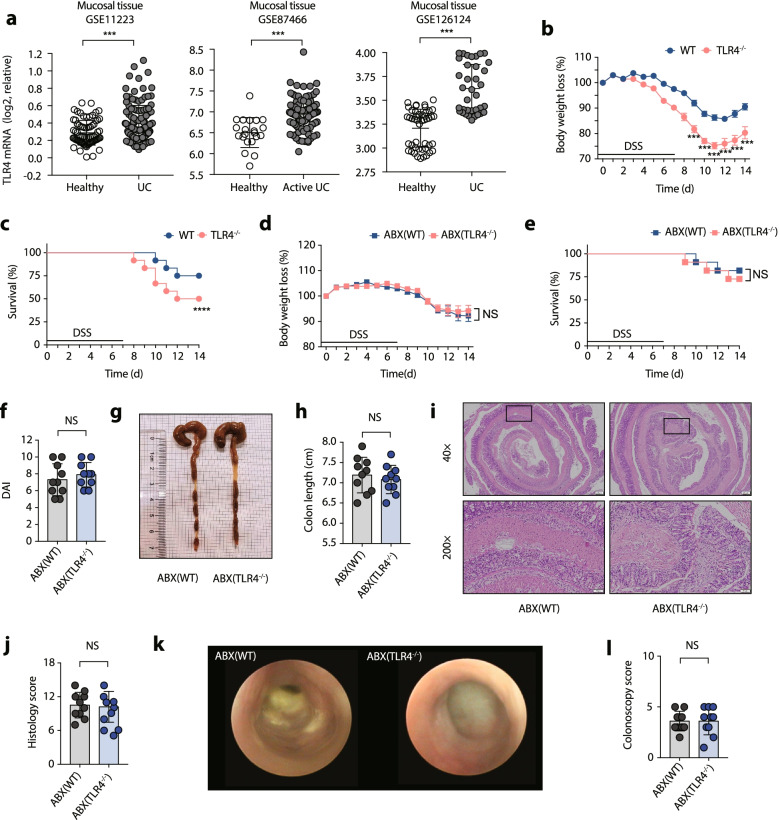
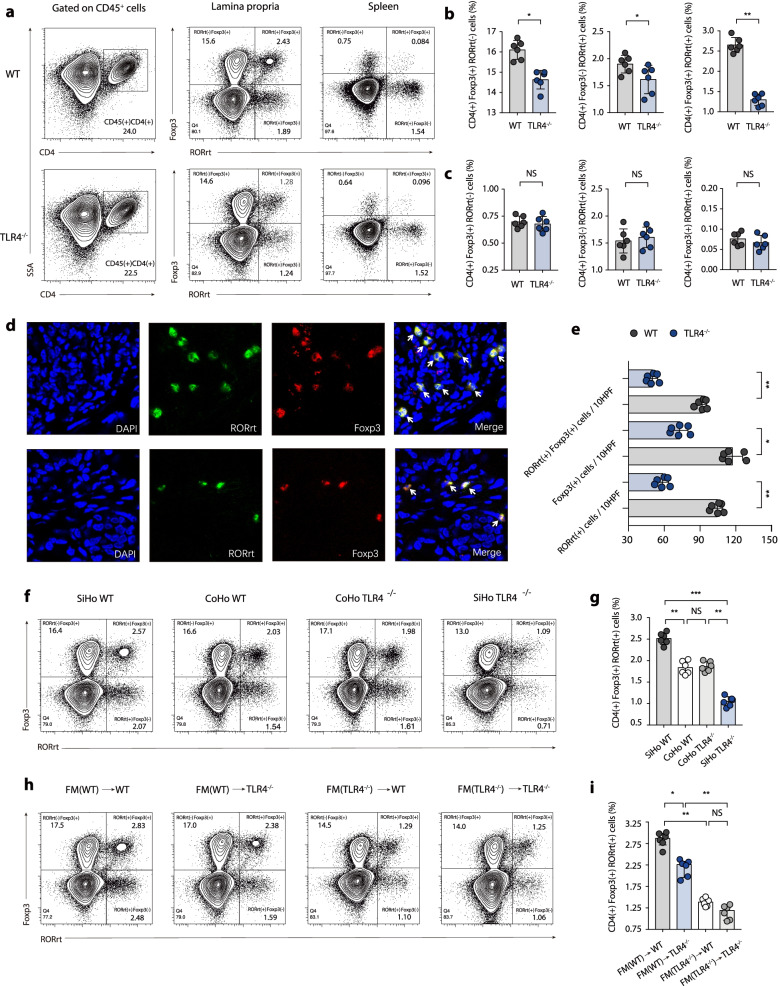
Well-balanced interactions between gut microbiota and the immune system are essential to prevent chronic intestinal inflammation, as observed in inflammatory bowel diseases (IBD). Toll-like receptor 4 (TLR4) functions as a sensor mediating the crosstalk between the intestinal commensal microbiome and host immunity, but the influence of TLR4 on the shaping of intestinal microbiota and immune responses during colon inflammation remains poorly characterized. We investigated whether the different susceptibilities to colitis between wild-type (WT) and TLR4 mice were gut microbiota-dependent and aimed to identify the potential immunity modulation mechanism.
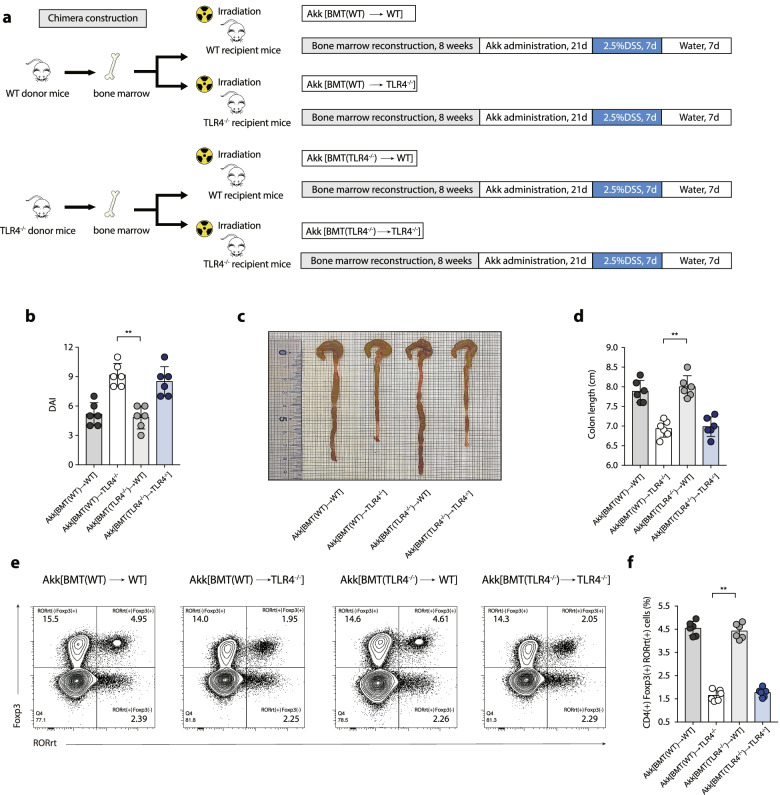
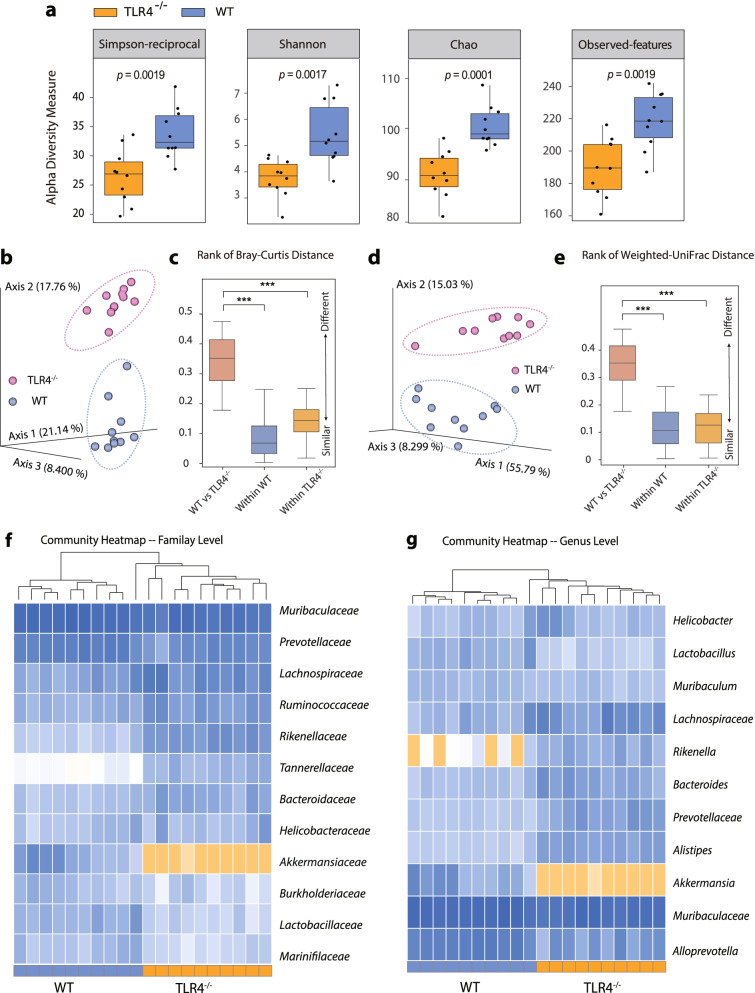
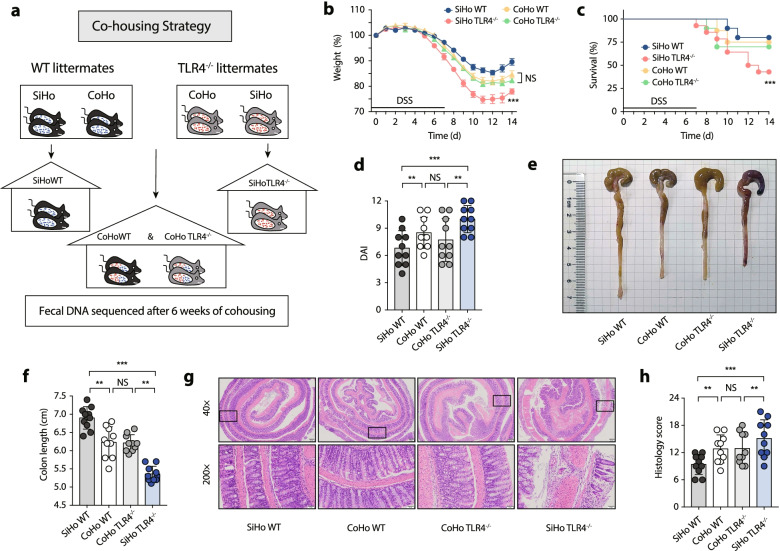
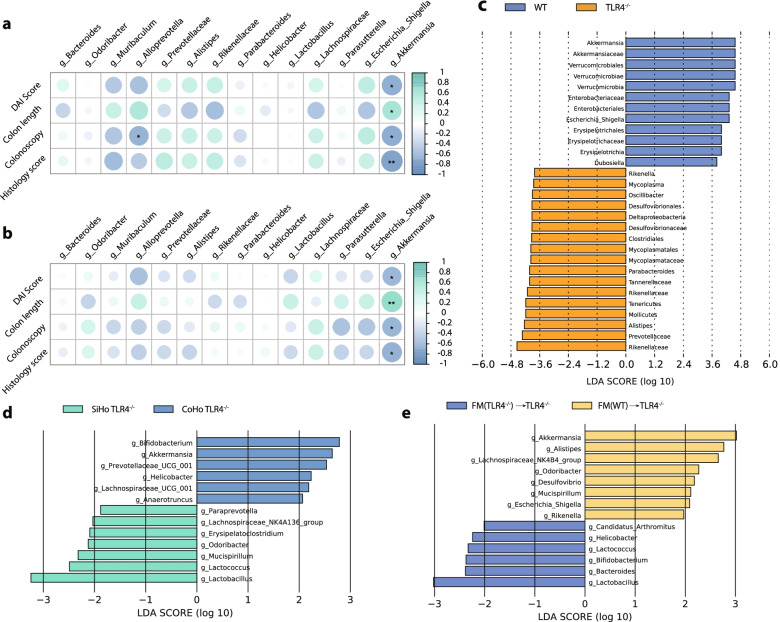
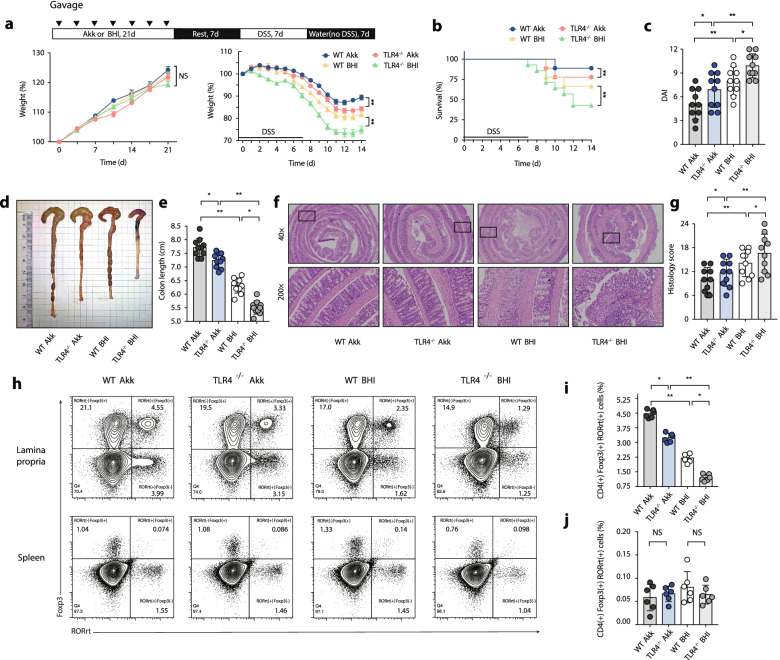
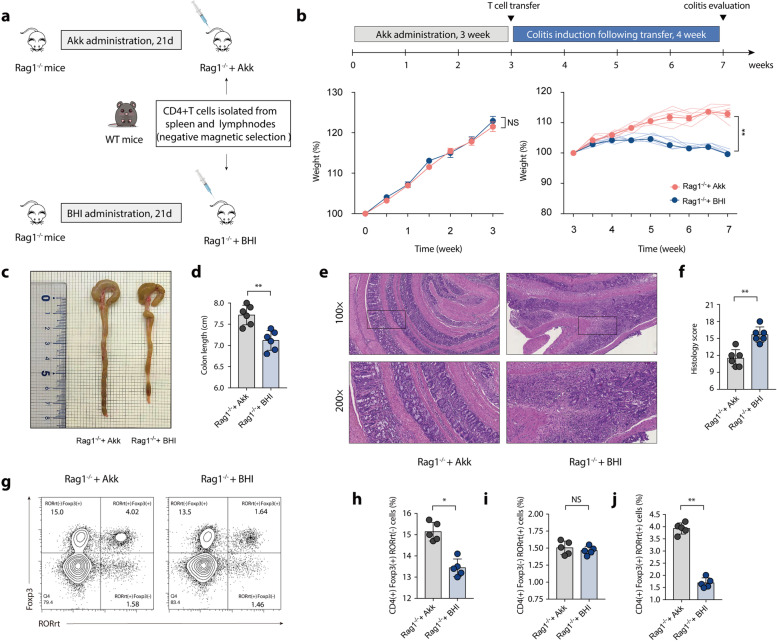
We performed antibiotic depletion of the microbiota, cohousing experiments, and faecal microbiota transplantation (FMT) in WT and TLR4 mice to assess the influence of TLR4 on intestinal microbial ecology. 16S rRNA sequencing was performed to dissect microbial discrepancies, and dysbiosis-associated immune perturbation was investigated by flow cytometry. Akkermansia muciniphila (A. muciniphila)-mediated immune modulation was confirmed through the T-cell transfer colitis model and bone marrow chimaera construction.
TLR4 mice experienced enhanced susceptibility to DSS-induced colitis. 16S rRNA sequencing showed notable discrepancy in the gut microbiota between WT and TLR4 mice. In particular, A. muciniphila contributed most to distinguishing the two groups. The T-cell transfer colitis model and bone marrow transplantation (BMT) consistently demonstrated that A. muciniphila ameliorated colitis by upregulating RORγt Treg cell-mediated immune responses. Mucosal biopsies from human manifested parallel outcomes with colon tissue from WT mice, as evidenced by the positive correlation between TLR4 expression and intestinal A. muciniphila colonization during homeostasis.
Our results demonstrate a novel protective role of TLR4 against intestinal inflammation, wherein it can modulate A. muciniphila-associated immune responses. These findings provide a new perspective on host-commensal symbiosis, which may be beneficial for developing potential therapeutic strategies. Video abstract.
肠道微生物群与免疫系统之间的平衡相互作用对于预防慢性肠道炎症至关重要,这种情况在炎症性肠病(IBD)中可以观察到。Toll 样受体 4(TLR4)作为一种传感器,介导肠道共生微生物组与宿主免疫之间的串扰,但 TLR4 对结肠炎期间肠道微生物群和免疫反应的塑造的影响仍知之甚少。我们研究了野生型(WT)和 TLR4 小鼠之间对结肠炎易感性的差异是否依赖于肠道微生物群,并旨在确定潜在的免疫调节机制。
我们对 WT 和 TLR4 小鼠进行了抗生素耗竭菌群、共同饲养实验和粪便微生物群移植(FMT),以评估 TLR4 对肠道微生物生态的影响。通过 16S rRNA 测序来剖析微生物差异,并通过流式细胞术研究与菌群失调相关的免疫失调。通过 T 细胞转移结肠炎模型和骨髓嵌合体构建来确认阿克曼氏菌(A. muciniphila)介导的免疫调节作用。
TLR4 小鼠对 DSS 诱导的结肠炎易感性增强。16S rRNA 测序显示 WT 和 TLR4 小鼠之间的肠道微生物群存在显著差异。特别是,阿克曼氏菌(A. muciniphila)对区分两组贡献最大。T 细胞转移结肠炎模型和骨髓移植(BMT)一致表明,阿克曼氏菌(A. muciniphila)通过上调 RORγt Treg 细胞介导的免疫反应来改善结肠炎。来自人类的黏膜活检与 WT 小鼠的结肠组织表现出平行的结果,这表明在稳态期间 TLR4 表达与肠道阿克曼氏菌(A. muciniphila)定植之间存在正相关。
我们的结果表明 TLR4 在肠道炎症中具有一种新的保护作用,它可以调节阿克曼氏菌(A. muciniphila)相关的免疫反应。这些发现为宿主共生关系提供了新的视角,这可能有助于开发潜在的治疗策略。